Artwork
Krishna being dressed in women’s clothes for the spring festival Holi
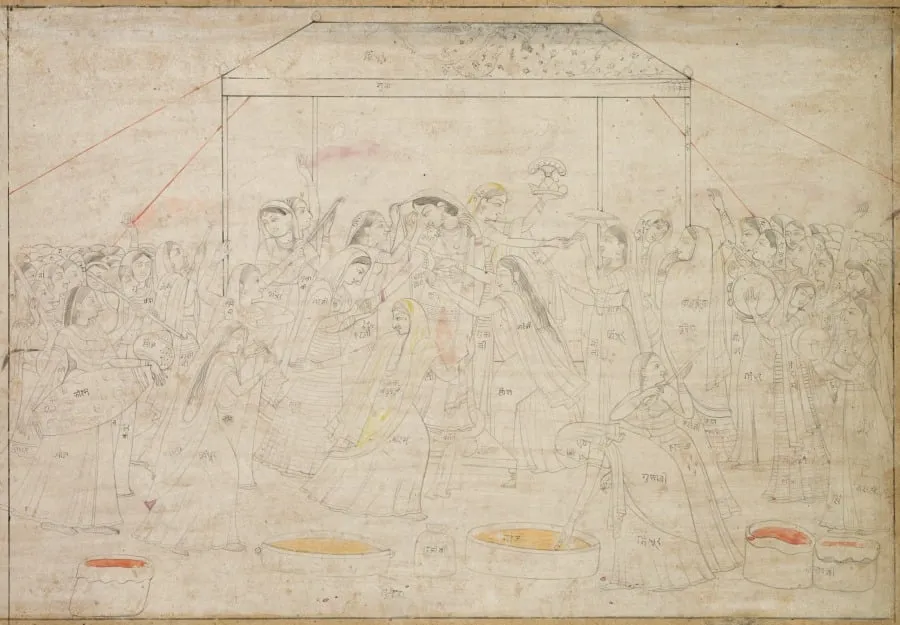
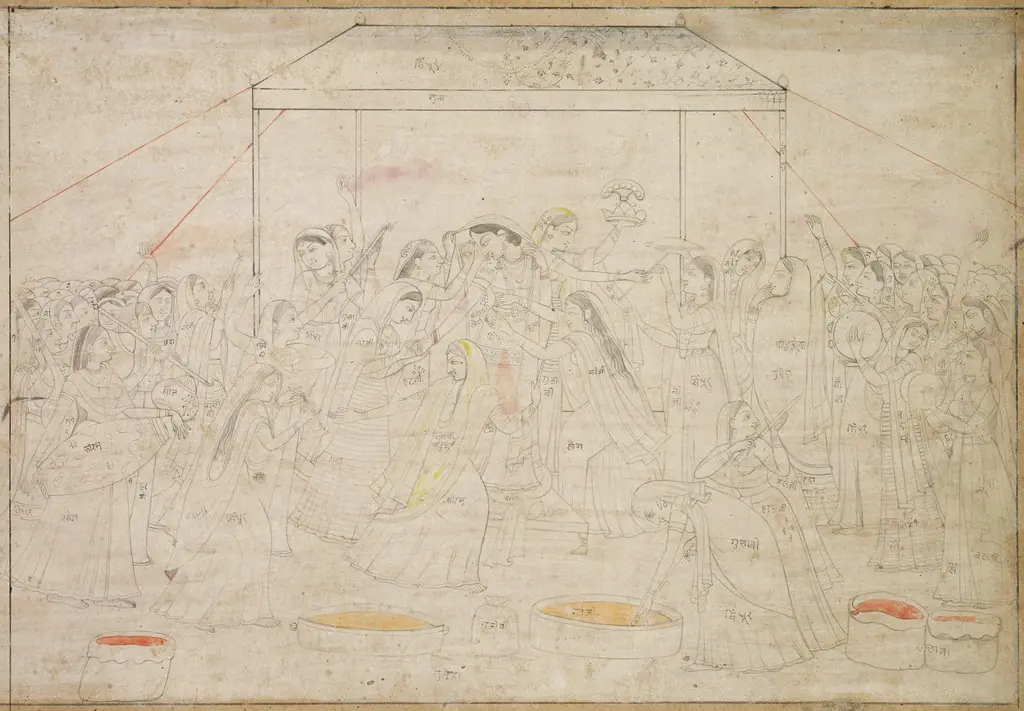
Krishna being dressed in women’s clothes for the spring festival Holi is an unspecified painting by the Mughal Painting artist Unknown. It dates from 1790 and is held in the collection of the Cleveland Museum of Art. The painting captures a moment from the Hindu spring festival Holi, when participants deliberately blur social boundaries.
About this work
Overview
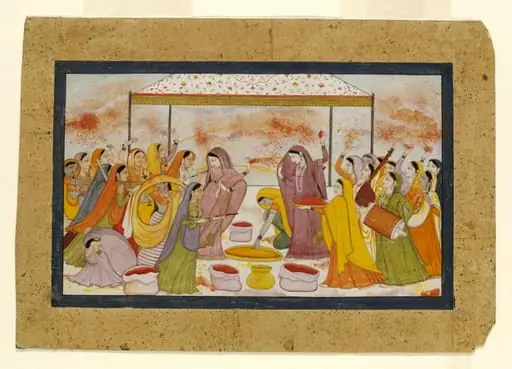
The painting captures a moment from the Hindu spring festival Holi, when participants deliberately blur social boundaries.
The painting captures a moment from the Hindu spring festival Holi, when participants deliberately blur social boundaries. In the foreground, vats of colored water and powder supply handheld pumps used to spray pigment. Young women from Krishna’s pastoral village gather, preparing the pumps, playing music, and playfully dressing the deity in feminine attire while Radha lifts his crown away, embodying the day’s carefree spirit.
Subject & Meaning
Central to the composition is the god Krishna, depicted as a youthful figure being adorned in bright skirts and jewelry by village women. The scene reflects Holi’s tradition of role reversal and merriment, emphasizing the temporary suspension of norms. Radha’s teasing gesture with Krishna’s crown underscores the intimate, affectionate dynamics between the divine couple and their community during the celebration.
Technique & Style
The work remains unfinished, revealing the collaborative process typical of Indian atelier painting. Initial drawing and color notations were likely executed by the master artist, after which a specialist colorist applied pigments. Separate hands may have rendered facial features and gold embellishments before the master returned for final touches and approval, illustrating the layered division of labor in traditional workshop practice.
History & Provenance
Created within the Pahari artistic tradition of northern India, the painting originates from a period when regional courts commissioned devotional scenes for private devotion and festival observance. Though specific patronage details are absent, its unfinished state suggests it was retained within the workshop, possibly intended for a patron familiar with the collaborative production method.
Context
The artwork exemplifies Holi’s cultural significance as a time of joyous transgression, a theme recurrent in Pahari visual culture. By portraying Krishna in a playful, gender‑fluid scenario, it reinforces the deity’s role as a lover of earthly pleasures. The piece contributes to a broader corpus of northern Indian paintings that document ritual festivities and the communal spirit of the festival.
Artist & collection

 Domestic Scene
 Giacomo and Cardinal Marco, investing Andrea, Abbot of San Zeno, with his Benefice
 The Nymph of Fontainebleau
 Portrait of a Woman
 Madonna and Child with Saints in the Enclosed Garden
 Venus and Minerva
 Family Group of Four on Sofa
 Wall painting from Room H of the Villa of P. Fannius Synistor at Boscoreale