Artwork
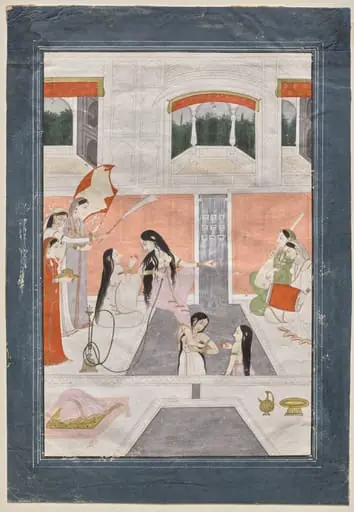
Girls Spraying Each Other at Holi
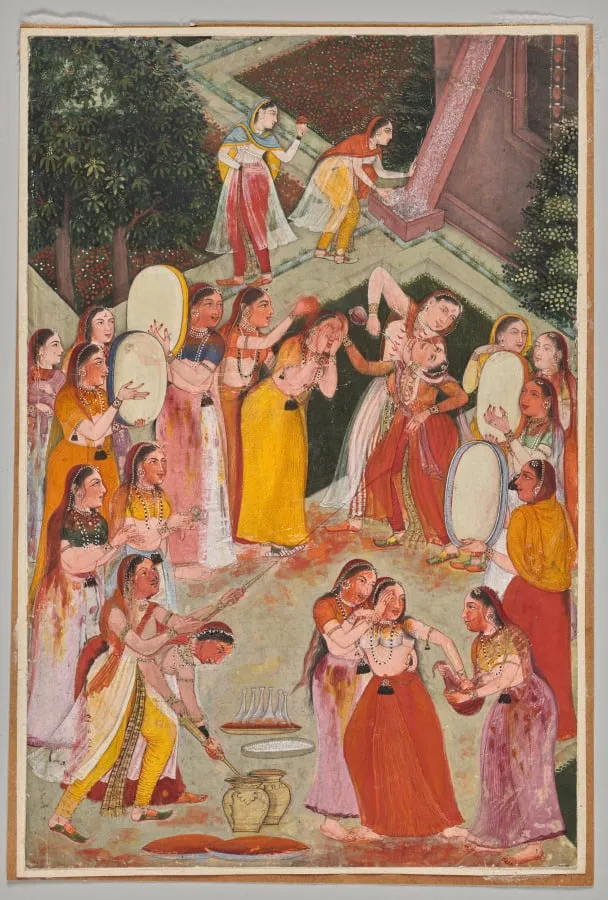
Girls Spraying Each Other at Holi is an unspecified painting by the Baroque artist Unknown. It dates from 1645 and is held in the collection of the Cleveland Museum of Art.
About this work
Overview
The painting captures a moment of the Holi celebration within the inner courtyard of a palace, where women are covered in vivid red and yellow powders. The scene is animated by music and laughter, with figures tossing pigment at one another. A central figure holds another in a playful grip, directing a stream of red color across her back, emphasizing the festive chaos.
Subject & Meaning
Depicting the Hindu spring festival of Holi, the work focuses on the communal joy and ritual of color‑throwing among women. The intimate setting suggests a private gathering rather than a public spectacle, and the exaggerated gesture of one woman restraining another adds a note of playful rivalry, highlighting the social bonds reinforced through shared merriment.
Technique & Style
The composition draws on conventions of imperial Mughal painting, evident in the structured garden backdrop and the careful rendering of figures. Yet the artist adapts these formal elements to a more informal, lively scene, employing bright pigments and dynamic brushwork that convey movement. The blend of Mughal precision with a freer Rajput palette creates a distinctive visual language.
History & Provenance
Created in the Rajput kingdom of Bikaner, the piece reflects the region’s artistic exchanges with the Mughal court, a relationship nurtured through political alliances. Bikaner painters, familiar with Mughal techniques, incorporated them into local subjects, resulting in works that bridge courtly refinement and regional festivity. The painting remains a testament to this cross‑cultural dialogue.
Context
Holi, celebrated at the onset of spring, involves the throwing of colored powders to symbolize the triumph of good over evil and the renewal of social ties. In royal households, such festivities were often confined to the women’s quarters, allowing for a private, exuberant expression of the holiday’s themes. The work thus records both cultural practice and gendered space within the palace.
Artist & collection

 Domestic Scene
 Giacomo and Cardinal Marco, investing Andrea, Abbot of San Zeno, with his Benefice
 The Nymph of Fontainebleau
 Portrait of a Woman
 Madonna and Child with Saints in the Enclosed Garden
 Venus and Minerva
 Family Group of Four on Sofa
 Wall painting from Room H of the Villa of P. Fannius Synistor at Boscoreale
 Lovers on a Terrace: Ramakali Ragini of Hindol, from a Bundi Ragamala
 Radha and Hindu God Krishna celebrating the festival Holi
 The Morning Toilette
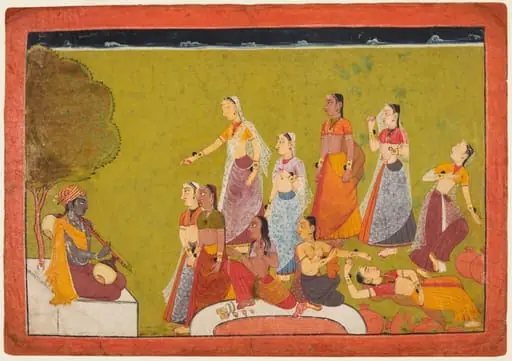 A group of women in ecstasy before Madhava, folio 4 from a Madhavanala-Kamakandala
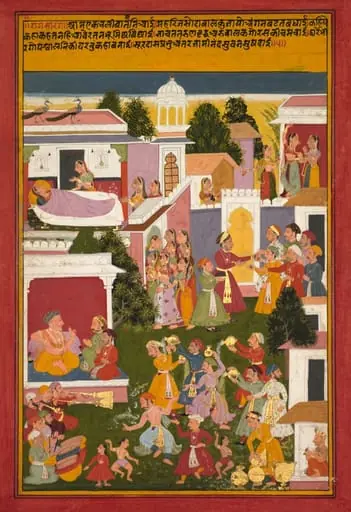 The Birth of Krishna, from a Sursagar of Surdas (Indian, c. 1480–1580)
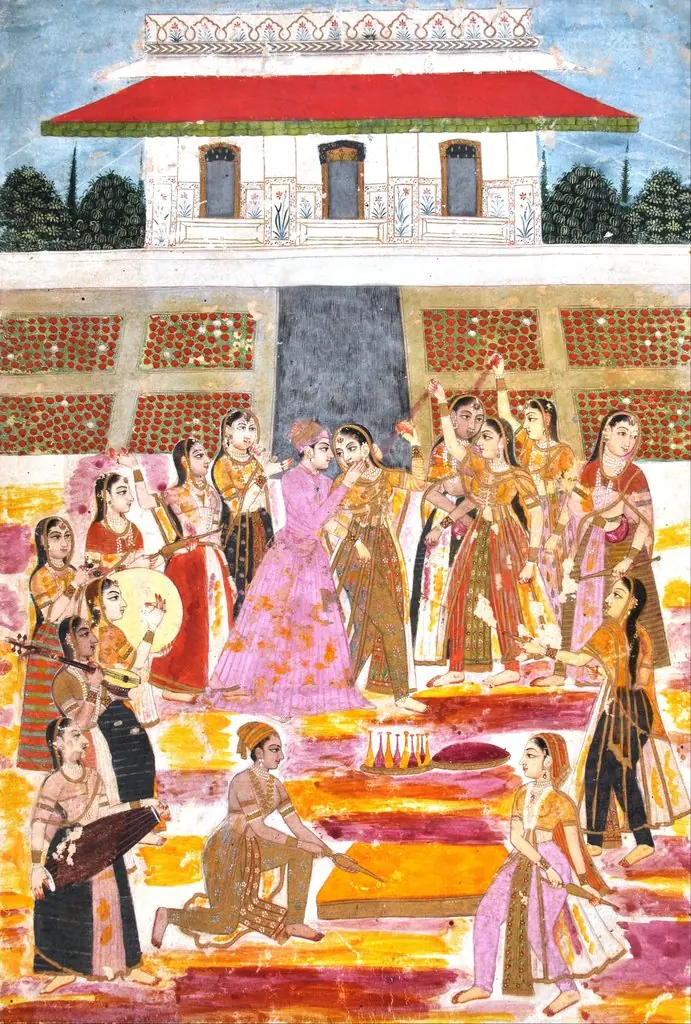 Prince playing Holi in harem
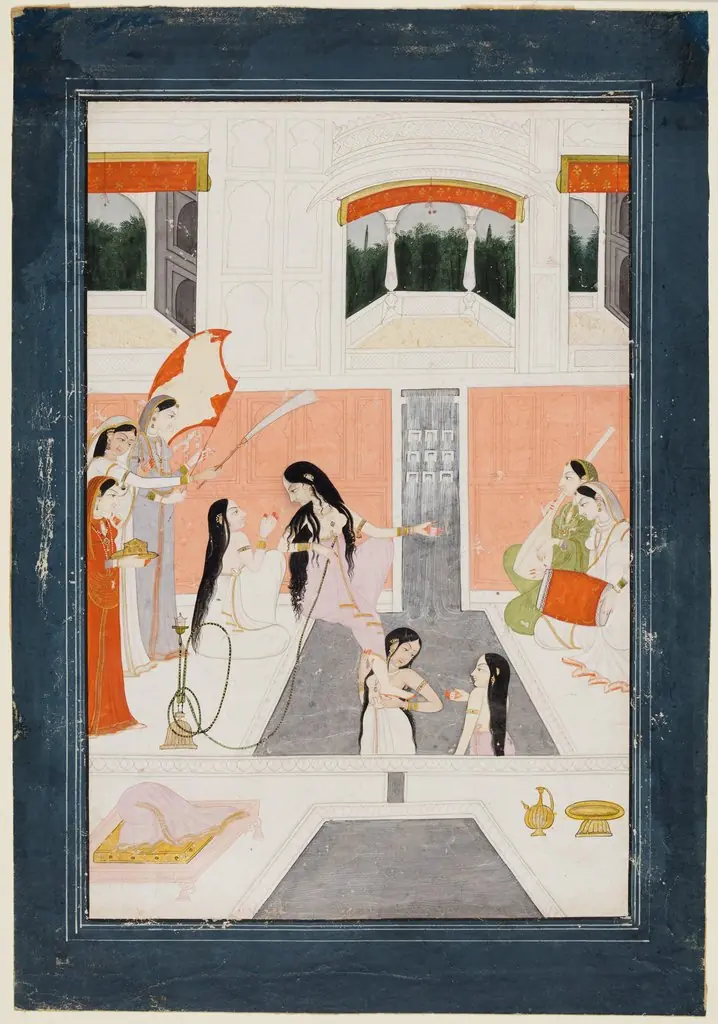 Palace Women Enjoy Music by the Side of a Water Cascade
 Palace women enjoy music by the side of a cascade