Artwork
Krishna dancing on the serpent Kaliya.
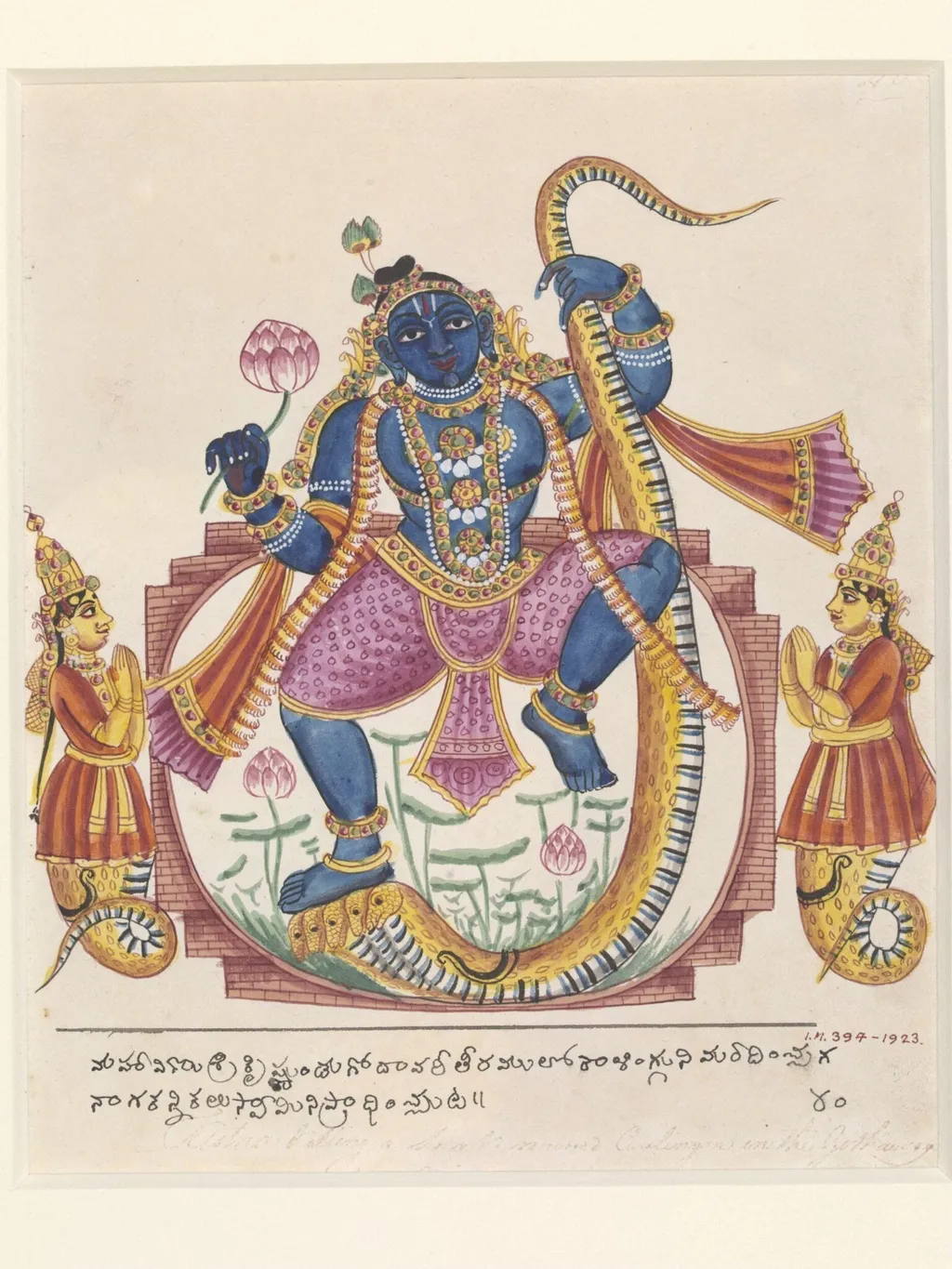
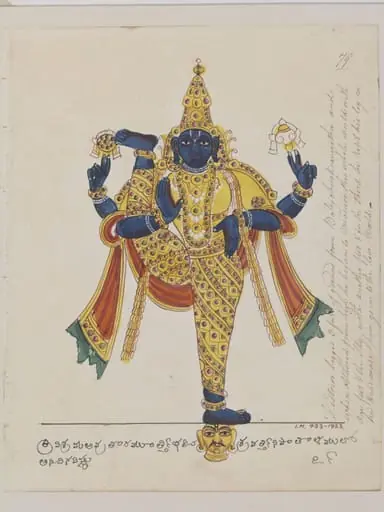
Krishna dancing on the serpent Kaliya. is a paint painting by the Mughal Painting artist Unknown. It dates from 1820 and is held in the collection of the Victoria and Albert Museum. This Indian miniature painting portrays a scene from Krishna’s early life, in which he subdues the venomous serpent Kaliya.
About this work
Overview
This Indian miniature painting portrays a scene from Krishna’s early life, in which he subdues the venomous serpent Kaliya.
This Indian miniature painting portrays a scene from Krishna’s early life, in which he subdues the venomous serpent Kaliya. The composition centers on Krishna’s dynamic pose atop the coiled serpent, surrounded by figures of reverence. Rendered in vivid pigments on paper, the work exemplifies the Pahari school’s lyrical style, with flowing lines and saturated hues that evoke spiritual drama without overt violence.
Subject & Meaning
Krishna, identified by his blue skin and divine attributes, dances on Kaliya to neutralize the serpent’s threat to the Yamuna River’s inhabitants. The lotus bud in his hand symbolizes purity amid corruption, while the two naginis—Kaliya’s consorts—pray in supplication, acknowledging his supremacy. The scene reflects devotion, divine intervention, and the triumph of dharma over chaos, central themes in Vaishnavite tradition.
Technique & Style
Executed in opaque watercolor, the painting employs fine brushwork to define intricate details in clothing, jewelry, and scales. The background features a stylized brick wall, suggesting the riverbank of Kalindi. Gold leaf accents highlight Krishna’s headdress and garments, while the serpent’s yellow and black patterning contrasts sharply against the muted tones of the setting, enhancing visual focus and symbolic tension.
History & Provenance
The painting originates from the Pahari region, likely produced in a royal atelier during the late 18th century. It entered the collection of the Victoria and Albert Museum through British colonial acquisitions, possibly as part of a larger series illustrating Krishna’s exploits. Its preservation reflects early European interest in Indian devotional art, though its original context within ritual or courtly display remains partially undocumented.
Context
This image belongs to a broader tradition of Bhagavata Purana illustrations, popular in North Indian courts where Krishna worship flourished. Artists adapted textual narratives into intimate, emotionally resonant scenes for private devotion or royal patronage. The romanticized aesthetic—soft contours, rich color, and serene gestures—aligns with regional tastes that favored lyrical expression over monumental grandeur.
Legacy
The painting contributes to the enduring visual language of Krishna iconography in South Asian art. Its balance of narrative clarity and decorative elegance influenced later regional styles and continues to inform contemporary interpretations of Hindu myth. As a preserved artifact in a major museum, it serves as a reference for studies on devotional art, colonial collecting practices, and the transmission of religious imagery across cultures.
Artist & collection

 Domestic Scene
 Giacomo and Cardinal Marco, investing Andrea, Abbot of San Zeno, with his Benefice
 The Nymph of Fontainebleau
 Portrait of a Woman
 Madonna and Child with Saints in the Enclosed Garden
 Venus and Minerva
 Family Group of Four on Sofa
 Wall painting from Room H of the Villa of P. Fannius Synistor at Boscoreale