Artwork
Vamana
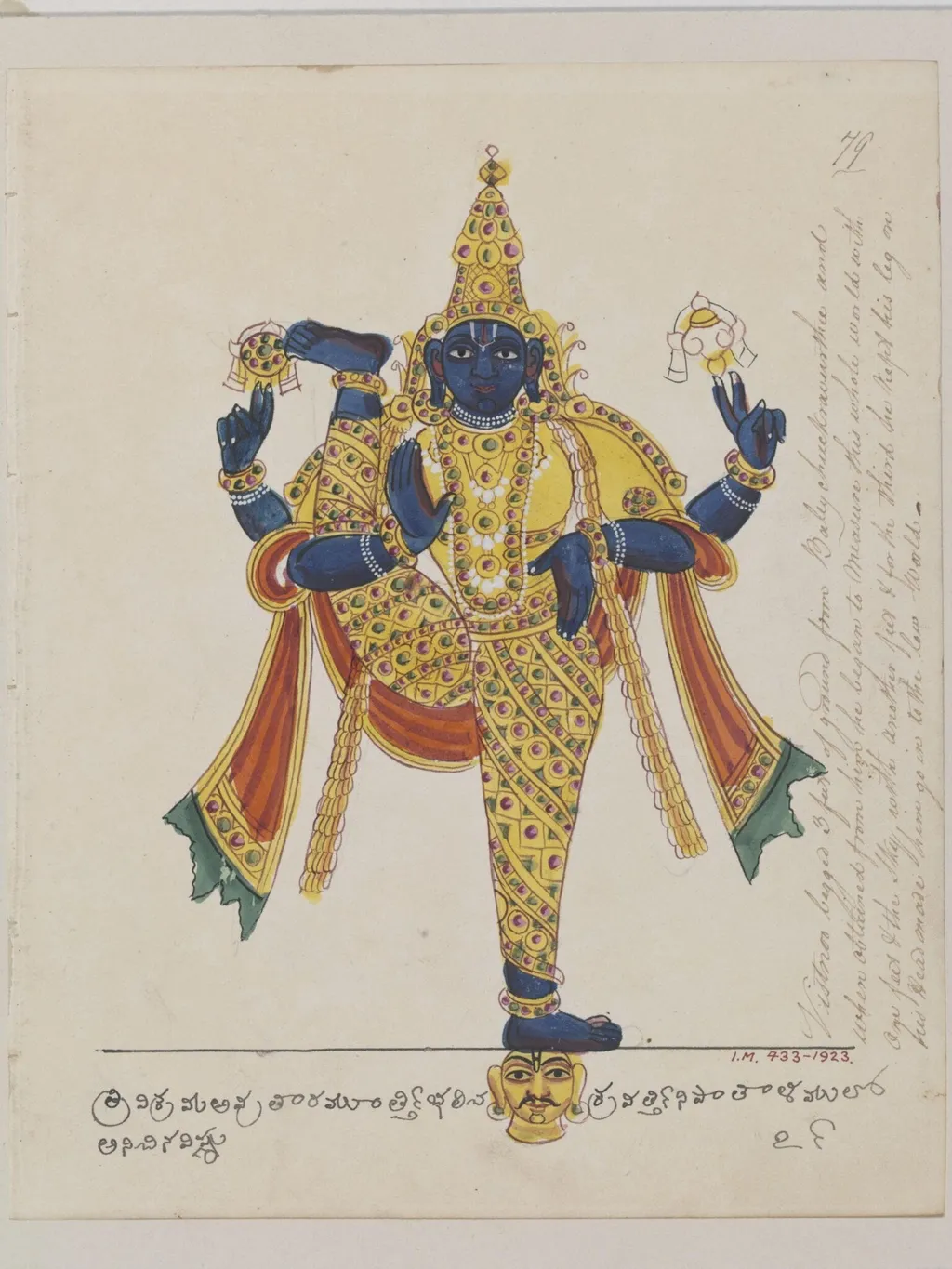
Vamana is a paint painting by the Romanticist artist Unknown. It dates from 1820 and is held in the collection of the Victoria and Albert Museum.
About this work
Overview
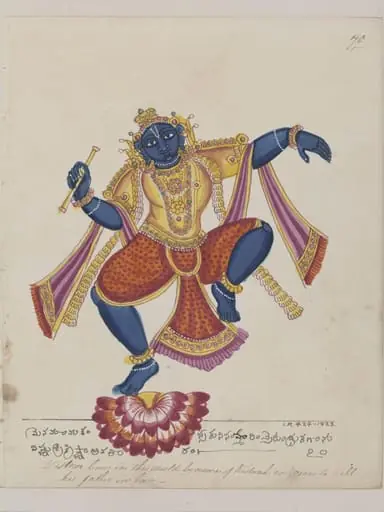
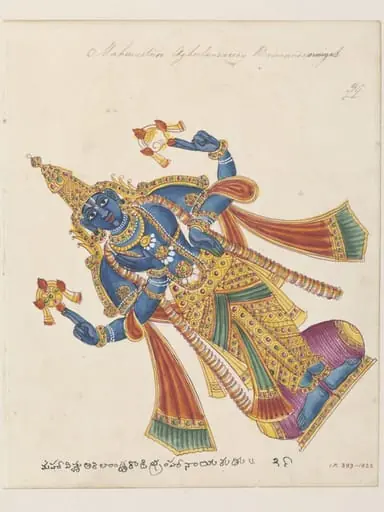
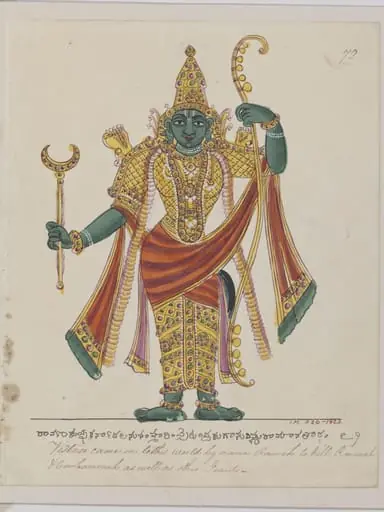
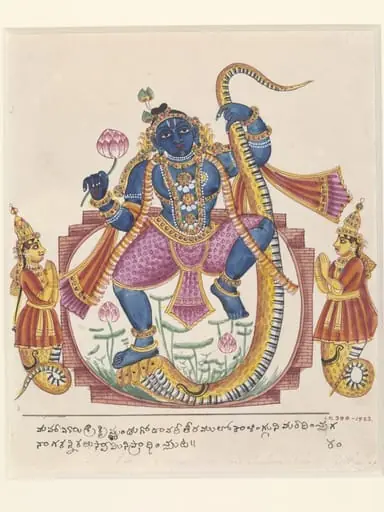
This 19th-century South Indian painting depicts Vamana, the fifth avatar of the Hindu deity Vishnu, in a dominant pose over King Bali. Executed around 1820, it forms part of a larger series illustrating 100 Hindu deities.
Subject & Meaning
Vamana, recognizable by his blue skin and four arms, embodies Vishnu's power. The scene symbolizes the mythological story where Vamana, in the form of a dwarf, subdues King Bali by stepping on him, illustrating the divine assertion of authority over earthly rulers.
Technique & Style
Characterized by bold, flat colors without shading, the painting reflects traditional South Indian artistic conventions of the time. The figure's attire, adorned with dots and lines, and the jewel-encrusted crown, showcase meticulous detail within a stylistically simplified framework.
History & Provenance
Created circa 1820 in South India as part of a 100-piece deity illustration series, the painting's specific provenance details are not provided in the available information.
Context
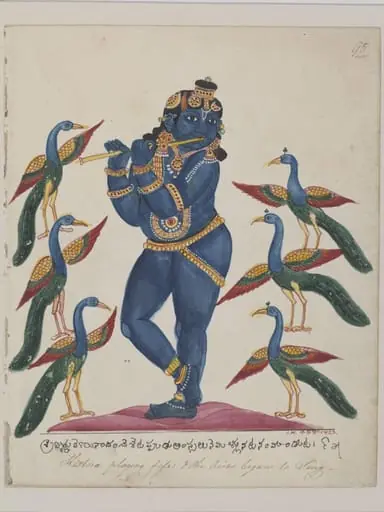
Understanding Vamana's significance is closely tied to the broader Hindu pantheon, particularly the concept of Vishnu's avatars. For deeper context on Vishnu's incarnations and their importance, see related figures like Krishna, another prominent avatar.
Artist & collection

 Domestic Scene
 Giacomo and Cardinal Marco, investing Andrea, Abbot of San Zeno, with his Benefice
 The Nymph of Fontainebleau
 Portrait of a Woman
 Madonna and Child with Saints in the Enclosed Garden
 Venus and Minerva
 Family Group of Four on Sofa
 Wall painting from Room H of the Villa of P. Fannius Synistor at Boscoreale