Artwork
Shiva in his form as Bichandi or Bhikshatana
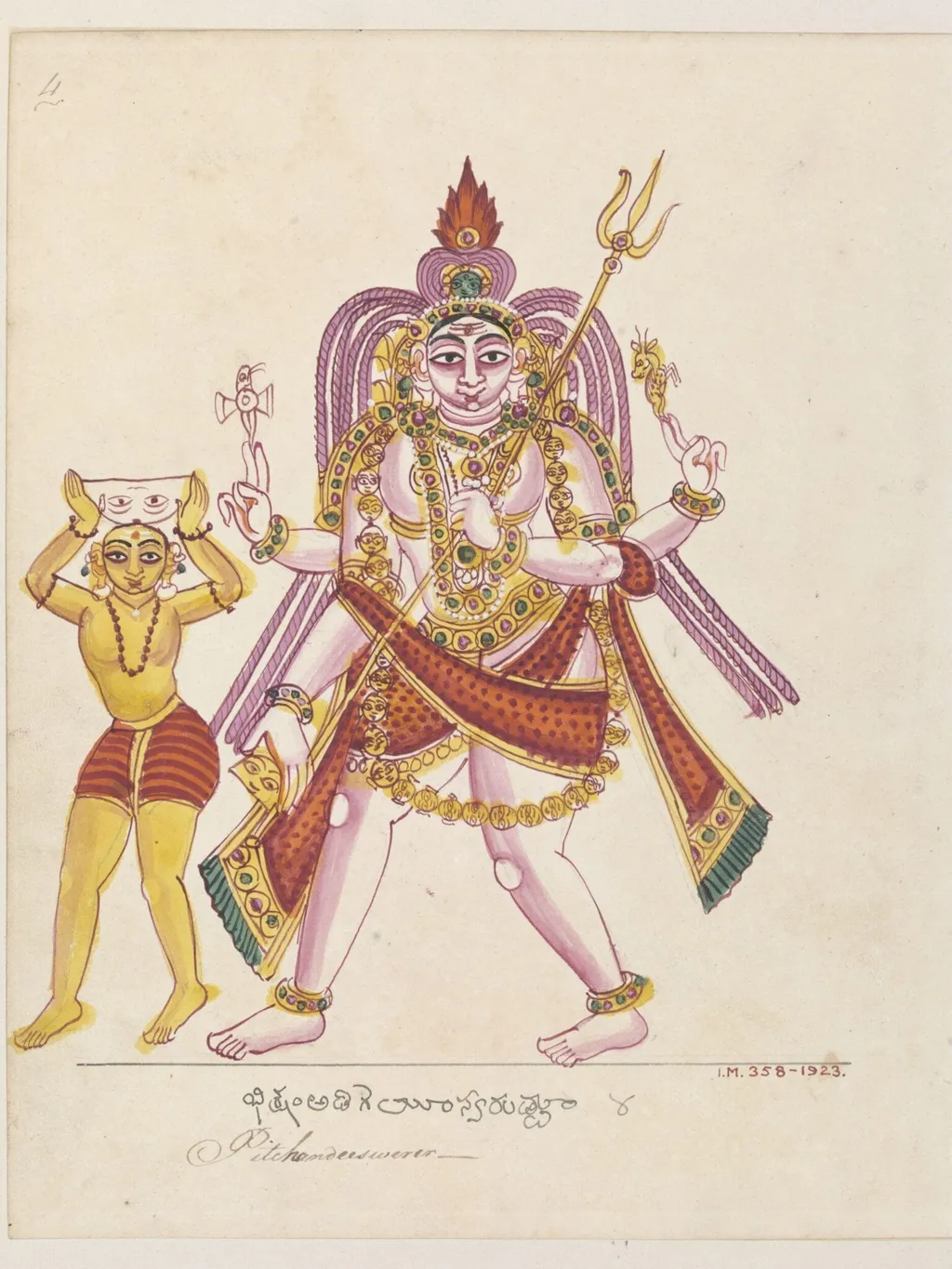
Shiva in his form as Bichandi or Bhikshatana is a paint painting by the Patna School of Painting artist Unknown. It dates from 1820 and is held in the collection of the Victoria and Albert Museum. The painting depicts Shiva in his wandering ascetic aspect, known as Bichandi or Bhikshatana.
About this work
Overview
The painting depicts Shiva in his wandering ascetic aspect, known as Bichandi or Bhikshatana. He is presented as a nude, white‑skinned deity clothed only in a red loin‑cloth, his four arms holding a trident, a drum, a deer, and a blood‑filled bowl. A flame crowns his hair, and a yellow‑skinned attendant stands before him, bearing a bowl that contains eyes.
Subject & Meaning
The deer, a symbol of the mind, and the blood‑bowl, representing sacrifice, together convey the paradox of ascetic detachment and cosmic authority.
In this iconography Shiva embodies the god of destruction and renewal, roaming as a mendicant. The attendant’s bowl of eyes references the deity’s power to see all, while the trident and drum symbolize his control over the three worlds and the rhythm of creation. The deer, a symbol of the mind, and the blood‑bowl, representing sacrifice, together convey the paradox of ascetic detachment and cosmic authority.
Technique & Style
Executed in vivid pigments, the work employs a bold palette of reds, golds, and yellows typical of early‑nineteenth‑century Indian court painting. The figures are rendered with exaggerated gestures and flattened spatial depth, emphasizing narrative over realism. Fine detailing appears in the jeweled garlands and the intricate patterns on the red skirt, while the flame atop Shiva’s hair is highlighted with luminous gold leaf.
Context
The composition reflects a period when Hindu deities were frequently portrayed for both devotional and courtly audiences, merging religious symbolism with aesthetic opulence. Though the exact origin is undocumented, the style aligns with works produced in northern Indian workshops during the early 1800s, suggesting it may have been commissioned for a princely patron or temple collection.
Artist & collection

 Domestic Scene
 Giacomo and Cardinal Marco, investing Andrea, Abbot of San Zeno, with his Benefice
 The Nymph of Fontainebleau
 Portrait of a Woman
 Madonna and Child with Saints in the Enclosed Garden
 Venus and Minerva
 Family Group of Four on Sofa
 Wall painting from Room H of the Villa of P. Fannius Synistor at Boscoreale
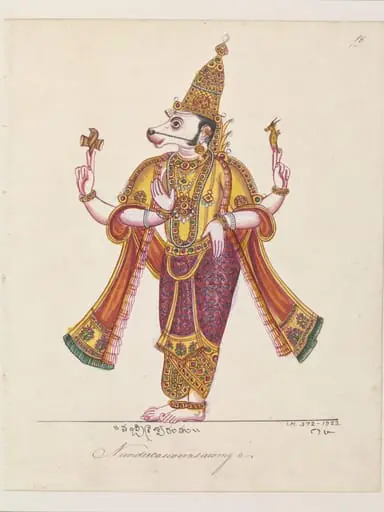 Nandikeshvara, the anthropomorphic form of Nandi and attendant of Shiva.
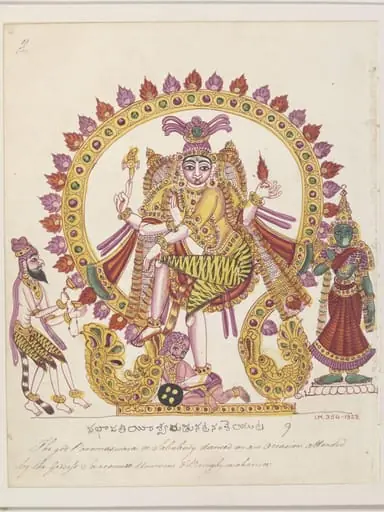 Nataraja (Shiva as lord of the dance)
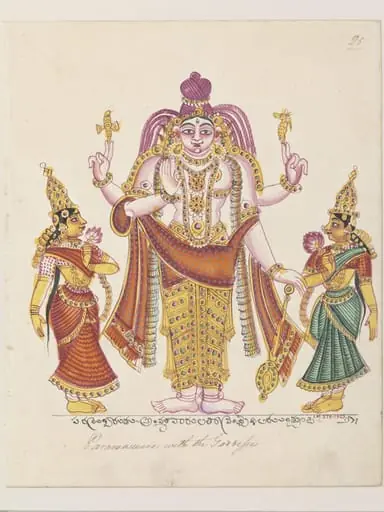 Harihara attended by Parvati and Lakshmi
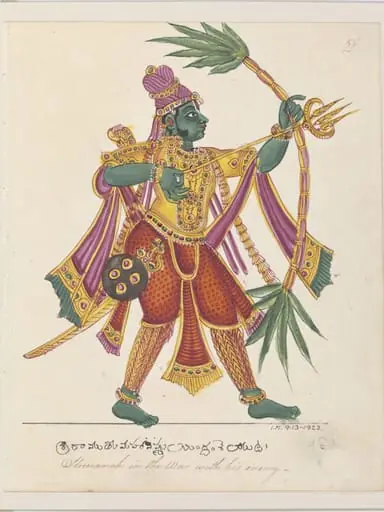 A green-skinned warrior
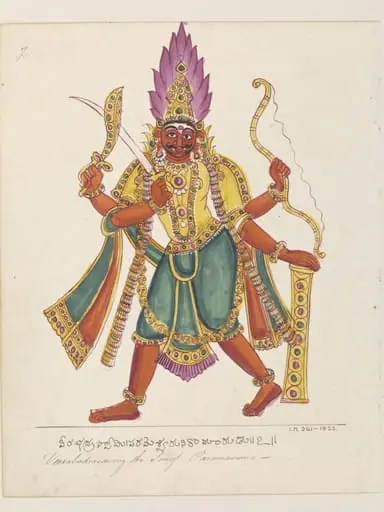 Virabhadra, the son of Shiva.
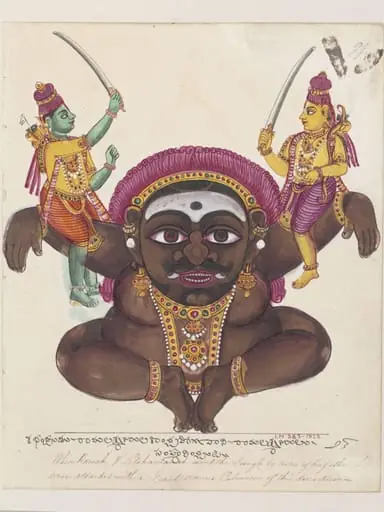 The rakshasa Kabandha supporting Rama and Lakshmana on his arms.
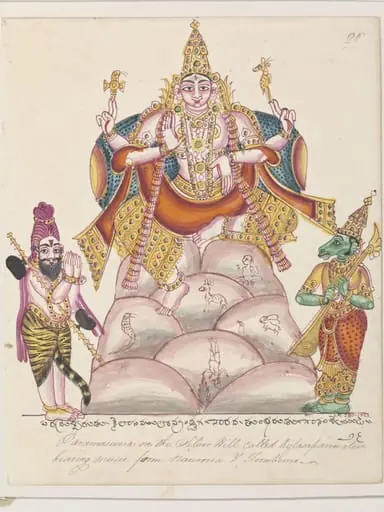 Shiva in his form of Dakshinamurti with the sages Narada and Tumburu on Mount Kailasa.
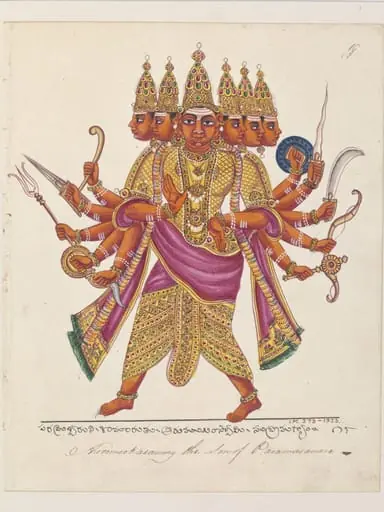 Subrahmanya, with six heads, in his form as Shanmukha (Arumukha)