Artwork
Krishna Quells the Serpent Kaliya, from a Bhagavata Purana
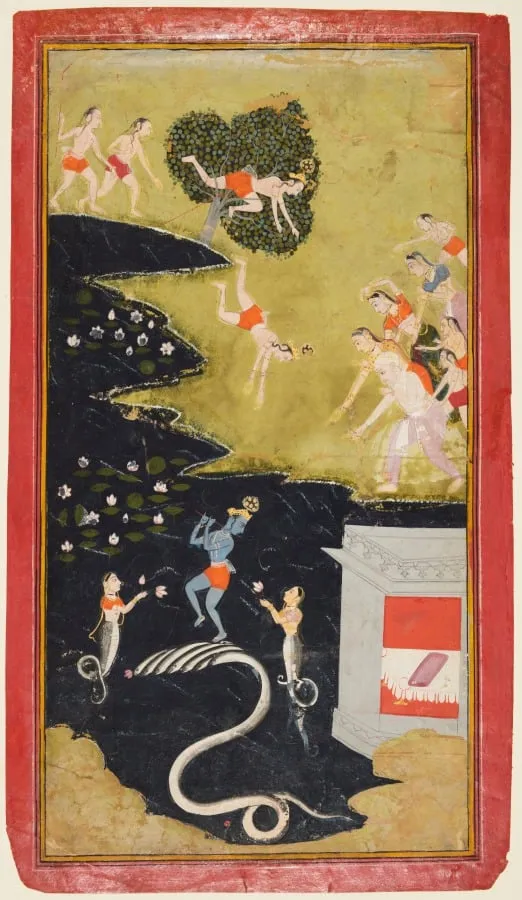
Krishna Quells the Serpent Kaliya, from a Bhagavata Purana is an unspecified painting by the Baroque artist Unknown. It dates from 1710 and is held in the collection of the Cleveland Museum of Art.
About this work
Overview
This painting illustrates a episode from the Bhagavata Purana, depicting the youthful Krishna subduing the venomous serpent Kaliya in the Yamuna River.
This painting illustrates a episode from the Bhagavata Purana, depicting the youthful Krishna subduing the venomous serpent Kaliya in the Yamuna River. Set in a forested landscape frequented by cowherds, the scene captures a moment of divine intervention to restore the river’s purity. The composition centers on Krishna’s dance atop the serpent’s many hoods, with cattle observing from the shore, emphasizing the harmony between the divine and the natural world.
Subject & Meaning
Krishna’s dance on Kaliya’s heads symbolizes the triumph of divine order over chaos and pollution. The serpent, whose poison had rendered the river lethal, represents destructive forces that must be contained, not destroyed. By compelling Kaliya to depart for the ocean, Krishna restores balance to the ecosystem, affirming his role as a protector of life and dharma. The scene reflects a broader theme of spiritual authority transforming natural threats into peaceful coexistence.
Technique & Style
The artist employs flat, unmodulated colors and simplified forms without shading or perspective, characteristic of Rajasthani miniature traditions. Bold outlines define Krishna’s blue form and the serpent’s fanned hoods, which resemble a ceremonial throne. The river’s vivid blue contrasts with the earthy tones of the bank, directing focus to the central action. This stylized approach prioritizes narrative clarity and symbolic resonance over naturalistic detail.
History & Provenance
This painting originates from the Rajput kingdom of Mewar, likely produced in the 17th or 18th century for a royal or devotional patron. Such illustrations were often part of illustrated manuscripts of the Bhagavata Purana, commissioned to reinforce religious devotion and royal legitimacy through divine association. Its survival reflects the enduring cultural value placed on Krishna’s legends in western India’s courtly circles.
Context
The depiction aligns with a broader tradition of Hindu devotional art that visualized sacred narratives for contemplation and instruction. In Mewar, where Krishna worship was especially prominent, such images served both spiritual and didactic purposes. The choice of the Yamuna River as setting connects the scene to real geographical and ritual sites, grounding myth in lived religious experience.
Legacy
Paintings of Krishna and Kaliya became a recurring motif in Rajasthani and Pahari schools, influencing regional iconography for centuries. The composition’s clarity and symbolic power ensured its replication across media, from manuscripts to temple murals. This image remains a touchstone for understanding how Hindu narratives were visually codified to convey theological ideas accessible to diverse audiences.
Artist & collection

 Domestic Scene
 Giacomo and Cardinal Marco, investing Andrea, Abbot of San Zeno, with his Benefice
 The Nymph of Fontainebleau
 Portrait of a Woman
 Madonna and Child with Saints in the Enclosed Garden
 Venus and Minerva
 Family Group of Four on Sofa
 Wall painting from Room H of the Villa of P. Fannius Synistor at Boscoreale
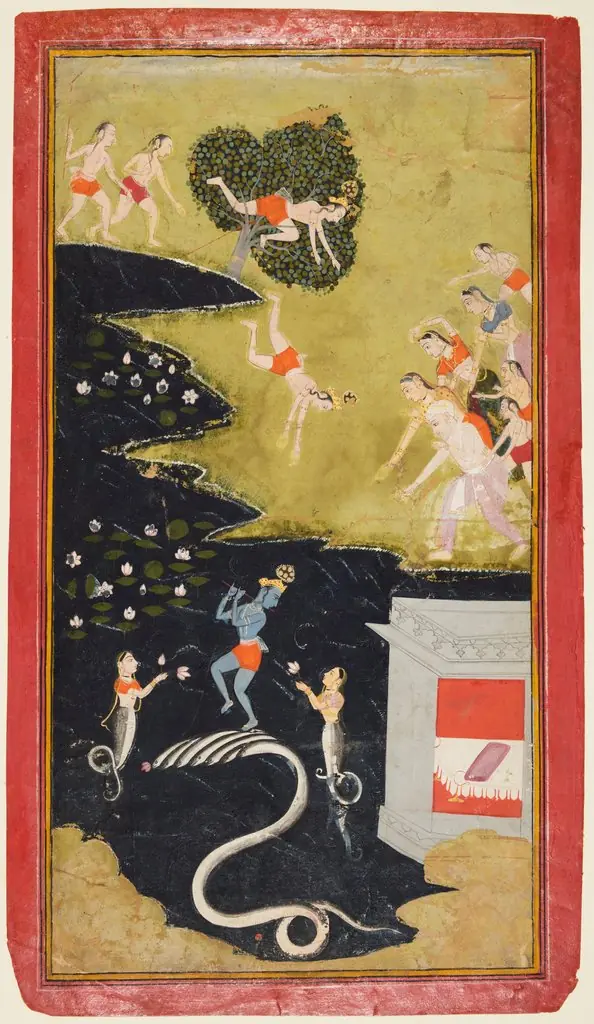 Krishna Quells the Serpent Kaliya, from a Bhagavata Purana
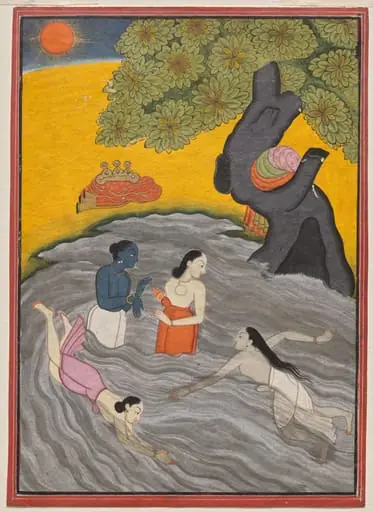 Krishna Playing with the Gopis in the Yamuna
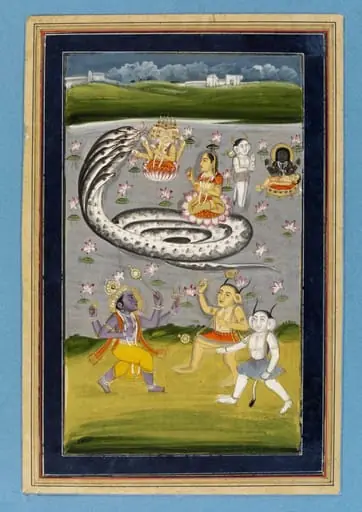 Krishna and Kaliya
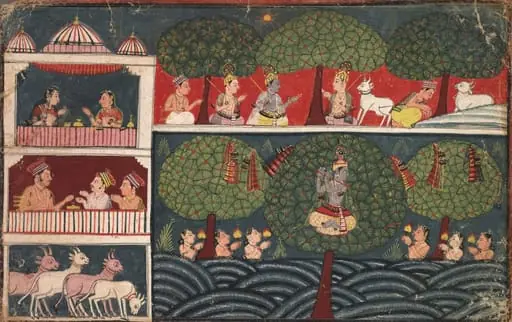 Krishna Steals the Clothes of the Milkmaids and Expounds on the Virtue of Trees, from a Braj Bhagavata Purana
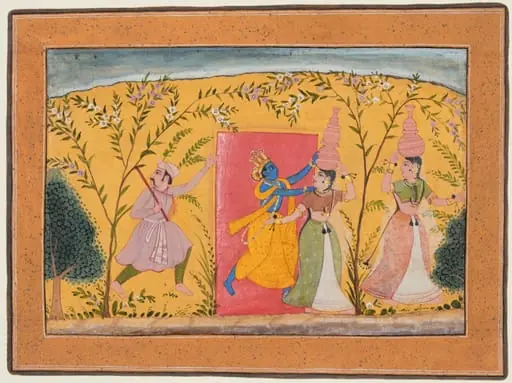 Krishna Exacts a Toll from the Milkmaids: Dana-Lila, from a Bhagavata Purana
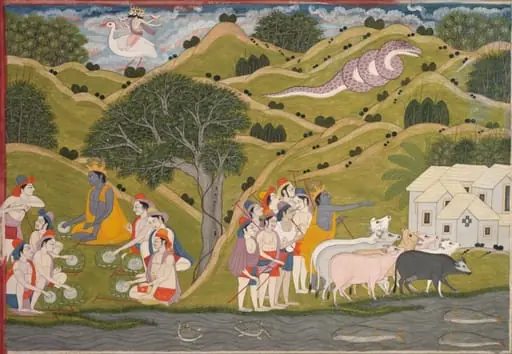 Krishna returns with the cowherds to Braj, from a Bhagavata Purana
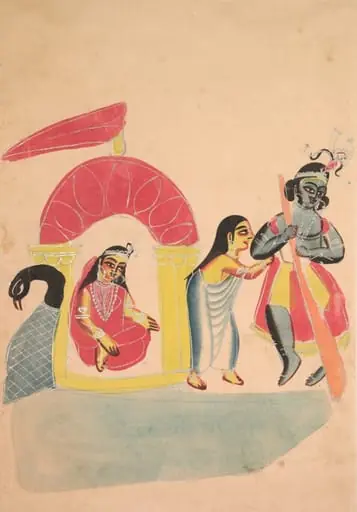 Krishna Ferrying Radha Across the Yamuna River