Artwork
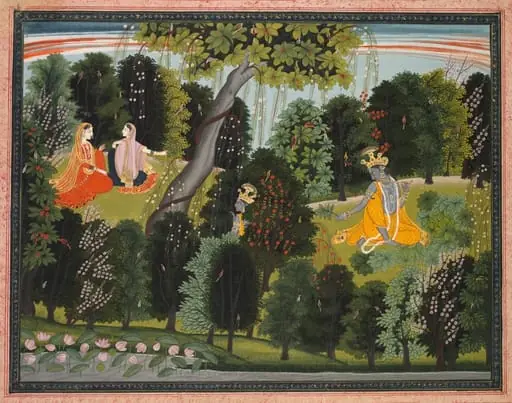
Krishna returns with the cowherds to Braj, from a Bhagavata Purana
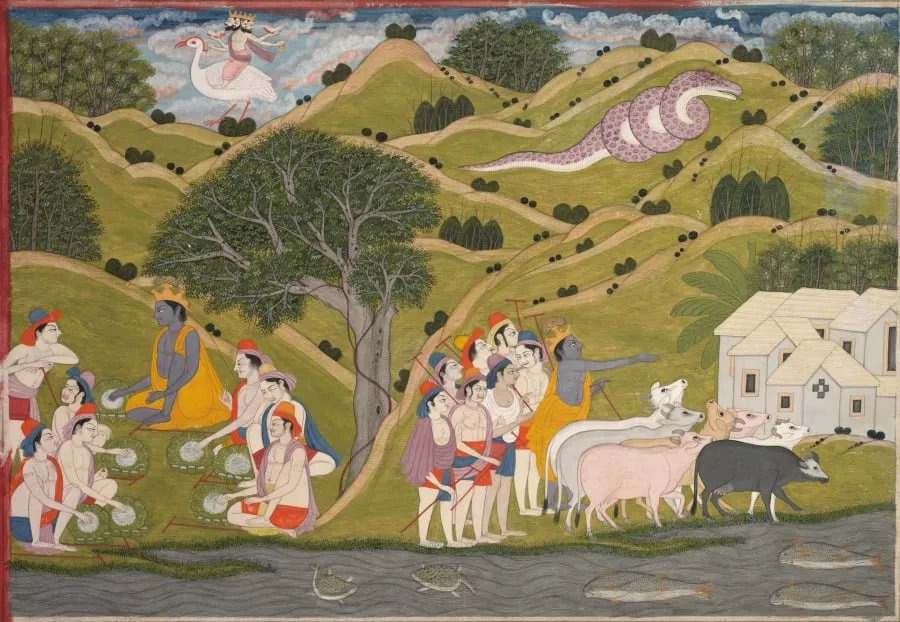
Krishna returns with the cowherds to Braj, from a Bhagavata Purana is an unspecified painting by the Mughal Painting artist Unknown. It dates from 1830 and is held in the collection of the Cleveland Museum of Art.
About this work
Overview
The work illustrates a scene from Chapter 14 of Book 10 of the Bhagavata Purana, where the deity Brahma, after briefly concealing Krishna’s cowherd companions and their calves, recognises Krishna’s divine power and departs. The composition captures the moment when Krishna, accompanied by his youthful companions and cattle, resumes their journey toward Braj at twilight.
Subject & Meaning
Krishna, depicted with his characteristic blue skin and a crown, leads a procession of boys and cows through a village landscape. The narrative suggests that the cowherds remain unaware that time itself has been altered, allowing them to indulge in play and sustenance without feeling the pull of home, underscoring themes of divine intervention and timeless joy.
Technique & Style
The painter renders the dusk‑lit hills in warm gold tones and the foliage as diminutive green flames, creating a vibrant, atmospheric backdrop. Each figure is surrounded by a subtle halo, a visual cue that elevates the ordinary return of children from the fields to a scene of sacred significance, while maintaining a naturalistic village ambience.
Context
The episode belongs to a larger corpus of Hindu mythological storytelling that has been visualised across the Pahari kingdoms of northern India. Artists from this region frequently employed bright palettes, delicate line work, and luminous halos to convey the spiritual aura surrounding deities like Krishna.
Legacy
By portraying a familiar pastoral moment with divine markers, the painting bridges everyday rural life and mythic narrative, a strategy common in Indian devotional art. It continues the tradition of rendering sacred texts accessible through relatable, everyday scenes, influencing later representations of Krishna’s youthful exploits.
Artist & collection

 Domestic Scene
 Giacomo and Cardinal Marco, investing Andrea, Abbot of San Zeno, with his Benefice
 The Nymph of Fontainebleau
 Portrait of a Woman
 Madonna and Child with Saints in the Enclosed Garden
 Venus and Minerva
 Family Group of Four on Sofa
 Wall painting from Room H of the Villa of P. Fannius Synistor at Boscoreale
 Krishna Steals the Clothes of the Milkmaids and Expounds on the Virtue of Trees, from a Braj Bhagavata Purana
 Krishna Steals the Clothes of the Milkmaids and Expounds on the Virtue of Trees, from a Braj Bhagavata Purana
 Brahma Hides the Cowherds and the Calves in the Cave, page from a Bhagavata Purana
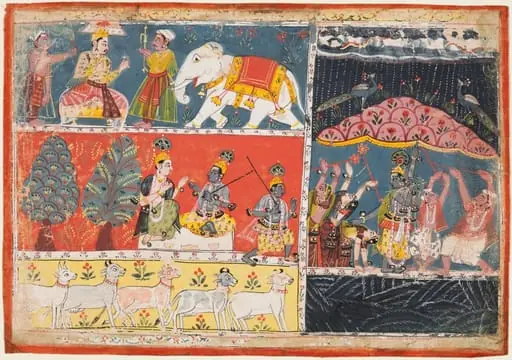 Krishna Lifts Mount Govardhan, from a Bhagavata Purana
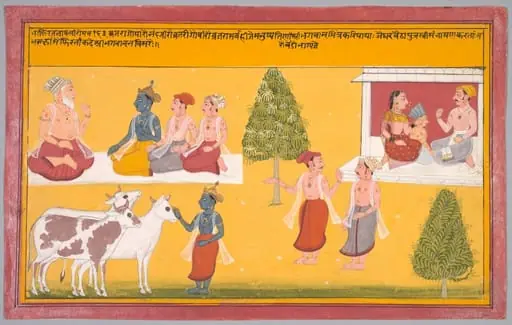 Friends of Krishna, folio 163 from a Bhakti Ratnavali of Vishnu Puri
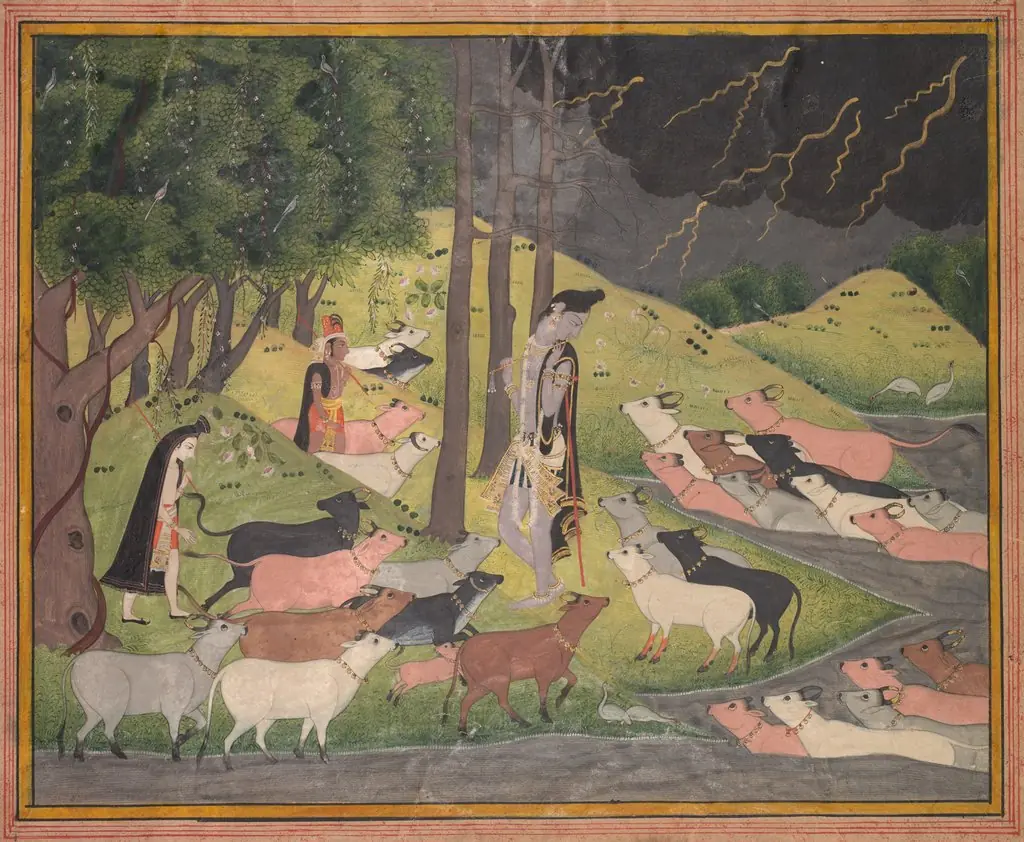 Krishna Summoning the Cows
 Krishna summoning the cows
 Sakhi persuades Radha to meet Krishna, from a Gita Govinda (Song of the Cowherd) of Jayadeva