Artwork
Kurma
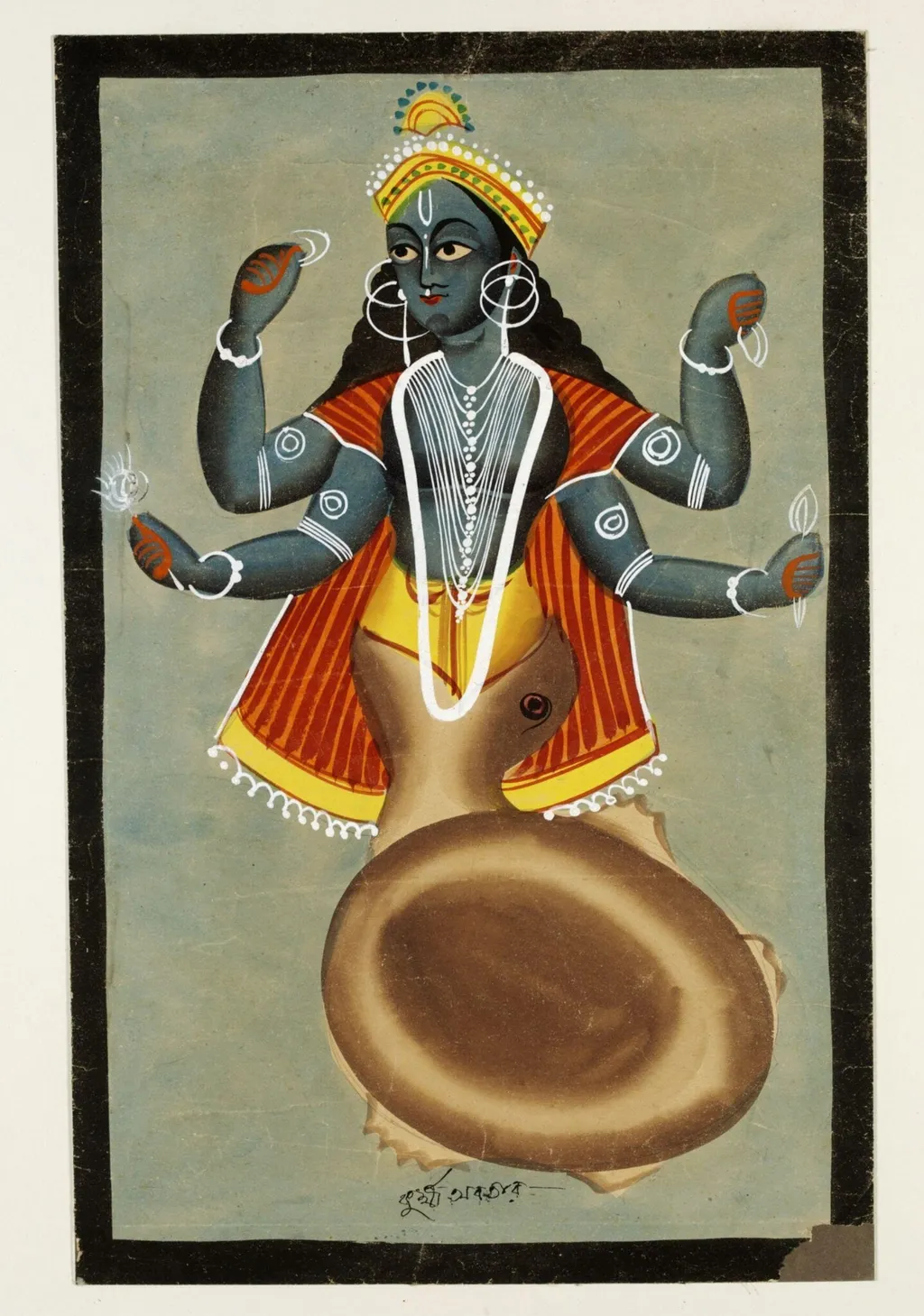
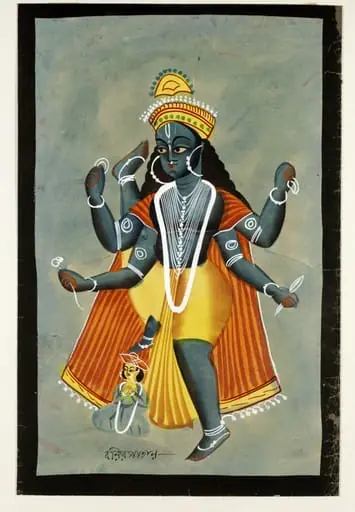
Kurma is a paint painting by the Impressionist artist Unknown. It dates from 1885 and is held in the collection of the Victoria and Albert Museum.
About this work
Overview
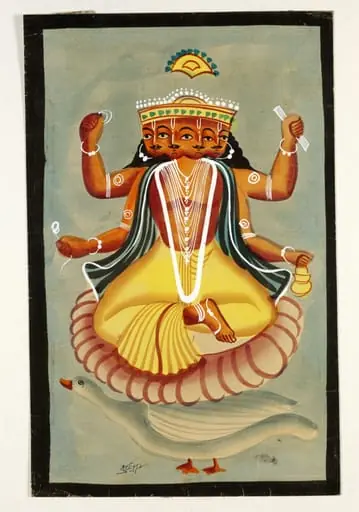
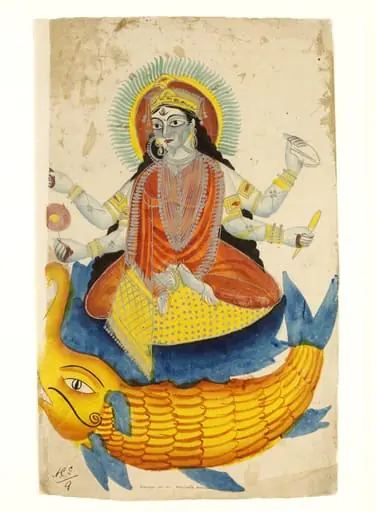
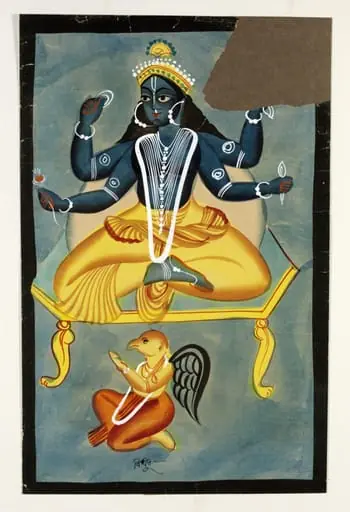
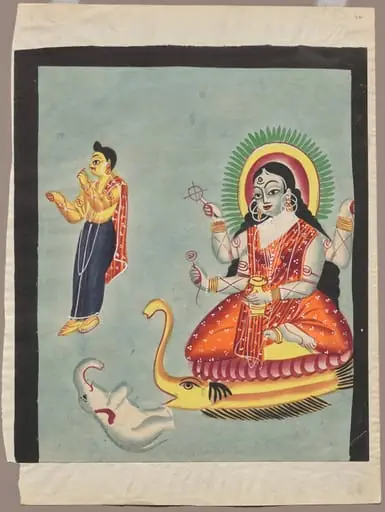
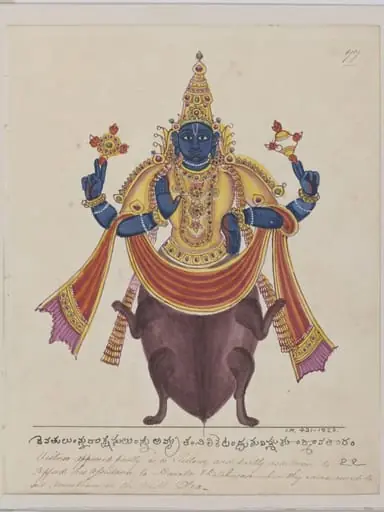
Kurma is a painting executed in opaque watercolour on paper, dated to 1885, attributed to an unknown artist. The work depicts Kurma, the tortoise avatar of the Hindu deity Vishnu.
Subject & Meaning
The painting portrays Kurma as a blue-skinned, four-armed figure seated cross-legged on a circular object, likely symbolizing the tortoise shell. Adorned in a red and yellow attire with white jewelry and a golden headpiece, the figure embodies the divine attributes of Vishnu’s incarnation.
Technique & Style
Characterized by bright, flat colors and the absence of deep shadows, the painting contrasts with techniques like chiaroscuro. The stylized facial features, with bold white outlines around the eyes and mouth, further emphasize the work’s distinct visual approach.
History & Provenance
The painting was acquired from Miss M Steele, having previously been part of her inherited family collection. The artist remains unidentified.
Context
Created in 1885, Kurma reflects the ongoing artistic interpretation of Hindu mythology during the late 19th century, potentially catering to both local devotion and colonial-era interest in Indian art and religion.
Legacy
While the artist of Kurma remains unknown, the piece contributes to the broader understanding of late 19th-century Indian religious art, offering insights into the representation of Vishnu’s avatars during this period.
Artist & collection

 Domestic Scene
 Giacomo and Cardinal Marco, investing Andrea, Abbot of San Zeno, with his Benefice
 The Nymph of Fontainebleau
 Portrait of a Woman
 Madonna and Child with Saints in the Enclosed Garden
 Venus and Minerva
 Family Group of Four on Sofa
 Wall painting from Room H of the Villa of P. Fannius Synistor at Boscoreale