Artwork
Landscape
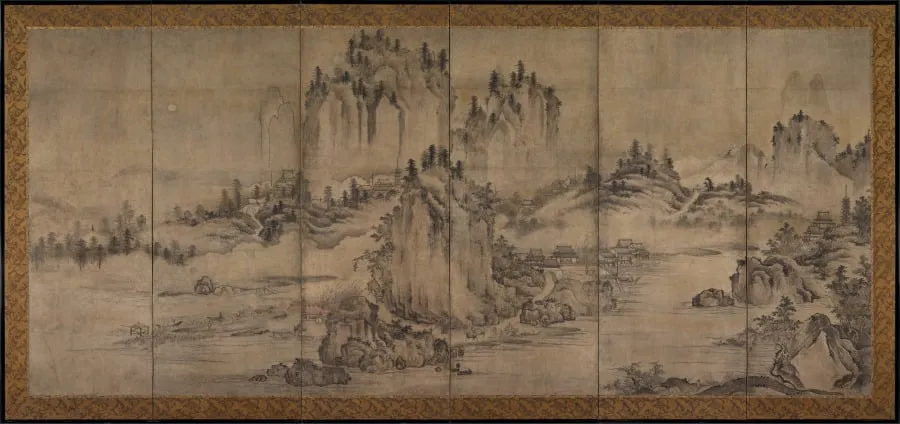
Landscape is an unspecified painting by the Renaissance artist Unknown. It dates from 1574 and is held in the collection of the Cleveland Museum of Art.
About this work
Overview
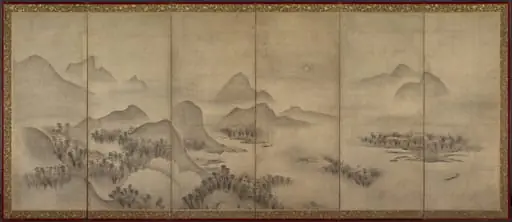
The brushwork is loose and fluid, evoking natural movement in water and clouds, as if captured in a fleeting moment rather than meticulously constructed.
This ink-on-paper painting presents a tranquil Japanese landscape, rendered in muted grays, browns, and subtle greens. Rolling hills, a meandering river, and clustered trees form a quiet composition, with small structures and boats suggesting minimal human presence. The brushwork is loose and fluid, evoking natural movement in water and clouds, as if captured in a fleeting moment rather than meticulously constructed.
Subject & Meaning
The scene emphasizes solitude and harmony with nature, typical of Zen-influenced aesthetics. Absent of human figures, the landscape invites contemplation. The modest dwellings and boats imply quiet coexistence with the environment, reflecting a philosophical preference for stillness and impermanence over grandeur or narrative.
Technique & Style
Executed in monochrome ink, the painting relies on varying brush pressure and ink density to suggest form and depth. Loose, rapid strokes convey texture in foliage and motion in water, while negative space defines atmospheric perspective. The sketch-like quality avoids polish, aligning with ideals of spontaneity and natural expression in Muromachi-period ink painting.
History & Provenance
Created during the Muromachi period (1336–1573), the work reflects the influence of Chinese Southern Song ink traditions adapted by Japanese monks and artists. Likely produced in a monastic or scholarly context, such landscapes were collected for meditation and aesthetic reflection, though specific provenance details remain undocumented.
Context
This painting emerged amid a cultural shift in Japan toward simplicity and introspection, fueled by Zen Buddhism and the decline of aristocratic patronage. Artists turned to nature as a subject worthy of quiet reverence, favoring ink wash over color and embracing asymmetry, emptiness, and implied motion as expressions of deeper truth.
Legacy
Works like this helped define the Japanese ink-wash tradition, influencing later schools such as the Sesshū lineage and Edo-period literati painters. Its emphasis on restraint and naturalism became a touchstone for East Asian landscape aesthetics, persisting in modern interpretations of minimalism and environmental stillness.
Artist & collection

 Domestic Scene
 Giacomo and Cardinal Marco, investing Andrea, Abbot of San Zeno, with his Benefice
 The Nymph of Fontainebleau
 Portrait of a Woman
 Madonna and Child with Saints in the Enclosed Garden
 Venus and Minerva
 Family Group of Four on Sofa
 Wall painting from Room H of the Villa of P. Fannius Synistor at Boscoreale
 元/明 佚名 舊傳 燕文貴 秋山蕭寺圖 軸|Buddhist Temples amid Autumn Mountains
 Untitled
 Streams and Mountains without End
 明 佚名 郭忠恕 僞款 輞川圖 卷|Wangchuan Villa
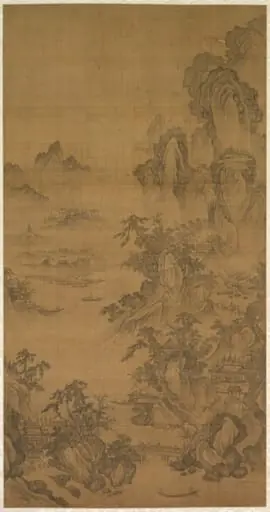 Mountain Market, Clear with Rising Mist
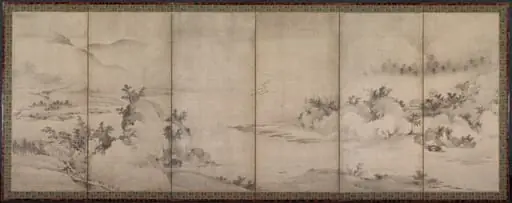 Landscape with Motifs from the Eight Views of Xiao-Xiang
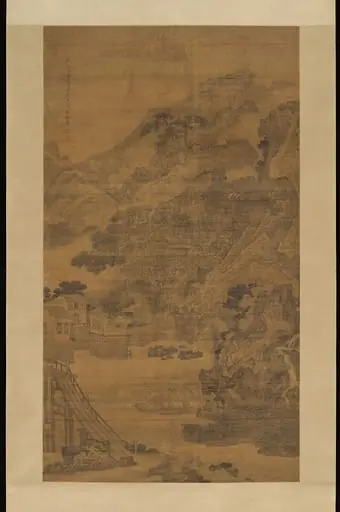 Untitled
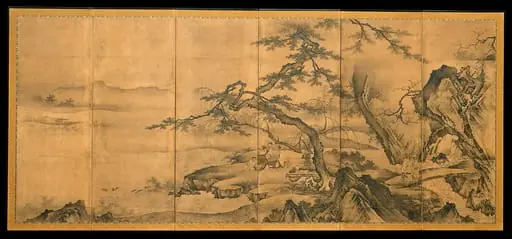 琴棋書画図屏風|The Four Accomplishments
 Moonlit Landscape (one of a pair)
 明/清 佚名 舊傳董源 山水圖 卷|Landscape
 The Peach Blossom Spring
 Landscape of the Four Seasons