Artwork
Moonlit Landscape (one of a pair)
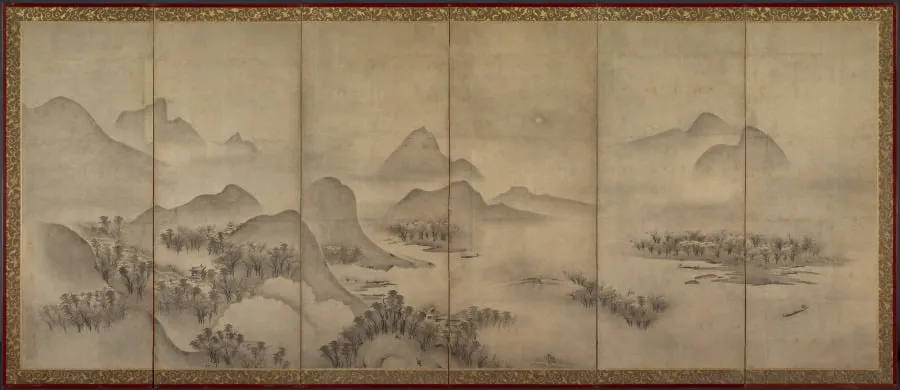
Moonlit Landscape (one of a pair) is an unspecified painting by the Renaissance artist Unknown. It dates from 1504 and is held in the collection of the Cleveland Museum of Art.
About this work
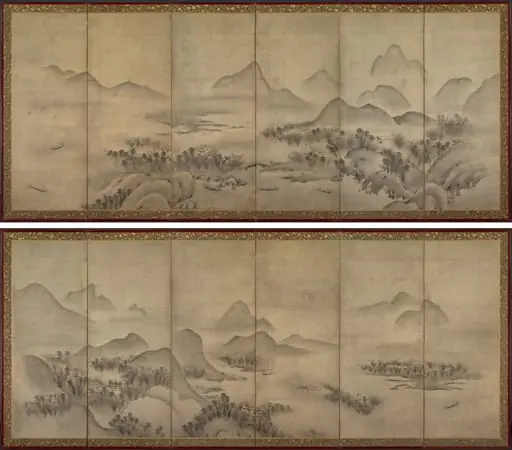
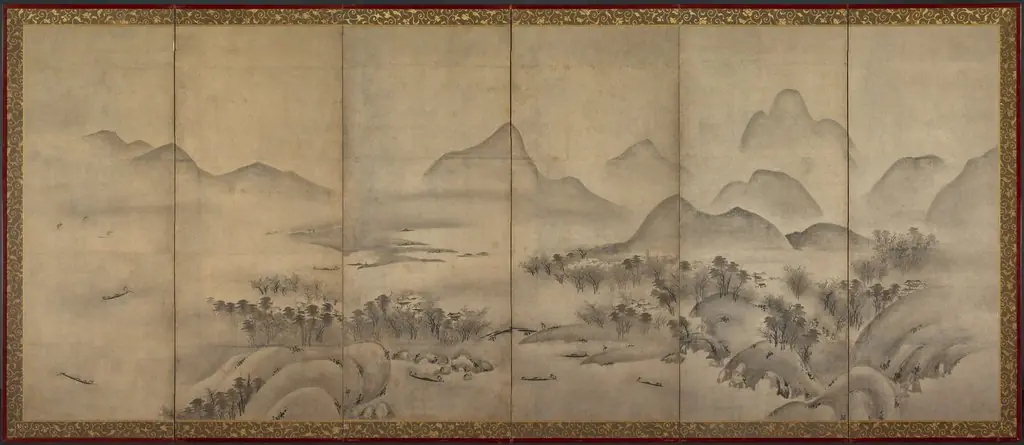
You see a dark river winding past hills, a fishing hut glowing pink, and a pale moon over misty temples.
You see a dark river winding past hills, a fishing hut glowing pink, and a pale moon over misty temples.
This painting is one of a pair meant to be read right to left, like a scroll. It borrows scenes from an old Chinese poem about eight famous views—but only shows four. The artist skips the rest, letting the empty space tell the story.
To see more quiet night scenes like this, look up *Japan, Muromachi period (1392–1573)*.
Overview
The work is an unsigned, unsealed painting that forms one half of a diptych intended to be viewed from right to left, echoing the format of a traditional scroll. It depicts a nocturnal river scene where a winding waterway passes gentle hills, a pink‑glowing fishing hut, and a pale moon hovering above mist‑shrouded temples.
Subject & Meaning
The composition draws on the classic theme of the Eight Views of the Xiao and Xiang Rivers, yet selects only four of the customary motifs. From right to left the viewer encounters a sunset over a fishing village, sails returning toward a distant shore, an autumn moon reflected on Lake Donting, and an evening bell sounding from a temple veiled in mist. By presenting these moments in sequence, the artist suggests a passage of time from dusk to night, guided by moonlight.
Technique & Style
Executed in ink and subtle color washes, the painting balances dark tonalities of the river and hills with delicate highlights that illuminate the hut and moon. The brushwork conveys atmospheric depth, especially in the mist surrounding the temple, while the pink glow of the hut offers a contrasting focal point within the subdued palette.
History & Provenance
Created during the Muromachi period (1392–1573) in Japan, the piece belongs to a pair designed to be read in tandem, mirroring the narrative flow of Chinese poetic cycles. Its unsigned status and lack of a seal suggest it may have been produced for a private collector rather than an official workshop.
Context
The painting reflects the broader East Asian tradition of integrating literary references into visual art, specifically the Eight Views motif that originated in Chinese poetry and was later adapted by Japanese artists. By selecting only half of the traditional scenes, the work invites contemplation of the unfilled spaces, emphasizing the poetic notion of what remains unsaid.
Artist & collection

 Domestic Scene
 Giacomo and Cardinal Marco, investing Andrea, Abbot of San Zeno, with his Benefice
 The Nymph of Fontainebleau
 Portrait of a Woman
 Madonna and Child with Saints in the Enclosed Garden
 Venus and Minerva
 Family Group of Four on Sofa
 Wall painting from Room H of the Villa of P. Fannius Synistor at Boscoreale
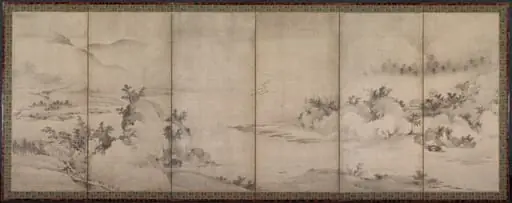 Landscape with Motifs from the Eight Views of Xiao-Xiang
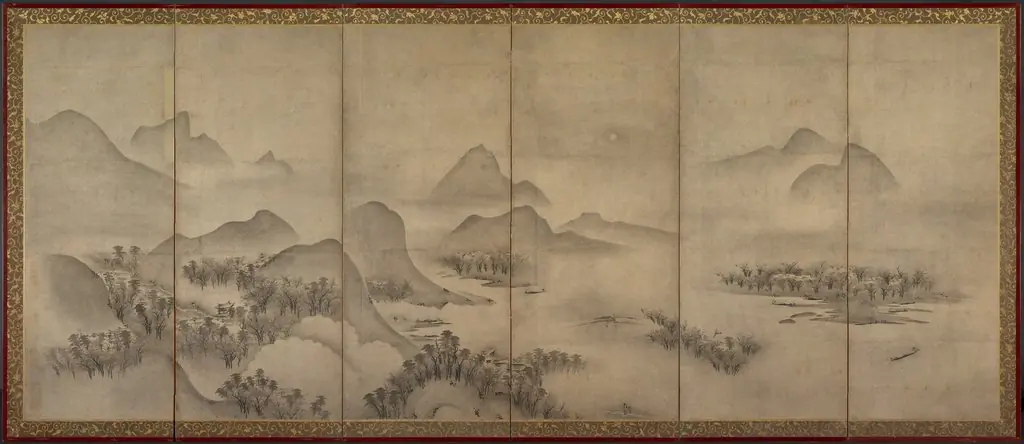 Moonlit Landscape (one of a pair)
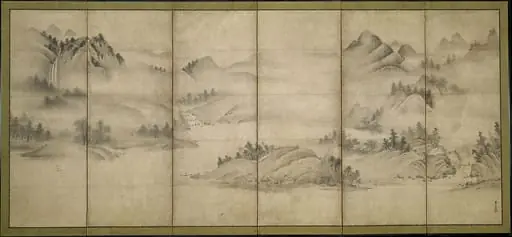 相阿弥筆 四季山水図 (瀟湘八景)|Landscape of the Four Seasons (Eight Views of the Xiao and Xiang Rivers)
 Moonlit Landscape
 Moonlit Landscape (one of a pair)
 Moonlit Landscape
 Landscape with Motifs from the Eight Views of Xiao-Xiang
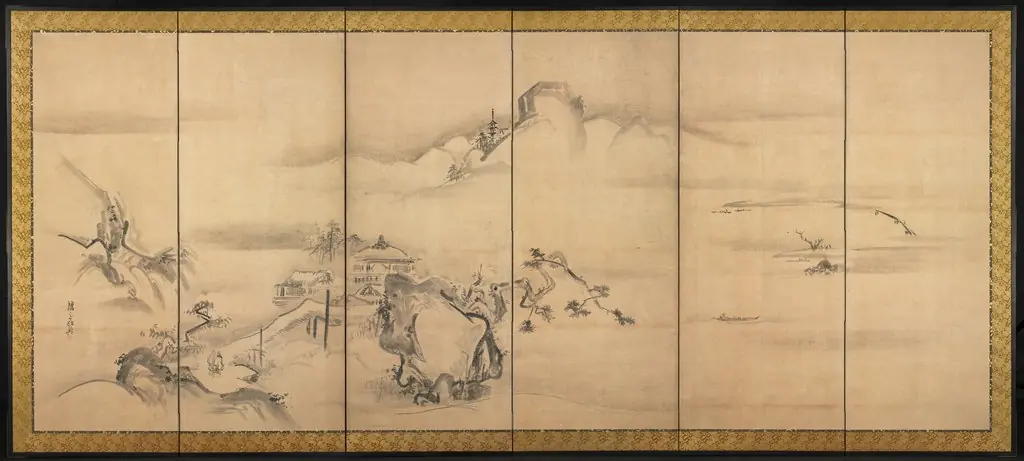 Eight Views of the Xiao and Xiang Rivers
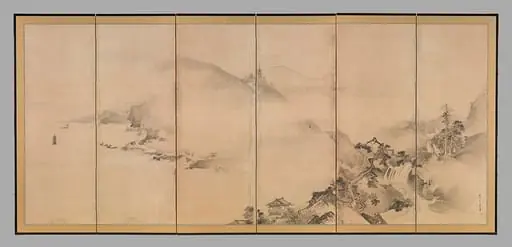 四季山水図屏風|Landscapes of the Four Seasons
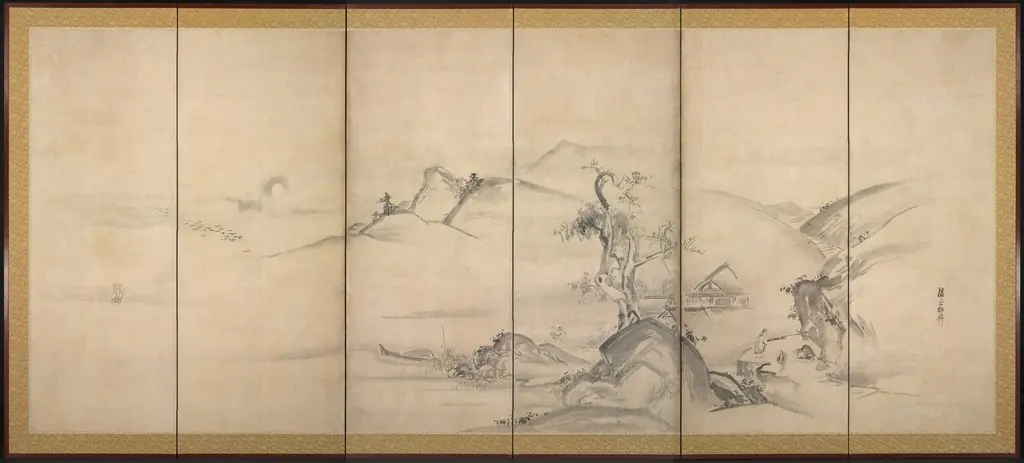 Eight Views of the Xiao and Xiang Rivers