Artwork
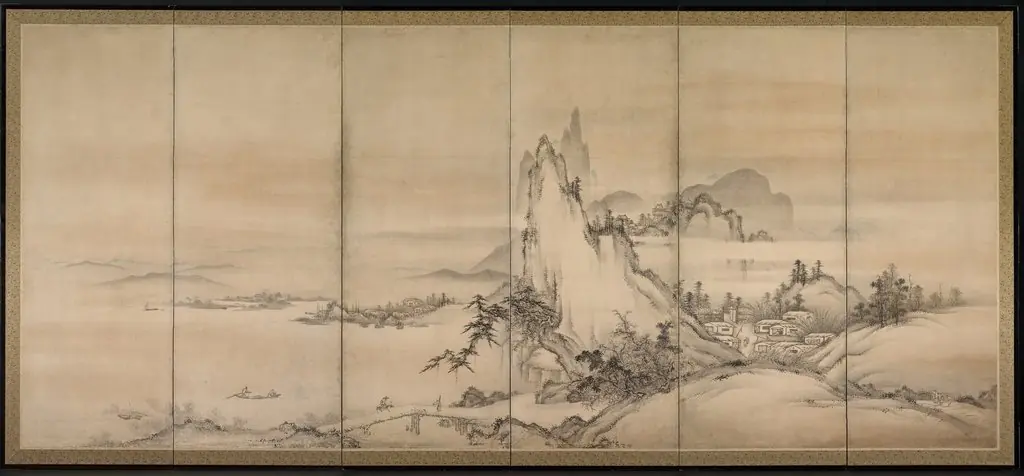
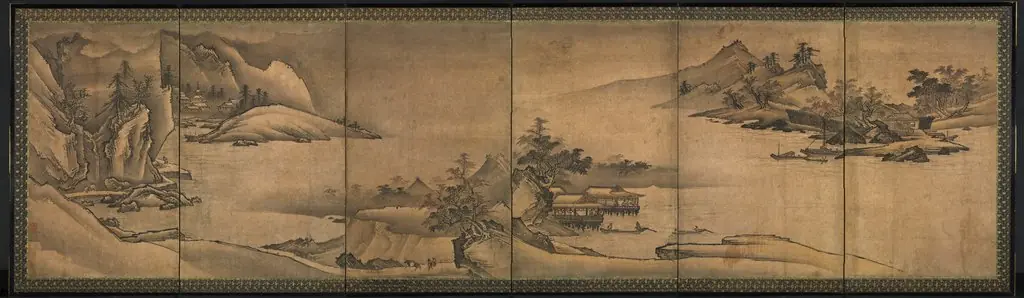
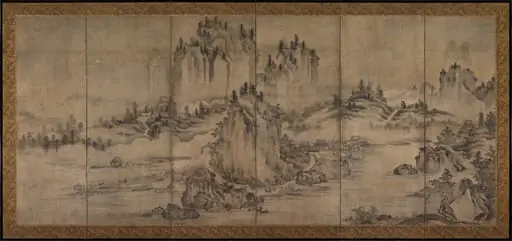
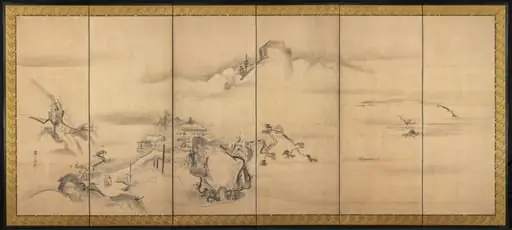
Landscape with Motifs from the Eight Views of Xiao-Xiang
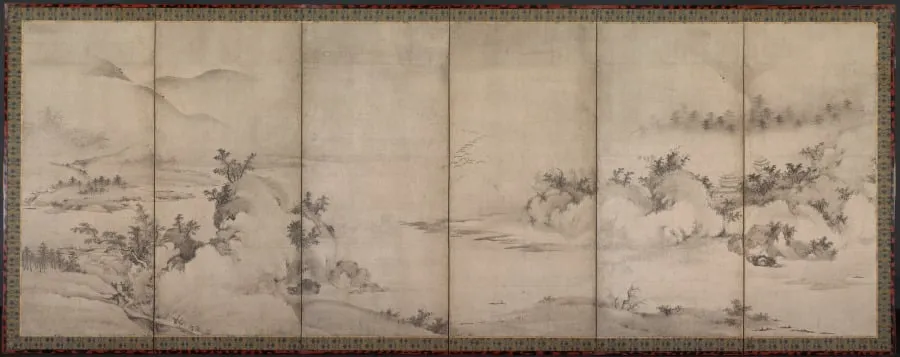
Landscape with Motifs from the Eight Views of Xiao-Xiang is an unspecified painting by the Renaissance artist Unknown. It dates from 1602 and is held in the collection of the Cleveland Museum of Art.
About this work
The artist used "crab-claw" trees—branches that curl like a crab’s legs—and tiny dots to show mist.
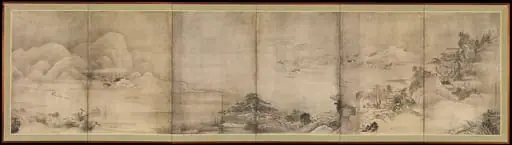
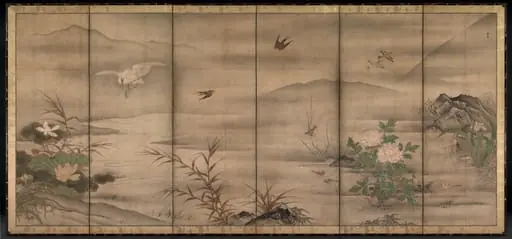
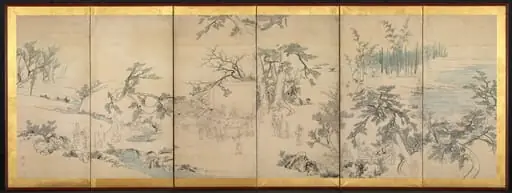
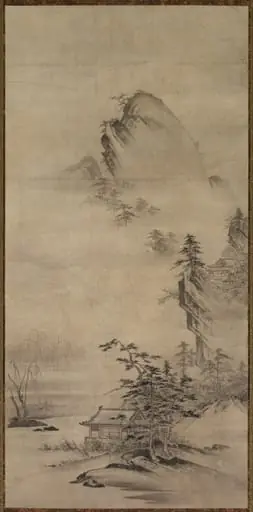
You see a folding screen with four scenes: a temple hidden in mist, geese landing on sand, a fishing village at sunset, and a mountain market clearing after rain.
This screen was made in Japan, but the scenes come from an old Chinese poem. The artist used "crab-claw" trees—branches that curl like a crab’s legs—and tiny dots to show mist. It’s part of a pair, but the other half is missing.
To see more art like this, look up *Japan, Momoyama period (1573–1615)*.
Overview
This folding screen is one half of a separated pair, depicting four scenes from the Eight Views of Xiao-Xiang, a theme originating in Chinese painting and poetry.
Subject & Meaning
The four scenes, meant to be read from right to left, are “Evening Bell from a Mist-Shrouded Temple,” “Wild Geese Descending to a Sandbar,” “Sunset Glow over a Fishing Village,” and “Mountain Market in Clearing Mist,” drawn from a traditional Chinese poetic theme.
Technique & Style
The artist employed a distinctive “crab-claw” style for the trees, characterized by curved branches, and used stippling to convey misty atmosphere, reflecting familiarity with Korean interpretations of Song dynasty Chinese painting styles.
History & Provenance
Created in Japan, this screen is part of a pair, with the other half now separated. It reflects the influence of Chinese themes and styles on Japanese art during this period.
Context
The artwork is associated with the Momoyama period (1573–1615) in Japan, a time when Chinese artistic themes and styles were being interpreted and adapted by Japanese artists.
Artist & collection

 Domestic Scene
 Giacomo and Cardinal Marco, investing Andrea, Abbot of San Zeno, with his Benefice
 The Nymph of Fontainebleau
 Portrait of a Woman
 Madonna and Child with Saints in the Enclosed Garden
 Venus and Minerva
 Family Group of Four on Sofa
 Wall painting from Room H of the Villa of P. Fannius Synistor at Boscoreale