Artwork
Landscape with a Distant Temple
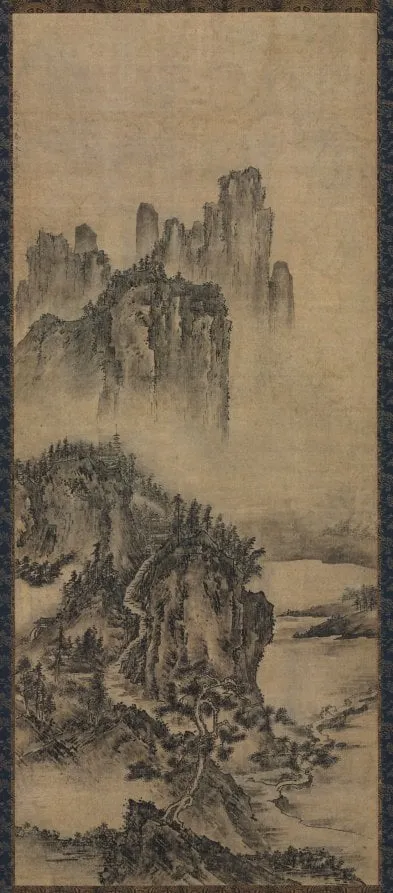
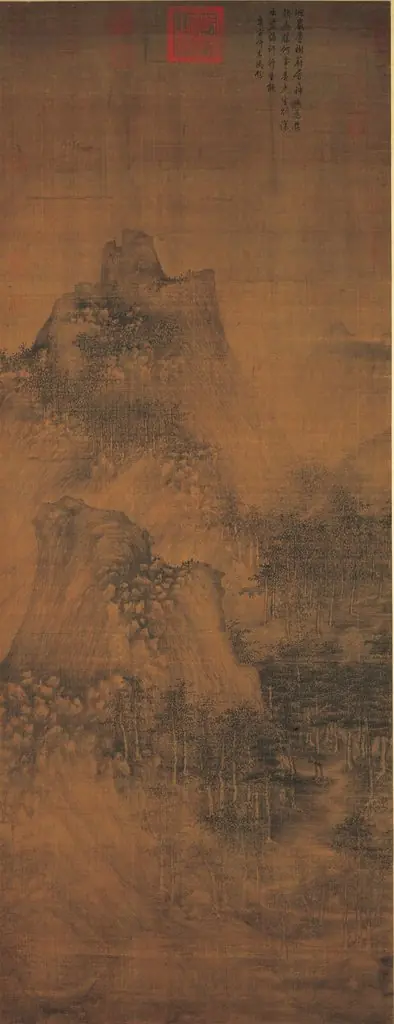
Landscape with a Distant Temple is an unspecified painting by the Baroque artist Unknown. It dates from 1604 and is held in the collection of the Cleveland Museum of Art. The work depicts a rugged mountainous landscape in which a winding path ascends through pine‑filled slopes toward a distant temple complex.
About this work
This painting was made in Japan during the Edo period, when artists often showed nature as a quiet, sacred place.
You see a tall, rocky mountain with a winding path leading to a temple tucked among pine trees. A river cuts through the valley below.
This painting was made in Japan during the Edo period, when artists often showed nature as a quiet, sacred place. The temple at the top isn’t just a building—it’s the heart of the scene, meant to feel far away and peaceful. The artist didn’t sign it, so we don’t know who made it, but the style was common for travelers’ sketches.
To see more like this, look up *subject: japan, edo period (1615–1868)*.
Overview
The work depicts a rugged mountainous landscape in which a winding path ascends through pine‑filled slopes toward a distant temple complex. A river threads the valley below, while towering crags dominate the horizon, creating a serene yet dramatic setting typical of Japanese ink landscapes of the Edo era.
Subject & Meaning
At the focal point stands a multi‑tiered pagoda, the most sacred element in Buddhist temple architecture, positioned at the highest point of the compound. The composition suggests a pilgrim’s journey toward spiritual refuge, emphasizing the temple’s remote tranquility within the natural world.
Technique & Style
Executed in monochrome ink on paper, the painting employs delicate brushwork to render pine needles, rock textures, and water flow. The linear, winding trail and the layered perspective reflect the conventions of Edo‑period travel sketches, where ink washes convey atmospheric depth without color.
History & Provenance
Created in Japan during the Edo period (1615–1868), the piece remains unsigned, leaving the artist unidentified. Its provenance traces to collections of travel‑related artworks, a genre popular among literati and itinerant monks who recorded sacred sites in sketchbook form.
Context
The image aligns with a broader East Asian tradition of idealizing religious sanctuaries within untamed scenery. In Edo Japan, such depictions reinforced the view of nature as a quiet, contemplative space, offering a visual counterpart to contemporary Buddhist devotion and the era’s appreciation of landscape as moral instruction.
Artist & collection

 Domestic Scene
 Giacomo and Cardinal Marco, investing Andrea, Abbot of San Zeno, with his Benefice
 The Nymph of Fontainebleau
 Portrait of a Woman
 Madonna and Child with Saints in the Enclosed Garden
 Venus and Minerva
 Family Group of Four on Sofa
 Wall painting from Room H of the Villa of P. Fannius Synistor at Boscoreale
 明 佚名 倣王紱 秋窗讀書圖 軸|Landscape
 Solitary Colors of the Autumn Woods
 Winter Landscape
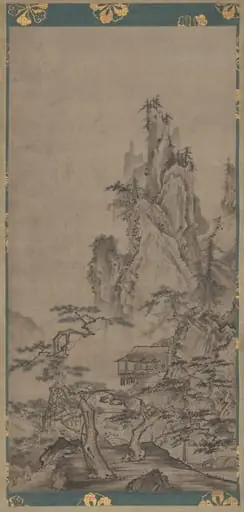 Scholar's Visit
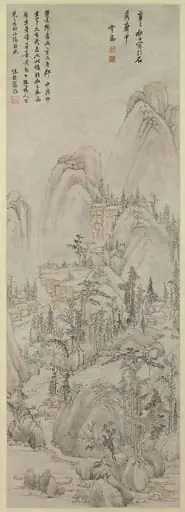 明 莫是龍 倣黃公望山水圖 軸|Landscape in the style of Huang Gongwang
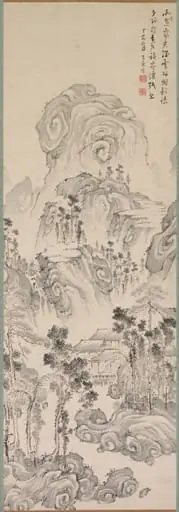 Landscape with Gentle Peaks
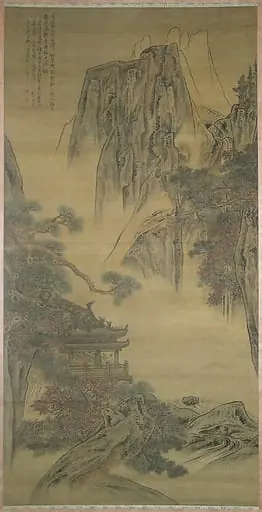 清 李寅 高閣觀瀑圖 軸|Viewing a waterfall from a mountain pavilion
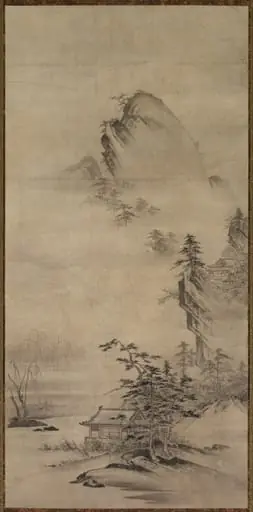 Landscape with a Pavilion
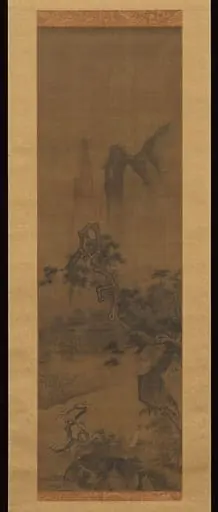 南宋 佚名 賞梅圖 軸|Scholar admiring plum blossoms
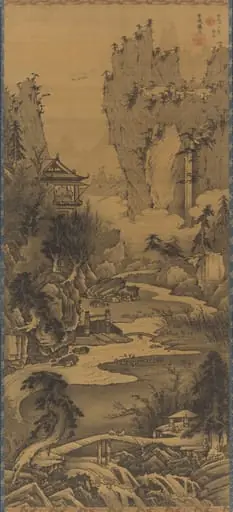 Orchid Pavilion Gathering
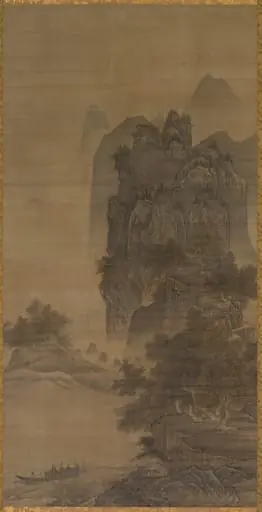 Sunset Glow over a Fishing Village, from Eight Views of Xiao-Xiang
 Layered Peaks and Dense Forests