Artwork
Solitary Colors of the Autumn Woods
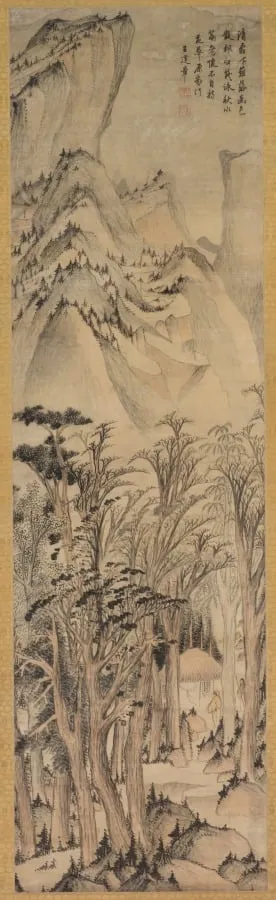
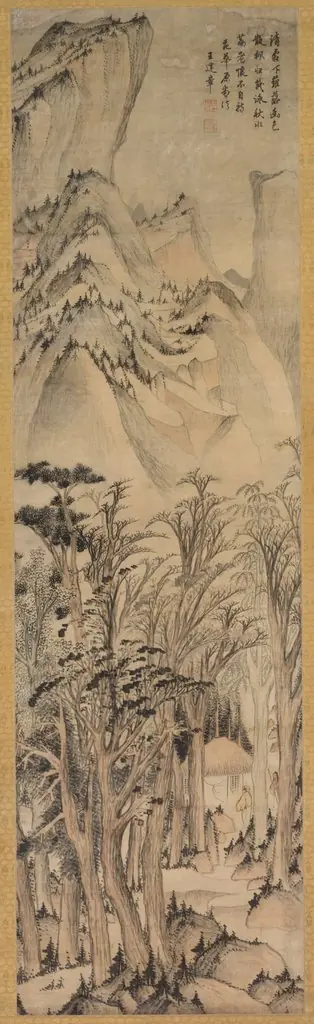
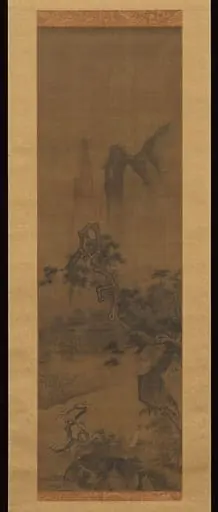
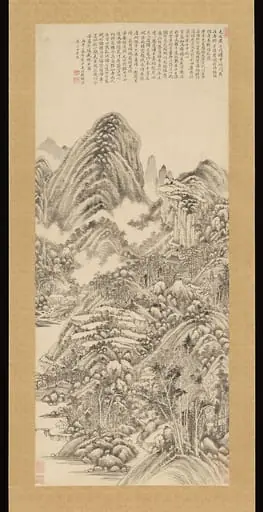
Solitary Colors of the Autumn Woods is an unspecified painting by the Baroque artist Wang Jianzhang. It dates from 1604 and is held in the collection of the Cleveland Museum of Art. This ink painting depicts two scholars standing beside a rustic thatched hut, surrounded by a forest in early autumn.
About this work
Overview
A poem inscribed by the artist, Wang Jianzhang, ties the visual to Daoist philosophy, deepening its emotional resonance beyond mere landscape.
This ink painting depicts two scholars standing beside a rustic thatched hut, surrounded by a forest in early autumn. Bare branches and scattered maple leaves suggest seasonal transition. The scene is quiet and contemplative, framed by dense foliage that isolates the figures. A poem inscribed by the artist, Wang Jianzhang, ties the visual to Daoist philosophy, deepening its emotional resonance beyond mere landscape.
Subject & Meaning
The two figures, likely literati, appear withdrawn, their posture reflecting introspection rather than interaction. The reference to Zhuangzi’s 'Autumn Water'—a text on adapting to change without losing one’s essence—suggests a personal allegory. Wang, living under Qing rule after the Ming collapse, may have used the poem to express the tension between outward compliance and inner fidelity to cultural identity, using nature as a metaphor for resilience.
Technique & Style
Executed in ink on paper, the painting employs subtle gradations of gray and muted tones to evoke atmospheric depth. Brushwork is restrained, with delicate lines defining tree trunks and sparse foliage. The composition avoids dramatic contrast, favoring quiet harmony between figures and environment. Inscribed poetry is integrated as a visual and conceptual element, not merely an annotation, reinforcing the literati tradition of uniting verse and image.
History & Provenance
Wang Jianzhang, active during the early Qing dynasty, was among many Ming loyalists who navigated political upheaval by retreating into scholarly pursuits. This work likely dates to his later years, when public service under the new regime required compromise. The painting’s survival suggests it remained in private hands, possibly within scholarly circles that valued coded expressions of cultural continuity over overt political statements.
Context
In the decades following the Ming fall, many Chinese scholars faced pressure to serve the Manchu-led Qing administration. Public allegiance often conflicted with private loyalty to Confucian and Daoist ideals. Art became a medium for veiled resistance: nature scenes, classical allusions, and poetic inscriptions allowed artists to preserve cultural memory without direct confrontation, embedding dissent in aesthetic restraint.
Legacy
Wang’s work exemplifies how literati painting served as a vessel for ethical and philosophical reflection during times of political fracture. His fusion of Zhuangzi’s themes with autumnal imagery influenced later artists seeking to express personal integrity through indirect means. The painting endures not as a record of events, but as a quiet testament to the persistence of cultural identity under duress.
Artist & collection