Artwork
Landscape with a town in the middle distance
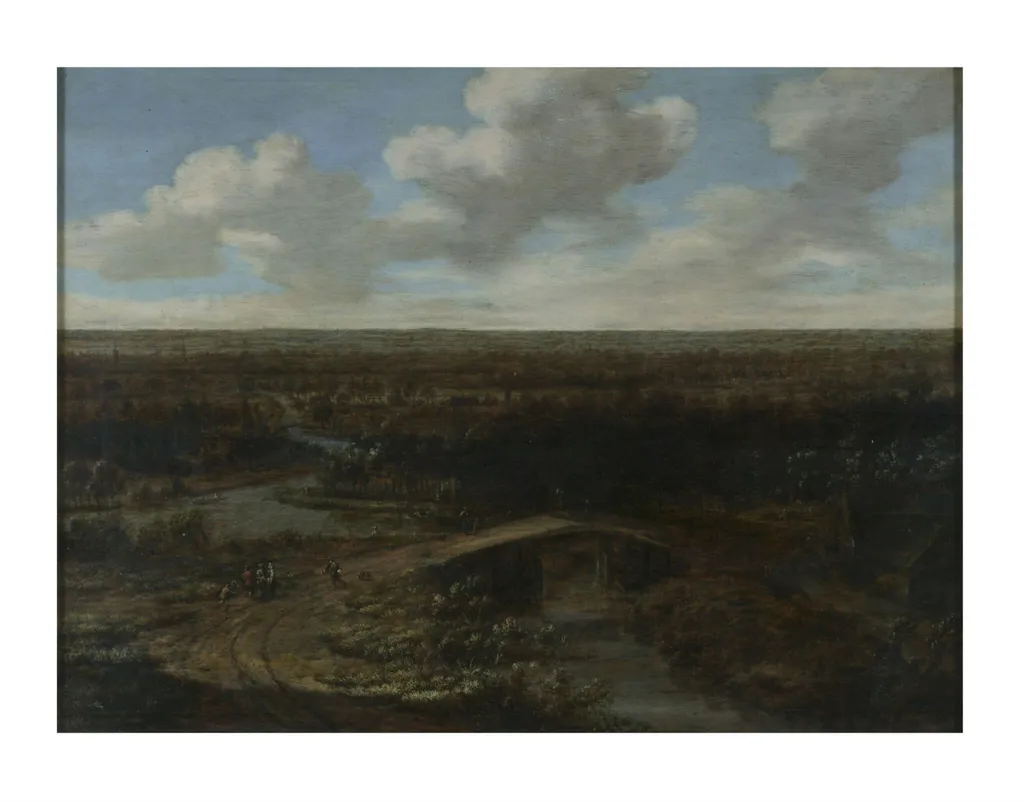
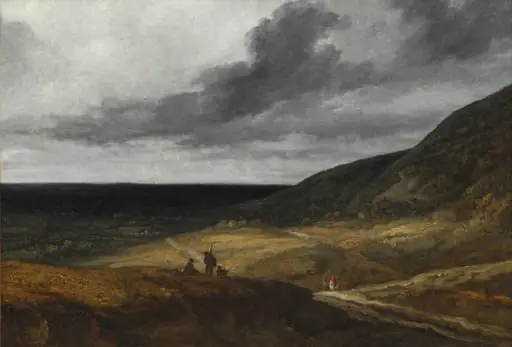
Landscape with a town in the middle distance is an oil painting by the Dutch Golden Age artist Unknown. It dates from 1650 and is held in the collection of the Victoria and Albert Museum. The work depicts a broad landscape in which a town rises in the middle distance, rendered in oil on canvas.
About this work
You see a landscape with a town in the middle distance, painted in oil.
The painting's style is similar to Dutch landscapes from the 17th century.
It's comparable to work by artists like Jacob van Ruisdael, but the painting is too damaged to confirm attribution.
To learn more about similar techniques used in this painting, look up the technique of chiaroscuro.
Overview
The work depicts a broad landscape in which a town rises in the middle distance, rendered in oil on canvas. Its overall composition follows conventions familiar to Dutch landscape painting of the 1600s, emphasizing a wide sky, a foreground that recedes toward a populated horizon, and a balanced distribution of natural and built elements.
Subject & Meaning
The central settlement functions as a focal point that anchors the viewer’s eye within an otherwise expansive rural scene. By placing human habitation amid open land, the painting reflects a common seventeenth‑century Dutch interest in the relationship between nature and society, suggesting both the tranquility of the countryside and the modest scale of urban life.
Technique & Style
The artist employed oil pigments to achieve a range of tonal values, with particular attention to light contrasts in the lower‑left foreground. These chiaroscuro effects echo the dramatic illumination found in the later works of Jacob van Ruisdael, distinguishing the piece from earlier, more uniformly toned Dutch landscapes.
History & Provenance
Originally listed in an 1893 museum catalogue as a work by Jacob van Ruisdael, the painting’s attribution has been questioned. In a 1973 foreign paintings catalogue, Michael Kauffmann noted extensive rubbing and overpainting that rendered definitive identification impossible, leaving its authorship uncertain despite its stylistic affinities.
Context
The composition aligns with the broader output of seventeenth‑century Dutch artists who portrayed idealized yet recognizable scenery. While the painting’s condition obscures many original details, the surviving foreground elements retain characteristics typical of the period’s mature landscape tradition.
Artist & collection

 Domestic Scene
 Giacomo and Cardinal Marco, investing Andrea, Abbot of San Zeno, with his Benefice
 The Nymph of Fontainebleau
 Portrait of a Woman
 Madonna and Child with Saints in the Enclosed Garden
 Venus and Minerva
 Family Group of Four on Sofa
 Wall painting from Room H of the Villa of P. Fannius Synistor at Boscoreale
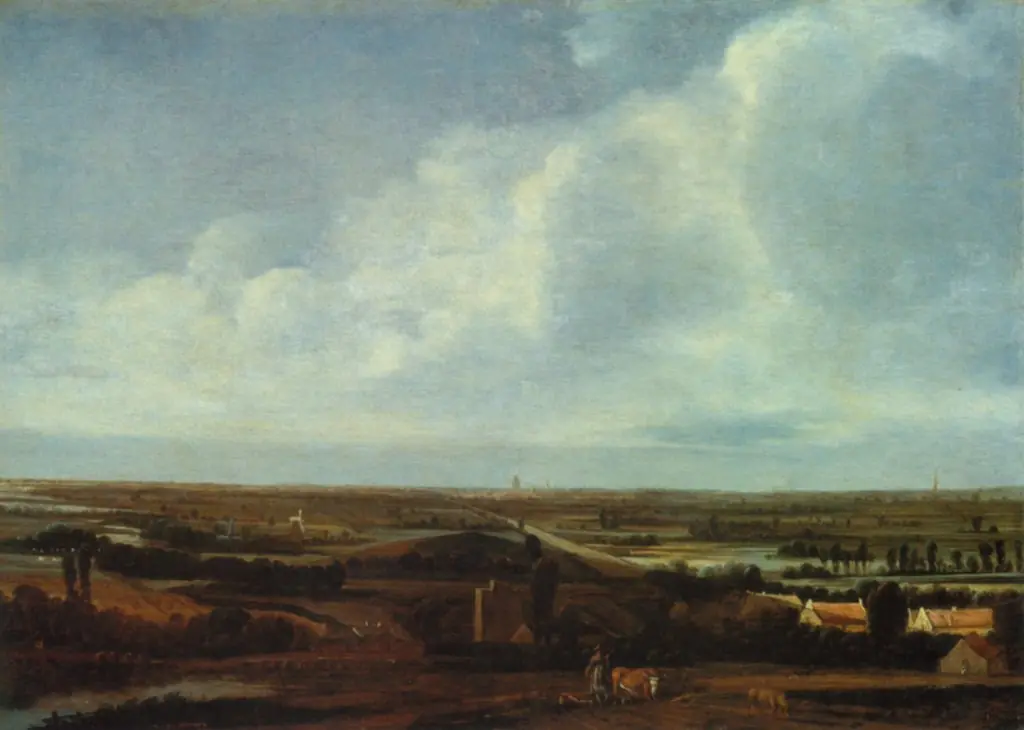 Flachlandschaft mit Stadt in der Ferne
 Swedish landscape
 Landscape with an Avenue of Trees
 Panoramic Landscape with Tobias and the Angel
 River landscape
 Panoramic Landscape with a Village
 Evening Landscape
 Flachlandschaft
 A Panoramic Landscape
 Dune Landscape with a Farmstead
 Dunes and bleaching fields
 Landscape Near Paris