Artwork
Landscape with the Temptation of Saint Anthony Abbot
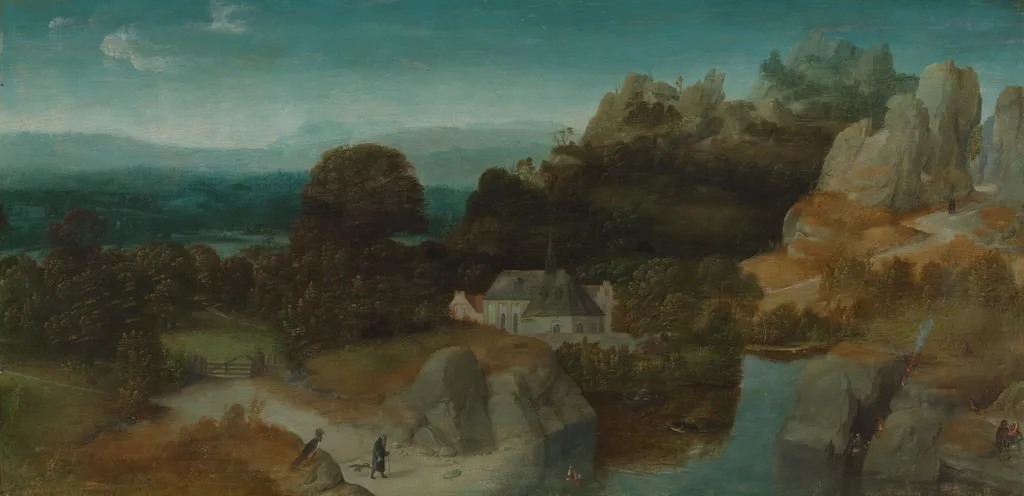
Landscape with the Temptation of Saint Anthony Abbot is an unspecified painting by the Northern Renaissance artist Unknown. It dates from 1510 and is held in the collection of the Rijksmuseum.
About this work
Overview
Joachim Patinir’s Landscape with the Temptation of Saint Anthony Abbot presents a sweeping, imaginary valley in which a diminutive figure of the hermit Saint Anthony moves toward a lake. The composition is dominated by expansive mountains, rivers and sky, while the saint’s narrative action occupies only a small portion of the picture plane.
Subject & Meaning
The work depicts Saint Anthony on a pilgrimage to draw water, a moment drawn from his hagiography. As he proceeds, grotesque, misshapen creatures emerge from rocks and foliage, symbolising the temptations and demonic assaults traditionally associated with the saint’s ascetic trials.
Technique & Style
Patinir employs a panoramic “world landscape” format, arranging foreground, middle ground and distant scenery in layered perspective. The tiny, detailed figure of the saint is set against a broad, atmospheric landscape rendered with delicate gradations of tone, emphasizing the natural world as the primary visual focus rather than a mere backdrop.
Context
Created in the early sixteenth century, the painting reflects the Northern Renaissance’s growing interest in topographical imagination and the theological motif of the hermit’s spiritual struggle. Patinir’s approach helped establish landscape as an independent genre, influencing subsequent artists who treated nature as a central element of composition.
Artist & collection

 Domestic Scene
 Giacomo and Cardinal Marco, investing Andrea, Abbot of San Zeno, with his Benefice
 The Nymph of Fontainebleau
 Portrait of a Woman
 Madonna and Child with Saints in the Enclosed Garden
 Venus and Minerva
 Family Group of Four on Sofa
 Wall painting from Room H of the Villa of P. Fannius Synistor at Boscoreale
 Landscape with Venus and Adonis
 River Landscape with the Baptism of Christ
 Landscape with Procne and Philomela
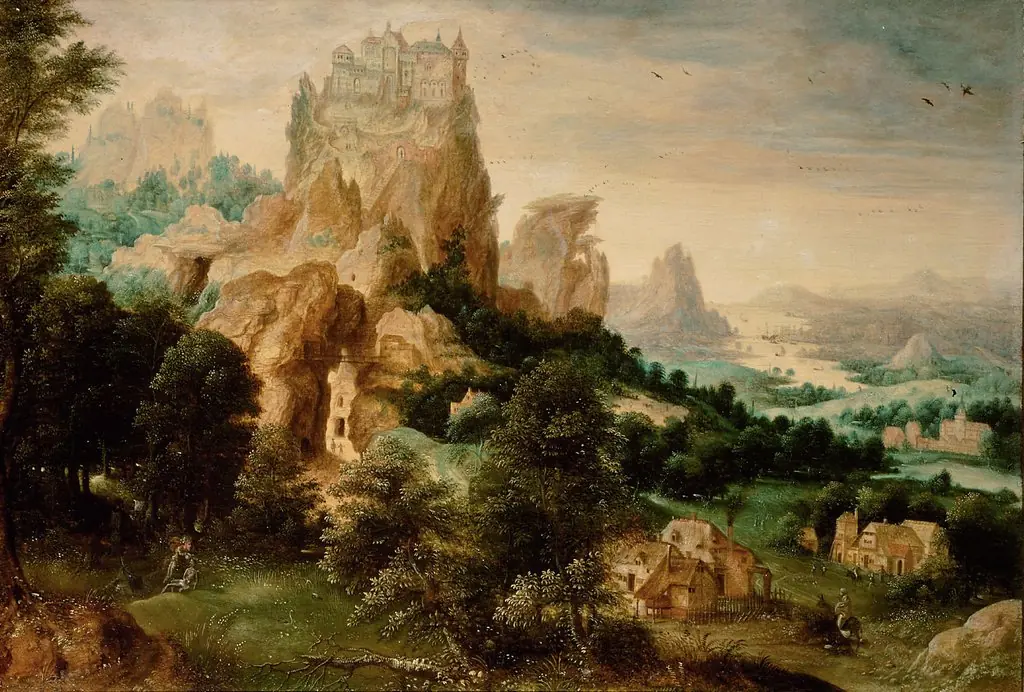 Hilly landscape with the story of the Good Samritan (Luke 10:25-37)
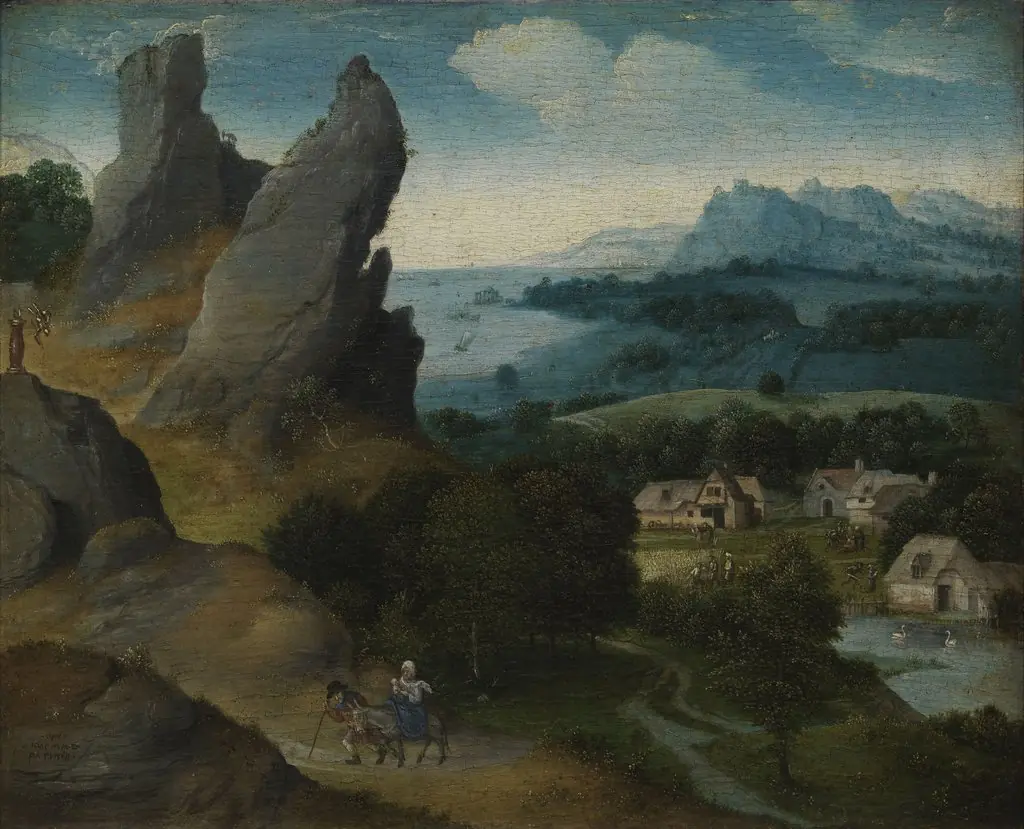 Landscape with the Flight into Egypt
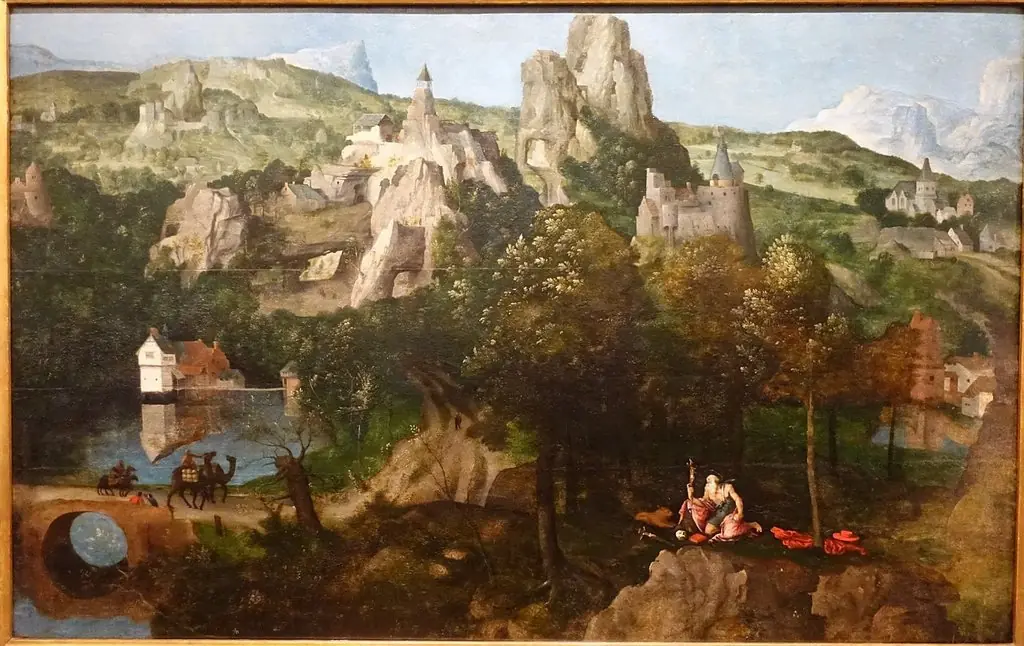 São Jerónimo em Adoração
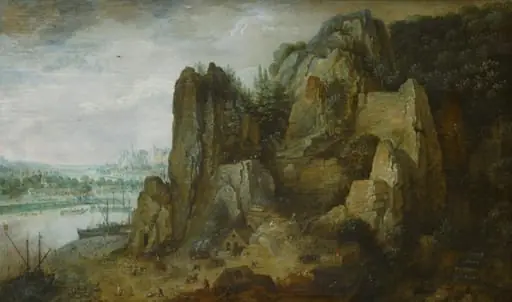 View of Rocks, River Landscape
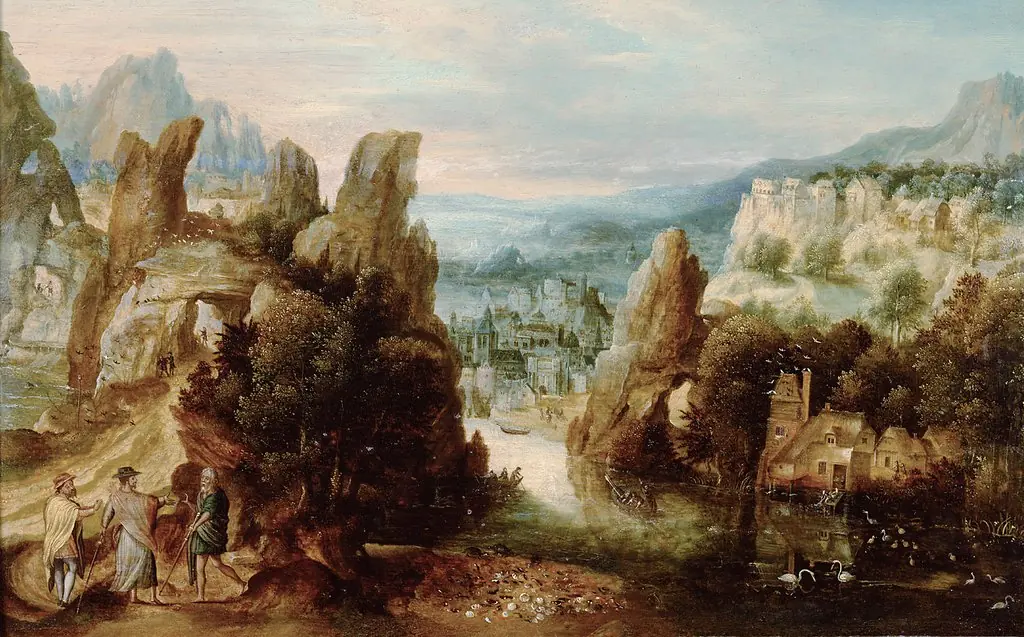 Landschaft mit dem Gang nach Emmaus
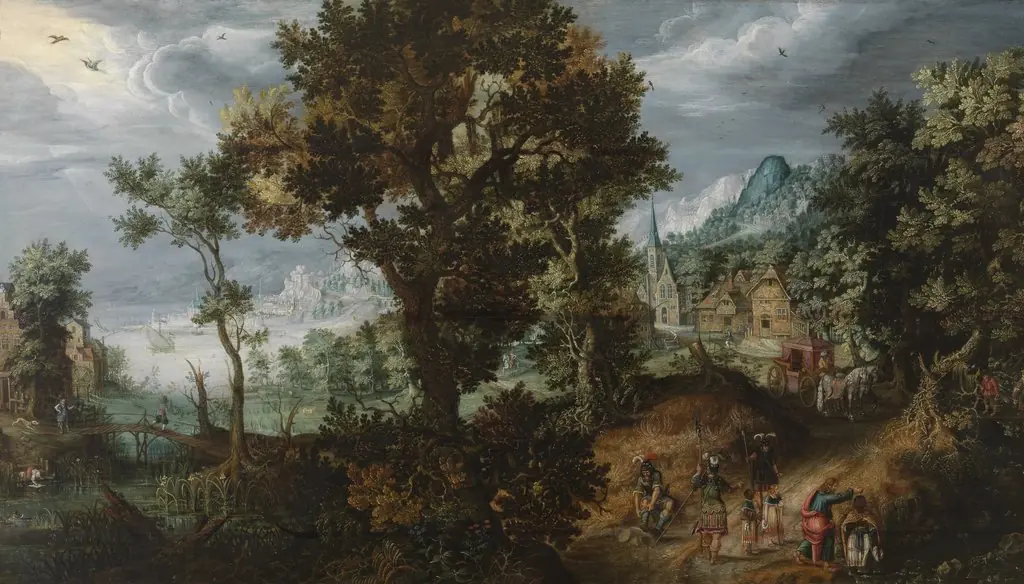 The Baptism of the Moorish Chamberlain
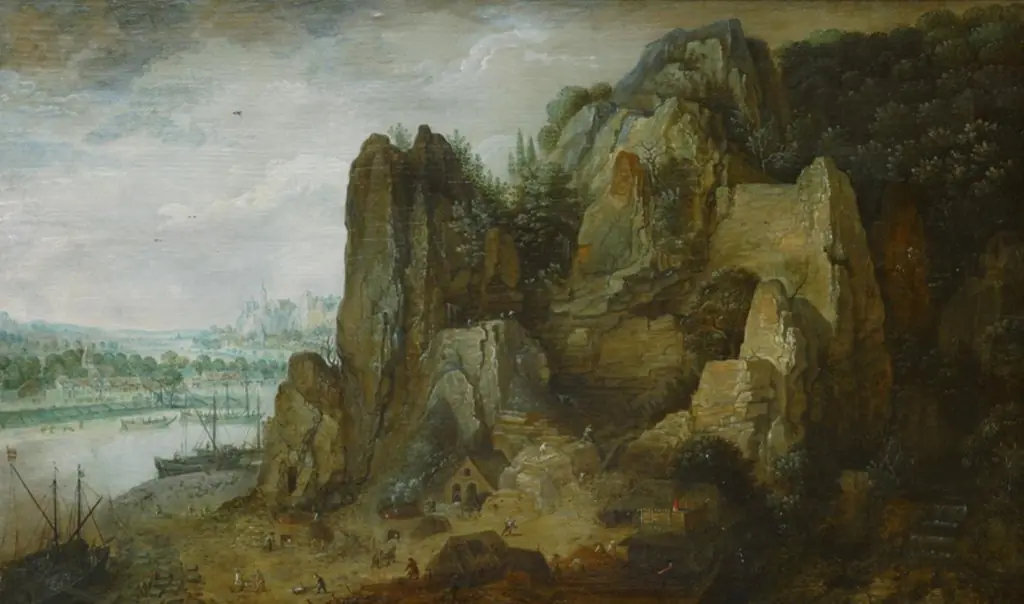 View of Rocks, River Landscape