Artwork
Landscape with Venus and Adonis
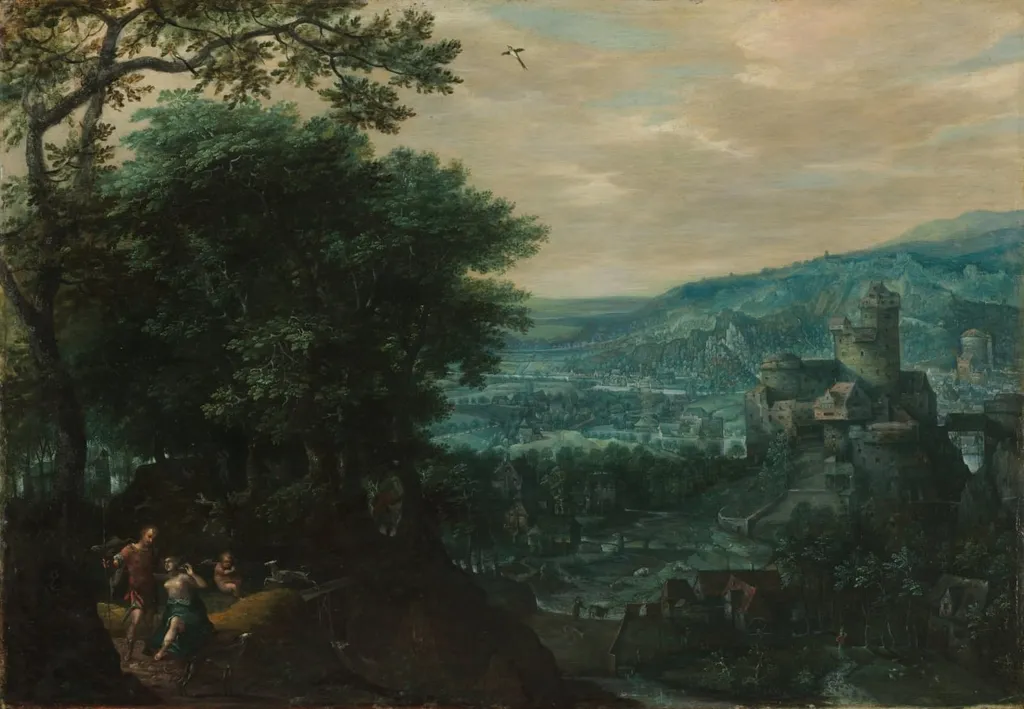
Landscape with Venus and Adonis is an unspecified painting by the Northern Renaissance artist Gillis van Coninxloo. It dates from 1584 and is held in the collection of the Cleveland Museum of Art.
About this work
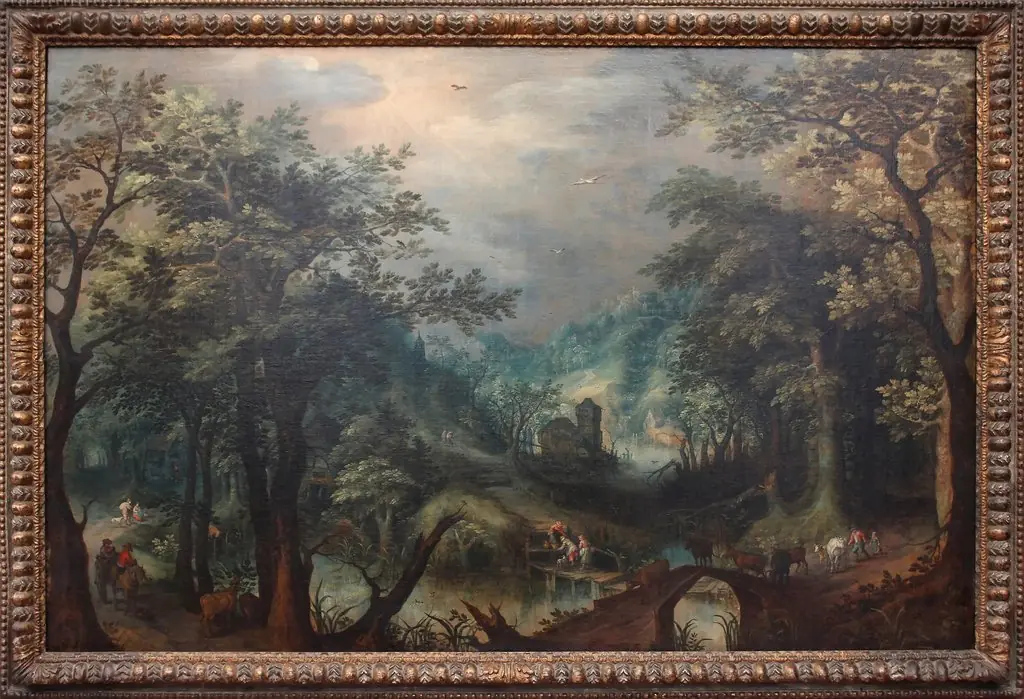
In this 1580s painting, a lush forest wraps around Venus and Adonis. Venus reaches for Adonis while deer graze beside them. A boar lurks near their feet—future danger.
Van Coninxloo sets this Greek myth in a real German-looking forest. He painted woods as a new subject, not just a backdrop. Most art showed gods in temples, not trees.
Look up Gillis van Coninxloo (Netherlandish, 1544–1607) next.
Overview
Painted in the 1580s by Gillis van Coninxloo, this work depicts the myth of Venus and Adonis within a dense, naturalistic forest rather than a classical setting. Unlike contemporaries who placed mythological figures in idealized ruins or temples, van Coninxloo situates the scene amid towering trees and undergrowth, signaling a shift toward landscape as a primary subject rather than mere background.
Subject & Meaning
Venus, attempting to restrain her mortal lover Adonis, reaches toward him as he prepares to hunt. At their feet, a boar lurks—foreshadowing his fate. The scene captures a moment of tender urgency, where divine concern meets mortal resolve. The presence of grazing deer adds stillness, contrasting with the impending violence, reinforcing the myth’s tragic inevitability.
Technique & Style
Van Coninxloo employs fine, detailed brushwork to render foliage with botanical precision, creating depth through layered greens and subtle light shifts. The figures are small yet carefully rendered, integrated into the environment rather than dominating it. This approach prioritizes atmospheric cohesion over narrative grandeur, emphasizing the forest’s immersive presence.
History & Provenance
The work’s early date places it among the first to treat forests as central, not auxiliary, elements in mythological painting.
Created during the artist’s mature period in the Northern Netherlands, the painting reflects van Coninxloo’s growing focus on woodland scenes after his move to Antwerp. It aligns with a broader trend among Netherlandish painters to elevate natural landscapes as worthy subjects. The work’s early date places it among the first to treat forests as central, not auxiliary, elements in mythological painting.
Context
In late 16th-century Europe, mythological paintings typically favored classical architecture and open skies. Van Coninxloo’s choice to embed Venus and Adonis in a Germanic woodland was unconventional. His approach drew from Northern traditions of detailed nature study, diverging from Italianate ideals and anticipating the forest landscapes that would dominate Dutch and Flemish art in the following century.
Legacy
This painting contributed to the legitimization of the forest as a serious subject in European art. Van Coninxloo’s treatment influenced later landscape specialists, helping transition mythological scenes from staged tableaux to immersive natural environments. His work laid groundwork for the fully realized wilderness paintings of the 17th century, where nature itself became the narrative.
Artist & collection
Artist
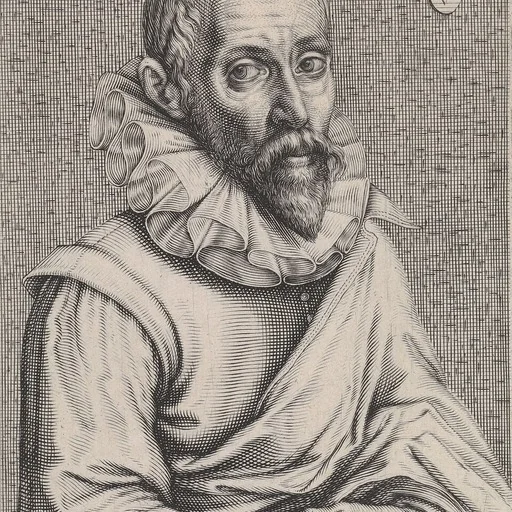
Gillis van Coninxloo (now also referred to as Gillis van Coninxloo II and previously referred to as Gillis van Coninxloo III) (24 January 1544 – January 1607) was a Flemish painter of landscapes.

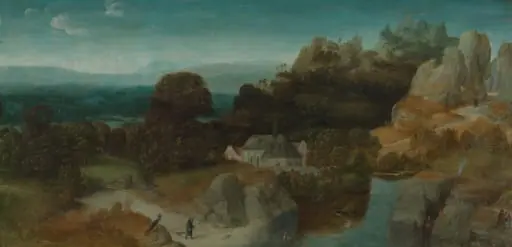 Landscape with the Temptation of Saint Anthony Abbot
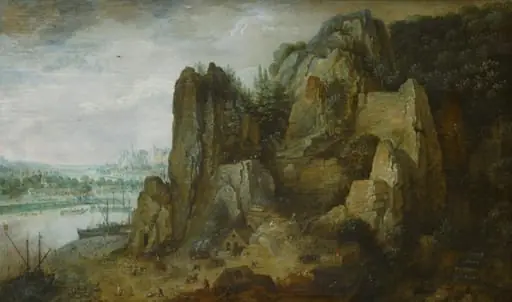 View of Rocks, River Landscape
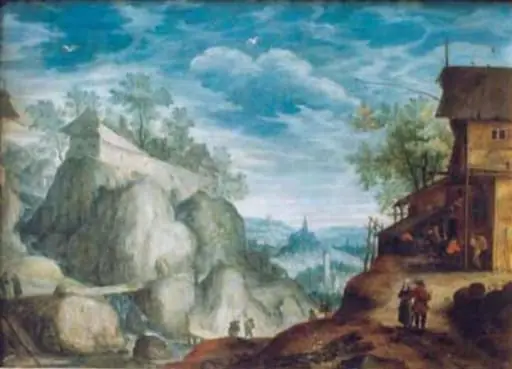 Peisaj muntos cu cârciumă
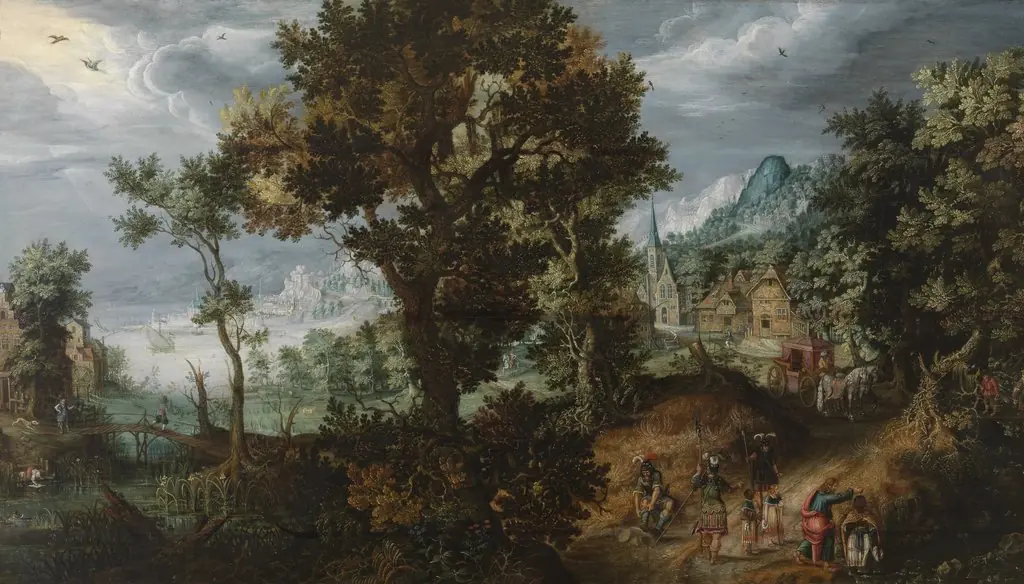 The Baptism of the Moorish Chamberlain
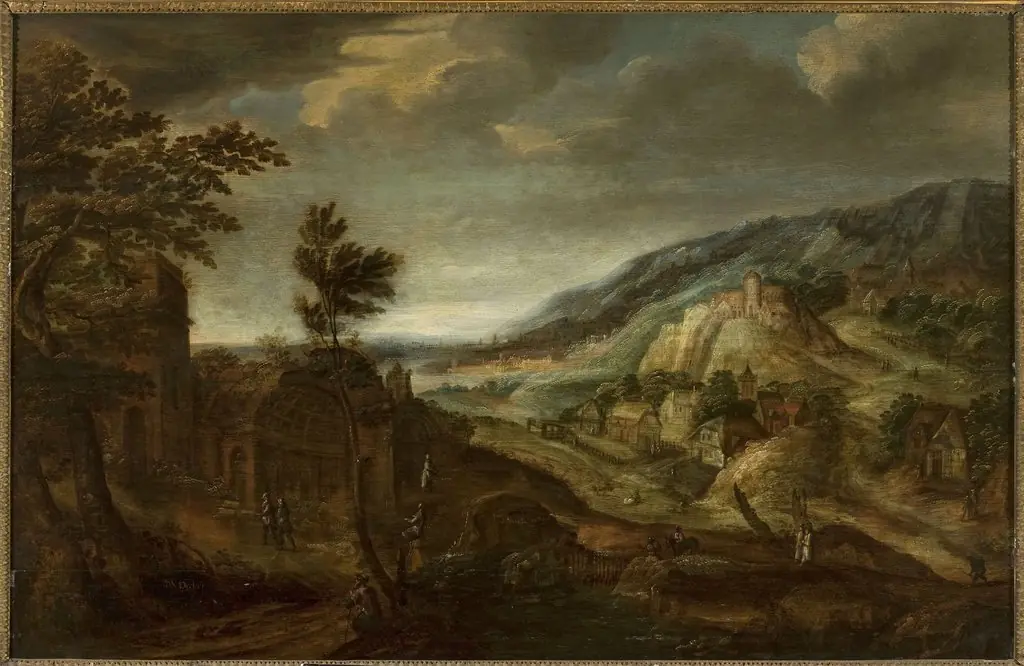 Mountain landscape
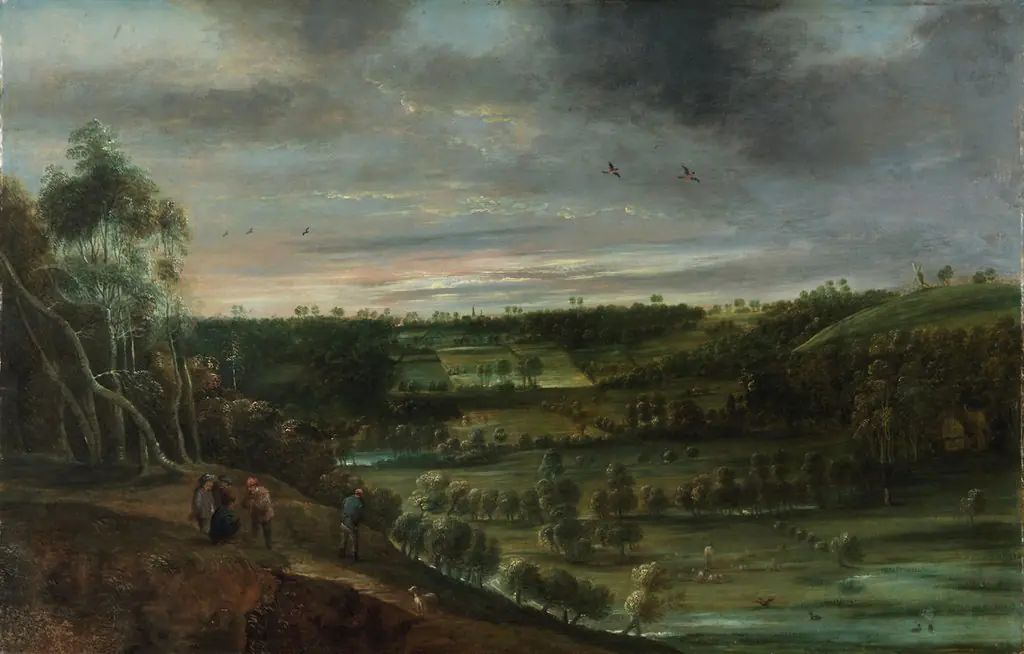 Evening Landscape
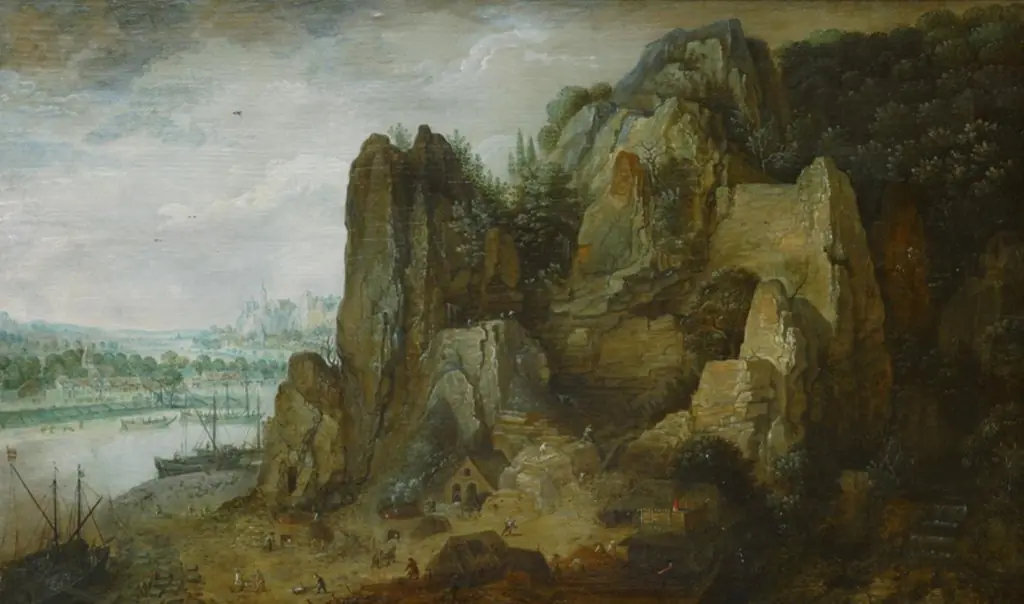 View of Rocks, River Landscape
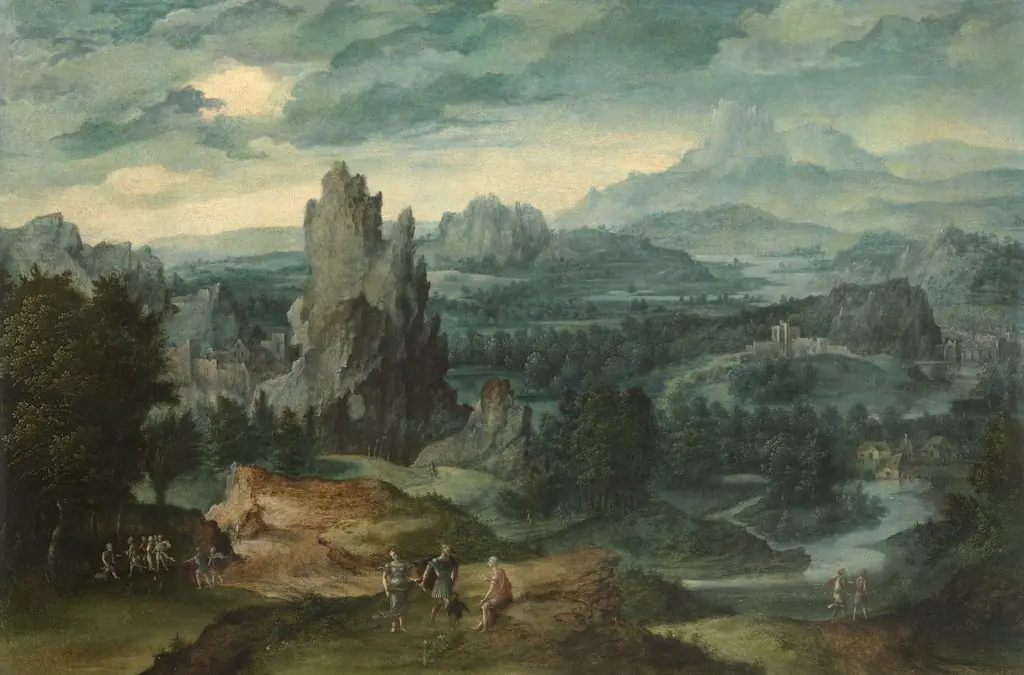 Landscape with Procne and Philomela
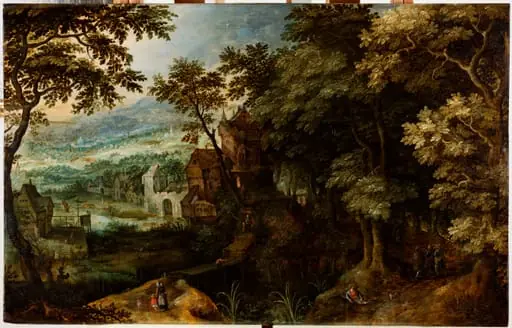 Waldlandschaft mit dem Gang nach Emmaus
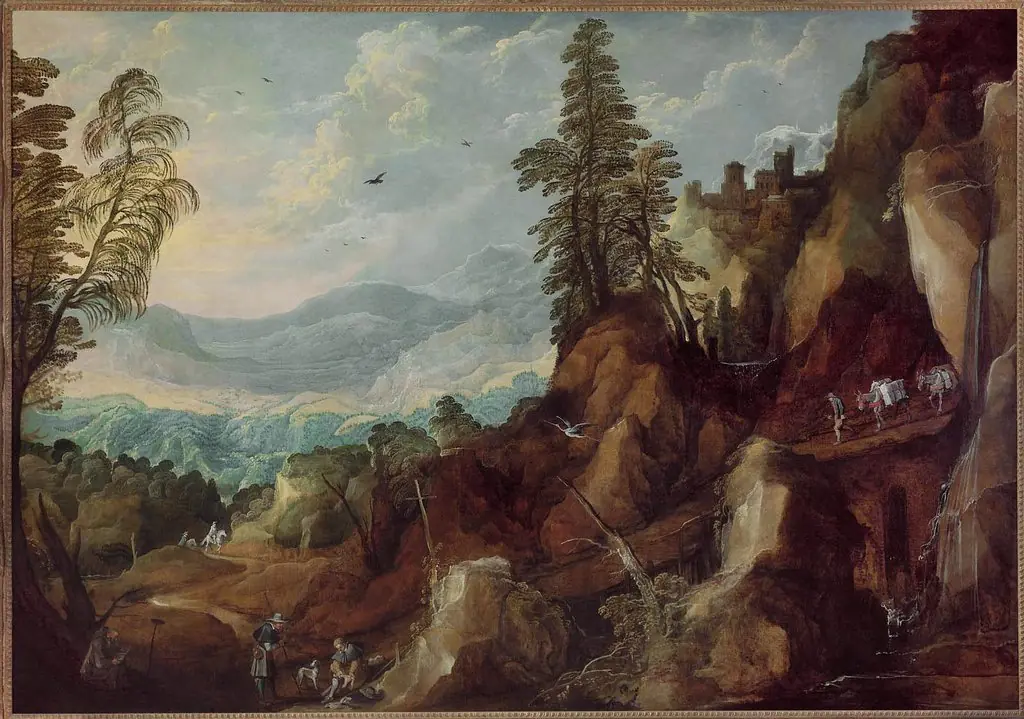 Mountain Landscape with Travelers
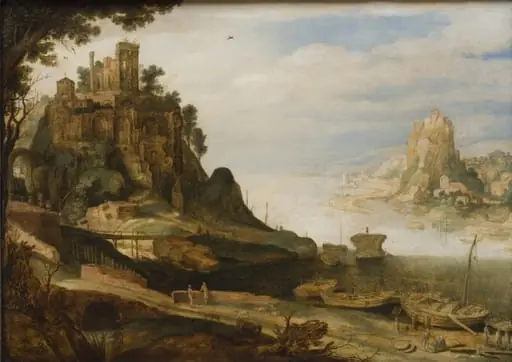 Coast Landscape with the so-called Temple of Sibyl at Tivoli