Artwork
Laughing Thrush
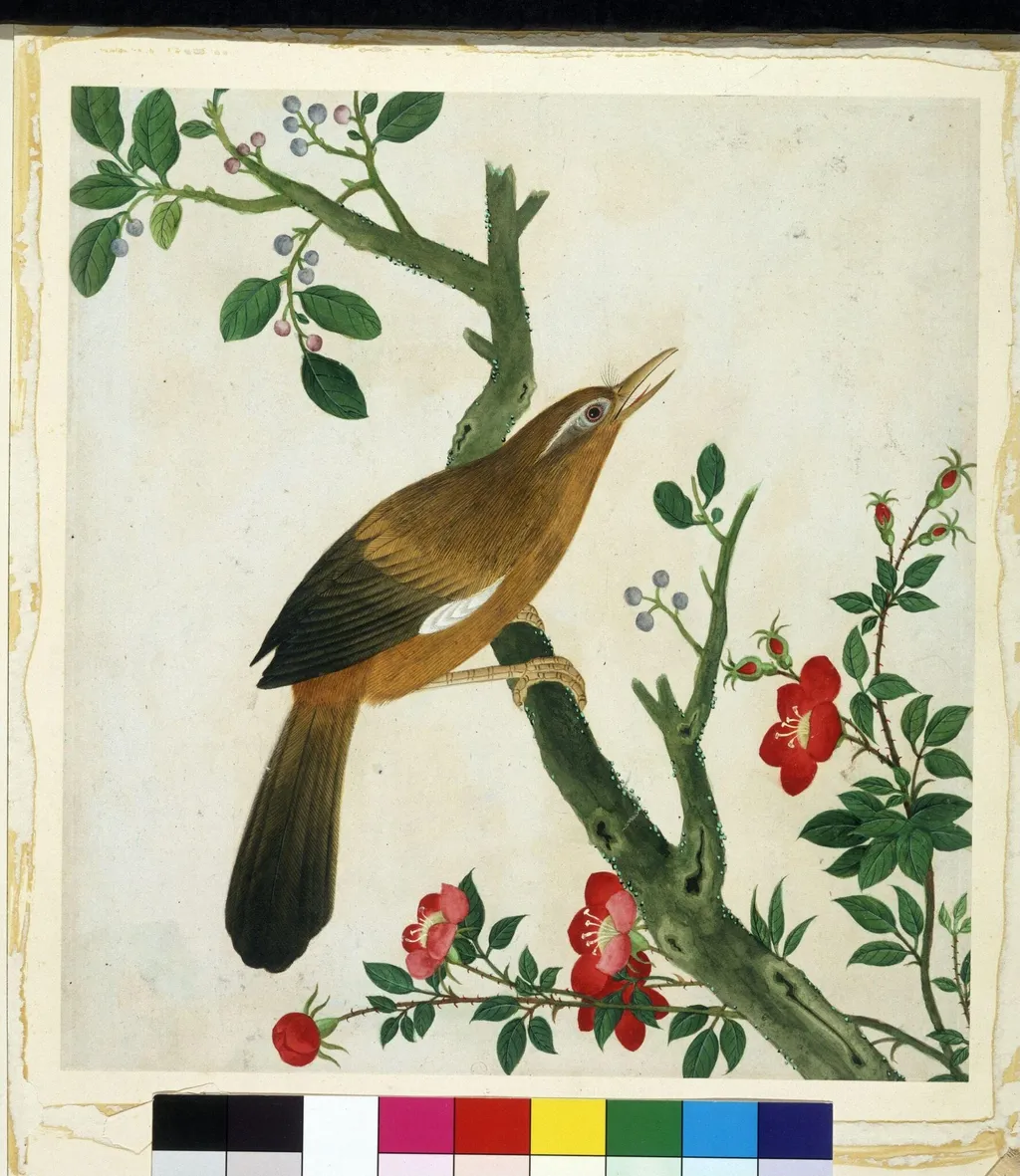
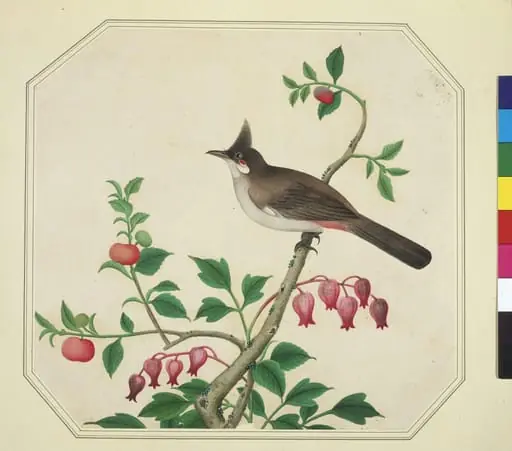
Laughing Thrush is a paint painting by the Patna School of Painting artist Unknown. It dates from 1800 and is held in the collection of the Victoria and Albert Museum.
About this work
Overview
This painting depicts a laughing thrush, a small bird native to southern China, rendered in watercolor on paper. Created in Canton during the 18th century, it belongs to a category of artworks produced specifically for European travelers. These pieces were made in quantity to meet demand, serving as souvenirs that captured exotic local wildlife for foreign audiences.
Subject & Meaning
The laughing thrush was chosen not for symbolic meaning but for its novelty to European viewers. At the time, natural history fascinated Western collectors, and birds in particular were prized as tangible links to distant ecosystems. The painting’s purpose was documentary and decorative, reflecting curiosity about non-European biodiversity rather than cultural or spiritual significance.
Technique & Style
Executed in delicate watercolor, the painting follows a precise, observational style influenced by both Chinese artistic traditions and European expectations of naturalistic representation. Artists in Canton adapted their brushwork to emphasize clarity and detail, avoiding overt stylization to satisfy foreign tastes for lifelike depictions of flora and fauna.
History & Provenance
Produced in Canton during the height of the Canton System, this work emerged from a specialized export art industry that flourished between 1757 and 1842, when foreign trade was restricted to this single port. Paintings like this were commissioned by merchants, sailors, and diplomats, then shipped back to Europe as personal mementos or gifts, often entering private collections.
Context
The 18th-century European fascination with natural history coincided with expanding global trade networks. As botanists and collectors sought to classify new species, Chinese artists responded by producing accurate, commercially viable images of local wildlife. This exchange shaped a unique hybrid art form, bridging Chinese craftsmanship with Western scientific interests.
Legacy
These export paintings remain important records of cross-cultural artistic adaptation. They document how Chinese artisans navigated foreign demand without abandoning their technical skills. Today, such works are studied for their role in early global visual culture, offering insight into the intersection of commerce, science, and aesthetics in the age of empire.
Artist & collection

 Domestic Scene
 Giacomo and Cardinal Marco, investing Andrea, Abbot of San Zeno, with his Benefice
 The Nymph of Fontainebleau
 Portrait of a Woman
 Madonna and Child with Saints in the Enclosed Garden
 Venus and Minerva
 Family Group of Four on Sofa
 Wall painting from Room H of the Villa of P. Fannius Synistor at Boscoreale