Artwork
Red-Crowned Crane
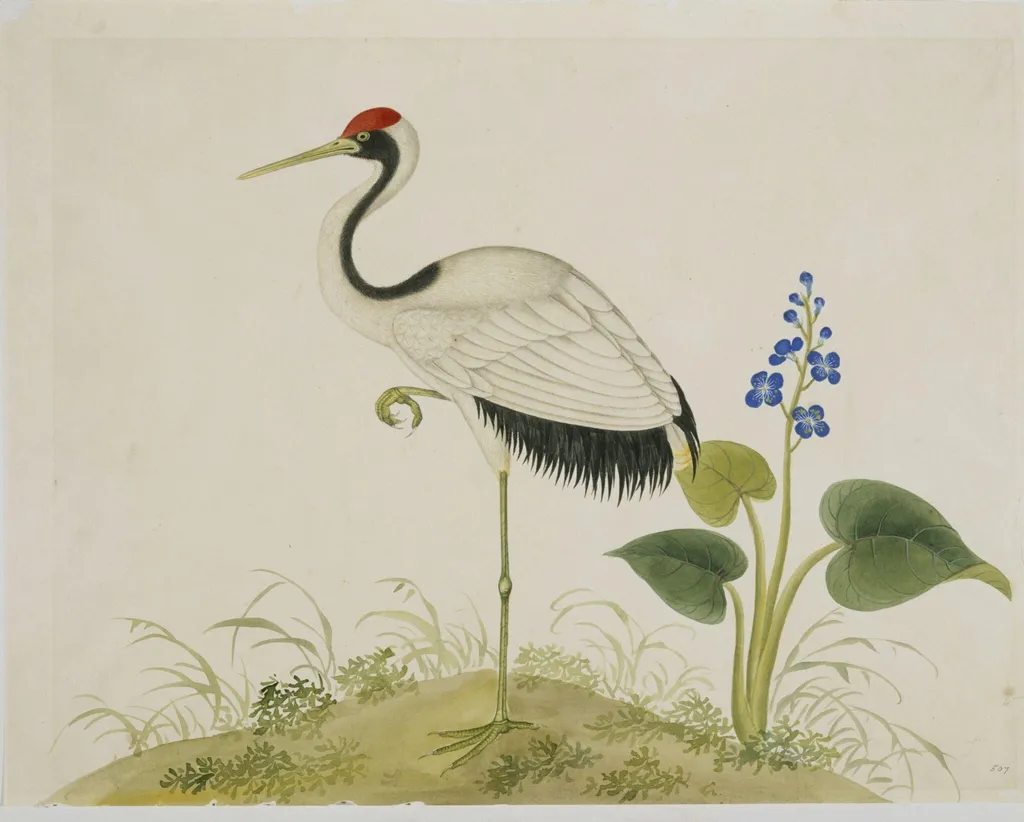
Red-Crowned Crane is a paint painting by the Romanticist artist Unknown. It dates from 1800 and is held in the collection of the Victoria and Albert Museum.
About this work
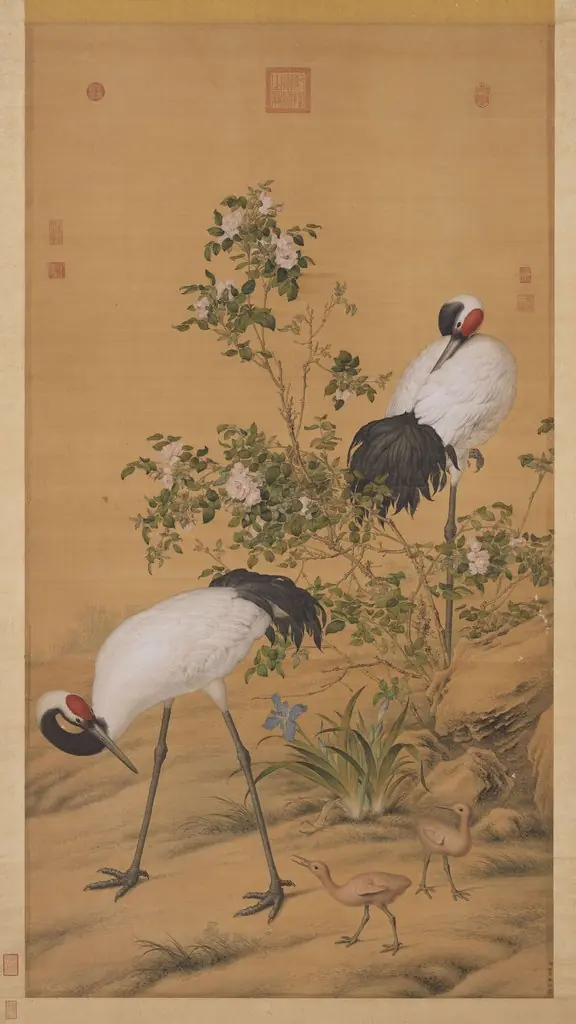
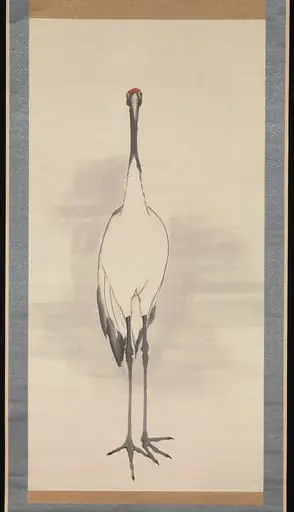
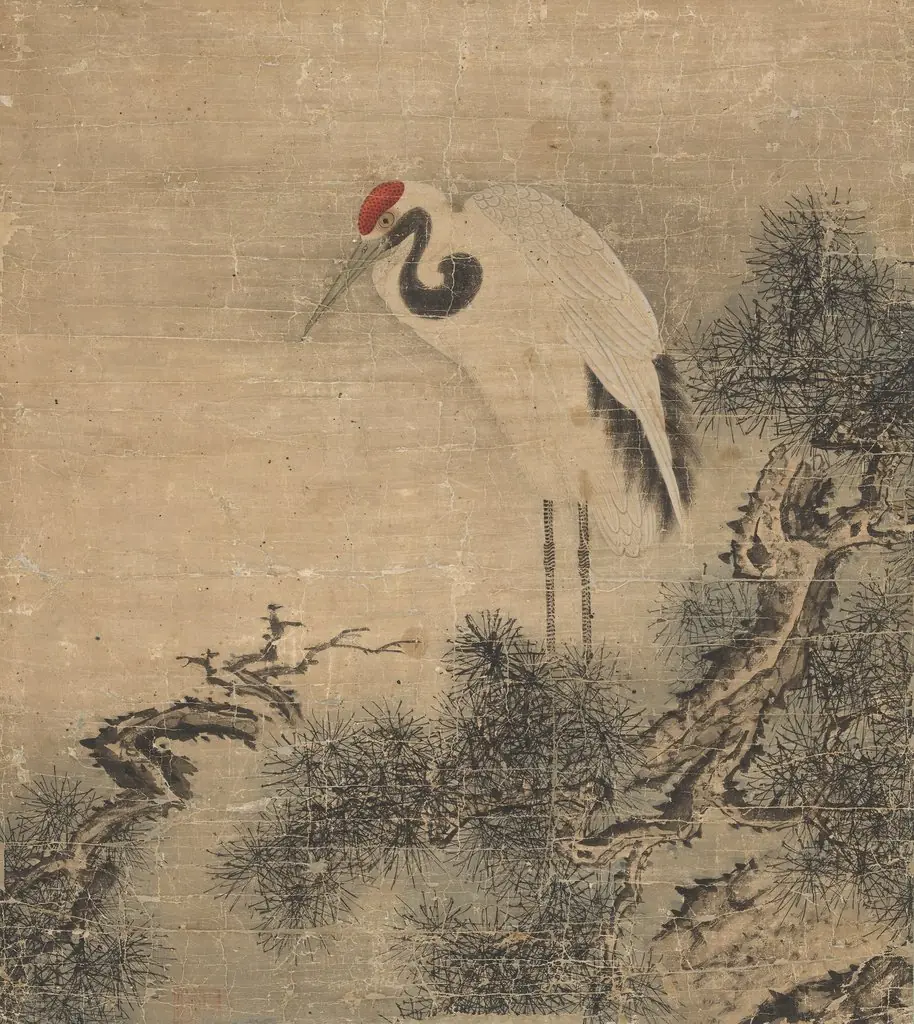
This painting shows a red-crowned crane standing in tall grass. The bird’s red head stands out against its white body and the dark background. Soft gray strokes fill the grass around it.
It was made in China around 1800–1830 for European buyers. Artists in Canton painted these scenes on imported paper to sell as souvenirs.
Check out more examples at the Victoria and Albert Museum.
Overview
This painting of a red-crowned crane was produced in Canton (Guangzhou) between 1800 and 1830 for European consumers.
This painting of a red-crowned crane was produced in Canton (Guangzhou) between 1800 and 1830 for European consumers. Made on Western paper imported for its durability and texture, it reflects a specialized trade in Chinese export art. Artists in Canton adapted local techniques to meet foreign demand, creating detailed naturalistic images of birds and flora as souvenirs for travelers returning to Europe.
Subject & Meaning
The red-crowned crane, a symbol of longevity and grace in East Asian culture, is depicted standing amid tall grass against a dark background. Its stark white plumage and vivid red crown draw attention, emphasizing visual clarity for Western viewers unfamiliar with the species. While rooted in Chinese ornithological observation, the image was tailored not for spiritual or literary context but as a specimen-like souvenir for European collectors.
Technique & Style
The artist used fine brushwork to render the crane’s feathers with precision, while soft gray washes suggest the texture of surrounding reeds. Painted on imported Western paper, the work blends Chinese watercolor traditions with European expectations of naturalistic detail. The composition isolates the bird against a neutral backdrop, enhancing its specimen-like quality and suitability for display in private cabinets of curiosity.
History & Provenance
Canton was the sole Chinese port open to European trade from the mid-18th century until the Opium Wars. Artists there produced thousands of export paintings for foreign visitors, often on commission. This crane painting likely passed through British or Dutch merchants who brought it to Europe. Its survival reflects the scale of this commercial art trade, though individual creators remain largely undocumented.
Context
During this period, European interest in global biodiversity surged, fueled by colonial exploration and scientific classification. Chinese artists responded by producing accurate depictions of native animals and plants for foreign buyers. These works bridged cultural interests: they were botanical records to Europeans and commercial products to Chinese artisans, existing outside traditional Chinese aesthetic hierarchies.
Legacy
Works like this crane painting remain in museum collections as evidence of early global art markets. They illustrate how local Chinese craftsmanship adapted to foreign tastes, creating a hybrid visual language. Today, they offer insight into cross-cultural exchange, not as fine art in the classical sense, but as material artifacts of commerce, curiosity, and colonial-era encounters.
Artist & collection

 Domestic Scene
 Giacomo and Cardinal Marco, investing Andrea, Abbot of San Zeno, with his Benefice
 The Nymph of Fontainebleau
 Portrait of a Woman
 Madonna and Child with Saints in the Enclosed Garden
 Venus and Minerva
 Family Group of Four on Sofa
 Wall painting from Room H of the Villa of P. Fannius Synistor at Boscoreale