Artwork
Lions and Lionesses
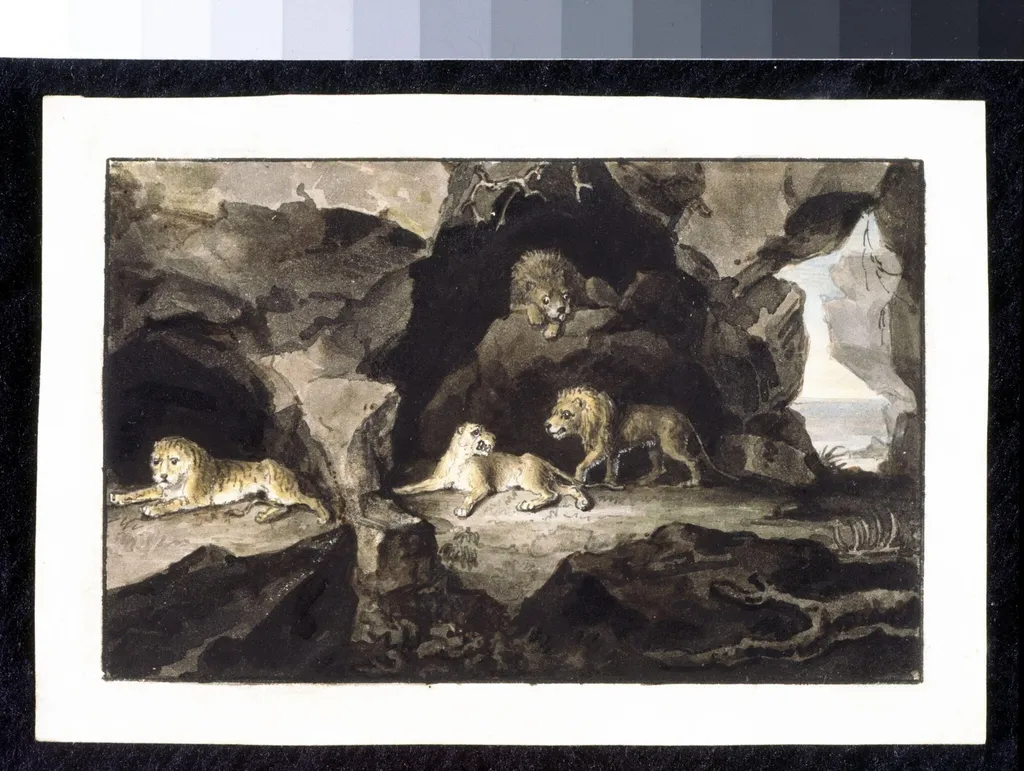
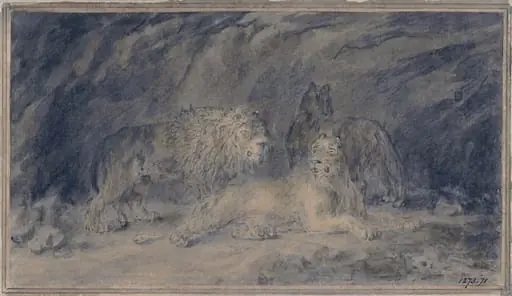
Lions and Lionesses is a watercolor work on paper by the Romanticist artist Unknown. It dates from 1810 and is held in the collection of the Victoria and Albert Museum. This watercolour is a faithful reproduction of a well-known composition by George Stubbs, likely created as a personal study or keepsake.
About this work
Overview
This watercolour is a faithful reproduction of a well-known composition by George Stubbs, likely created as a personal study or keepsake.
This watercolour is a faithful reproduction of a well-known composition by George Stubbs, likely created as a personal study or keepsake. Though executed in a modest medium, it reflects the 18th-century practice of copying celebrated works for private appreciation. Its origin is unrecorded, but it entered the V&A’s collection alongside other items linked to Mary Linwood, suggesting a contextual connection to her influential exhibition culture.
Subject & Meaning
The scene depicts two lions and two lionesses grouped closely, evoking the naturalistic yet dramatic animal compositions Stubbs pioneered in the 1770s. Unlike his typical English landscapes, this version omits the cave setting, focusing instead on the animals’ quiet proximity. The absence of narrative context invites contemplation of their presence rather than action, aligning with contemporary interest in observed wildlife over mythologized symbolism.
Technique & Style
Rendered in watercolour, the work employs fine, delicate brushwork to suggest the texture of fur and the softness of skin. The palette is restrained, emphasizing tonal gradations over bold colour. The artist’s attention to anatomical detail reflects familiarity with Stubbs’s observational approach, though the handling lacks the precision and depth of the original, indicating a skilled amateur rather than a professional painter.
History & Provenance
The watercolour was bequeathed to the Victoria and Albert Museum alongside Mary Linwood’s portrait of Napoleon, linking it indirectly to her celebrated exhibition. While not one of her crewel-wool works, it shares the era’s fascination with reproducing Stubbs’s imagery. Its survival suggests it was preserved as part of a private collection connected to Linwood’s circle, possibly as a reference or memento.
Context
In the late 18th century, reproductions of Stubbs’s animal studies circulated widely, especially after his reputation grew through exhibitions and engravings. Mary Linwood’s wool embroideries of his works brought them to public attention, making such images familiar to middle-class audiences. This watercolour fits within a broader culture of artistic replication, where copying served educational, commemorative, or decorative purposes beyond original creation.
Legacy
Though unsigned and unattributed to a known artist, the watercolour endures as a quiet testament to the dissemination of Stubbs’s imagery in the Georgian era. It illustrates how high art entered domestic spaces through accessible media, bridging elite and popular visual culture. Its preservation in the V&A underscores its value as a material witness to 18th-century artistic practices beyond the canonical.
Artist & collection

 Domestic Scene
 Giacomo and Cardinal Marco, investing Andrea, Abbot of San Zeno, with his Benefice
 The Nymph of Fontainebleau
 Portrait of a Woman
 Madonna and Child with Saints in the Enclosed Garden
 Venus and Minerva
 Family Group of Four on Sofa
 Wall painting from Room H of the Villa of P. Fannius Synistor at Boscoreale
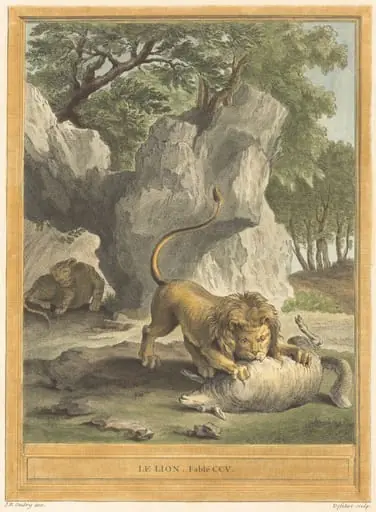 Le lion (The Lion)
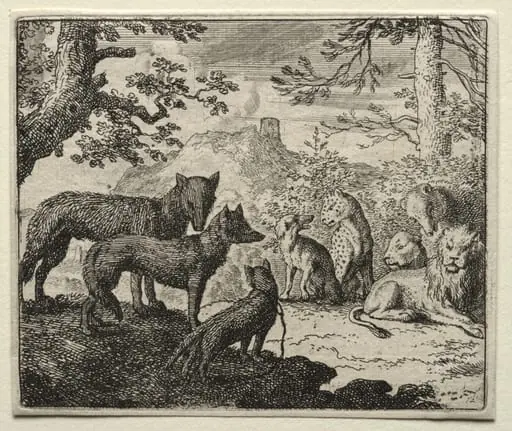 Reynard the Fox: The Relatives of Reynard Leave Court
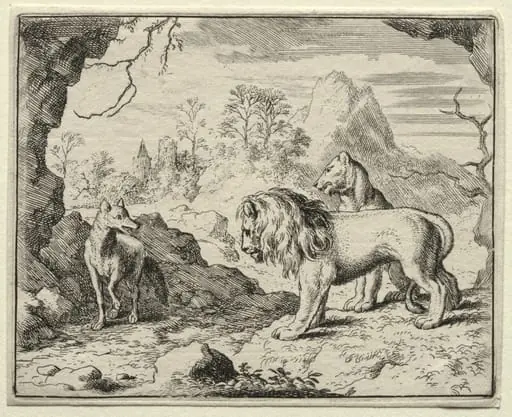 Reynard the Fox: Reynard Tells of Hidden Treasure
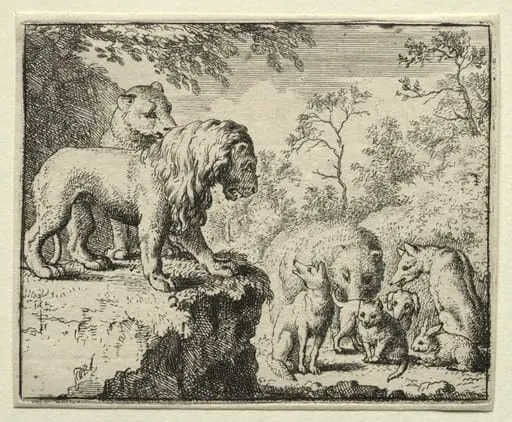 Reynard the Fox: The Pardon of Reynard
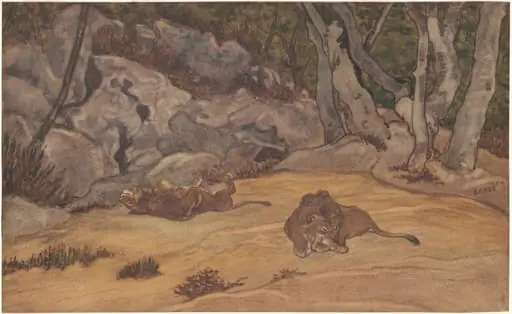 Sleeping Lions
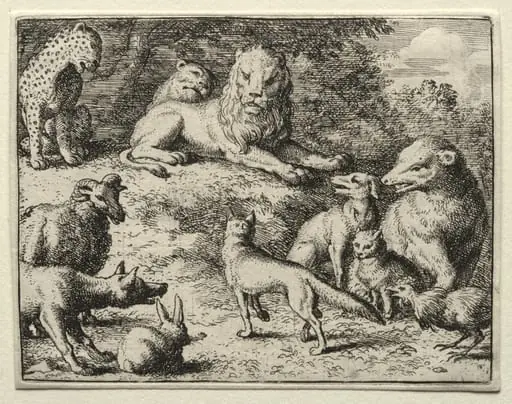 Reynard the Fox: Reynard Appears at Court
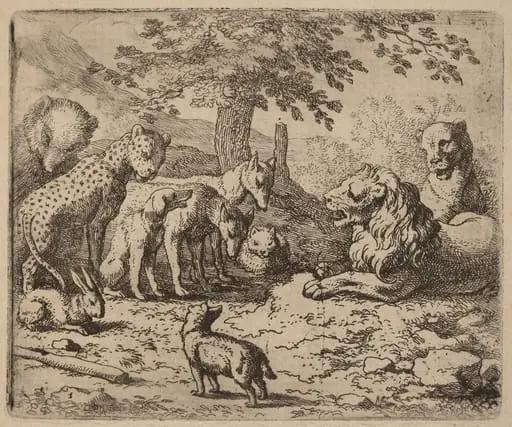 The Lion Seeks Advice
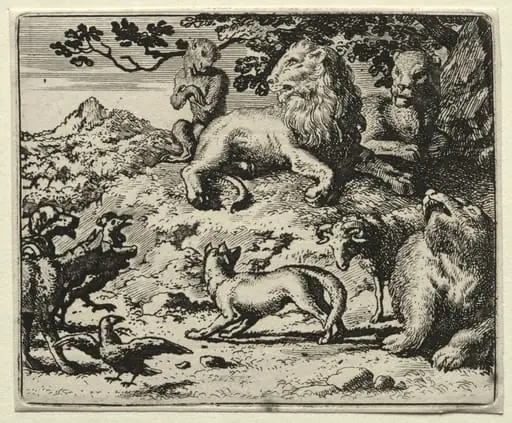 Reynard the Fox: The Animals Complain of Reynard's Pardon
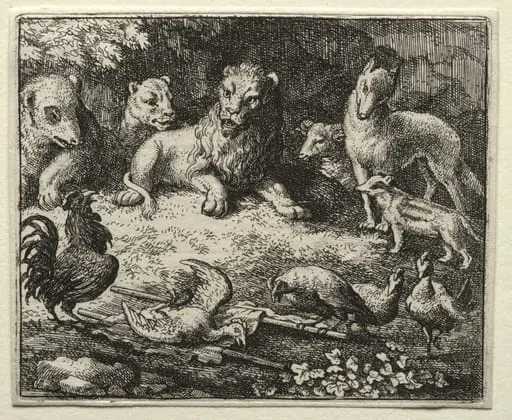 Reynard the Fox: The Complaint of the Cock
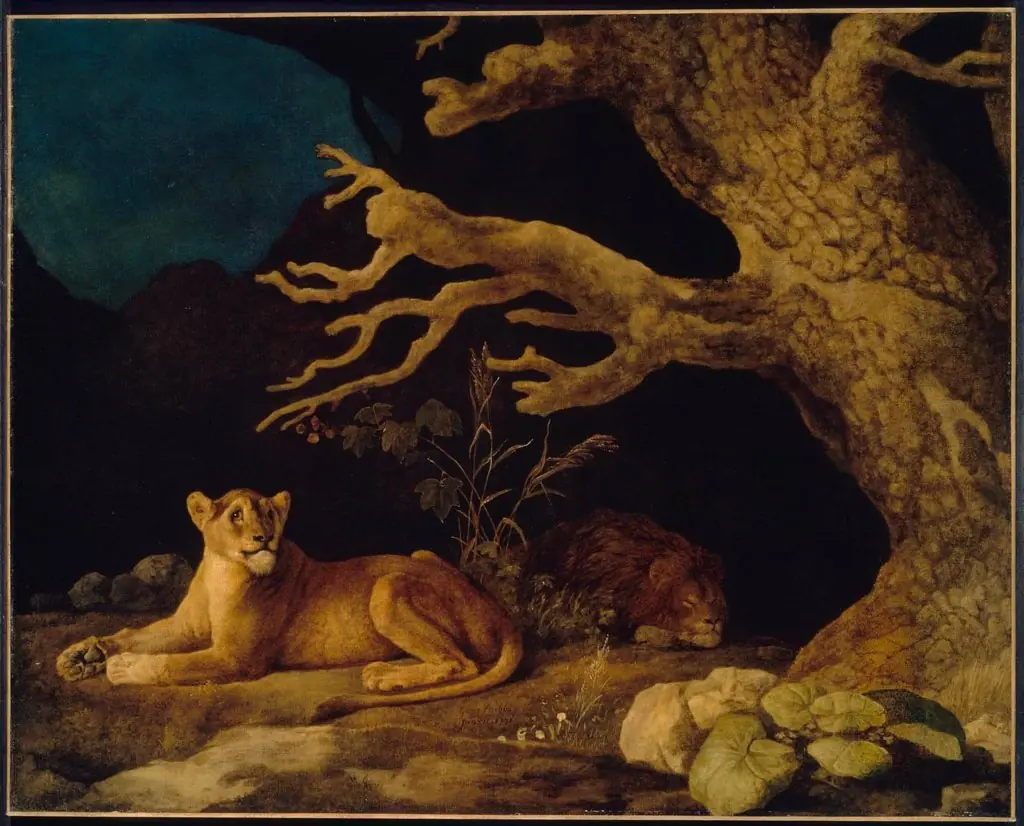 Lion and Lioness
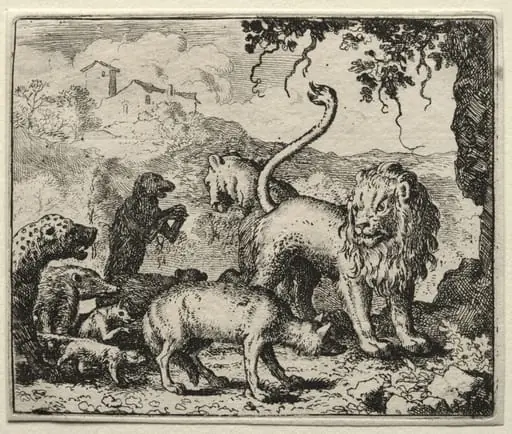 Reynard the Fox: First Complaint of the Wolf
 Lion and lionesses