Artwork
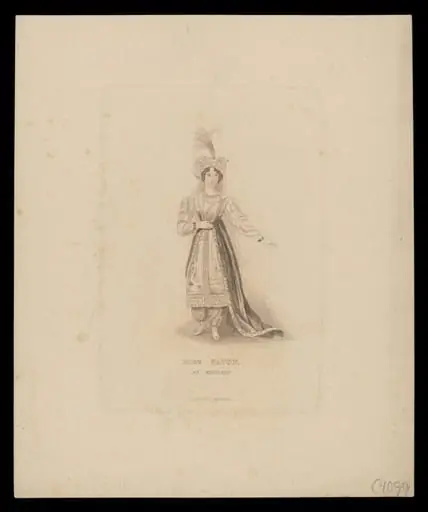
Madame Pasta
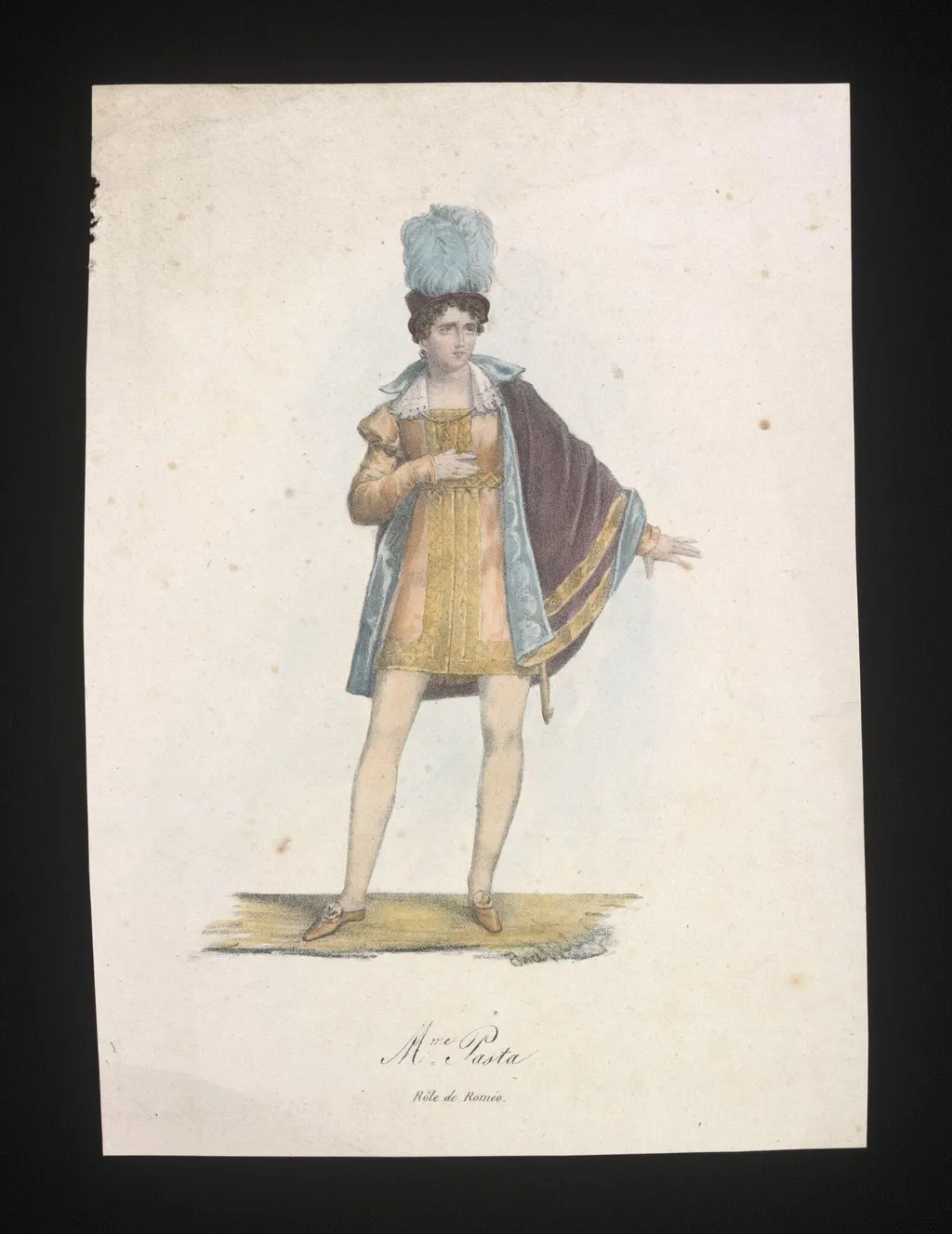
Madame Pasta is a print by Unknown. It dates from 1850 and is held in the collection of the Victoria and Albert Museum.
About this work
The woman is Giuditta Pasta, an opera singer, which makes this portrait interesting because it highlights her career in theater.
This painting shows a woman dressed as Romeo.
She's wearing a hat and holding a sword.
The woman is Giuditta Pasta, an opera singer, which makes this portrait interesting because it highlights her career in theater.
The portrait is a print, which was a common way to share images back then.
It was published in the early 19th century, and we can learn more about this time period through art like this.
You can learn more about this style by looking into the technique of sfumato.
Overview
This early 19th-century print captures the Italian opera singer Giuditta Pasta in the role of Romeo, a male character from Shakespeare’s tragedy. Produced as a reproductive print, it was intended for wide circulation among theater enthusiasts. The image reflects the popularity of operatic adaptations of literary works and the public fascination with performers who transcended gender norms on stage.
Subject & Meaning
Giuditta Pasta, renowned for her dramatic intensity, portrayed Romeo in Bellini’s opera based on Shakespeare’s play. Depicted in masculine attire—with a hat and sword—she embodies the role’s emotional and physical vigor. The image underscores the era’s acceptance of female singers in travesti roles, challenging conventional gender representation while celebrating vocal and theatrical virtuosity.
Technique & Style
The print employs line engraving or lithographic methods typical of the period, emphasizing clear contours and tonal contrast to render costume and posture. Unlike oil painting, it prioritizes clarity and reproducibility over atmospheric depth. The composition is staged for theatrical impact, with minimal background detail, directing focus to Pasta’s commanding presence and costume.
History & Provenance
Created during Pasta’s peak fame in the 1820s–1830s, the print was likely issued by a commercial publisher to capitalize on her public appeal. It entered the Harry Beard Collection, a significant archive of theatrical memorabilia assembled in the 19th century. The print’s survival reflects its role as both cultural artifact and promotional material for the operatic stage.
Context
In early 19th-century Europe, opera houses were centers of social and artistic life, and singers like Pasta attained celebrity status. Female performers in male roles were not uncommon, especially in bel canto repertoire. This print situates Pasta within a broader tradition of theatrical cross-dressing, where vocal prowess and dramatic skill outweighed literal gender representation.
Legacy
The print preserves a moment when opera blurred the boundaries of gender and genre, influencing later perceptions of performance identity. As a mass-produced image, it helped shape public memory of Pasta’s artistry beyond the stage. Today, it serves as a historical document of how theater culture was documented, consumed, and remembered in the pre-photographic era.
Artist & collection

 Domestic Scene
 Giacomo and Cardinal Marco, investing Andrea, Abbot of San Zeno, with his Benefice
 The Nymph of Fontainebleau
 Portrait of a Woman
 Madonna and Child with Saints in the Enclosed Garden
 Venus and Minerva
 Family Group of Four on Sofa
 Wall painting from Room H of the Villa of P. Fannius Synistor at Boscoreale