Artwork
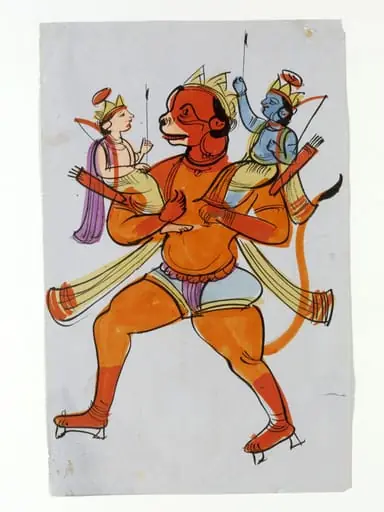
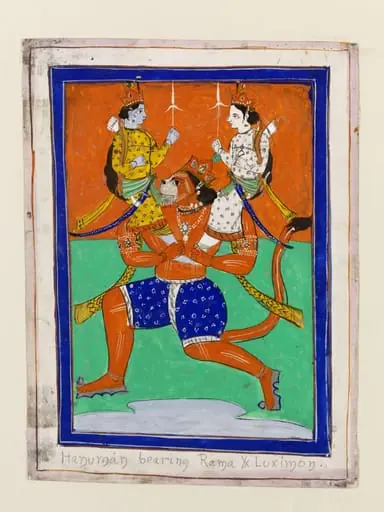
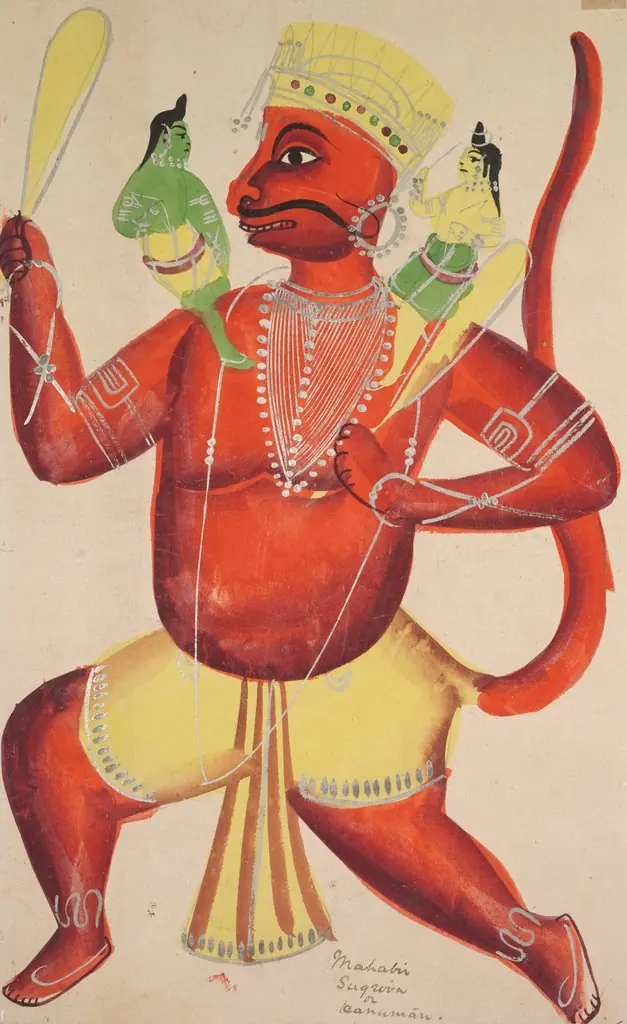
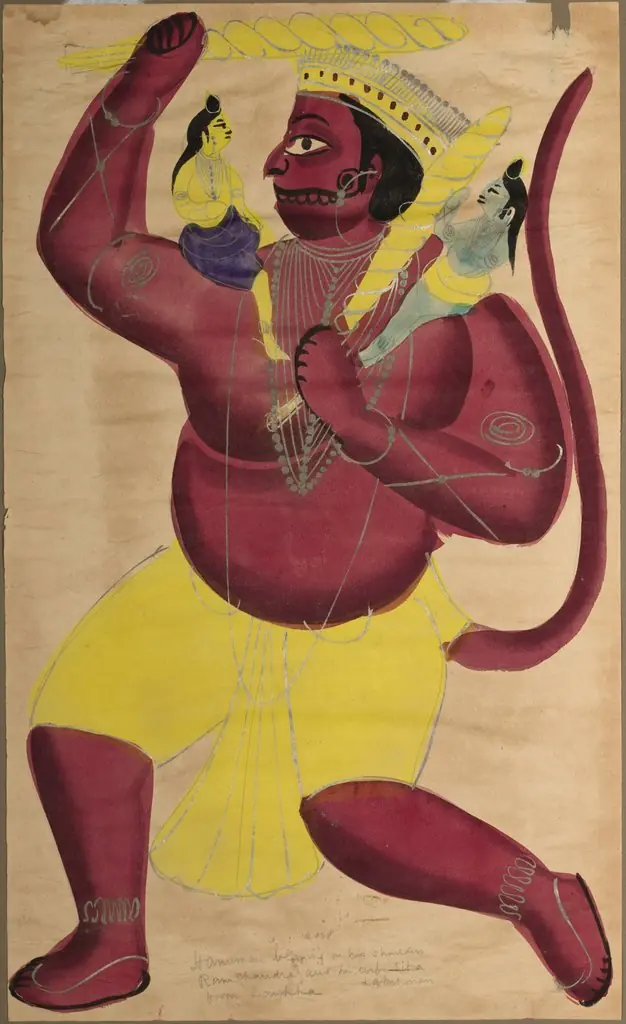
Mahabir. Rama and Lakshmana
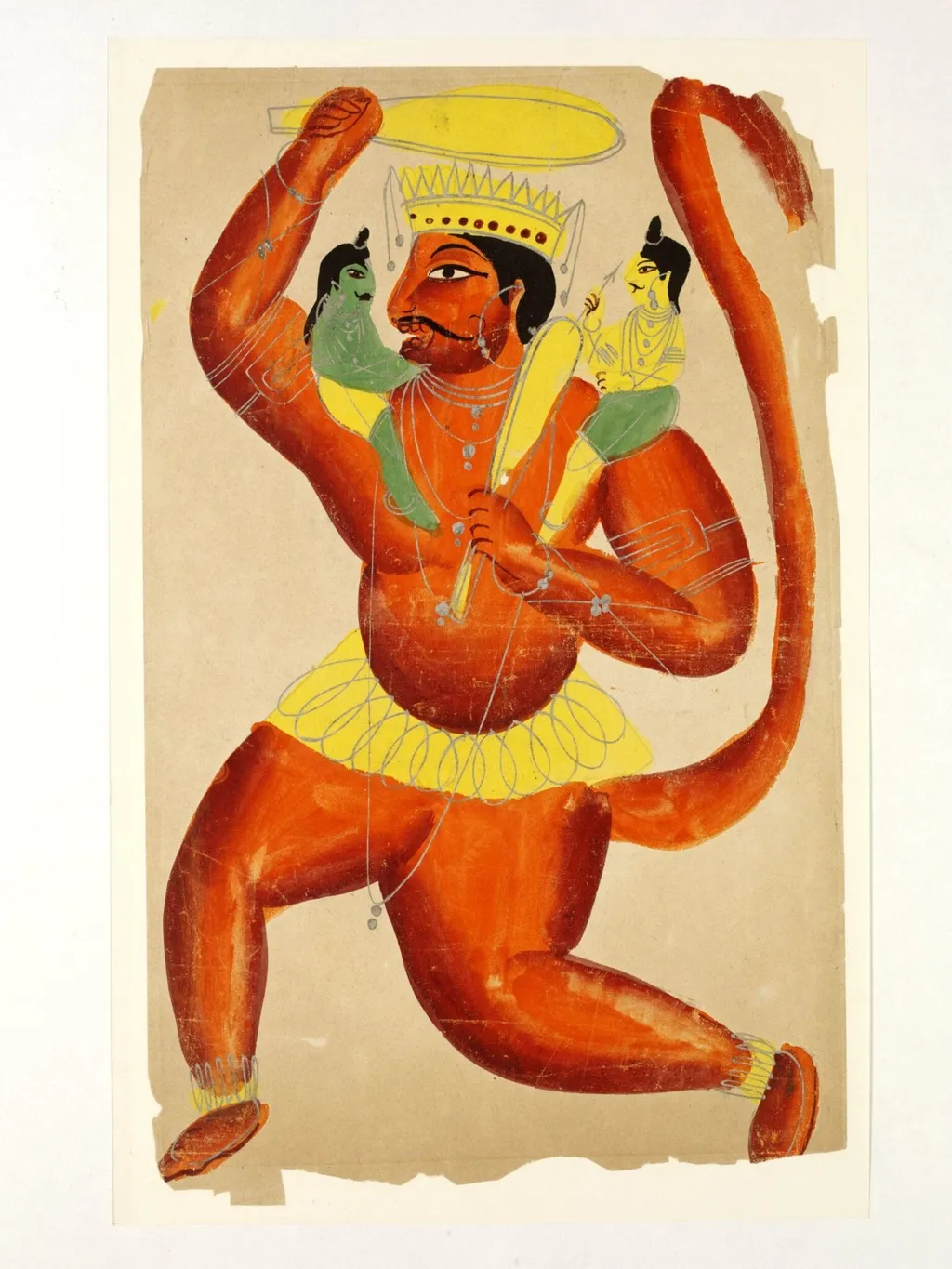
Mahabir. Rama and Lakshmana is a paint painting by the Impressionist artist Unknown. It dates from 1890 and is held in the collection of the Victoria and Albert Museum.
About this work
Overview
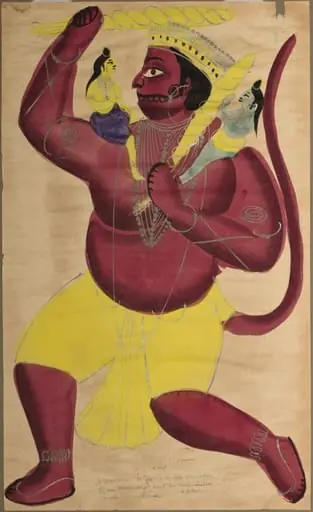
The work is a watercolor and tin‑alloy painting on paper that portrays the Hindu hero Mahabir, identified with the monkey‑god Hanuman, bearing the brothers Rama and Lakshmana on his shoulders. The composition is rendered in vivid hues with clear, unmodulated color fields and strong outlines, set against a largely empty background that isolates the figures.
Subject & Meaning
The scene draws from the Ramayana narrative in which Hanuman transports the exiled princes across the sea to rescue Sita. By emphasizing the physical strength of Mahabir and the regal bearing of Rama, the image underscores themes of devotion, heroic assistance, and divine intervention within the epic.
Technique & Style
Executed in the Kalighat school of 19th‑century Calcutta, the painting employs bold, flat colors, simplified forms, and brisk brushwork typical of the genre. Dark contour lines define the muscular bodies, while the lack of shading creates a graphic, two‑dimensional effect that aligns with the commercial, print‑like aesthetic of Kalighat artists.
History & Provenance
The piece entered the museum collection through a 1955 donation by M. N. Varvill, Esq. It reflects the broader practice of Bengali painters who, during the colonial era, adapted traditional mythological subjects to a modern visual language that appealed to both local and European audiences.
Context
Kalighat paintings emerged around the 1850s as a response to the bustling pilgrimage site of the Kalighat temple, where artists produced affordable works for travelers. The style merged indigenous iconography with influences from European printmaking, documenting social change while preserving religious narratives.
Artist & collection

 Domestic Scene
 Giacomo and Cardinal Marco, investing Andrea, Abbot of San Zeno, with his Benefice
 The Nymph of Fontainebleau
 Portrait of a Woman
 Madonna and Child with Saints in the Enclosed Garden
 Venus and Minerva
 Family Group of Four on Sofa
 Wall painting from Room H of the Villa of P. Fannius Synistor at Boscoreale