Artwork
Maharaja Bijai Singh
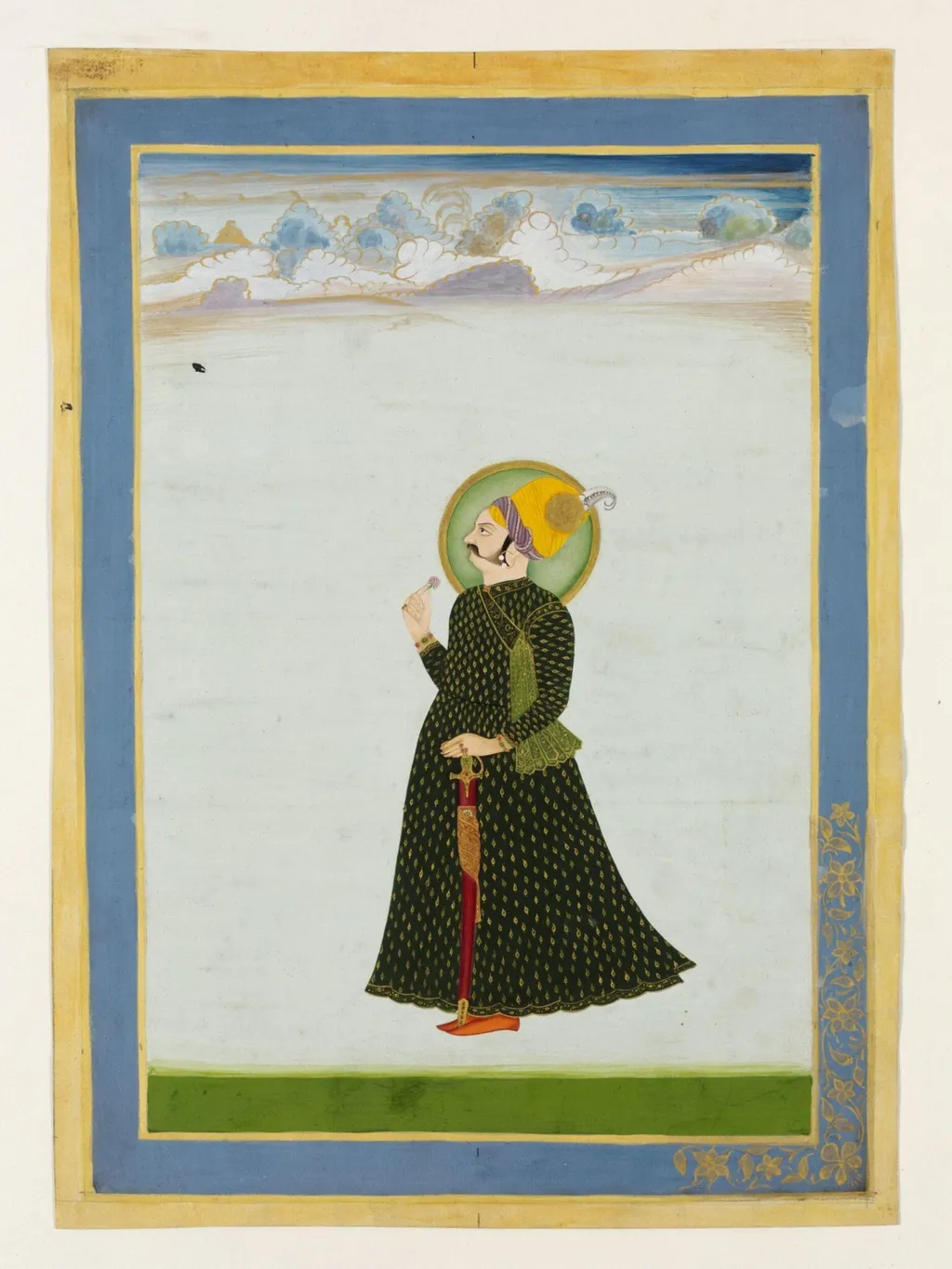
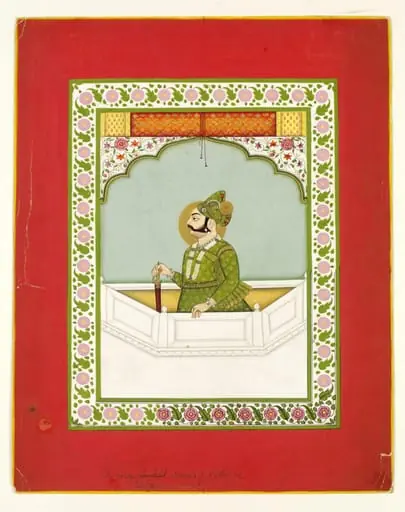
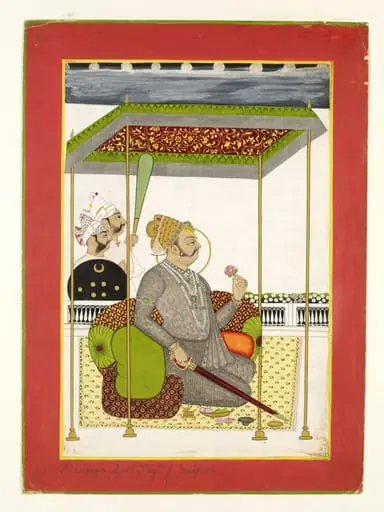
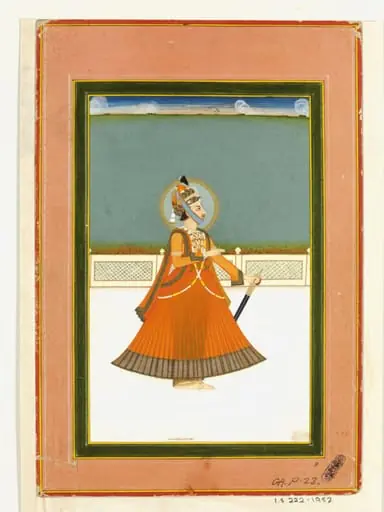
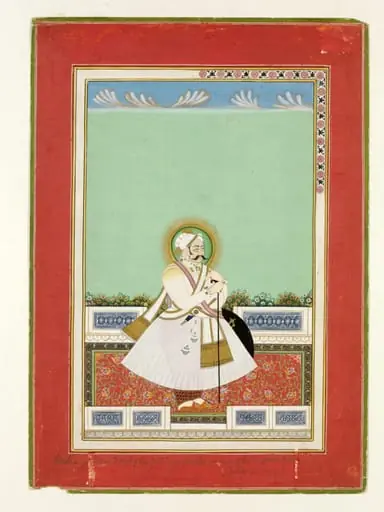
Maharaja Bijai Singh is a paint painting by the Impressionist artist Unknown. It dates from 1890 and is held in the collection of the Victoria and Albert Museum.
About this work
Overview
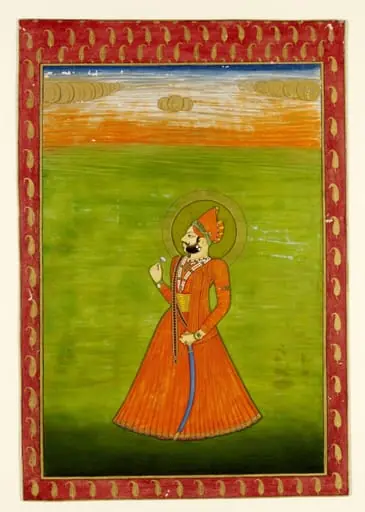
Created in 1890, this portrait depicts Maharaja Bijai Singh, a ruling prince of India, in a formal, stylized composition.
Created in 1890, this portrait depicts Maharaja Bijai Singh, a ruling prince of India, in a formal, stylized composition. Executed in opaque watercolour and gold on paper, the work follows regional conventions of courtly portraiture. The figure stands centrally, framed by a luminous halo and set against a minimal background of soft clouds and a coloured base, emphasizing his status through symbolic rather than naturalistic means.
Subject & Meaning
Maharaja Bijai Singh is portrayed with attributes of authority and divine association. His raised right hand holds a red object, possibly a symbol of sovereignty, while a flower in the left suggests ritual or refinement. The radiant halo, blending green, gold, purple, and yellow, transcends mere decoration, implying spiritual presence or celestial sanction, common in depictions of Indian royalty to convey legitimacy beyond earthly power.
Technique & Style
The painting employs opaque watercolour with meticulous gold detailing, typical of North Indian court traditions. The robe’s intricate embroidery is rendered in fine gold lines, contrasting with the flat, saturated tones of the background. The halo is built with layered pigments and swirling patterns, creating a luminous effect. The absence of perspective and the decorative border reflect a preference for symbolic representation over spatial realism.
History & Provenance
This work originates from a princely state in northern India, likely commissioned for ceremonial or archival purposes. It entered institutional collections in the early 20th century, possibly through colonial-era acquisitions. Its preservation in major museums, such as the Victoria and Albert, reflects its value as a document of royal visual culture during the late British Raj, when traditional patronage persisted amid political change.
Context
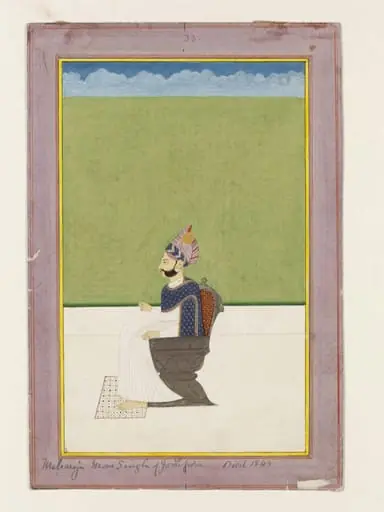
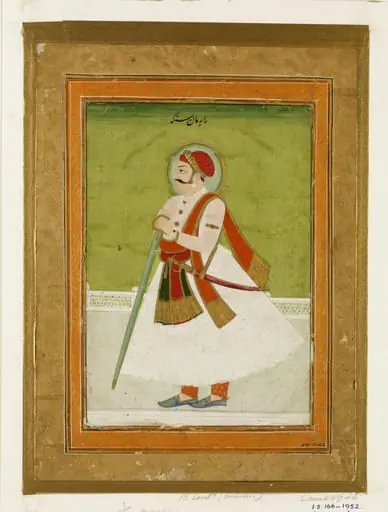
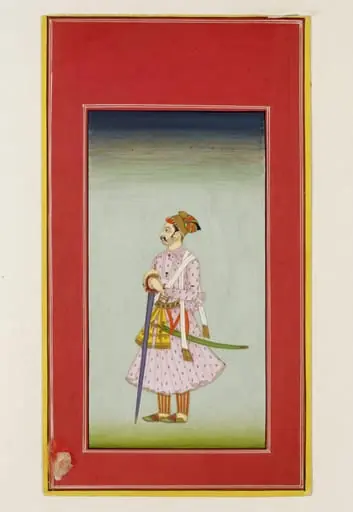
Produced during a period when Indian rulers maintained cultural autonomy under British oversight, such portraits served to affirm dynastic identity. Artists in regional ateliers continued pre-colonial styles, blending indigenous iconography with subtle European influences in composition. The emphasis on regalia, halos, and symbolic objects aligned with longstanding traditions of depicting rulers as semi-divine figures, distinct from Western portraiture’s focus on individual likeness.
Legacy
This painting contributes to a broader corpus of Indian court art preserved in global collections. It illustrates how traditional techniques and symbolism endured into the modern era, even as political structures shifted. Scholars use such works to trace the evolution of royal representation, regional aesthetics, and the intersection of spirituality and authority in South Asian visual culture during the colonial period.
Artist & collection

 Domestic Scene
 Giacomo and Cardinal Marco, investing Andrea, Abbot of San Zeno, with his Benefice
 The Nymph of Fontainebleau
 Portrait of a Woman
 Madonna and Child with Saints in the Enclosed Garden
 Venus and Minerva
 Family Group of Four on Sofa
 Wall painting from Room H of the Villa of P. Fannius Synistor at Boscoreale