Artwork
Maharaja Raj Singh
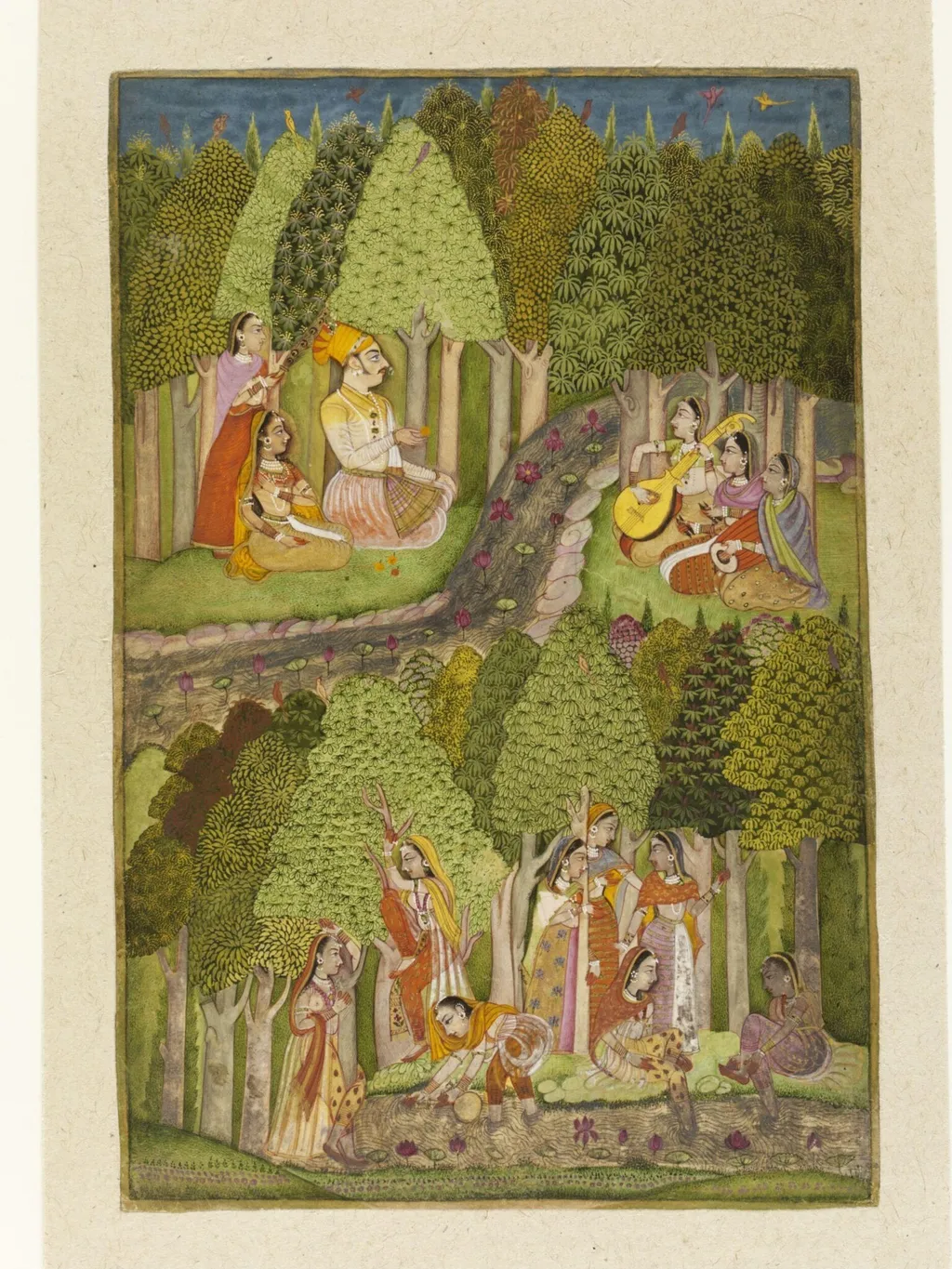
Maharaja Raj Singh is a paint painting by the Baroque artist Unknown. It dates from 1700 and is held in the collection of the Victoria and Albert Museum.
About this work
Overview
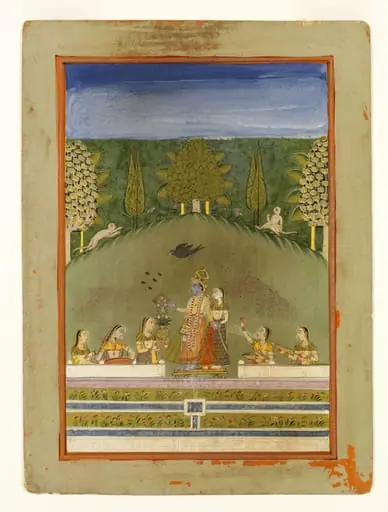
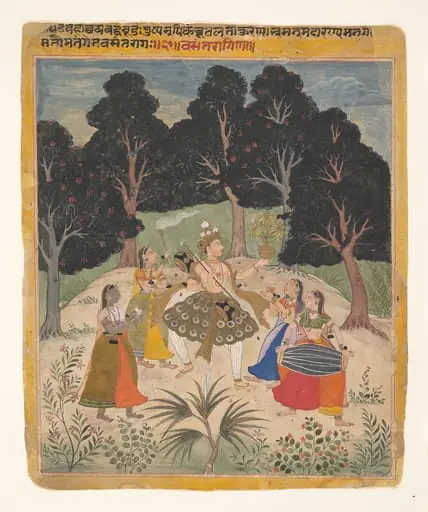
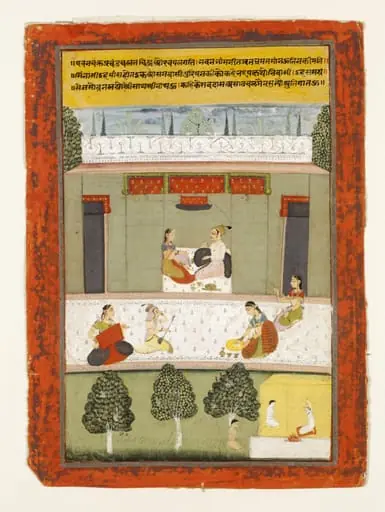
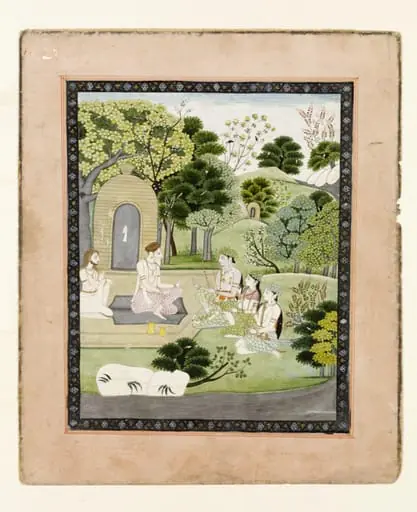
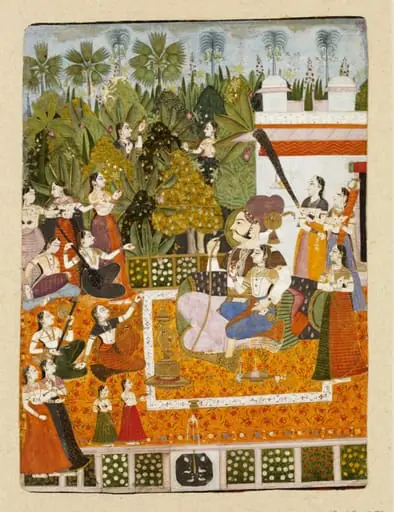
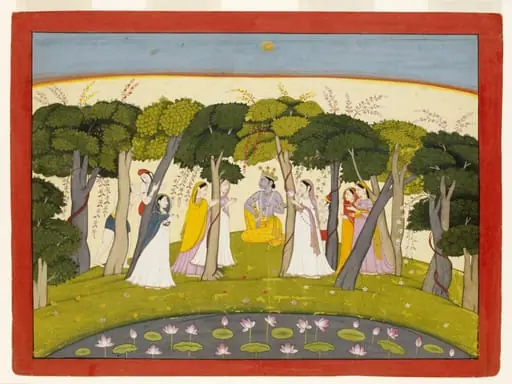
The composition centers on the ruler seated on a throne amid a dense forest, with a stream dividing the space and lotuses floating nearby.
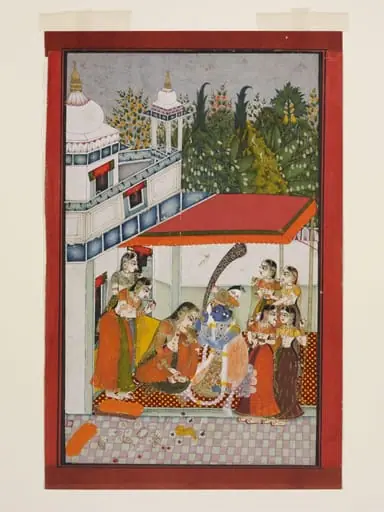
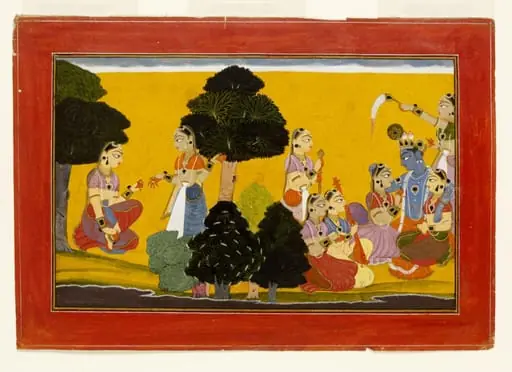
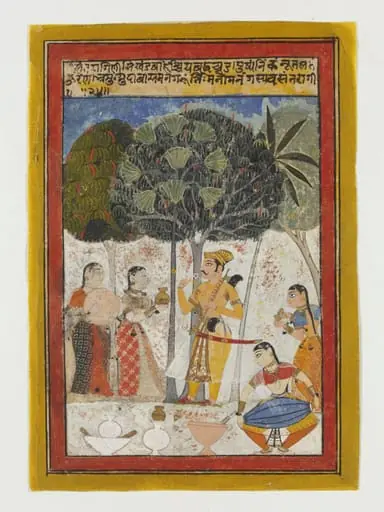
This opaque watercolor and gold painting on paper portrays Maharaja Raj Singh of Mewar in a tranquil natural setting. The composition centers on the ruler seated on a throne amid a dense forest, with a stream dividing the space and lotuses floating nearby. Eight female musicians are depicted in the foreground, engaged in quiet conversation as they paddle a boat. The scene blends courtly formality with the serenity of the landscape.
Subject & Meaning
Maharaja Raj Singh is portrayed not in a formal court setting but in a private, idyllic grove, suggesting a moment of leisure or spiritual reflection. The presence of musicians implies cultural patronage and refined leisure, while the lotuses and flowing water may symbolize purity and the cyclical nature of power. The ruler’s elevated position and elaborate attire reinforce his status without overt displays of military or political authority.
Technique & Style
The painting employs rich opaque watercolors and gold leaf to create luminous surfaces and intricate textile patterns. Details in the foliage, garments, and water reflect a meticulous attention to texture and color gradation. While rooted in Rajasthani miniature traditions, subtle shifts in spatial depth and naturalism hint at influences from European pictorial conventions, though not through direct imitation.
History & Provenance
Created in the late 17th century during the reign of Maharaja Raj Singh, the work originates from the Mewar court in Rajasthan. It was likely commissioned to commemorate a personal or ceremonial occasion, possibly linked to monsoon festivities or courtly retreats. The painting remained within royal collections until the 20th century, when it entered institutional holdings through documented acquisitions.
Context
This work emerged during a period of cultural exchange between Indian and European artistic traditions, particularly through Jesuit missionaries and trade contacts. While Mewar artists maintained indigenous compositional norms, they began incorporating softer modeling and atmospheric depth. The style reflects a localized adaptation rather than wholesale adoption of Baroque aesthetics, which are often misattributed in popular descriptions.
Legacy
The painting stands as an example of how Rajasthani courts selectively absorbed external influences without abandoning their visual language. It contributes to scholarly understanding of regional hybridity in early modern Indian art. Unlike grand imperial commissions, such intimate court scenes reveal the personal tastes and spiritual inclinations of rulers, offering a quieter but significant counterpoint to more overtly political imagery.
Artist & collection

 Domestic Scene
 Giacomo and Cardinal Marco, investing Andrea, Abbot of San Zeno, with his Benefice
 The Nymph of Fontainebleau
 Portrait of a Woman
 Madonna and Child with Saints in the Enclosed Garden
 Venus and Minerva
 Family Group of Four on Sofa
 Wall painting from Room H of the Villa of P. Fannius Synistor at Boscoreale