Artwork
Maharaja Ram Singh
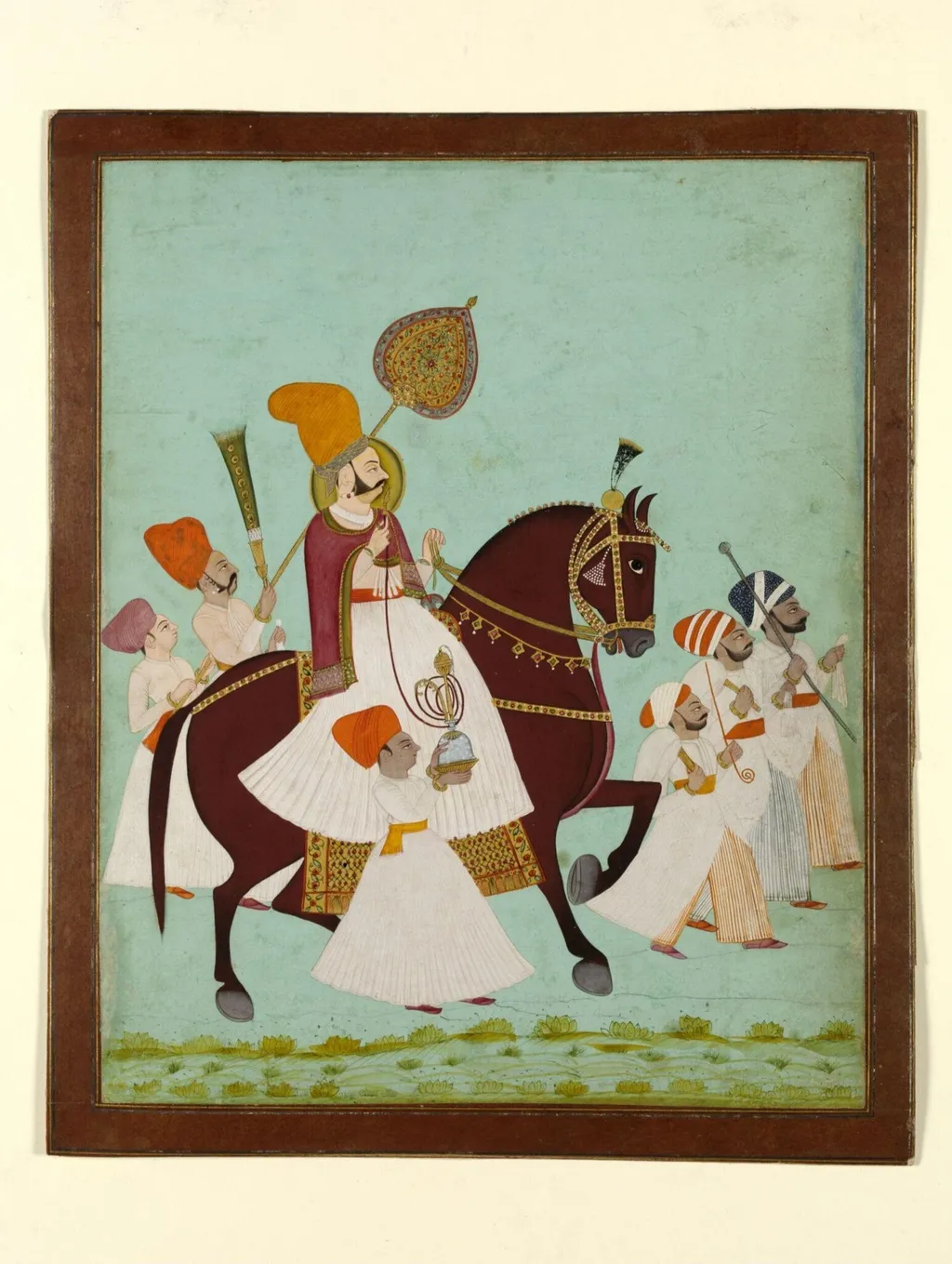
Maharaja Ram Singh is a paint painting by the Rococo painting artist Unknown. It dates from 1750 and is held in the collection of the Victoria and Albert Museum.
About this work
Overview
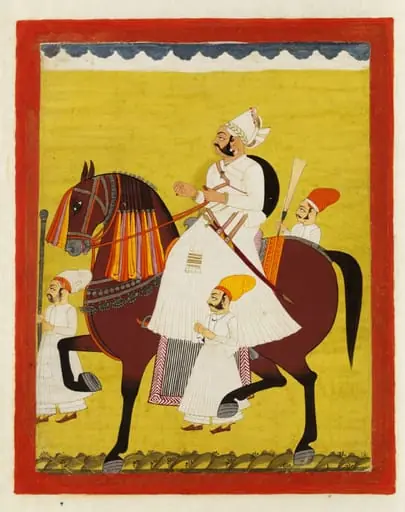
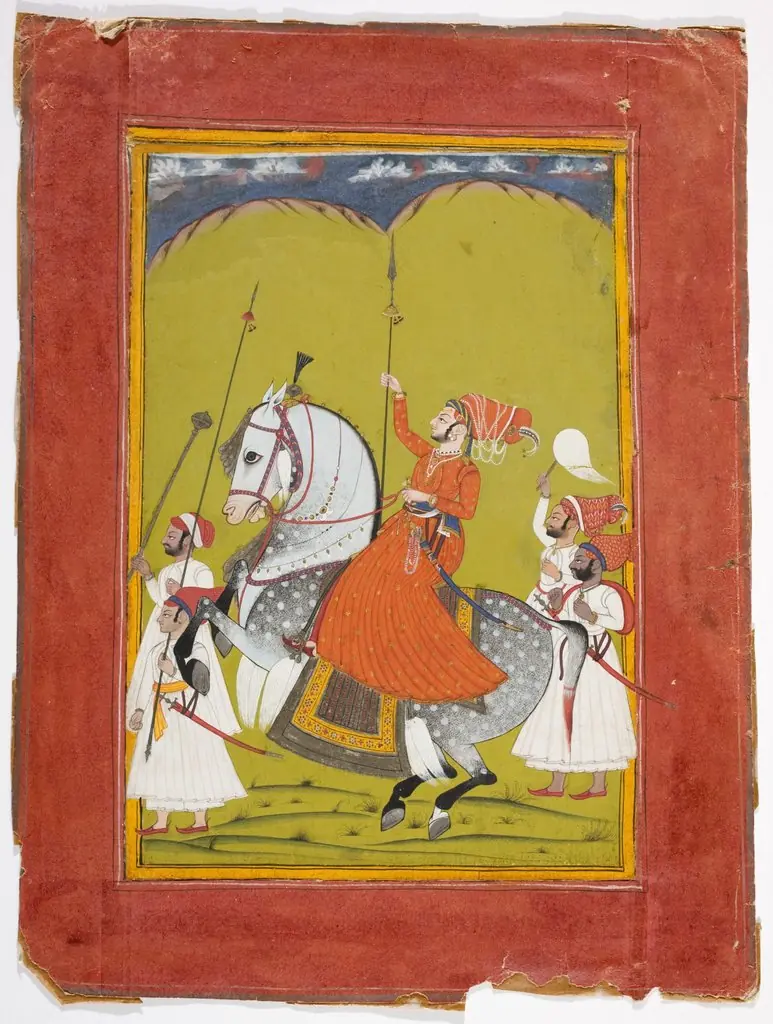
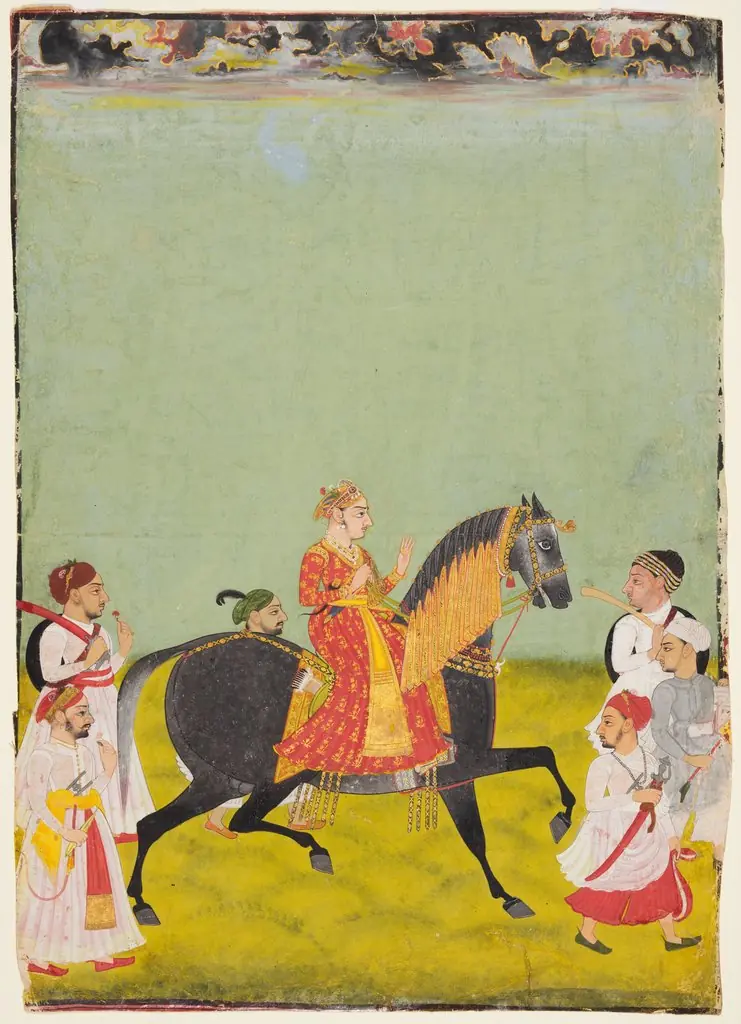
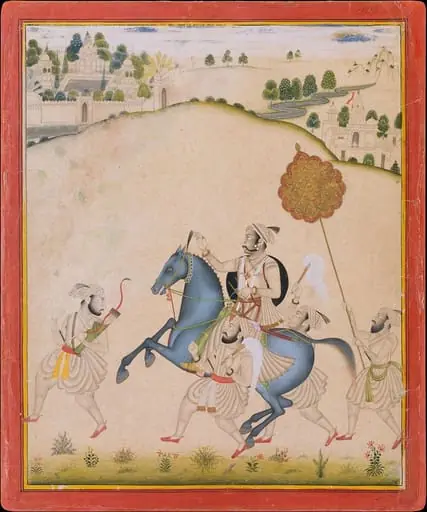
This portrait depicts Maharaja Ram Singh, ruler of Jodhpur from 1749 to 1751, during a brief and turbulent reign. Painted in the mid-18th century, it belongs to a series of official images commissioned to assert his authority. The composition follows a standardized royal format common in Rajasthani courts, emphasizing regal bearing through posture and attire rather than narrative context.
Subject & Meaning
Ram Singh is portrayed with a stern demeanor, reflecting his contested rule and the political instability that followed his ascent. The portrait functions not as a personal likeness but as a symbol of sovereignty, intended to project legitimacy amid growing dissent. His elevated position and formal dress reinforce his status, even as his actual power was rapidly eroding.
Technique & Style
Colors are layered with precision, and the background remains minimal, focusing attention on the figure.
The painting employs fine brushwork and rich pigments typical of Rajput court art, with attention to textile patterns and the elaborate turban, a regional marker of status. Colors are layered with precision, and the background remains minimal, focusing attention on the figure. The stylized rendering of facial features aligns with established conventions rather than naturalism, prioritizing symbolic representation over individual expression.
History & Provenance
Ram Singh was deposed within two years by his uncle Bakhat Singh, supported by powerful nobles. After his overthrow, he lived in exile until his death in Jaipur in 1773. Portraits like this one were likely produced during his short reign and circulated among loyalists or as diplomatic gifts. Their survival suggests continued interest in his image, even after his fall from power.
Context
In mid-18th century Rajasthan, portraiture served political ends as much as personal commemoration. The towering turban worn by Ram Singh was a distinctive Jodhpur style, signaling regional identity and royal authority. As succession disputes intensified, such images became tools for legitimizing rule, especially when actual control was fragile or contested.
Legacy
Though Ram Singh’s reign was brief and ended in exile, the portrait tradition he inspired endured. These images helped preserve his visual presence in courtly memory, even as historical narratives favored his successors. The style of dress and composition influenced later Rajput portraiture, embedding regional aesthetics into broader artistic practices of the period.
Artist & collection

 Domestic Scene
 Giacomo and Cardinal Marco, investing Andrea, Abbot of San Zeno, with his Benefice
 The Nymph of Fontainebleau
 Portrait of a Woman
 Madonna and Child with Saints in the Enclosed Garden
 Venus and Minerva
 Family Group of Four on Sofa
 Wall painting from Room H of the Villa of P. Fannius Synistor at Boscoreale