Artwork
Portrait of Jiva Raja
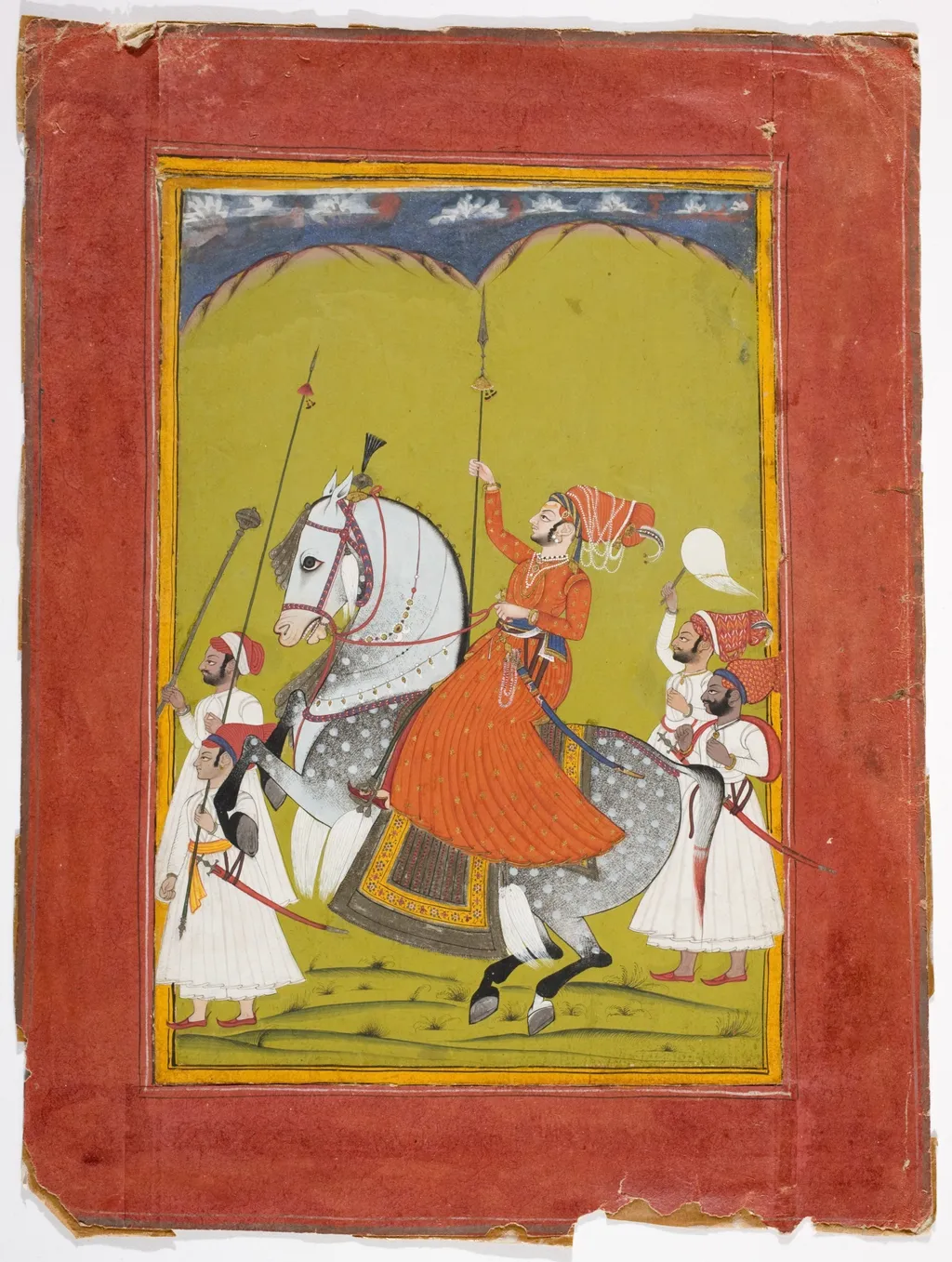
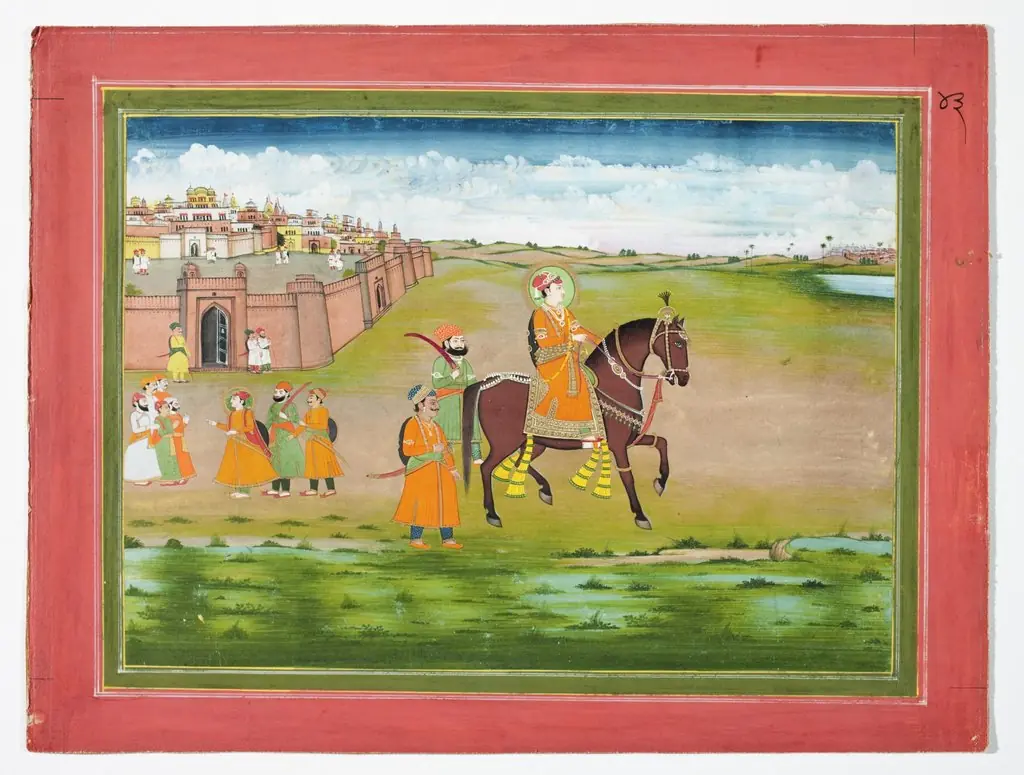
Portrait of Jiva Raja is an unspecified painting by the Rococo painting artist Unknown. It dates from 1740 and is held in the collection of the Detroit Institute of Arts.
About this work
Overview
This painting portrays a noble figure on horseback, surrounded by four attendants, all dressed in white robes and turbans, with the central figure clad in orange. The scene unfolds against a flat yellow wall and a blue sky dotted with white clouds. Bold color contrasts and dynamic postures convey motion, suggesting a moment of transit or ceremonial procession rather than static display.
Subject & Meaning
The central figure, identified as Jiva Raja, is depicted as a leader or warrior, distinguished by his orange attire and raised spear. The attendants, uniformly dressed, likely represent his retinue or guard. The composition emphasizes authority and movement, possibly illustrating a royal procession, military inspection, or ritual ride—common themes in regional courtly portraiture of the period.
Technique & Style
The lack of perspective and flat spatial treatment align with regional painting traditions prioritizing symbolic presence over naturalism.
The artist employs vivid, unmodulated colors—orange, white, red, and gold—to create visual impact. Details on the horse’s saddle and bridle are rendered with precision, contrasting with the simplified background. Figures and animals are stylized yet expressive, with limbs angled to suggest motion. The lack of perspective and flat spatial treatment align with regional painting traditions prioritizing symbolic presence over naturalism.
History & Provenance
The painting originates from a north Indian courtly tradition, likely produced in the 17th or early 18th century. Its subject, Jiva Raja, was a local ruler or nobleman whose identity is preserved in regional records. The work remained within family or court collections until entering institutional custody in the 20th century, though its exact early provenance remains partially undocumented.
Context
Created during a period when regional courts commissioned portraits to assert status, this work reflects the fusion of Mughal influences with local aesthetics. Similar compositions appear in Rajput and Pahari schools, where equestrian imagery symbolized martial virtue and sovereignty. The use of gold and red in tack, alongside the orderly retinue, signals wealth and hierarchical order within a small princely state.
Legacy
The painting contributes to the understanding of non-Mughal portraiture in early modern India, highlighting how local rulers adapted visual conventions to assert identity. Its preservation offers insight into the material culture and ceremonial practices of smaller courts. Though not widely exhibited, it remains a key example of regional artistic autonomy during a time of dominant imperial styles.
Artist & collection

 Domestic Scene
 Giacomo and Cardinal Marco, investing Andrea, Abbot of San Zeno, with his Benefice
 The Nymph of Fontainebleau
 Portrait of a Woman
 Madonna and Child with Saints in the Enclosed Garden
 Venus and Minerva
 Family Group of Four on Sofa
 Wall painting from Room H of the Villa of P. Fannius Synistor at Boscoreale
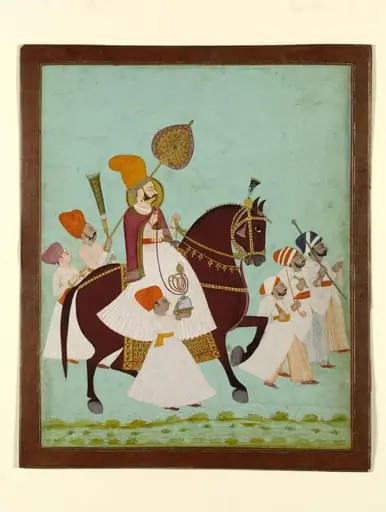 Maharaja Ram Singh
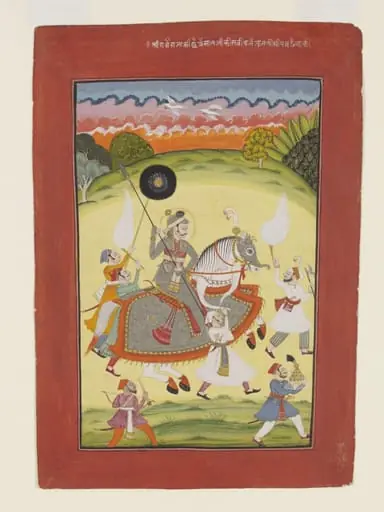 Rao Chhattar Sal
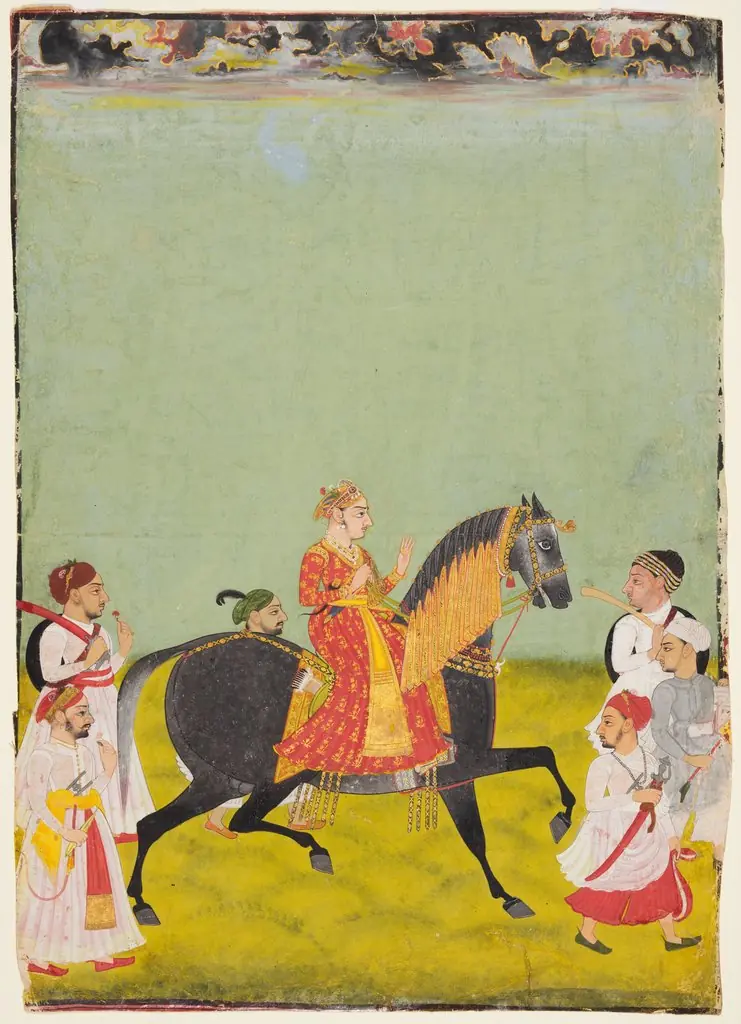 Equestrian Portrait of Maharana Raj Singh II of Mewar (r. 1755–62)
 Kalki avatar
 Maharaja Sawai Jai Singh
 Untitled
 Prince Mathu Singh of Jatoli on a Blue Horse Riding to Udaipur
 Untitled
 A Young Prince on Horseback
 Untitled
 Thakur Kusal Singhji Champawat
 Portrait of Raja on Horseback