Artwork
Maharao Umed Singh
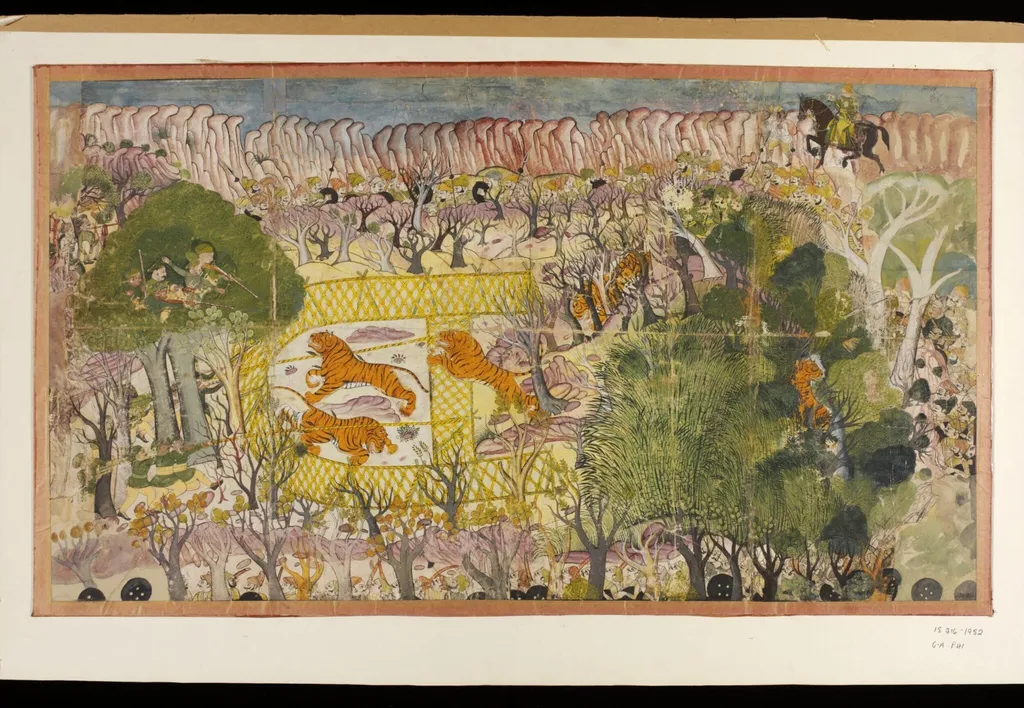
Maharao Umed Singh is a paint painting by the Rococo painting artist Unknown. It dates from 1770 and is held in the collection of the Victoria and Albert Museum.
About this work
Overview
The scene is set against a vividly layered background of blue sky and horizontal bands of pink and white architectural forms.
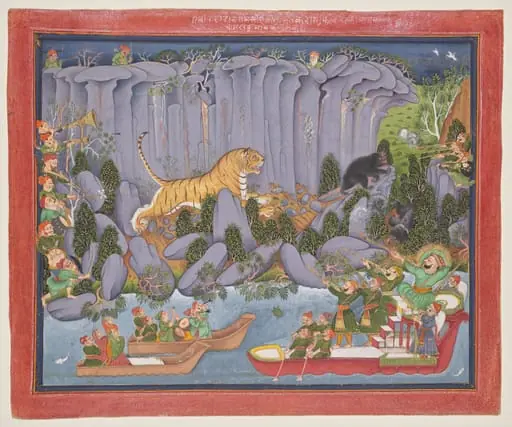
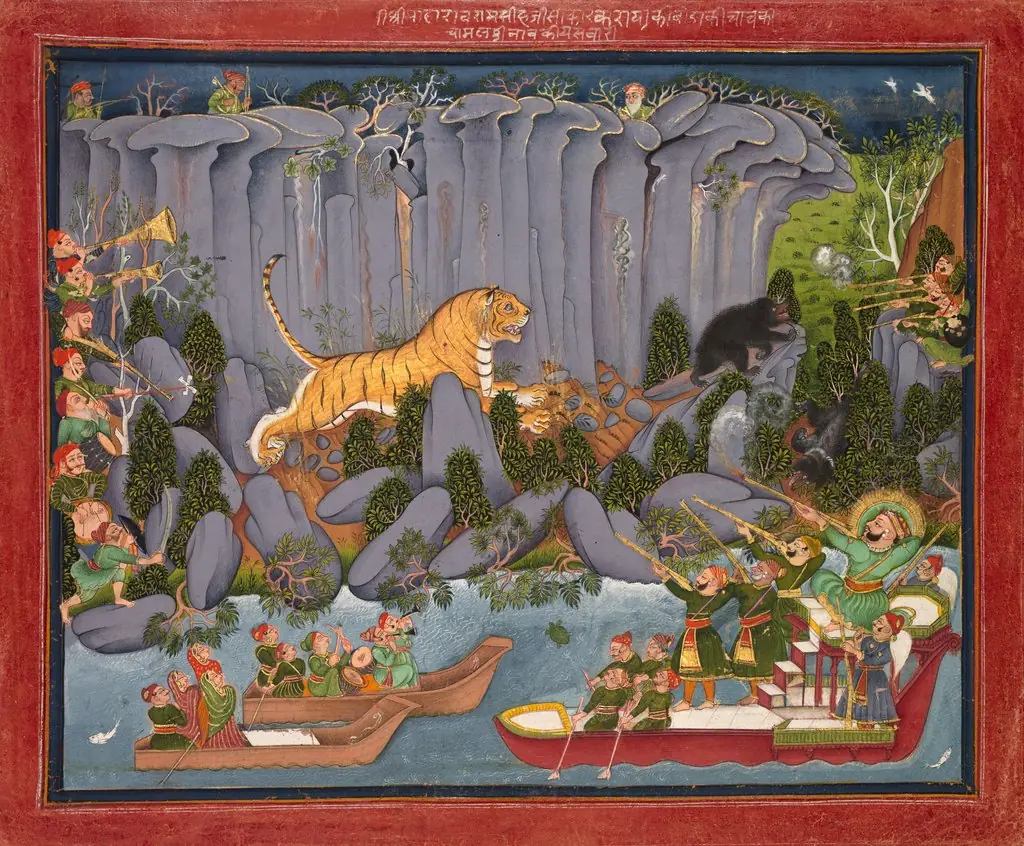
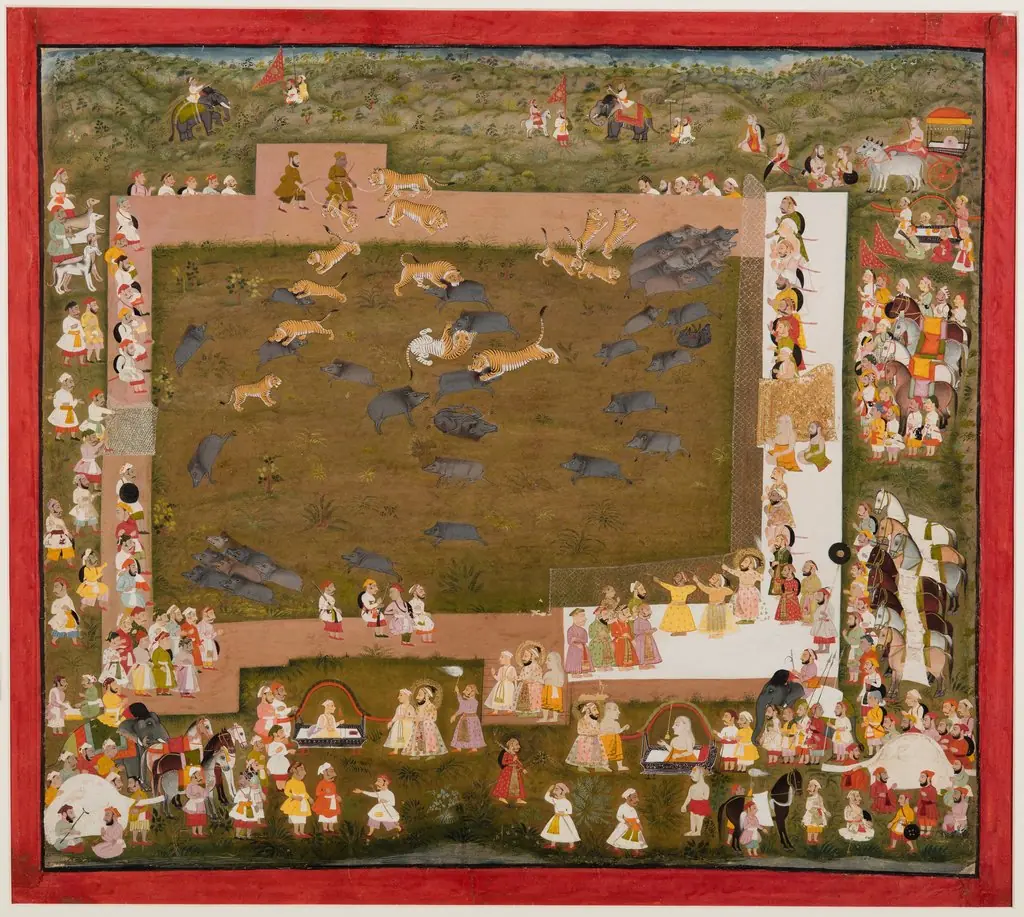
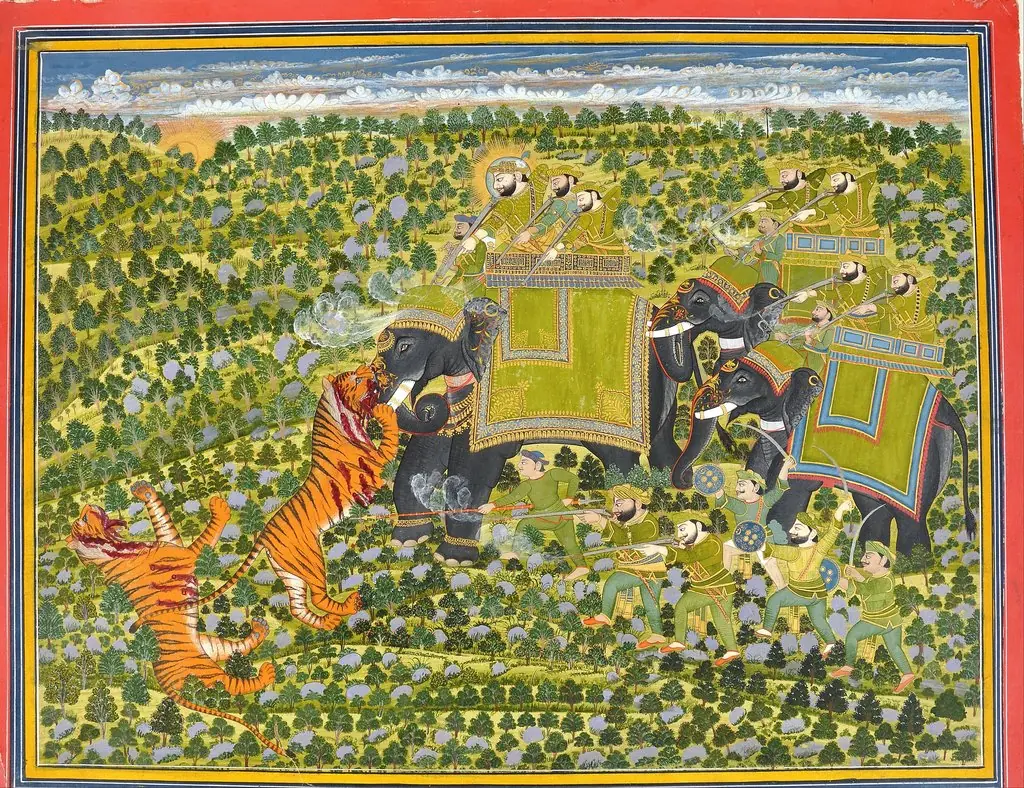
This opaque watercolour on paper portrays Maharao Umed Singh of Kota, who reigned from 1771 to 1820, during a tiger hunt. The scene is set against a vividly layered background of blue sky and horizontal bands of pink and white architectural forms. Multiple figures and two tigers are arranged around a large central structure, capturing a moment of dynamic interaction. The composition emphasizes detail and movement, typical of Rajasthani court painting traditions.
Subject & Meaning
The painting illustrates a royal tiger hunt, an activity that symbolized the ruler’s courage, control over nature, and martial authority. The presence of attendants, hunters, and the tigers on the structure suggests a staged event, possibly a ceremonial hunt rather than a spontaneous encounter. Such imagery reinforced the maharao’s status and his role as protector and master of his domain, blending spectacle with political messaging.
Technique & Style
Executed in opaque watercolour, the work features fine brushwork and rich, layered pigments that define textures in clothing, foliage, and stone. The figures are rendered with precise detail, while the background uses flat, decorative bands to suggest depth without perspective. Movement is conveyed through directional gestures and the positioning of figures and animals, reflecting the conventions of Rajasthani miniature painting with its emphasis on pattern and narrative clarity.
History & Provenance
Created during Umed Singh’s reign, the painting likely originated in the Kota court atelier, where artists documented royal activities. It remained within royal collections until the 20th century, when it entered institutional or private holdings. Its survival reflects the continued patronage of traditional art forms in Rajasthan despite shifting political landscapes under British influence.
Context
In late 18th- and early 19th-century Rajasthan, hunting scenes were common in court art, serving both as record and ritual. Kota’s artists developed a distinctive style marked by bold colour and intricate detail, influenced by Mughal traditions yet adapted to local tastes. These works were not merely decorative but functioned as visual affirmations of lineage, power, and cultural identity within a changing political environment.
Legacy
The painting contributes to a broader corpus of Rajasthani miniatures that document royal life with precision and symbolism. While later colonial and modern art movements shifted aesthetic priorities, such works remain vital for understanding indigenous artistic practices and the visual language of power in pre-colonial India. They continue to inform scholarly study and museum exhibitions on South Asian court culture.
Artist & collection

 Domestic Scene
 Giacomo and Cardinal Marco, investing Andrea, Abbot of San Zeno, with his Benefice
 The Nymph of Fontainebleau
 Portrait of a Woman
 Madonna and Child with Saints in the Enclosed Garden
 Venus and Minerva
 Family Group of Four on Sofa
 Wall painting from Room H of the Villa of P. Fannius Synistor at Boscoreale