Artwork
Maharawat Raghunath Singh
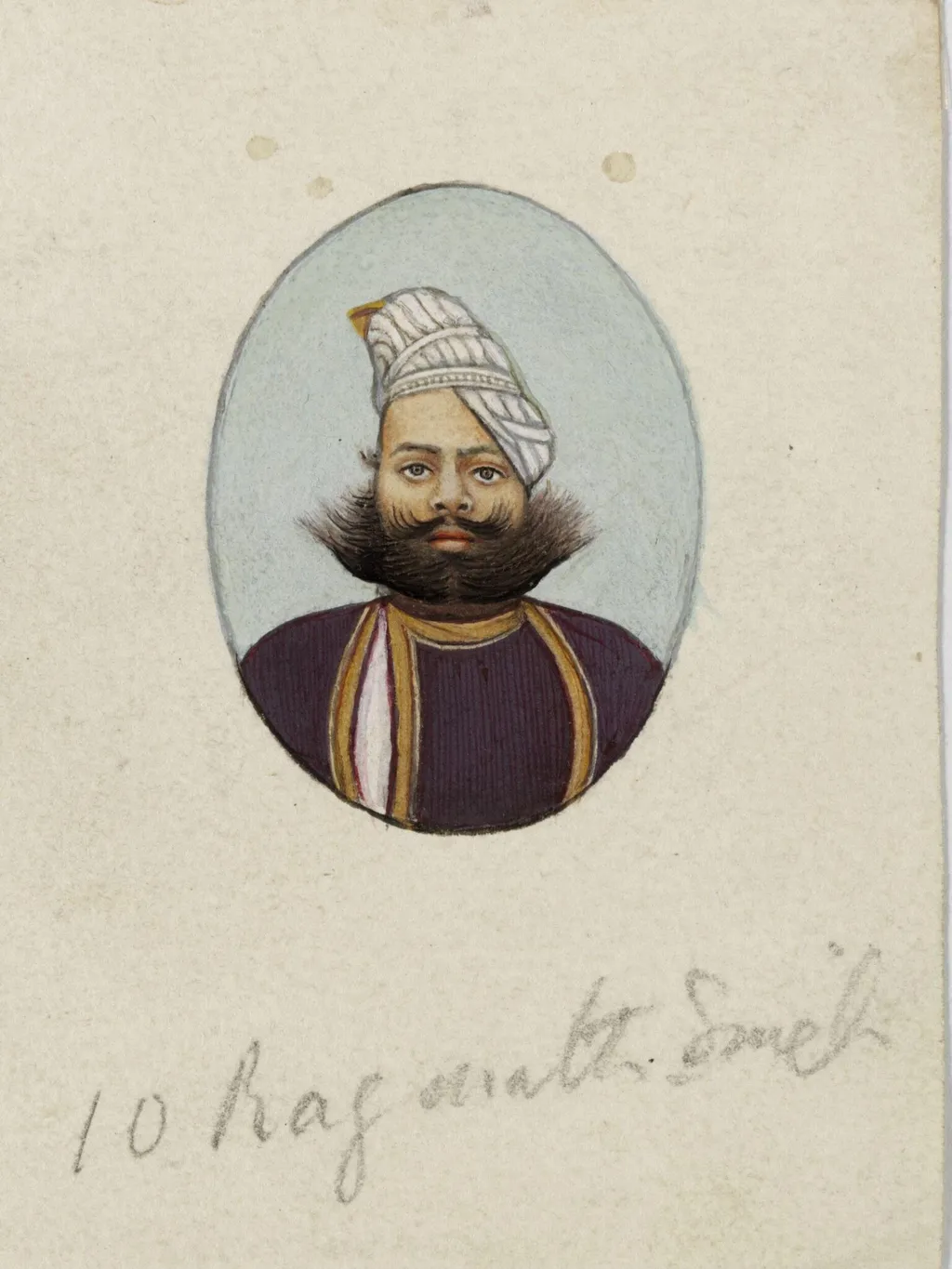
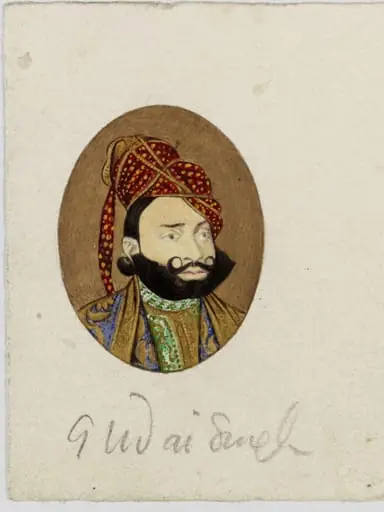
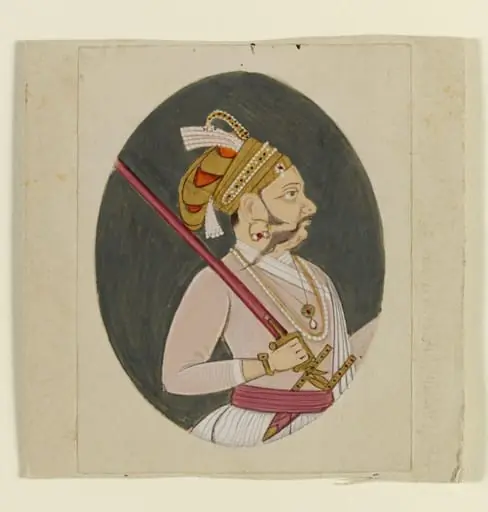
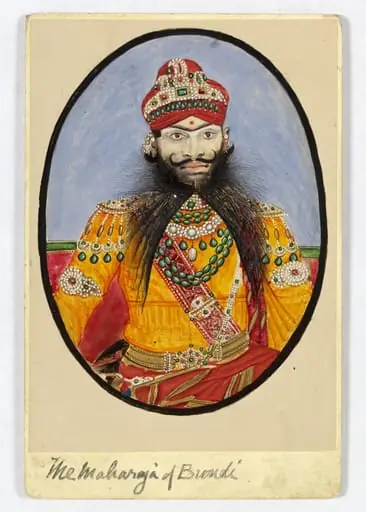
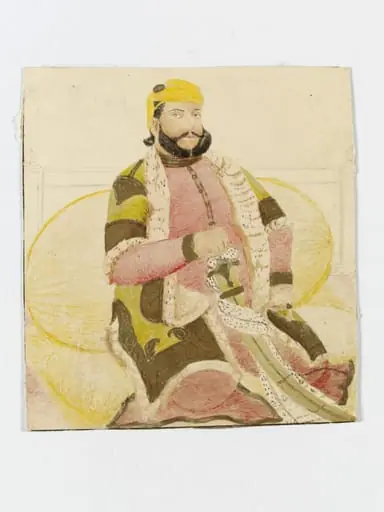
Maharawat Raghunath Singh is a paint painting by the Impressionist artist Unknown. It dates from 1890 and is held in the collection of the Victoria and Albert Museum. This portrait, created in 1890, depicts Raghunath Singh, the ruler of Deoliya Partabgarh, in a formal seated pose.
About this work
Overview
Executed in opaque watercolor and gold on paper, it reflects the refined aesthetic of late 19th-century Rajasthani court painting.
This portrait, created in 1890, depicts Raghunath Singh, the ruler of Deoliya Partabgarh, in a formal seated pose. Executed in opaque watercolor and gold on paper, it reflects the refined aesthetic of late 19th-century Rajasthani court painting. The work combines traditional Indian miniature techniques with emerging naturalistic tendencies, capturing the subject with careful attention to texture and presence.
Subject & Meaning
Raghunath Singh is portrayed with solemn dignity, his direct gaze establishing a quiet authority. His white turban and dark garment, embellished with gold thread, signal his status and adherence to royal convention. The absence of symbolic objects or landscape elements focuses attention on his person, reinforcing the portrait’s function as a statement of leadership and personal identity within a changing political landscape.
Technique & Style
The artist employed fine brushwork to render fabric folds, facial features, and metallic embroidery with precision. Gold leaf highlights on the clothing add luminosity without overt ornamentation. The muted blue-gray background isolates the figure, enhancing the realism of his form. While rooted in regional miniature traditions, the rendering of anatomy and expression shows influence from Western naturalism, reflecting broader artistic exchanges of the period.
History & Provenance
Commissioned during the British colonial era, the painting likely served as a diplomatic or ceremonial object, possibly intended for display in royal residences or as a gift to colonial officials. Its survival suggests it remained within family or regional collections, avoiding dispersal. No documented exhibition or sale history is known prior to its modern acquisition by a public institution.
Context
By 1890, many Rajasthani courts maintained traditional painting ateliers even as photography began to replace portraiture. This work represents a transitional moment: rulers still commissioned painted likenesses to assert continuity with pre-colonial dynastic culture, while subtly incorporating Western realism to align with contemporary expectations of representation and authority.
Legacy
The portrait stands as a testament to the resilience of indigenous artistic practices under colonial influence. It illustrates how regional styles absorbed external techniques without abandoning their core visual language. Today, it contributes to scholarly understanding of how Indian royalty navigated identity, power, and representation during a period of profound social and political transformation.
Artist & collection

 Domestic Scene
 Giacomo and Cardinal Marco, investing Andrea, Abbot of San Zeno, with his Benefice
 The Nymph of Fontainebleau
 Portrait of a Woman
 Madonna and Child with Saints in the Enclosed Garden
 Venus and Minerva
 Family Group of Four on Sofa
 Wall painting from Room H of the Villa of P. Fannius Synistor at Boscoreale