Artwork
Maharawat Udai Singh
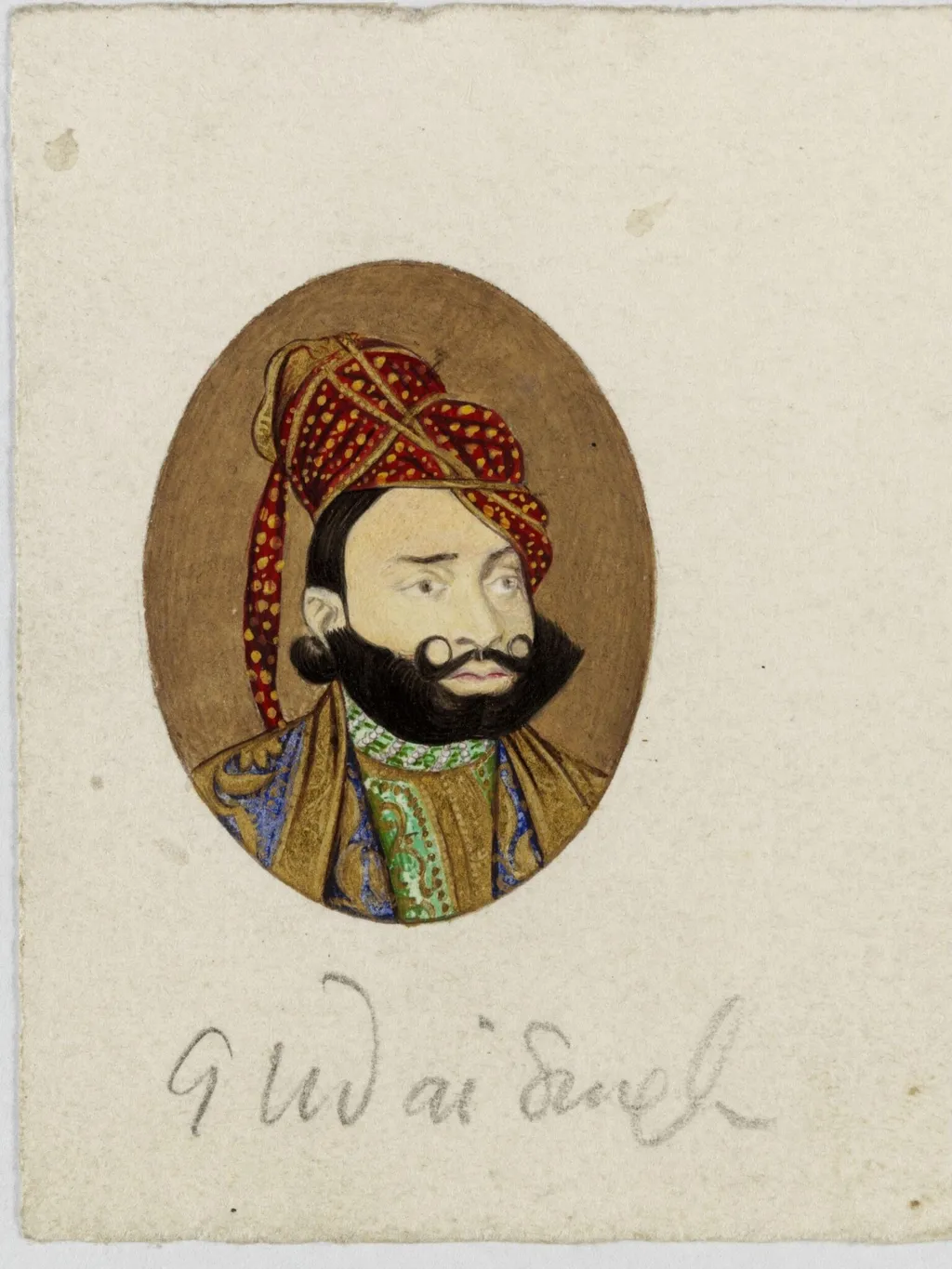
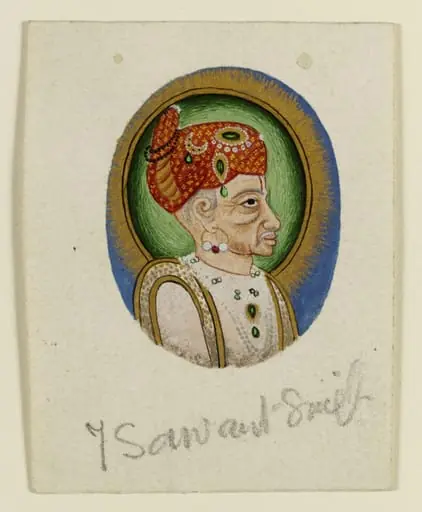
Maharawat Udai Singh is a paint painting by the Impressionist artist Unknown. It dates from 1890 and is held in the collection of the Victoria and Albert Museum.
About this work
The style of the painting is reminiscent of Impressionism and Realism, with a focus on capturing the subject's likeness and expression.
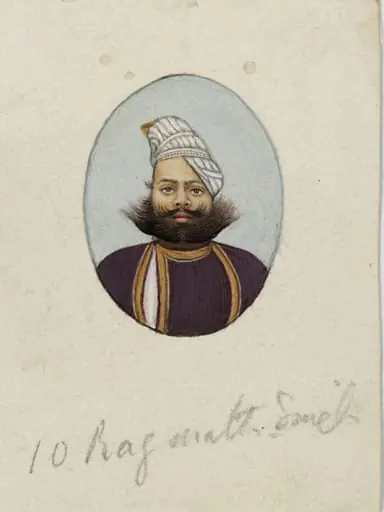
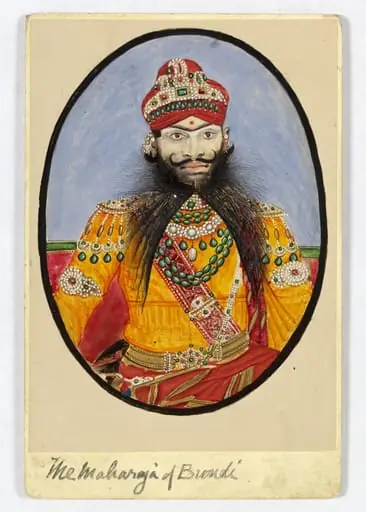
This painting is a portrait of a man, likely from the 19th century. He is depicted wearing a red turban with yellow and white dots, a green and blue patterned shirt, and a brown robe. The man has a thick black mustache and beard, and his hair is pulled back into a bun.
The background of the painting is a solid brown color, which helps to focus attention on the subject. The artist's use of color and detail creates a sense of depth and texture in the painting.
The style of the painting is reminiscent of Impressionism and Realism, with a focus on capturing the subject's likeness and expression. To learn more about this style, you can explore the movement of Impressionism.
Overview
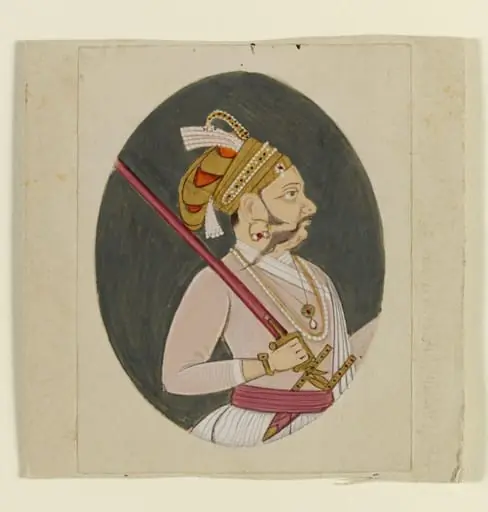
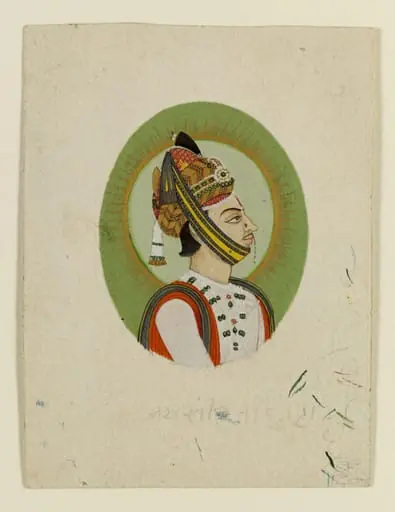
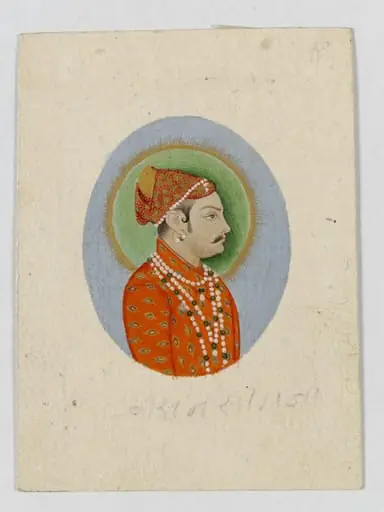
This 1890 miniature portrait depicts Maharawat Udai Singh of Dungarpur, a Rajput ruler of the region. Executed in opaque watercolor and gold on paper, the work belongs to the tradition of Rajasthani court painting. Its compact scale and meticulous detail reflect the conventions of Indian miniature art, where portraiture served both personal and political functions within royal households.
Subject & Meaning
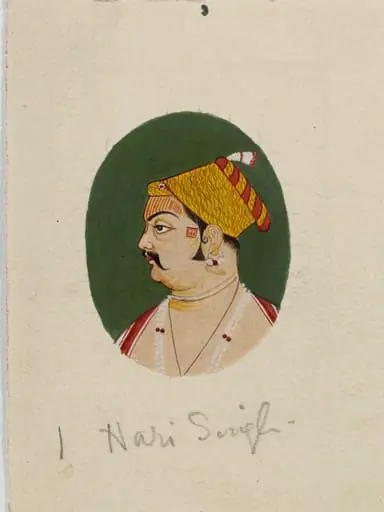
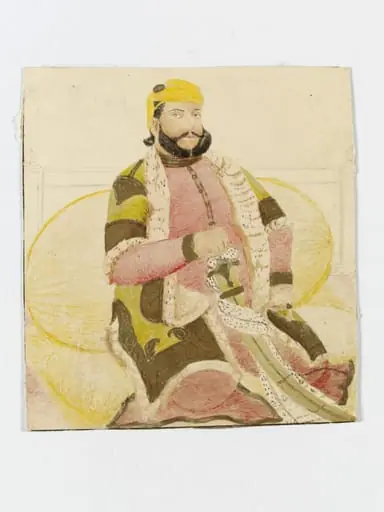
The ruler is shown in formal attire, emphasizing his status through rich textiles and ornamental headwear. The red turban, patterned tunic, and layered robe signify rank and cultural identity. His full beard and neatly bound hair convey dignity and maturity, common traits in portraits of Indian nobility. The absence of landscape or symbolic objects focuses attention on his presence, reinforcing his authority as a local sovereign.
Technique & Style
The artist employed fine brushwork and layered pigments to render fabric textures and facial features with precision. Gold accents highlight embroidery and jewelry, adding luminosity without overt decoration. Unlike Western realism or impressionism, the style adheres to indigenous conventions—flattened space, controlled perspective, and symbolic color use—where clarity of form and regal bearing take precedence over naturalistic depth.
History & Provenance
Created in 1890, the portrait likely originated in the court of Dungarpur, a princely state in present-day Rajasthan. Such works were commissioned to commemorate rulers, often displayed in palaces or gifted to allies. Its survival suggests it remained within royal collections, possibly passed down through generations before entering institutional or private holdings in the 20th century.
Context
By the late 19th century, Rajput courts maintained artistic traditions despite increasing British influence. Miniature painting persisted as a marker of cultural continuity, even as photography began to replace portraiture. This work reflects a deliberate adherence to indigenous aesthetics, asserting local identity amid colonial modernization and shifting political power structures.
Legacy
The portrait stands as an example of late Rajasthani miniature painting, preserving visual codes of royal representation into the colonial era. It contributes to the understanding of how regional courts sustained artistic practices long after their political autonomy diminished. Today, such works are studied for their craftsmanship and as records of elite self-presentation in pre-independence India.
Artist & collection

 Domestic Scene
 Giacomo and Cardinal Marco, investing Andrea, Abbot of San Zeno, with his Benefice
 The Nymph of Fontainebleau
 Portrait of a Woman
 Madonna and Child with Saints in the Enclosed Garden
 Venus and Minerva
 Family Group of Four on Sofa
 Wall painting from Room H of the Villa of P. Fannius Synistor at Boscoreale