Artwork
Maica Domnului cu Pruncul
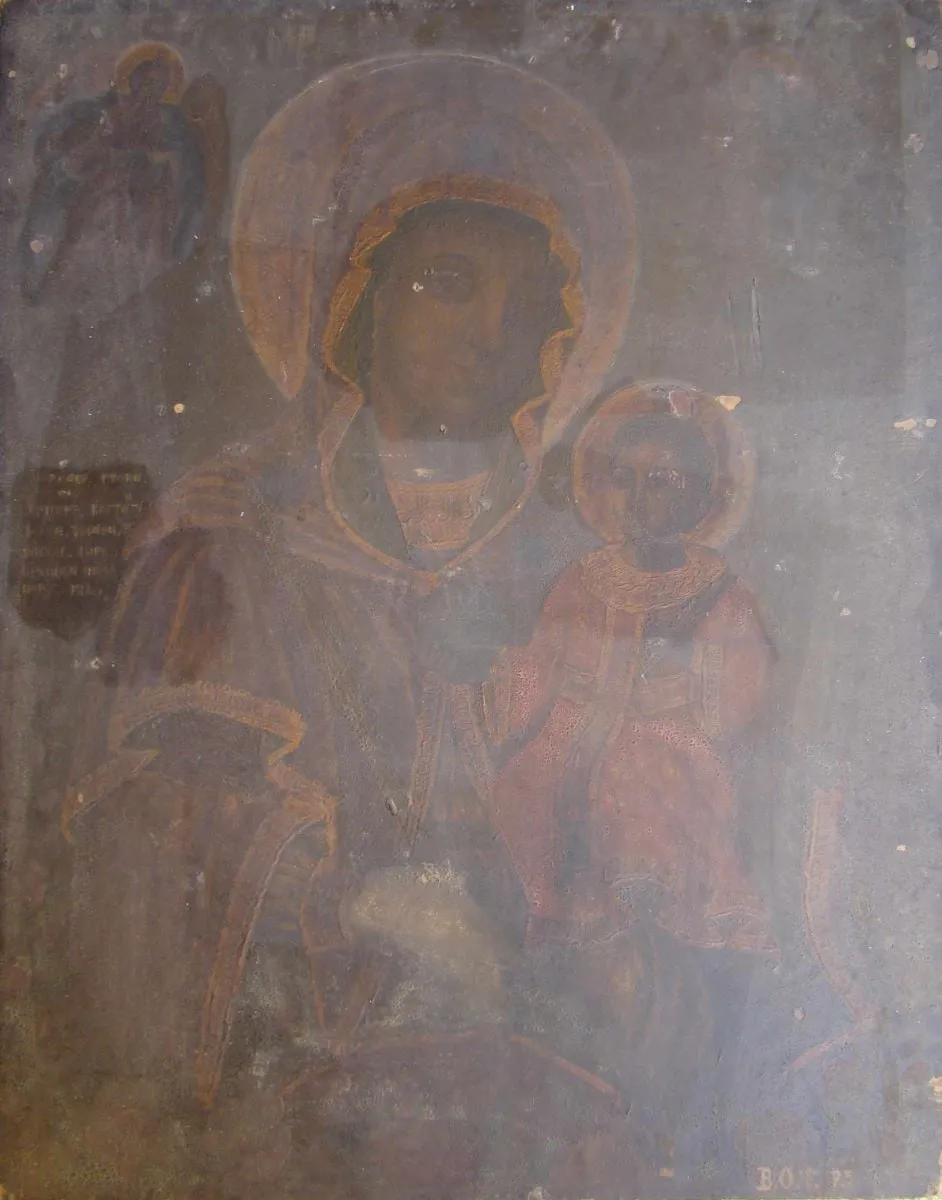
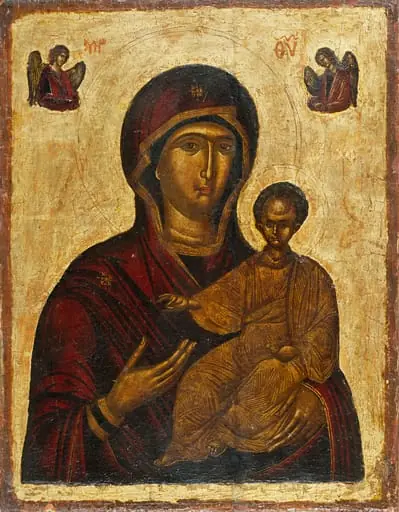
Maica Domnului cu Pruncul is a drawing by the Romanticist artist Unknown. It dates from 1823 and is held in the collection of the Alba Iulia Orthodox Archdiocese. This devotional panel depicts the Virgin Mary holding the infant Jesus, both crowned with golden halos.
About this work
Overview
The painting shows signs of age—faded pigments, surface cracking, and worn details—suggesting it was created centuries ago and used in religious contexts.
This devotional panel depicts the Virgin Mary holding the infant Jesus, both crowned with golden halos. The figures are rendered in a stylized, flat manner against a muted, dark background. The painting shows signs of age—faded pigments, surface cracking, and worn details—suggesting it was created centuries ago and used in religious contexts. Its simplicity and solemnity reflect early Byzantine or post-Byzantine traditions rather than later naturalistic approaches.
Subject & Meaning
The Virgin and Child represent central figures in Christian devotion, symbolizing divine motherhood and the Incarnation. Their solemn expressions and frontal posture invite contemplation rather than emotional engagement. The halos affirm their sacred status, while the lack of elaborate setting focuses attention on their spiritual presence. The faint figure in the upper corner may denote a celestial witness, reinforcing the holy nature of the scene.
Technique & Style
The painting employs tempera or egg-based pigments on a wooden panel, typical of medieval and early Renaissance iconography. Forms are simplified, with minimal modeling and no perspective. The contrast between the Virgin’s dark outer robe and lighter undergarment creates subtle depth, while the child’s pale garment draws the eye. Facial features are rendered with restrained lines, avoiding individualized expression in favor of timeless, canonical representation.
History & Provenance
Though exact origins are undocumented, the style aligns with Eastern Orthodox icon painting traditions from the late medieval or early modern Balkans. Its wear and fading suggest prolonged use in a domestic or ecclesiastical setting. The painting likely traveled through private collections or church inventories before entering its current context, but no documented ownership chain or commission record survives.
Context
This work predates Romanticism by centuries and belongs to a tradition of religious iconography that emphasized spiritual presence over emotional drama or naturalism. Romanticism, which emerged in the late 18th century, celebrated individual emotion and nature—values this image deliberately avoids. Its austerity reflects liturgical needs and theological priorities of pre-modern Christian communities, not artistic movements of the 19th century.
Legacy
As a surviving example of pre-modern devotional art, this panel contributes to the study of how sacred imagery functioned in daily religious life. Its endurance through centuries speaks to the persistence of iconographic conventions in Orthodox communities. Though not widely known outside specialized circles, it remains a quiet testament to the enduring role of visual symbols in faith practices across generations.
Artist & collection

 Domestic Scene
 Giacomo and Cardinal Marco, investing Andrea, Abbot of San Zeno, with his Benefice
 The Nymph of Fontainebleau
 Portrait of a Woman
 Madonna and Child with Saints in the Enclosed Garden
 Venus and Minerva
 Family Group of Four on Sofa
 Wall painting from Room H of the Villa of P. Fannius Synistor at Boscoreale
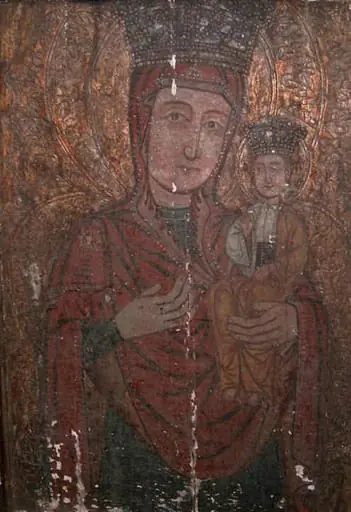 Madona cu Pruncul
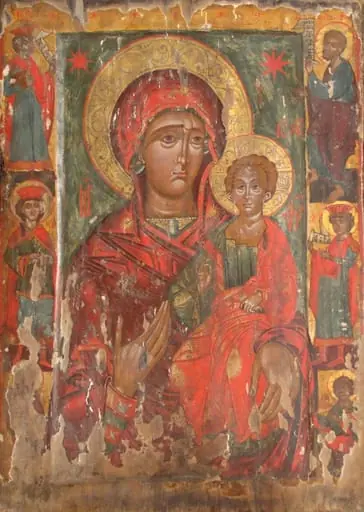 Maica Domnului cu Pruncul, flancată de prooroci
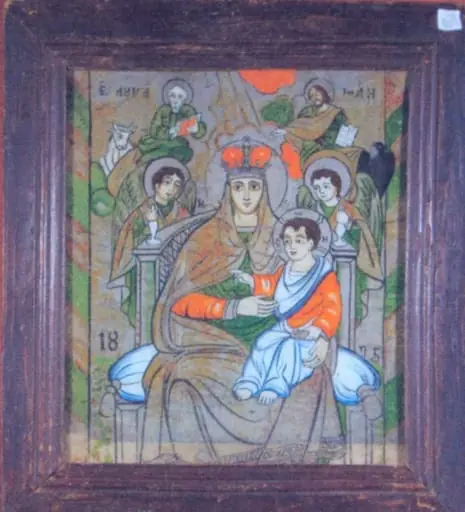 Maica Domnului cu Pruncul
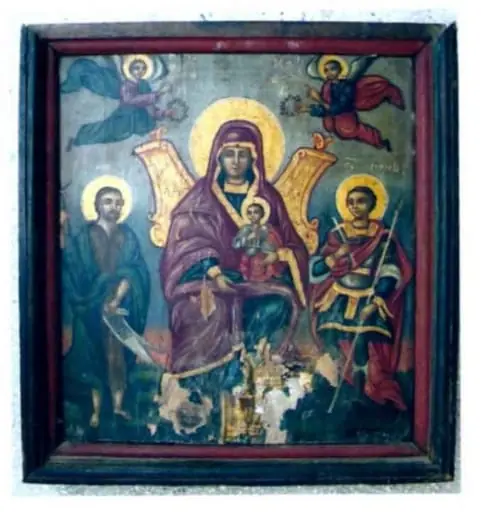 Maica Domnului cu Pruncul
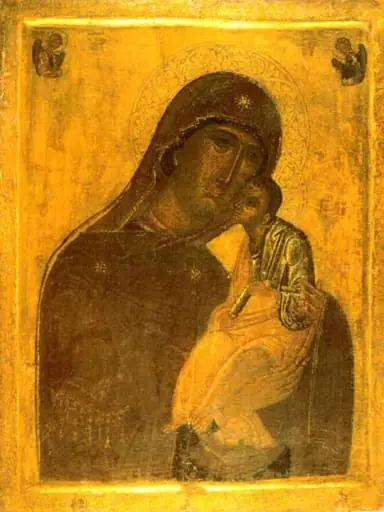 Maica Domnului cu Pruncul - Eleusa
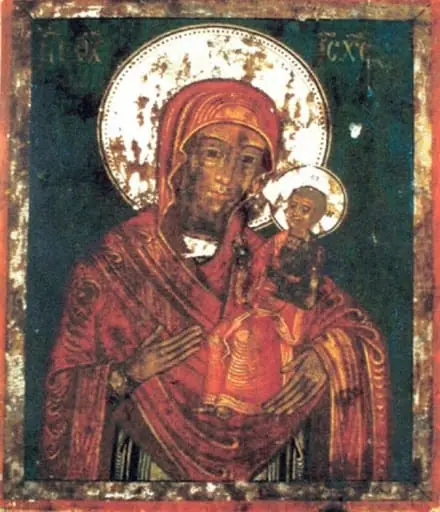 Maica cu Pruncul
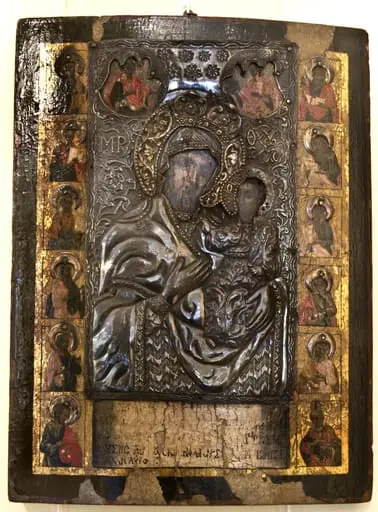 Maica Domnului cu Pruncul; Icoană ferecată
 Jumalanäiti, Hodigitria - Tiennäyttäjä, bysanttilainen ikoni
 Maica Domnului cu pruncul Kazanskaia, Madona Neagră