Artwork
Maica Domnului cu Pruncul
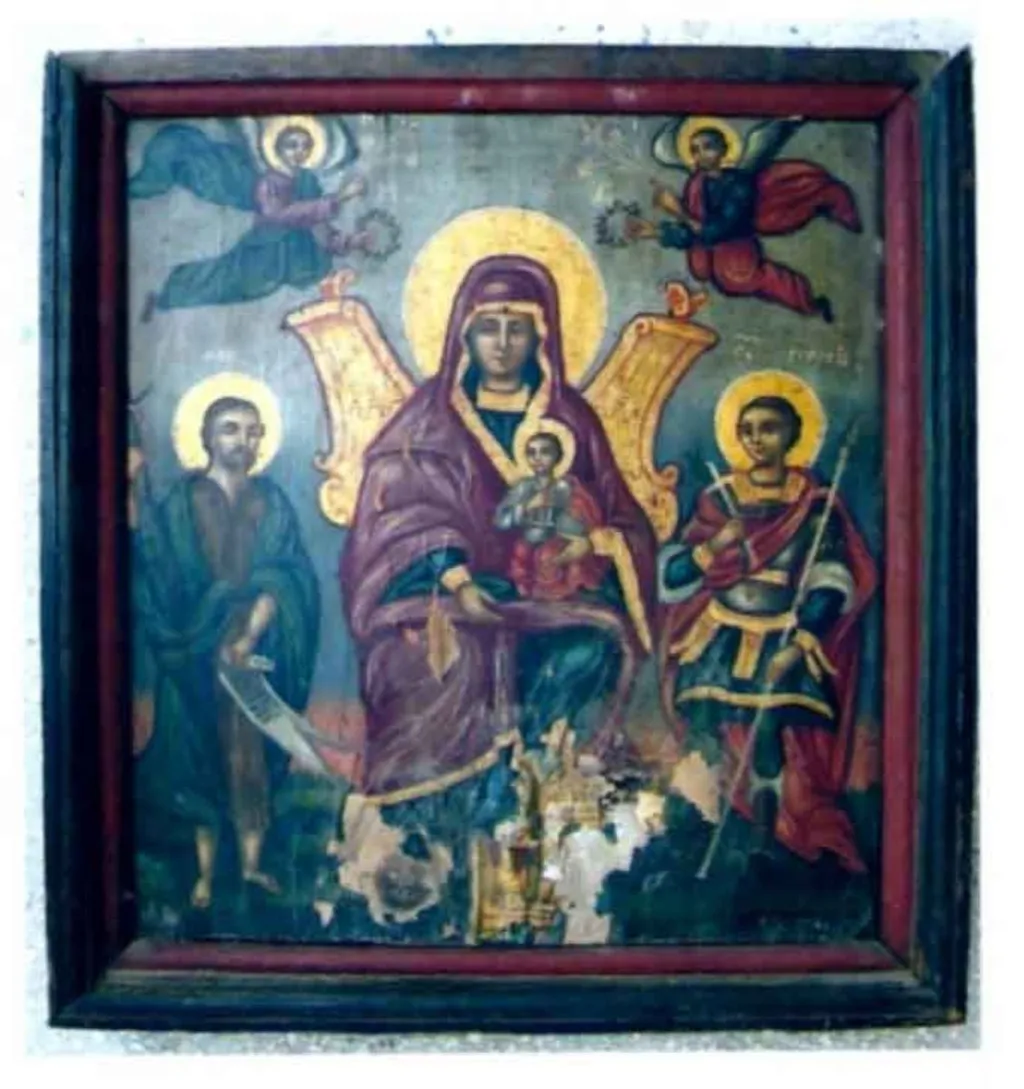
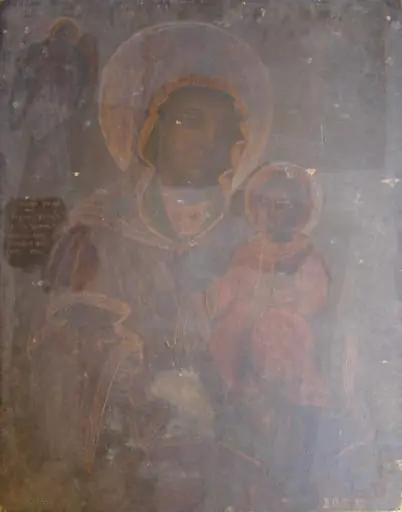
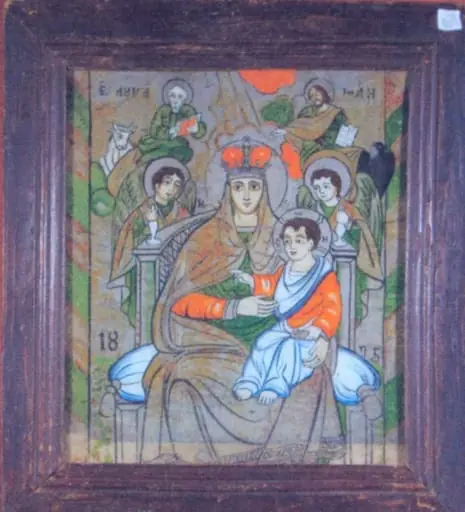
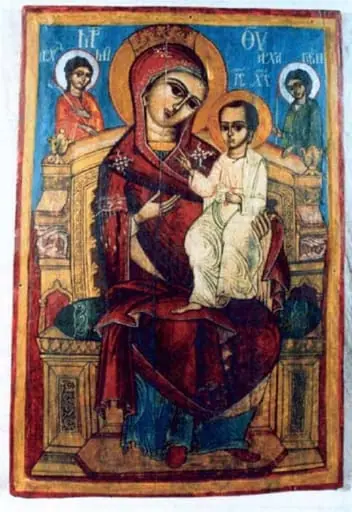
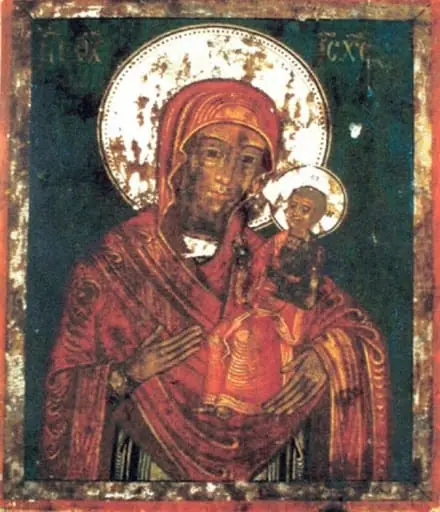
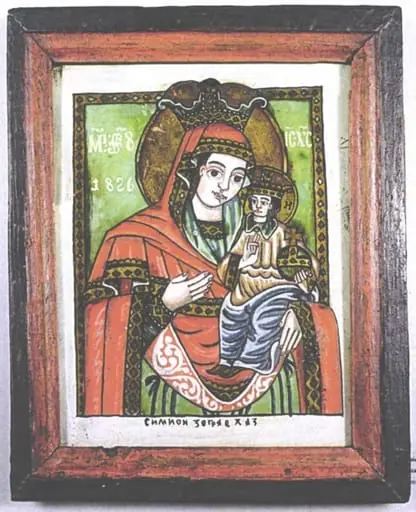
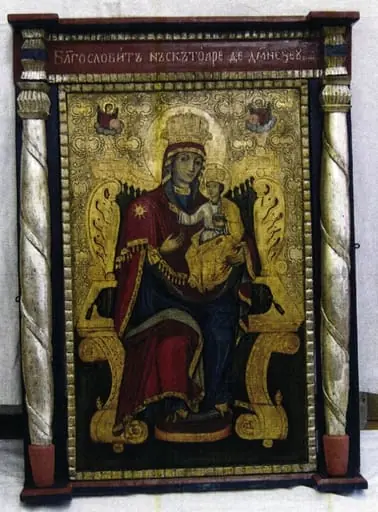
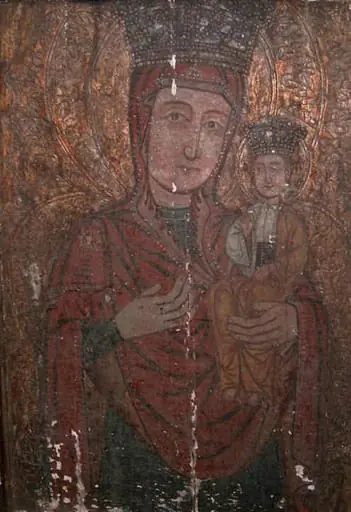
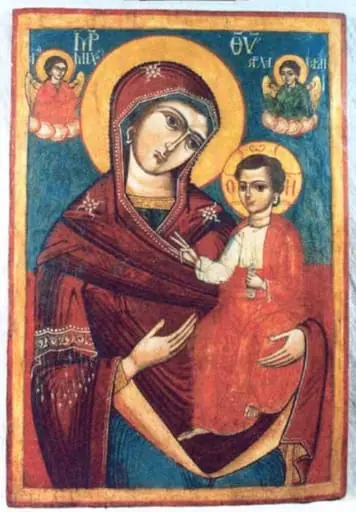
Maica Domnului cu Pruncul is a drawing by the Impressionist artist Unknown. It dates from 1864 and is held in the collection of the Golești Viticulture and Pomiculture Museum. This work depicts the Virgin Mary seated with the Christ Child, surrounded by two attendant figures and two angels.
About this work
Overview
This work depicts the Virgin Mary seated with the Christ Child, surrounded by two attendant figures and two angels. The composition is hierarchical, with the central pair elevated by golden halos and a luminous background. Colors are rendered in flat, saturated tones, and the overall effect is formal and devotional, typical of Byzantine-influenced iconography.
Subject & Meaning
The Virgin and Child are the focal point, their intimate yet rigid posture suggesting both tenderness and solemnity. The figures with the scroll and spear likely represent prophets or saints, their attributes hinting at divine prophecy or sacrifice. The angels above reinforce the sacred nature of the scene, while the golden light signifies divine presence rather than natural illumination.
Technique & Style
The painting employs a stylized approach with minimal modeling and no perspective. Figures are outlined clearly, and drapery folds are simplified into geometric patterns. Gold leaf halos and background emphasize spiritual significance over realism. The rigid poses and flat planes reflect liturgical conventions rather than naturalistic observation.
History & Provenance
The style and iconography align with Eastern Orthodox or late medieval Byzantine traditions, likely produced in a monastic or workshop setting. Exact origin and maker are unknown, but similar works were common in the Balkans and Anatolia between the 12th and 15th centuries. Its preservation suggests it was venerated in a religious context.
Context
Created during a period when religious imagery served as a visual scripture for largely illiterate communities, this piece functioned as an object of prayer and meditation. Its formal rigidity reflects theological emphasis on eternal truths rather than human emotion. Similar icons were used in home altars and church apses across Orthodox Christian regions.
Legacy
Though stylistically distinct from later Western developments like Impressionism, this work influenced the persistence of symbolic representation in religious art. Its enduring presence in liturgical settings underscores the continuity of iconographic traditions, even as artistic movements elsewhere embraced naturalism and individual expression.
Artist & collection
Museum
Golești Viticulture and Pomiculture Museum
Continue through works from the same source collection.
 Domestic Scene
 Giacomo and Cardinal Marco, investing Andrea, Abbot of San Zeno, with his Benefice
 The Nymph of Fontainebleau
 Portrait of a Woman
 Madonna and Child with Saints in the Enclosed Garden
 Venus and Minerva
 Family Group of Four on Sofa
 Wall painting from Room H of the Villa of P. Fannius Synistor at Boscoreale