Artwork
Maica Domnului cu Pruncul
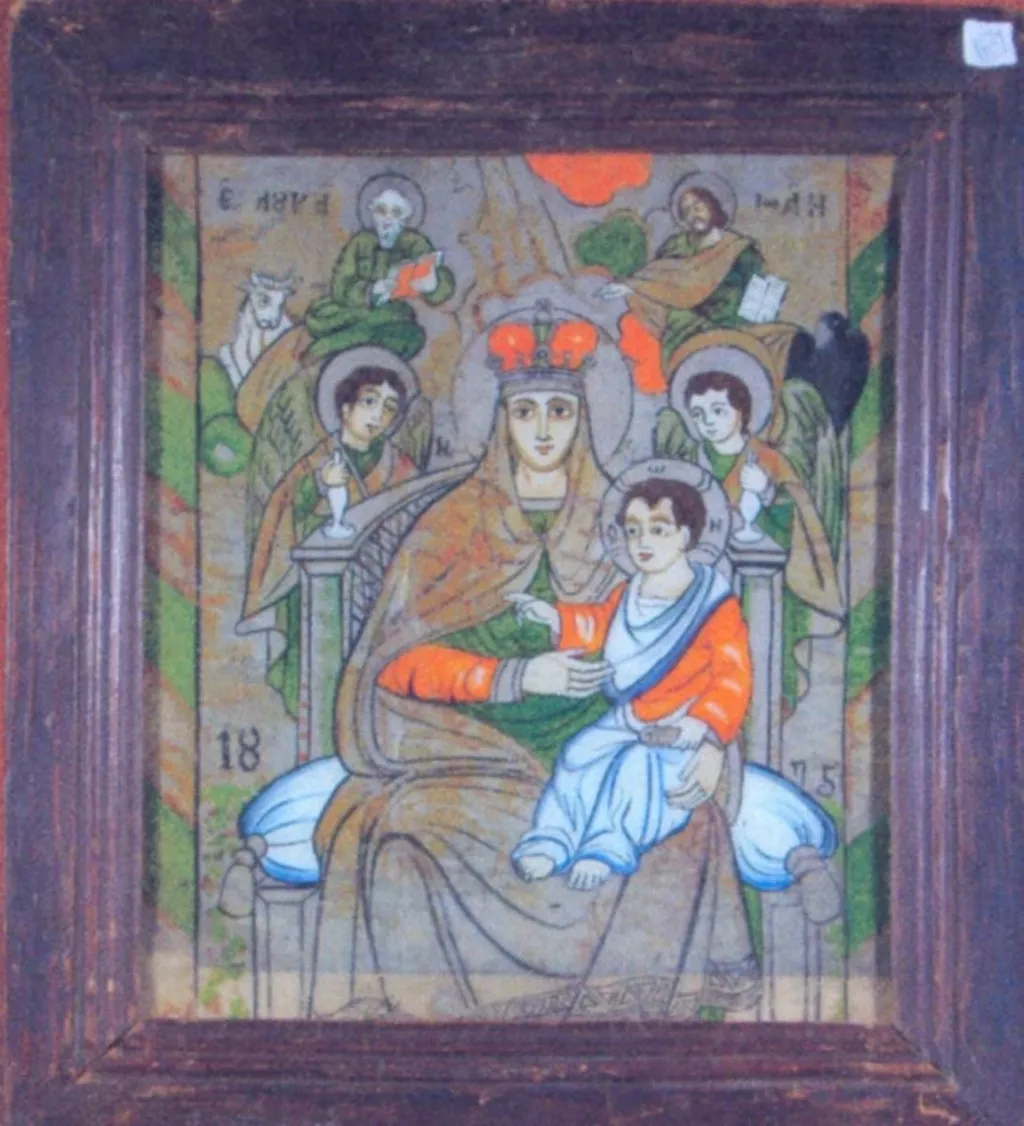
Maica Domnului cu Pruncul is a drawing by the Impressionist artist Unknown. It dates from 1875 and is held in the collection of the Romanian Academy in Bucharest. This artwork presents a seated female figure with a child, rendered in a style that merges impressionistic brushwork with realistic detail.
About this work
Overview
Though labeled as an image without clear provenance, its visual language aligns with late 19th-century religious iconography adapted through modern techniques.
This artwork presents a seated female figure with a child, rendered in a style that merges impressionistic brushwork with realistic detail. The composition centers on maternal intimacy, framed by a soft landscape and celestial figures above. Though labeled as an image without clear provenance, its visual language aligns with late 19th-century religious iconography adapted through modern techniques.
Subject & Meaning
The central figures likely represent the Virgin Mary and the Christ Child, indicated by their regal attire and halos. The crown and rich robes suggest divine status, while the child’s simple tunic contrasts with his ornate cloak, symbolizing both humanity and divinity. The four haloed figures above may be archangels or evangelists, reinforcing the sacred context of the scene.
Technique & Style
The painting employs loose, atmospheric brushstrokes in the background to suggest depth and movement, characteristic of Impressionism. Facial features and garments are rendered with careful realism, grounding the spiritual subject in tangible form. The color palette—soft greens, warm oranges, and muted skies—creates a serene, otherworldly mood without overt symbolism.
History & Provenance
No documented origin or artist is established for this work. Its resemblance to pieces in the Museum of Ethnography suggests possible Eastern European or Balkan provenance, where folk traditions often merged religious imagery with regional aesthetics. It may have been produced for private devotion rather than institutional use.
Context
In the late 1800s, religious subjects were frequently reinterpreted through emerging modern styles across Europe. This painting reflects a trend where traditional iconography was softened by impressionistic techniques, making sacred themes more accessible to domestic audiences while retaining their symbolic weight.
Legacy
Though not widely exhibited or cataloged, the work exemplifies a quiet shift in devotional art: the blending of folk sensibility with academic influences. Its preservation in ethnographic collections hints at its role as a cultural artifact, bridging religious practice and regional artistic identity in a period of rapid change.
Artist & collection
 Domestic Scene
 Giacomo and Cardinal Marco, investing Andrea, Abbot of San Zeno, with his Benefice
 The Nymph of Fontainebleau
 Portrait of a Woman
 Madonna and Child with Saints in the Enclosed Garden
 Venus and Minerva
 Family Group of Four on Sofa
 Wall painting from Room H of the Villa of P. Fannius Synistor at Boscoreale
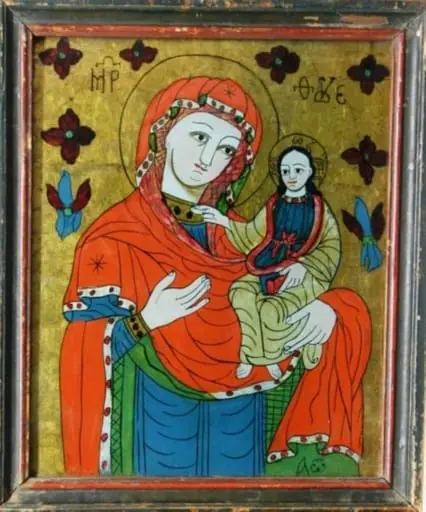 Maica Domnului cu Pruncul
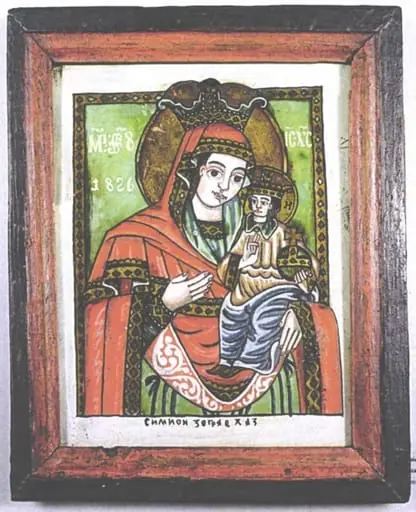 Maica Domnului Hodighitria
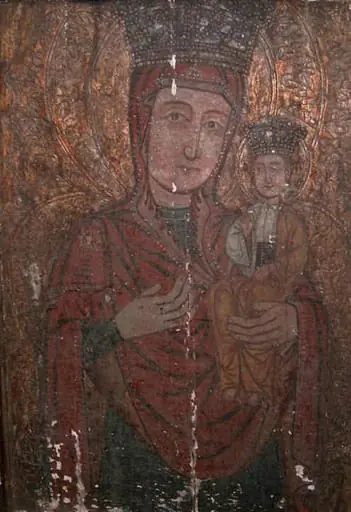 Madona cu Pruncul
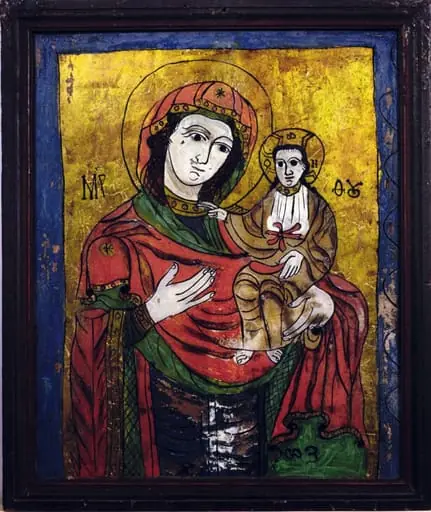 Maica Domnului cu Pruncul
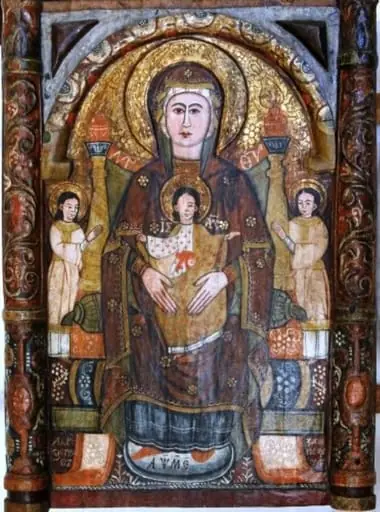 Maica Domnului cu Pruncul
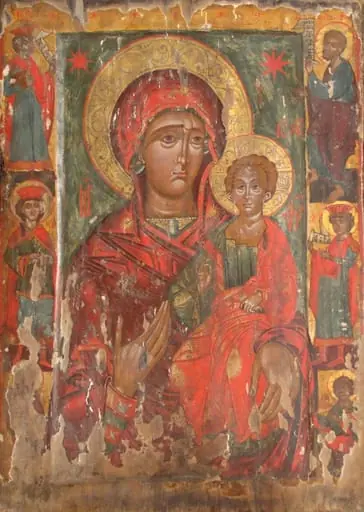 Maica Domnului cu Pruncul, flancată de prooroci
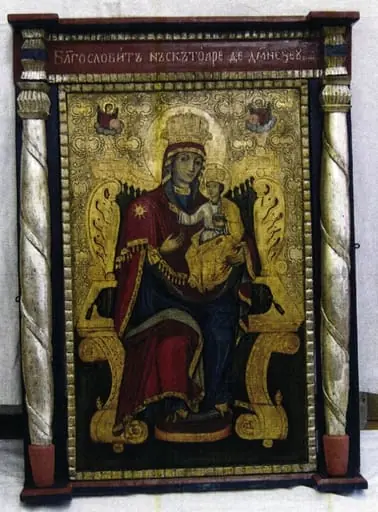 Maica Domnului cu Pruncul
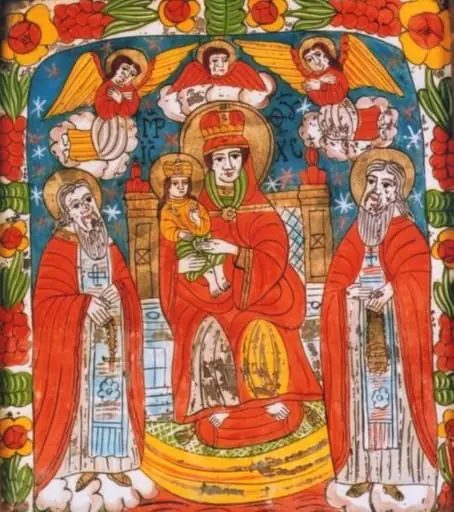 Maica Domnului cu Pruncul și Sfinții
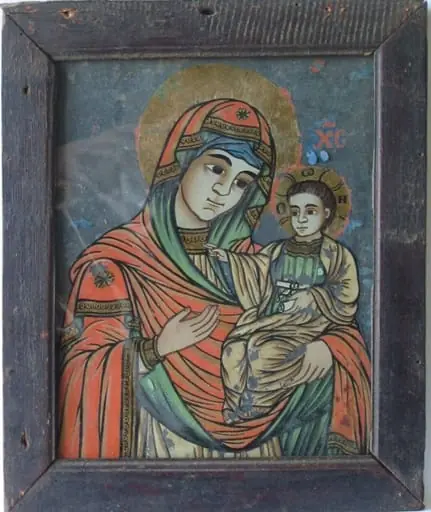 Maica Domnului cu Pruncul Iisus în brațe
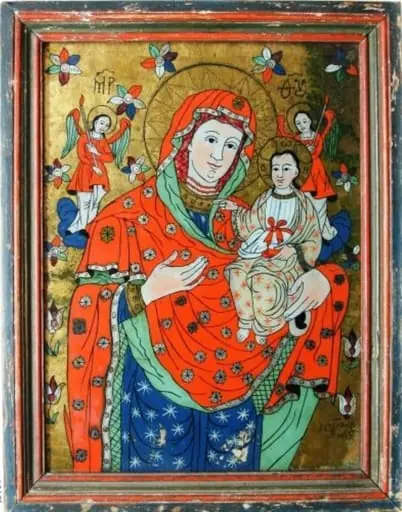 Maica Domnului cu Pruncul
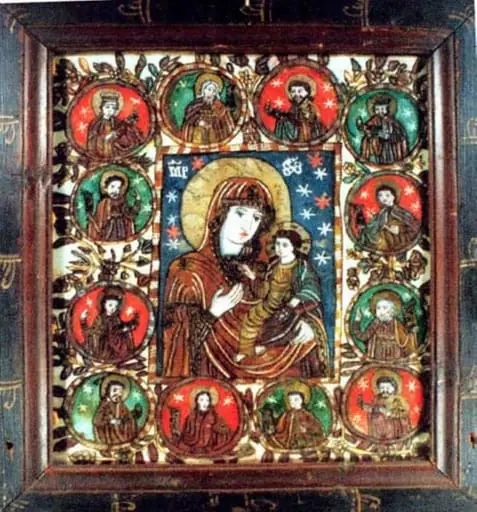 Maica cu Pruncul cu Apostolii