Artwork
Maica Domnului cu pruncul Rodon to amaranton; Trandafirul neveștejit
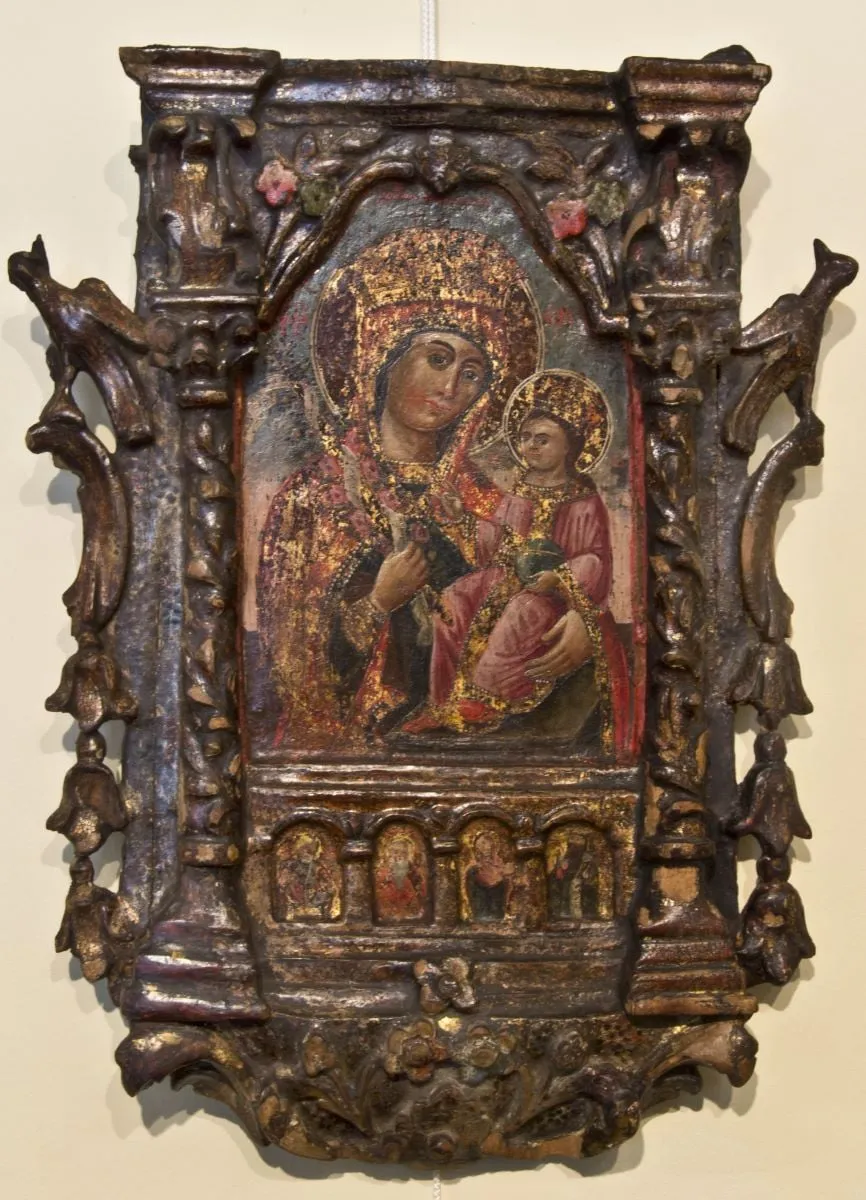
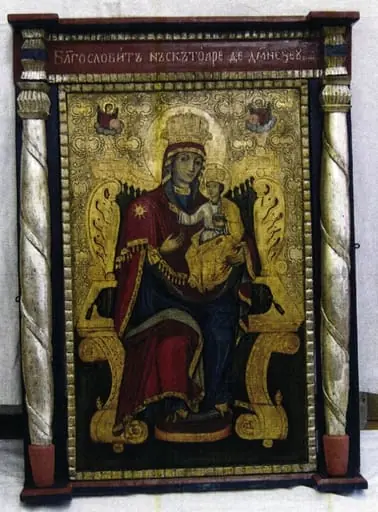
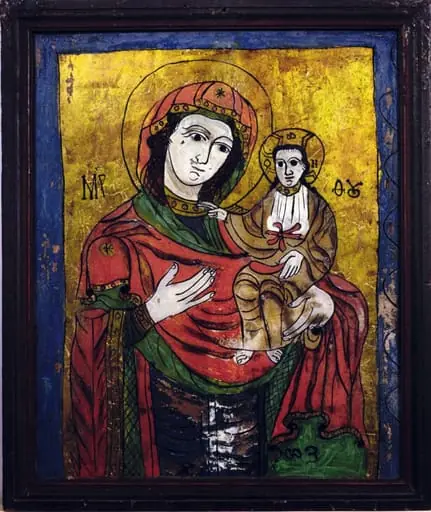
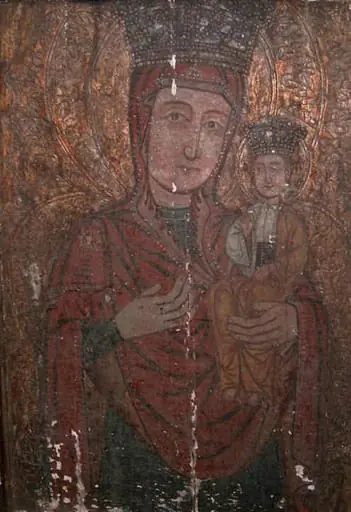
Maica Domnului cu pruncul Rodon to amaranton; Trandafirul neveștejit is a drawing by Unknown. It dates from 1850 and is held in the collection of the National Museum of Art of Romania. This devotional panel depicts the Virgin Mary seated with the infant Jesus, both crowned with golden halos.
About this work
Overview
Faded tones of gold, red, and blue dominate the composition, while small figures at the base suggest kneeling worshippers.
This devotional panel depicts the Virgin Mary seated with the infant Jesus, both crowned with golden halos. The figures are framed by an ornate, wood-like border carved with floral motifs. Faded tones of gold, red, and blue dominate the composition, while small figures at the base suggest kneeling worshippers. The work reflects a Byzantine-influenced tradition of sacred imagery, emphasizing spiritual presence over naturalism.
Subject & Meaning
The Virgin and Child represent the theological concept of the Theotokos—Mary as the God-bearer. The halos affirm their divine status, while the child’s simple robes contrast with the elaborate frame, underscoring humility amid holiness. The floral carvings may reference the Virgin’s purity, drawing on medieval symbolism where roses and vines evoked eternal life and divine grace.
Technique & Style
Executed in tempera or egg-based paint on wood, the image employs flat, stylized forms typical of late medieval iconography. Facial features are serene and symmetrical, with minimal shading to preserve spiritual clarity. The background is not a spatial environment but a gilded plane, reinforcing the otherworldly nature of the scene. Details in the frame suggest skilled woodcarving integrated into the panel’s structure.
History & Provenance
The work likely originated in a Byzantine or post-Byzantine context, possibly from the Balkans or Eastern Mediterranean, during the 14th or 15th century. Its preservation of faded pigments and intact frame indicates it was venerated in a domestic or small ecclesiastical setting. The title references local devotional traditions, suggesting regional liturgical use rather than broad ecclesiastical commission.
Context
In medieval Orthodox Christianity, such panels served as objects of private prayer and household devotion. The integration of carved frames was common in regions where icon painting and woodworking traditions merged. Floral motifs echoed liturgical texts and hymns that likened Mary to an unfading rose, reinforcing theological themes through visual symbolism accessible to the faithful.
Legacy
This panel exemplifies the endurance of Byzantine iconographic conventions in regional Christian communities long after the fall of Constantinople. Its survival offers insight into how devotional practices adapted locally, blending standardized imagery with artisanal craftsmanship. Though not widely known in Western art history, it remains a testament to the quiet persistence of sacred art in everyday spiritual life.
Artist & collection

 Domestic Scene
 Giacomo and Cardinal Marco, investing Andrea, Abbot of San Zeno, with his Benefice
 The Nymph of Fontainebleau
 Portrait of a Woman
 Madonna and Child with Saints in the Enclosed Garden
 Venus and Minerva
 Family Group of Four on Sofa
 Wall painting from Room H of the Villa of P. Fannius Synistor at Boscoreale