Artwork
Maica Domnului cu Pruncul
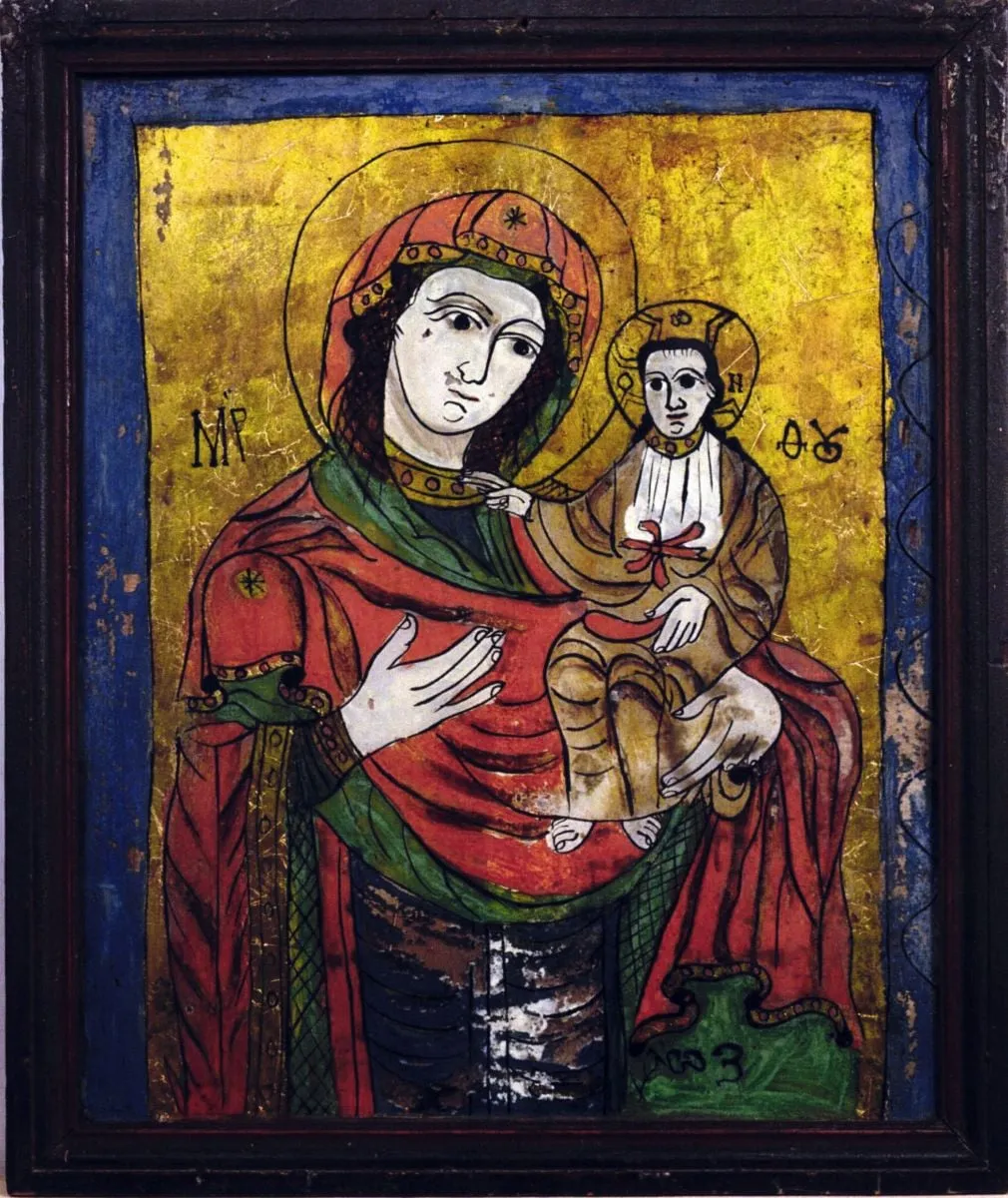
Maica Domnului cu Pruncul is a drawing by the Romanticist artist Unknown. It dates from 1807 and is held in the collection of the Colecție particulară - București. This panel painting depicts the Virgin Mary with the infant Jesus, rendered in a traditional Byzantine style.
About this work
Overview
The composition follows established iconographic conventions, prioritizing spiritual presence over naturalism.
This panel painting depicts the Virgin Mary with the infant Jesus, rendered in a traditional Byzantine style. The figures are set against a gold background with a blue border, emphasizing their sacred status. Both subjects wear halos, and their garments are painted in flat, unmodulated colors without shadow or depth. The composition follows established iconographic conventions, prioritizing spiritual presence over naturalism.
Subject & Meaning
The Virgin Mary, identified by the initials 'MP' (Mother of God), holds the Christ Child, marked by 'IC XC' (Jesus Christ). The child clutches a heart-shaped object, symbolizing divine love or the soul. Their calm expressions convey serenity and divine authority. The gold halos and richly colored robes signify holiness, while the simple white tunic of the child suggests purity and humility within a sacred context.
Technique & Style
The painting employs a rigid, frontal composition typical of medieval Eastern Orthodox icons. Pigments are applied in flat, bright hues with no attempt at perspective or shading. Details like the green trim on Mary’s robe and the red sash on the child are rendered with precision but without texture. The gold background reflects liturgical use, enhancing luminosity in dimly lit chapels and reinforcing the heavenly realm.
History & Provenance
Though exact origins are unrecorded, the style and inscriptions align with Byzantine icon production between the 12th and 15th centuries. Such panels were often created for private devotion or church altars. The presence of Greek abbreviations suggests a cultural context rooted in the Eastern Christian tradition. It is now held in the Museum of Ethnography, where it is preserved as part of a broader collection of religious artifacts.
Context
This image belongs to a widespread tradition of Marian icons in Orthodox Christianity, used in prayer and ritual. Its formal qualities—frontal pose, symbolic colors, and inscriptions—follow standardized models passed down through centuries. Such icons were not merely decorative but served as intermediaries between the faithful and the divine, embodying theological concepts through visual language rather than narrative detail.
Legacy
The painting exemplifies a continuous artistic and devotional practice that endured across empires and centuries. Its preservation in a museum setting reflects modern efforts to document religious heritage. While no longer used liturgically, it remains a key reference for understanding how spiritual ideals were visually codified in medieval Christian communities across Eastern Europe and the Byzantine world.
Artist & collection
 Domestic Scene
 Giacomo and Cardinal Marco, investing Andrea, Abbot of San Zeno, with his Benefice
 The Nymph of Fontainebleau
 Portrait of a Woman
 Madonna and Child with Saints in the Enclosed Garden
 Venus and Minerva
 Family Group of Four on Sofa
 Wall painting from Room H of the Villa of P. Fannius Synistor at Boscoreale
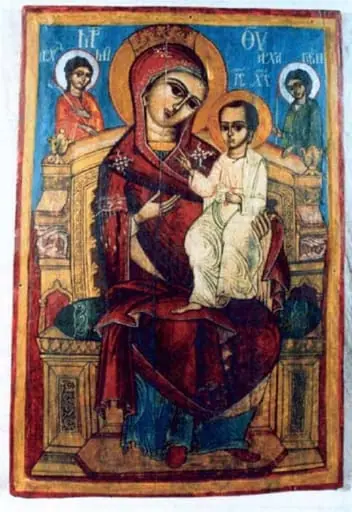 Maica cu Pruncul/Maica Împărăteasă-Doamnă
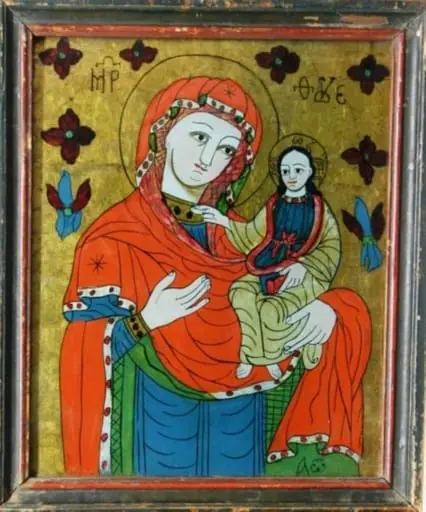 Maica Domnului cu Pruncul
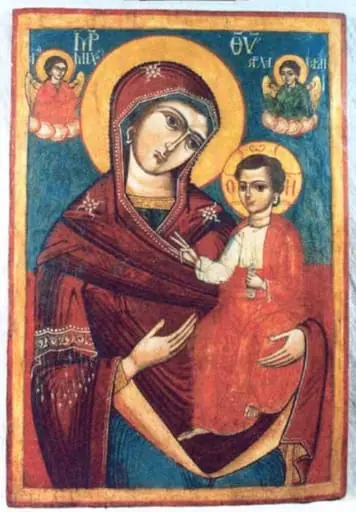 Maica cu Pruncul-Axionița
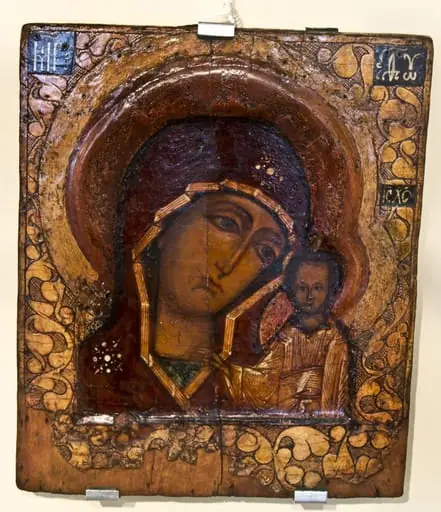 Maica Domnului cu pruncul Kazanskaia, Madona Neagră
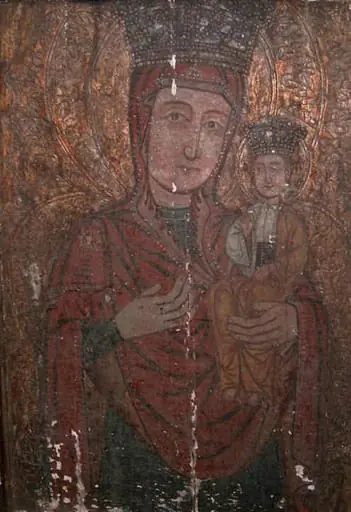 Madona cu Pruncul
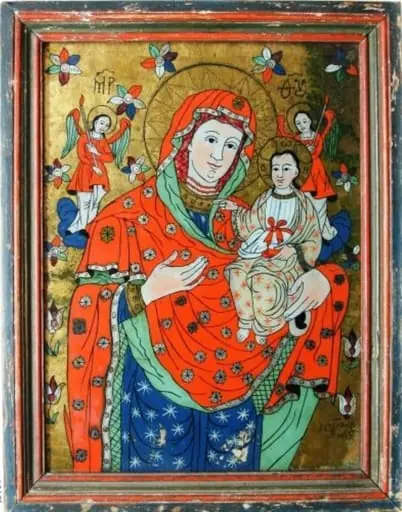 Maica Domnului cu Pruncul
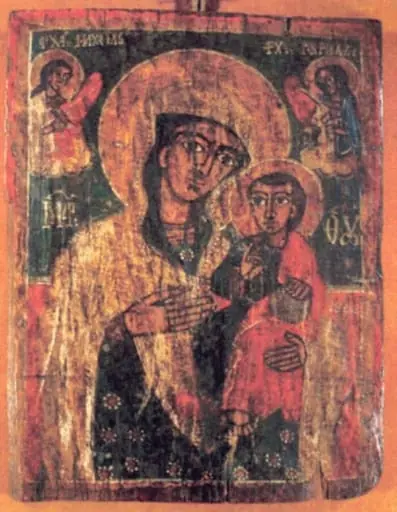 Maica cu Pruncul
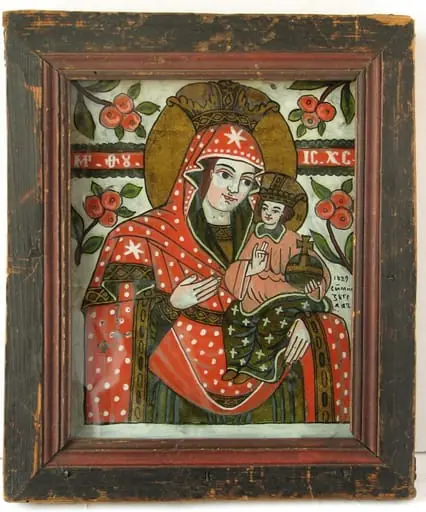 Maica Domnului cu Pruncul Iisus Hristos în brațe
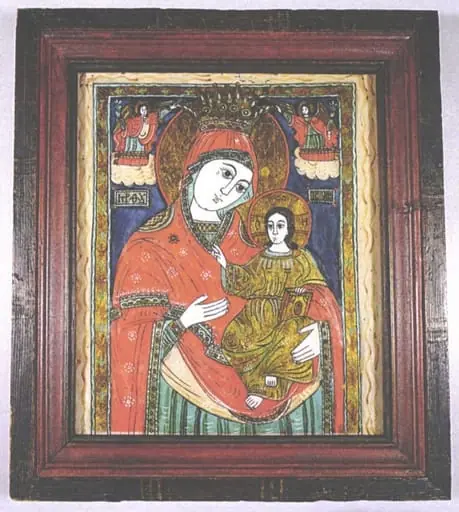 Maica Domnului cu Pruncul Hodighitria
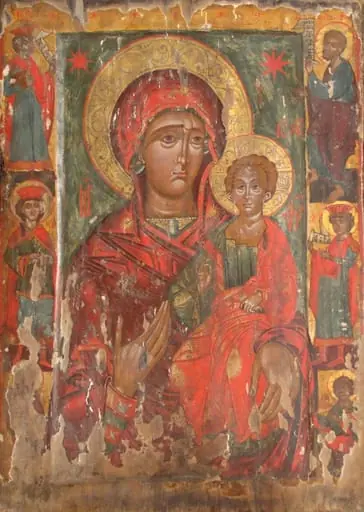 Maica Domnului cu Pruncul, flancată de prooroci
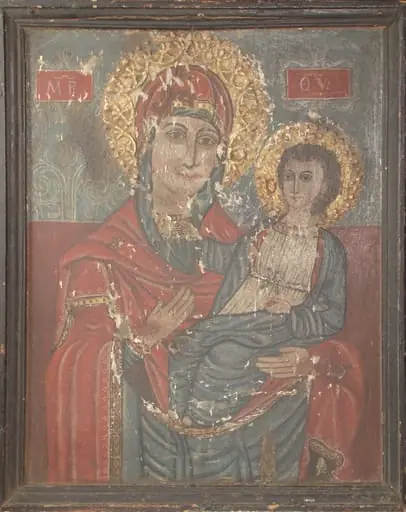 Maica Domnului cu Pruncul