Artwork
Maica Domnului cu Pruncul
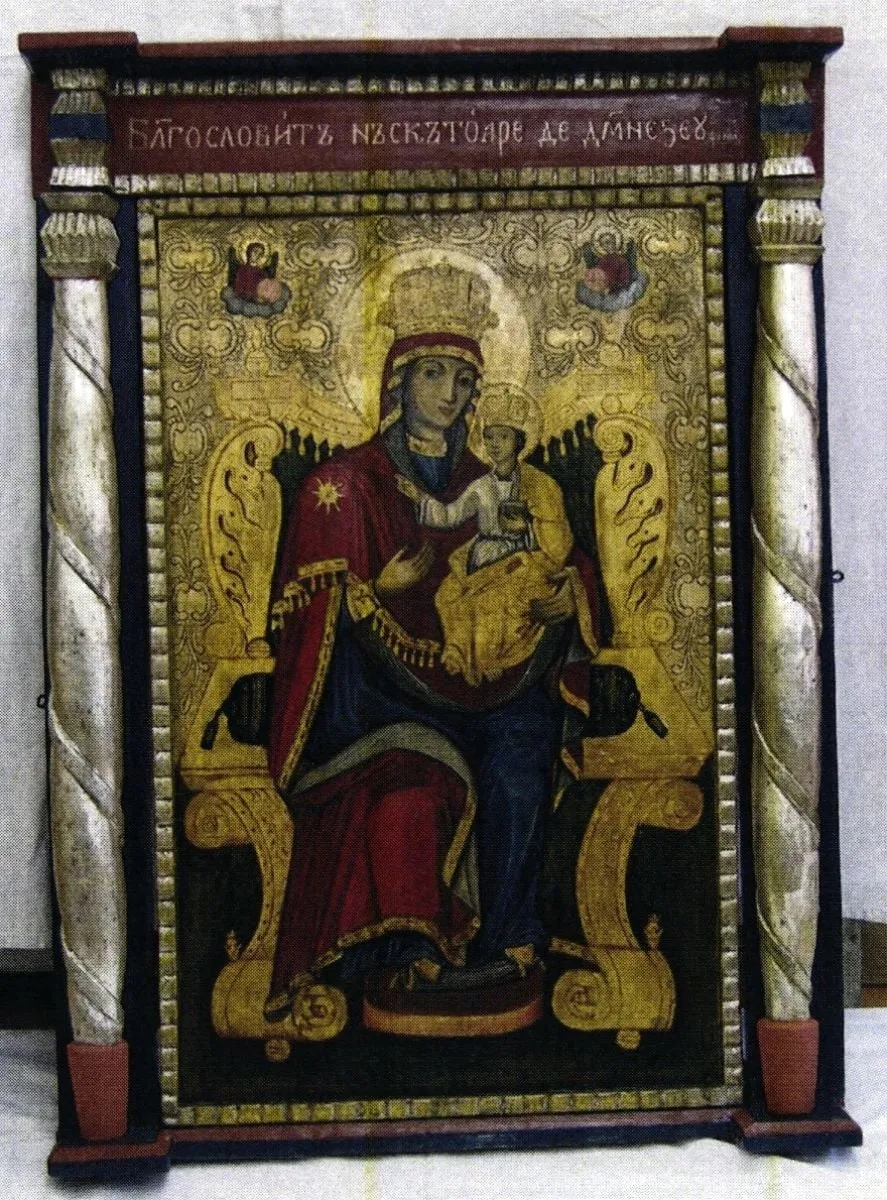
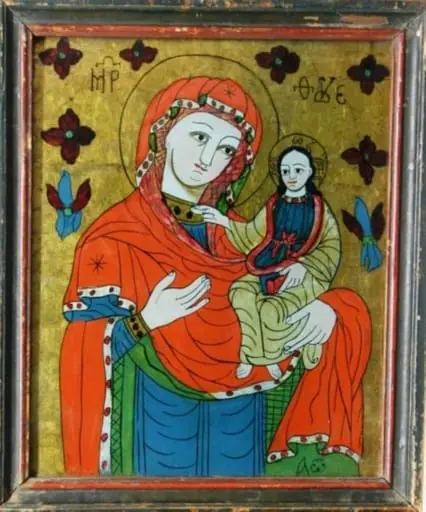
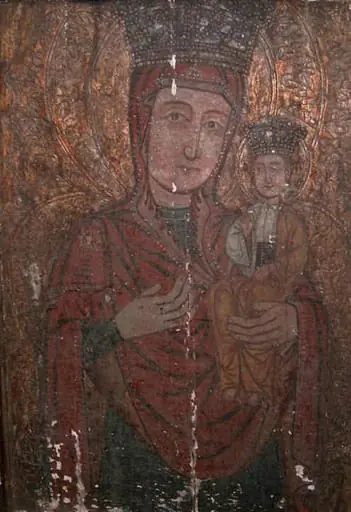
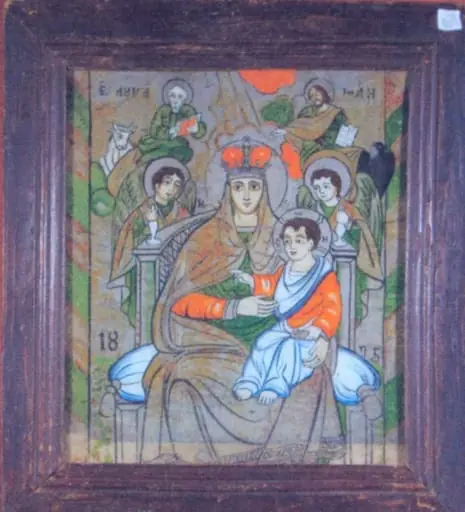
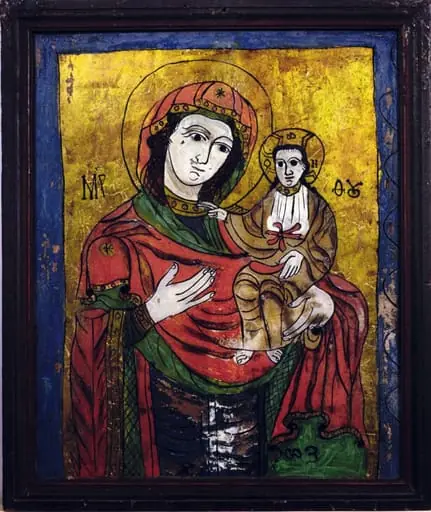
Maica Domnului cu Pruncul is a drawing by the Romanticist artist Unknown. It dates from 1810 and is held in the collection of the National Museum of Bukovina. This painting depicts a solemn, sacred scene of a woman, identified by her attire as a figure of reverence, holding a child.
About this work
Overview
This painting depicts a solemn, sacred scene of a woman, identified by her attire as a figure of reverence, holding a child. Both are adorned in luxurious, dark robes embellished with gold trim, conveying an aura of importance.
Subject & Meaning
The woman, wearing a distinctive blue headscarf and red sash, and the child clutching an unspecified object, are central to the composition. The presence of two angels in the sky and the child's gesture suggest a scene of divine or prophetic significance, though the specific narrative or figures (e.g., Virgin and Child) are not explicitly confirmed by the provided details.
Technique & Style
The painting features intricate, swirling gold patterns and stars in the background, enhancing the sacred and formal ambiance. The use of rich colors, particularly the contrast between the dark robes and golden accents, contributes to the overall sense of solemnity and importance.
History & Provenance
The age of the frame, described as old with a mix of silver and dark wood, hints at the painting's antiquity, though no specific date or origin is provided. The text at the top in an unspecified language could offer clues to its provenance but remains uninterpreted here.
Context
The painting's formal and sacred qualities align with traditional religious art, potentially placing it within a broader context of devotional works. The mention of exploring 'Romanticism next' for similar interests may imply a late or post-medieval timeframe, though this is speculative.
Legacy
No direct information is provided regarding the painting's influence, exhibition history, or recognition within art historical canons. Its significance appears to be more in its representation of a traditional religious art form rather than a groundbreaking or widely celebrated work.
Artist & collection
 Domestic Scene
 Giacomo and Cardinal Marco, investing Andrea, Abbot of San Zeno, with his Benefice
 The Nymph of Fontainebleau
 Portrait of a Woman
 Madonna and Child with Saints in the Enclosed Garden
 Venus and Minerva
 Family Group of Four on Sofa
 Wall painting from Room H of the Villa of P. Fannius Synistor at Boscoreale