Artwork
Maica Domnului este înveșmântată în maforiom roșu vermillon, cu interiorul verde-gri, cu aureolă aurie împodobită cu cunună de ghirlandă de flori. Pruncul Iisus Hristos este înveșmântat în alb-ivoriu-galben-ocru-verde și are, de asemenea, aureolă aurie. Pruncul Iisus Binecuvântează cu mâna dreaptă, arătând înspre Maica Domnului și ține cu mâna stângă un hrisov înfășurat. Pe cămașa-sacos alb ivoriu are o floare, reprezentând inima deschisă. Fondul icoanei este cerul albastru ultramarin bleumarin întunecat, împodobit cu elemente fitomorfe, dispuse într-un chenar decorativ format dintr-o ghirlandă. Cromatica este armonioasă: roșu vermillon, galben-ocru, crem, ivoriu, bej, albastru ultramarin bleumarin, verde brad, alb, negru. Icoana este de Nicula.
Maica Domnului este înveșmântată în maforiom roșu vermillon, cu interiorul verde-gri, cu aureolă aurie împodobită cu cunună de ghirlandă de flori. Pruncul Iisus Hristos este înveșmântat în alb-ivoriu-galben-ocru-verde și are, de asemenea, aureolă aurie. Pruncul Iisus Binecuvântează cu mâna dreaptă, arătând înspre Maica Domnului și ține cu mâna stângă un hrisov înfășurat. Pe cămașa-sacos alb ivoriu are o floare, reprezentând inima deschisă. Fondul icoanei este cerul albastru ultramarin bleumarin întunecat, împodobit cu elemente fitomorfe, dispuse într-un chenar decorativ format dintr-o ghirlandă. Cromatica este armonioasă: roșu vermillon, galben-ocru, crem, ivoriu, bej, albastru ultramarin bleumarin, verde brad, alb, negru. Icoana este de Nicula. is a drawing by Unknown. It dates from 1850 and is held in the collection of the ASTRA National Museum Complex.
About this work
Overview
The icon depicts the Virgin Mary clothed in a vivid vermilion mantle with a green‑gray interior, crowned by a golden halo surrounded by a floral garland. The Child Jesus appears in a multicolored garment of ivory, yellow, ochre and green, also bearing a golden halo. He blesses with his right hand toward his mother while holding a wrapped swaddling cloth in his left.
Subject & Meaning
The composition emphasizes the intercessory relationship between mother and child, highlighted by the infant’s gesture of blessing directed at Mary. The open‑heart flower on the child's ivory shirt symbolizes divine love, while the floral wreath encircling Mary's halo reinforces themes of purity and heavenly celebration.
Technique & Style
Executed on a wooden panel, the icon employs a harmonious palette of vermilion, ochre, cream, ivory, beige, ultramarine, pine‑green, white and black. The background features a deep ultramarine sky filled with stylized vegetal motifs arranged within a decorative border formed by a garland, reflecting traditional Eastern Orthodox iconographic conventions.
History & Provenance
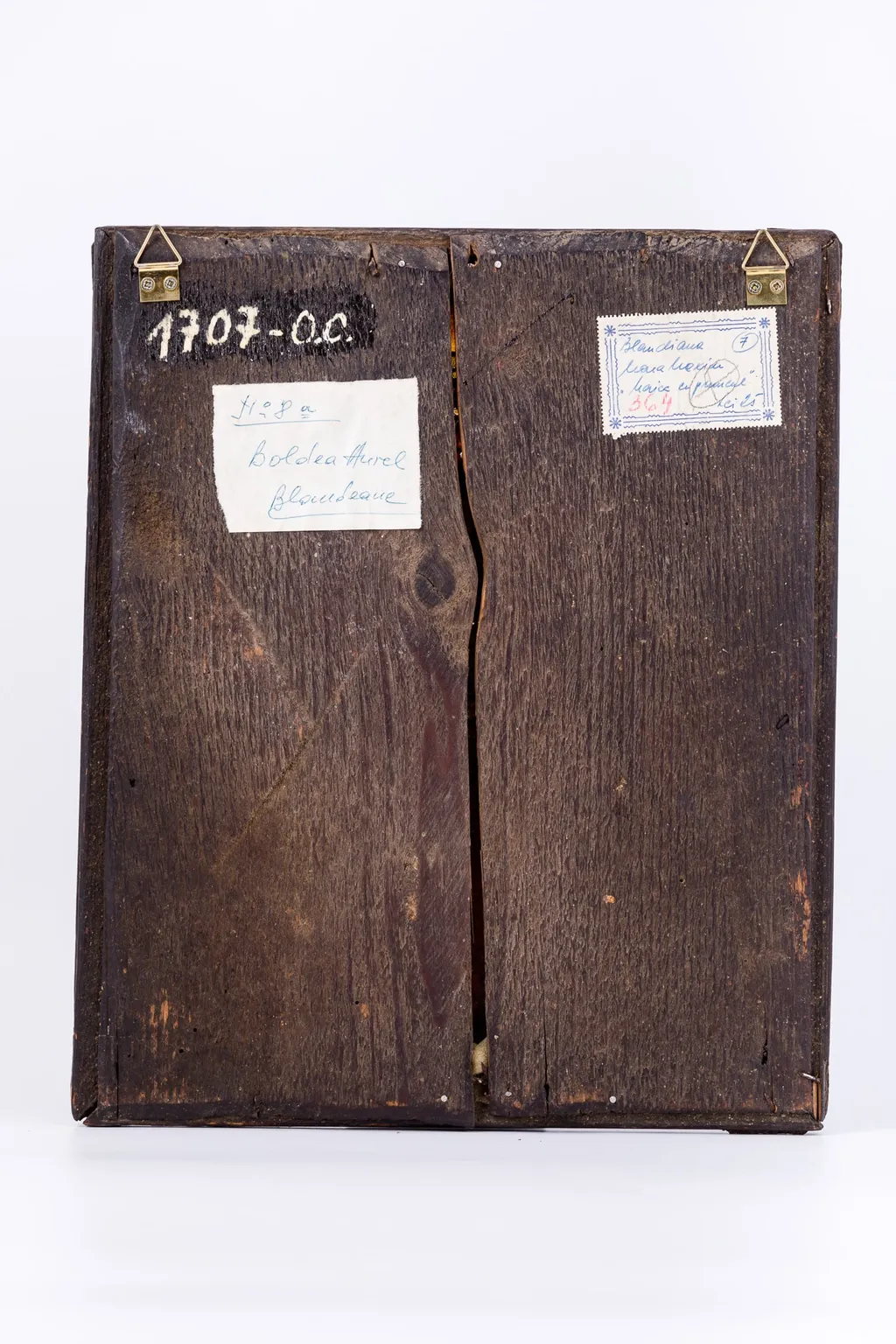
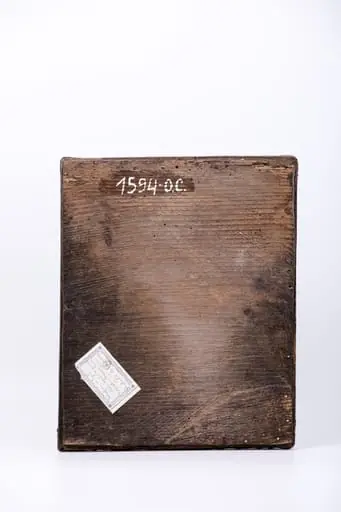
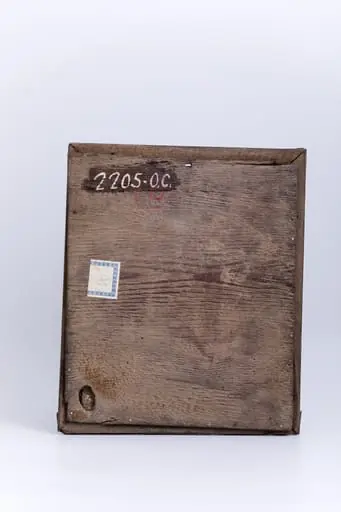
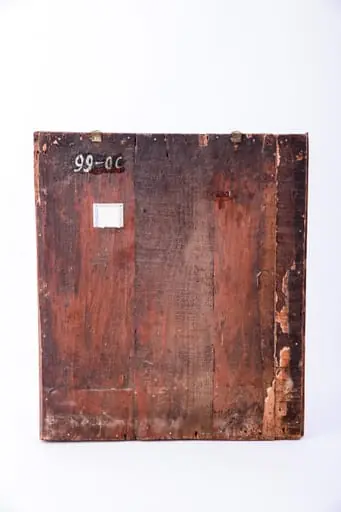
The back of the panel shows two metal rings at the top and a weathered, split wooden surface. Handwritten pencil notes reference the names "Boldea Hurel" and "Blădeșeanu," while an aged museum sticker suggests the piece has been catalogued and stored for an extended period, indicating its status as a cult object.
Context
Originating from the Nicula region, the icon aligns with local devotional practices that venerate the Virgin and Child. Its material and stylistic choices correspond to the liturgical art produced for parish churches and private chapels in the area during the period of its creation.
Artist & collection

 Domestic Scene
 Giacomo and Cardinal Marco, investing Andrea, Abbot of San Zeno, with his Benefice
 The Nymph of Fontainebleau
 Portrait of a Woman
 Madonna and Child with Saints in the Enclosed Garden
 Venus and Minerva
 Family Group of Four on Sofa
 Wall painting from Room H of the Villa of P. Fannius Synistor at Boscoreale
 Maica Domnului este înveșmântată în maforiom roșu vermillon, cu interiorul verde-brad-smarald, cu aureolă aurie împodobită cu coroniță de trandafiri, din 4 ruje. Pruncul Iisus Hristos este înveșmântat în alb-nisipiu - verde brad și ocru și are, de asemenea, aureolă aurie, împodobită cu cunună de trandafiri, din 3 ruje. Pruncul Iisus Binecuvântează, arătând înspre Maica Domnului. Fondul icoanei este cerul albastru bleu-ciel senin, împodobit cu 2 elemente florale - ruje roșii cu frunze smarald. Cromatica este armonioasă: roșu vermillon, galben-ocru, crem, bej, albastru ceruleum și bleu-ciel, verde smarald, alb, negru. Icoana este de Nicula. Inscripția din româno-chirilică se traduce IC XC MP Iisus Hristos Maica Domnului.
 Maica Domnului este înveșmântată în maforiom roșu vermillon, cu interiorul gri-antracit, cu aureolă aurie împodobită cu coroniță galbenă. Pruncul Iisus Hristos este înveșmântat în alb-ivoriu-galben-gri și are, de asemenea, aureolă aurie. Pruncul Iisus Binecuvântează cu mâna stângă, arătând înspre Maica Domnului și ține cu mâna dreaptă Sfânta Evanghelie închisă pe genunchi. În registrul superior, de-a dreapta și de-a stânga, sunt două flori mari roșii de trandafir, care înlocuiesc metaforic prezența obișnuită a Sfinților Arhangheli Mihail și Gavriil. Fondul icoanei este alb-ivoriu, în registrul superior și galben-ocru, în registrul inferior. Cromatica este armonioasă: roșu vermillon, roz-trandafiriu, galben-ocru, crem, bej, verde văratic, alb, negru. Inscripția din româno-chirilică se traduce MP Maica Domnului. Icoana este de Nicula-Gherla.
 Maica Domnului ține în brațe Pruncul Iisus Hristos care are în mâna stângă un hrisov înfășurat și Binecuvântează cu mâna dreaptă. Maica Domnului arată calea cu mâna dreaptă, deci este Hodighitria. Maica Domnului este înveșmântată în mantie cu maforion roșu vermillon cu interiorul verde și sacos galben, are aureolă. Pruncul Iisus Hristos este înveșmântat în galben-bronziu și alb crem-ivoriu, are aureolă. Întreaga icoană este încadrată de un chenar decorativ geometrizant vișiniu-acajou-sracojiu cu linia albă șerpuită, specifică centrului de la Nicula. Fondul icoanei este cerul albastru ultramarin bleumarin. Cromatica este armonioasă, luminoasă, bizantină și foarte picturală: roșu vermillon, verde spanac-avocado, kaki, galben chihlimbar, albastru ultramarin bleumarin, vișiniu, stacojiu-acajou, bronziu, alb, negru. Icoana este de Nicula. Inscripția din româno-chirilică se traduce MP IC XC Maica Domnului Iisus Hristos.
 Maica Domnului ține în brațe Pruncul Iisus Hristos. Maica Domnului este înveșmântată în mantie cu maforion roșu vermillon și interiorul căputușit cu galben, bronz, și decorat cu multe striații albe. Mantia este foarte acoperitoare, mâinile Maicii Domnului fiind ascunse sub veșmânt. Pruncul Iisus Hristos este ținut în veșmântul maternității. Icoana este pictată după modelul Maicii Domnului Sporirea minții - icoană rusească, făcătoare de minuni. În locul îngerilor, lateral stânga-dreapta sunt flori, simetrice, pe câmpuri paralele, alternativ-cromatizate cu brun, gri și galben. Fondul icoanei este albastru ultramarin bleumarin întunecat, cu un chenar decorativ geometrizant, care conține și linia albă șerpuitoare. Cromatica este armonioasă și semnificativă: roșu vermillon, galben-chihlimbar, gri, ocru, brun, bej, abastru ultramarin bleumarin, alb, negru. Inscripția din româno-chirilică se traduce Sf Maică Maria. Icoana este de Nicula.
 Maica Domnului este înveșmântată în maforiom roșu-vermillon-cărămiziu, cu interiorul galben-chihlimbar, cu mânecă verde-gri, cu guleraș galben-auriu, cu coroană roșie de Împărăteasa Cerurilor, cu aureolă largă galben-aurie. Sacos-ul Maicii Domnului este foarte larg și încăpător, asemenea unei îmbrățișări materne. Pruncul Iisus Hristos este fără veșminte, cu coroană și aureolă. Pruncul Iisus Hristos este lipit de Maica Domnului, ținându-i obrajii cu mânuțele și Maica Domnului Îl îmbrățișează cu multă tandrețe. De aceea se numește Eleusa-Mângâietoarea. Fondul icoanei este cerul albastru bleu-ciel senin. Întreaga tematică iconografică este încadrată de un chenar decorativ fitomorf, format dintr-o ghirlandă de bujori-trandafiri, 6 ruje duble roșii, mari, cu bobocei și frunze verzi. Cromatica este armonioasă: roșu vermillon-cărămiziu, albastru bleu-ciel, cobalt-ceruleum, galben-solar-ocru-muștar, verde văratic-forest, brun, bronziu, alb, negru. Icoana este din Nordul Transilvaniei, Nicula.
 Trupul Mântuitorului Iisus Hristos este coborât de pe cruce de patru ucenici, învelit în giulgiul alb și primit de Maica Domnului și două femei mironosițe purtătoare mir. În partea dreaptă, alături de Maica Domnului este și ucenicul cei iubit, Ioan Teologul, care va fi Sfântul Apostol și Evanghelist Ioan, Teologul Iubirii. Compoziția este foarte simetrică, echilibrată. Petele de sânge de pe giulgiul alb, interiorul căptușit al maforiumului Maicii Domnului și scara, pe care se urcă ucenicii, sunt de culoare roșie. Veșmintele toate sunt verzi kaki, cu tonuri de bronz și olive-smarald. Cerul este albastru închis, ca de noapte de bleumarin. Inscripția în româno-chirilică este cu alb pe cerul ceruleum și se traduce Coborârea de pe cruce a Mântuitorului Iisus Hristos IC XC. Icoana este pictată la Lancrăm, Valea Sebeșului, având o cromatică fină, delicată, puternică, armonioasă: verde, kaki, olive, smarald, albastru ceruleum, gri, bronz, alb, negru, roșu.