Artwork
Maica Domnului ține în brațe Pruncul Iisus Hristos care are în mâna stângă un hrisov înfășurat și Binecuvântează cu mâna dreaptă. Maica Domnului arată calea cu mâna dreaptă, deci este Hodighitria. Maica Domnului este înveșmântată în mantie cu maforion roșu vermillon cu interiorul verde și sacos galben, are aureolă. Pruncul Iisus Hristos este înveșmântat în galben-bronziu și alb crem-ivoriu, are aureolă. Întreaga icoană este încadrată de un chenar decorativ geometrizant vișiniu-acajou-sracojiu cu linia albă șerpuită, specifică centrului de la Nicula. Fondul icoanei este cerul albastru ultramarin bleumarin. Cromatica este armonioasă, luminoasă, bizantină și foarte picturală: roșu vermillon, verde spanac-avocado, kaki, galben chihlimbar, albastru ultramarin bleumarin, vișiniu, stacojiu-acajou, bronziu, alb, negru. Icoana este de Nicula. Inscripția din româno-chirilică se traduce MP IC XC Maica Domnului Iisus Hristos.
Maica Domnului ține în brațe Pruncul Iisus Hristos care are în mâna stângă un hrisov înfășurat și Binecuvântează cu mâna dreaptă. Maica Domnului arată calea cu mâna dreaptă, deci este Hodighitria. Maica Domnului este înveșmântată în mantie cu maforion roșu vermillon cu interiorul verde și sacos galben, are aureolă. Pruncul Iisus Hristos este înveșmântat în galben-bronziu și alb crem-ivoriu, are aureolă. Întreaga icoană este încadrată de un chenar decorativ geometrizant vișiniu-acajou-sracojiu cu linia albă șerpuită, specifică centrului de la Nicula. Fondul icoanei este cerul albastru ultramarin bleumarin. Cromatica este armonioasă, luminoasă, bizantină și foarte picturală: roșu vermillon, verde spanac-avocado, kaki, galben chihlimbar, albastru ultramarin bleumarin, vișiniu, stacojiu-acajou, bronziu, alb, negru. Icoana este de Nicula. Inscripția din româno-chirilică se traduce MP IC XC Maica Domnului Iisus Hristos. is a drawing by Unknown. It dates from 1850 and is held in the collection of the ASTRA National Museum Complex. This wooden panel icon depicts the Virgin Mary holding the Christ Child, both crowned with aureoles, in a traditional Byzantine composition.
About this work
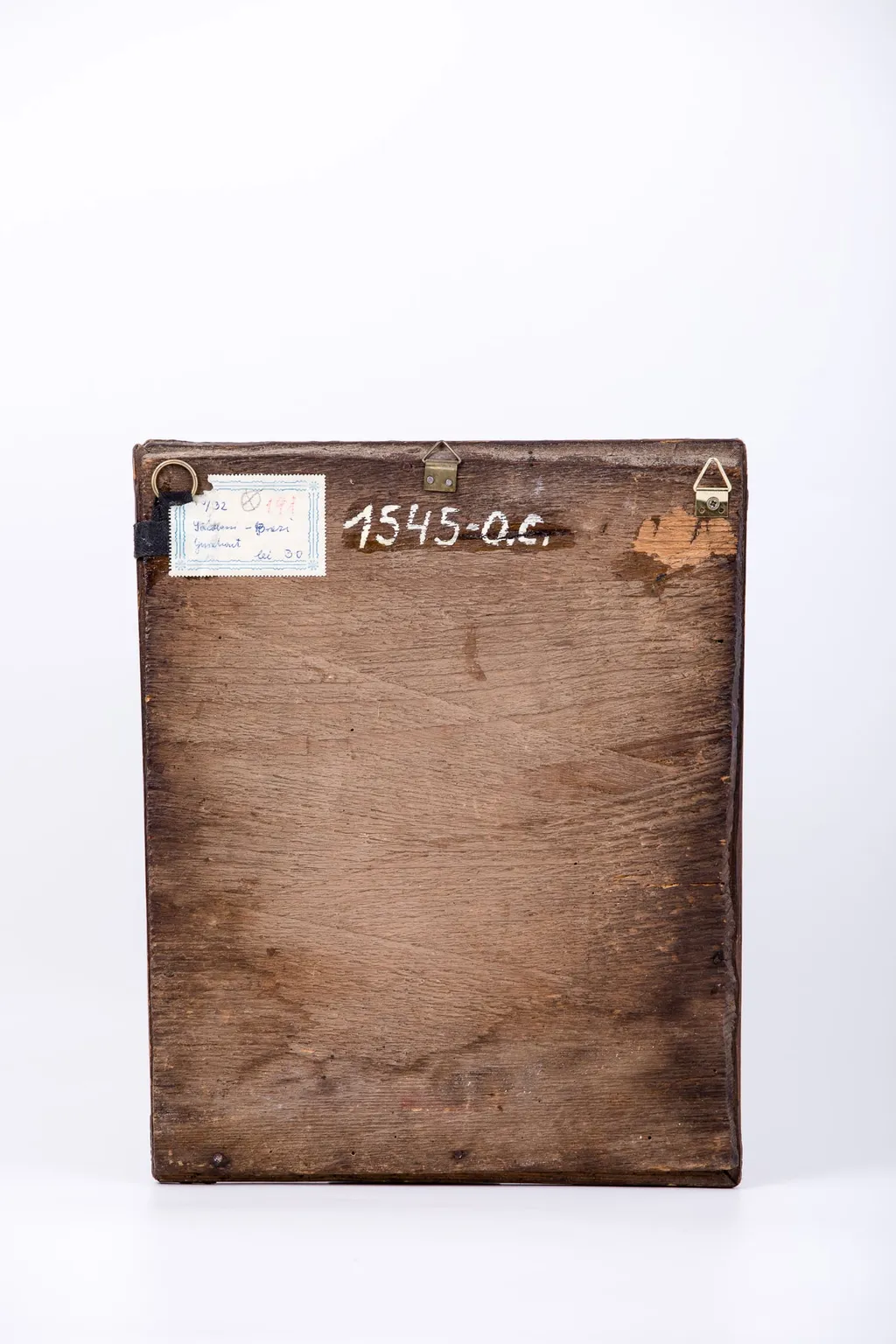
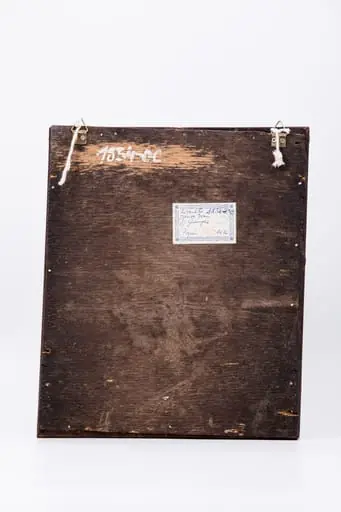
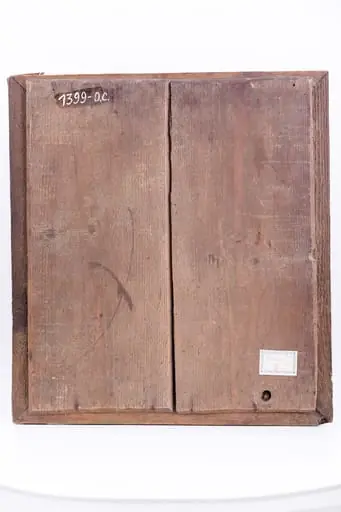
You can see a small paper tag with handwritten notes in a script that looks old, and a larger number "1545-00" written in pencil.
This is the back of a wooden panel with a few faded labels. You can see a small paper tag with handwritten notes in a script that looks old, and a larger number "1545-00" written in pencil. The wood is dark, worn, and held together by two metal clasps at the top.
The painting itself shows a religious scene with a woman holding a child, but the details are hidden here. The labels suggest this is a cult object, possibly a religious icon.
Look up inscription to see how these early notes were used in art and history.
Overview
This wooden panel icon depicts the Virgin Mary holding the Christ Child, both crowned with aureoles, in a traditional Byzantine composition. The Virgin is identified as Hodighitria, gesturing toward her son as the path to salvation. The work originates from the Nicula monastery in Transylvania, distinguished by its ornate geometric frame and vivid, harmonious palette rooted in Eastern Christian iconography.
Subject & Meaning
The Virgin Mary, as Hodighitria, directs the viewer’s gaze toward Christ, who holds a scroll symbolizing divine law and blesses with his right hand. The imagery affirms Christ’s dual nature as both divine and human, while Mary’s role as intercessor is emphasized through her posture and inscription. The Greek abbreviations MP IC XC confirm her identity as Mother of God, aligning the icon with liturgical and devotional traditions of the Orthodox Church.
Technique & Style
Painted in tempera on wood, the icon employs a luminous, saturated palette—vermillion, ultramarine, spinach green, amber yellow—applied with precise, flat planes typical of Byzantine aesthetics. The figures are rendered with elongated proportions and minimal modeling, prioritizing spiritual presence over naturalism. The decorative frame, in cherry, mahogany, and stucco tones with a serpentine white border, reflects the distinctive regional style of Nicula workshops.
History & Provenance
The icon was produced at the Nicula monastery, a known center for icon production in 17th- to 18th-century Transylvania. The reverse bears faded labels and a handwritten note in an archaic script, alongside a penciled inventory number, 1545-00, suggesting it was cataloged during a later ecclesiastical or museum collection effort. The wooden panel is secured by metal clasps, indicating repeated handling or relocation over centuries.
Context
Produced within a monastic community deeply engaged in Orthodox liturgical life, this icon served as a focus for prayer and veneration. Its rich colors and symbolic gestures reflect theological teachings transmitted through visual form. The use of Romanian Cyrillic script in the inscription points to local linguistic and religious practices, situating the work within a broader Eastern Christian cultural sphere that preserved Byzantine traditions in a vernacular context.
Legacy
As a product of the Nicula school, the icon exemplifies the regional adaptation of Byzantine models in Transylvanian Orthodox art. Its survival, with original frame and inscriptions intact, offers insight into devotional practices and material culture of rural monastic communities. The preserved labels and inventory markings document its passage through institutional care, anchoring it in the historical record of religious artifact preservation.
Artist & collection

 Domestic Scene
 Giacomo and Cardinal Marco, investing Andrea, Abbot of San Zeno, with his Benefice
 The Nymph of Fontainebleau
 Portrait of a Woman
 Madonna and Child with Saints in the Enclosed Garden
 Venus and Minerva
 Family Group of Four on Sofa
 Wall painting from Room H of the Villa of P. Fannius Synistor at Boscoreale
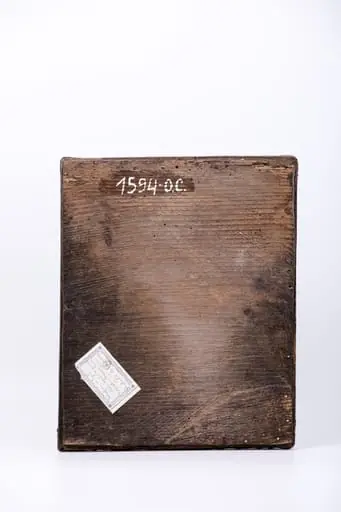 Maica Domnului ține în brațe Pruncul Iisus Hristos. Maica Domnului este înveșmântată în mantie cu maforion roșu vermillon și interiorul căputușit cu galben, bronz, și decorat cu multe striații albe. Mantia este foarte acoperitoare, mâinile Maicii Domnului fiind ascunse sub veșmânt. Pruncul Iisus Hristos este ținut în veșmântul maternității. Icoana este pictată după modelul Maicii Domnului Sporirea minții - icoană rusească, făcătoare de minuni. În locul îngerilor, lateral stânga-dreapta sunt flori, simetrice, pe câmpuri paralele, alternativ-cromatizate cu brun, gri și galben. Fondul icoanei este albastru ultramarin bleumarin întunecat, cu un chenar decorativ geometrizant, care conține și linia albă șerpuitoare. Cromatica este armonioasă și semnificativă: roșu vermillon, galben-chihlimbar, gri, ocru, brun, bej, abastru ultramarin bleumarin, alb, negru. Inscripția din româno-chirilică se traduce Sf Maică Maria. Icoana este de Nicula.
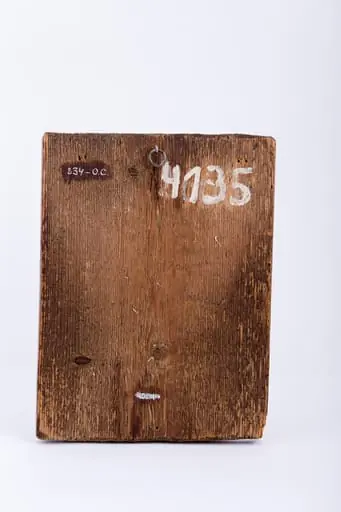 Maica Domnului ține în brațe Pruncul Iisus Hristos, care Binecuvântează cu mâna dreaptă. Mântuitorul stă în picioare pe genunchii Maicii Domnului. Maica Domnului este înveșmântată în mantie cu maforion roșu cu interiorul negru, are coroană și aureolă. Pruncul Iisus Hristos este înveșmântat în roșu cu aureolă. Fondul icoanei este negru. În registrul superior, dreapta și stânga, sunt Sfinții Arhangheli Mihail și Gavriil, pe câte o mandorlă de nouri rotunzi, albi. Icoana este încadrată de un chenar fitomorf, alcătuit din ramură de brad și câte un con de brad la mijlocul laturilor, ca și element de legătură. Chenarul este desenat cu negru pe un fond bej-crem. Inscripția din româno-chirilică se traduce: IC XC MP Iisus Hristos Maica Domnului. Cromatică: roșu vermillon, galben, acajou, stacojiu, brun, bej, negru.
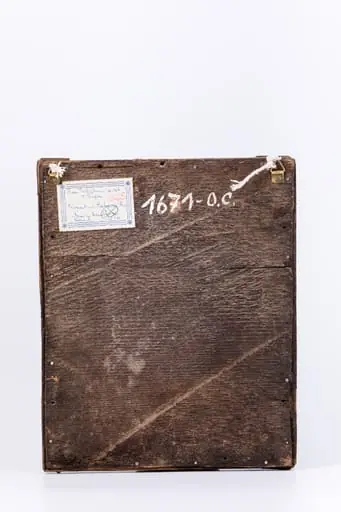 Maica Domnului este înveșmântată în maforiom roșu vermillon, cu interiorul verde-brad-smarald, cu aureolă aurie împodobită cu coroniță de trandafiri, din 4 ruje. Pruncul Iisus Hristos este înveșmântat în alb-nisipiu - verde brad și ocru și are, de asemenea, aureolă aurie, împodobită cu cunună de trandafiri, din 3 ruje. Pruncul Iisus Binecuvântează, arătând înspre Maica Domnului. Fondul icoanei este cerul albastru bleu-ciel senin, împodobit cu 2 elemente florale - ruje roșii cu frunze smarald. Cromatica este armonioasă: roșu vermillon, galben-ocru, crem, bej, albastru ceruleum și bleu-ciel, verde smarald, alb, negru. Icoana este de Nicula. Inscripția din româno-chirilică se traduce IC XC MP Iisus Hristos Maica Domnului.
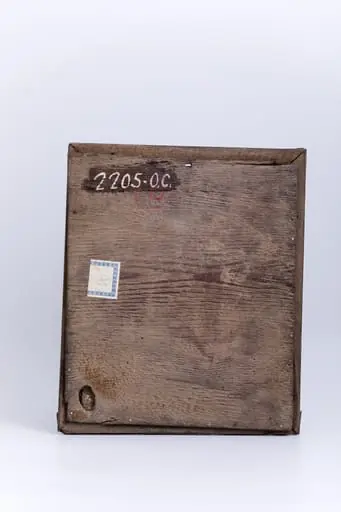
 Maica Domnului este înveșmântată în cămașă femeiască tradițională, sacos roșu vermillon, cu interiorul și mânecile de culoare verde-văratic, de nuanță spanac-avocado, cu danteluță bronzie la baza gâtului, cu maforion roșu vermillon, cu aureolă. Maica Domnului are gâtul neacoperit cu veșmânt și pe sub maramă se observă părul șaten castaniu. Pruncul Iisus Hristos este înveșmântat în alb și verde kaki-lime-olive, cu aureolă. Pruncul Iisus arată cu mâna dreaptă înspre Maica Domnului, prezentându-ne-O, iar în mâna stângă ține un hrisov înfășurat. Maica Domnului arată înspre Pruncul Iisus Hristos cu mâna dreaptă, prezentându-ni-L ca fiind Mântuitorul Calea, Adevărul și Viața. Fondul icoanei este cerul de culoarea albastru ultramarin, în exterior, iar în interior este o fereastră de lumină galbenă. Întreaga icoană este încadrată de un chenar decorativ geometrizant roșu-acajou cu linia albă șerpuitoare, între cele două chenare paralele: albastru și galben. Cromatica este armonioasă: roșu vermillon, acajou, albastru cobalt, verde văratic, galben solar, brun, auriu, ocru-brun-bronziu, alb, negru. Inscripția din româno-chirilică se traduce MP IC XC Maica Domnului Iisus Hristos. Icoana este din Nicula.
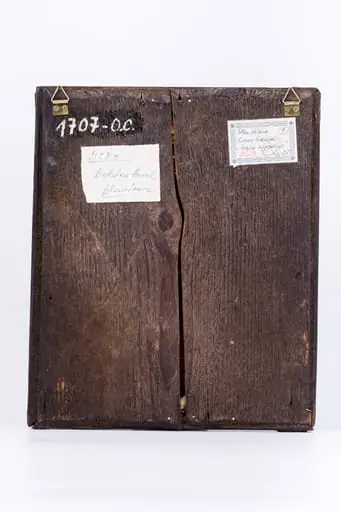
 Maica Domnului este înveșmântată în maforiom roșu-vermillon-cărămiziu, cu interiorul galben-chihlimbar, cu mânecă verde-gri, cu guleraș galben-auriu, cu coroană roșie de Împărăteasa Cerurilor, cu aureolă largă galben-aurie. Sacos-ul Maicii Domnului este foarte larg și încăpător, asemenea unei îmbrățișări materne. Pruncul Iisus Hristos este fără veșminte, cu coroană și aureolă. Pruncul Iisus Hristos este lipit de Maica Domnului, ținându-i obrajii cu mânuțele și Maica Domnului Îl îmbrățișează cu multă tandrețe. De aceea se numește Eleusa-Mângâietoarea. Fondul icoanei este cerul albastru bleu-ciel senin. Întreaga tematică iconografică este încadrată de un chenar decorativ fitomorf, format dintr-o ghirlandă de bujori-trandafiri, 6 ruje duble roșii, mari, cu bobocei și frunze verzi. Cromatica este armonioasă: roșu vermillon-cărămiziu, albastru bleu-ciel, cobalt-ceruleum, galben-solar-ocru-muștar, verde văratic-forest, brun, bronziu, alb, negru. Icoana este din Nordul Transilvaniei, Nicula.
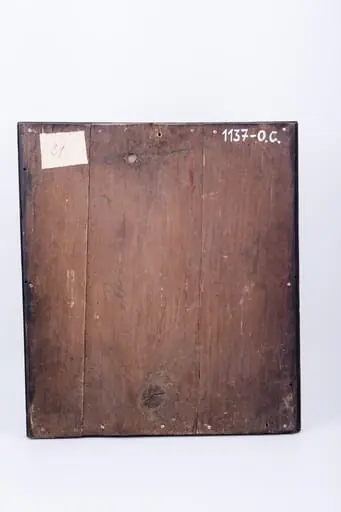
 Maica Domnului este înveșmântată în maforiom roșu vermillon, cu interiorul verde-gri, cu aureolă aurie împodobită cu cunună de ghirlandă de flori. Pruncul Iisus Hristos este înveșmântat în alb-ivoriu-galben-ocru-verde și are, de asemenea, aureolă aurie. Pruncul Iisus Binecuvântează cu mâna dreaptă, arătând înspre Maica Domnului și ține cu mâna stângă un hrisov înfășurat. Pe cămașa-sacos alb ivoriu are o floare, reprezentând inima deschisă. Fondul icoanei este cerul albastru ultramarin bleumarin întunecat, împodobit cu elemente fitomorfe, dispuse într-un chenar decorativ format dintr-o ghirlandă. Cromatica este armonioasă: roșu vermillon, galben-ocru, crem, ivoriu, bej, albastru ultramarin bleumarin, verde brad, alb, negru. Icoana este de Nicula.
 Maica Domnului Împărăteasă a Cerurilor, pe tron așezată, ține Pruncul Iisus Hristos, în brațe. Maica Domnului este îmbrăcată cu mantie cu maforion brun, cu interiorul căptușit cu verde închis. Poartă aureolă și coroniță roșie de împărăteasă. Pruncul Iisus Hristos este îmbrăcat cu gri și verde închis, are aureolă și binecuvântează cu mâna dreaptă. În registrul superior sunt ocrotitori și păzitori Sfinții Arhangheli Mihail și Gavriil, sprijinindu-se cu mâinile de cele două turnulețe - elemente decorativ geometrizante din structura arhitecturală a bogatului tron arhieresc al Maicii Domnului Împărăteasă. În registrul superior sunt Sfântul Mare Evanghelist Luca, cel care a pictat-o pentru prima dată pe Maica Domnului cu Pruncul Iisus Hristos. Sfântul Evanghelist Luca apare împreună cu simbolul reprezentativ - vițelul - Parabola Întoarcerii Fiului risipitor. În cealaltă parte este Sfântul Evanghelist Ioan, cu vulturul, asemenea căruia se înalță în zbor Cuvântul Dumnezeiesc, fiind Teologul Iubirii. Cromatica este armonioasă, caldă și luminoasă: roșu vermillon, verde spanac-avocado, ocru, brun, gri, alb, negru. Inscripția din româno-chirilică se traduce Maica Domnului MP Iisus Hristos IC XC. Icoana este încadrată de un chenar decorativ geometrizant, pe laterale, ca două panglici late, cu ghirlande de flori mari, de culoare verde-gri. Icoana este datată 1866. Icoana este a lui Savu Moga, din Arpașu de Sus, Țara Făgărașului.
 Maica Domnului este Împărăteasa Cerurilor, ținând în brațe Pruncul Iisus Hristos care cu mâna dreaptă ține pe genunchi Sfânta Evanghelie închisă, un hrisov înfășurat și ne-o arată pe Maica Domnului cu mâna stângă. Maica Domnului ni-L arată pe Mântuitorul Iisus Hristos cu mâna dreaptă, ca fiind Calea, Adevărul și Viața, deci este Hodighitria. Maica Domnului este înveșmântată în mantie cu maforion roșu vermillon cu broderie dantelată bronzie, pe margini, cu sacos albastru și verde, dungat cu linii albe paralele. Maica Domnului poartă coroniță de împărăteasă, salbă de aur și aureolă. Pruncul Iisus Hristos este înveșmântat în crem-bej, dungat cu alb, și auriu ocru-brun-bronziu, cu coroană și aureolă. În registrul superior îndepărtat, stânga și dreapta, sunt cei doi îngeri arhangheli Mihail și Gavriil, cu aripile verzi, așezând cu mâinile coronița de Împărăteasă pe capul Maicii Domnului. Lateral Maicii Domnului și Pruncului Iisus Hristos sunt două flori, una cu interiorul albastru, reprezentând-o pe Împărăteasa Cerurilor și cealaltă cu interiorul galben, de Lumină, reprezentându-L pe Mântuitorul. Fondul icoanei este cerul de culoarea albastru ultramarin, în registrul superior, galben-verde, în câmpuri paralele, alternativ-cromatizate, în registrul inferior. Cromatica, specifică Țării Oltului, este vie, luminoasă și armonioasă: roșu vermillon, albastru ultramarin, cobalt, bleu-ciel, alb, verde spanac-avocado, galben-ocru, bej, brun, brun-bronziu, auriu, negru. Icoana este de Șcheii Brașovului, Țara Bârsei - Țara Oltului. Inscripția din româno-chirilică se traduce MP IC XC Maica Domnului Iisus Hristos.