Artwork
Man Dhata in Yogi Position
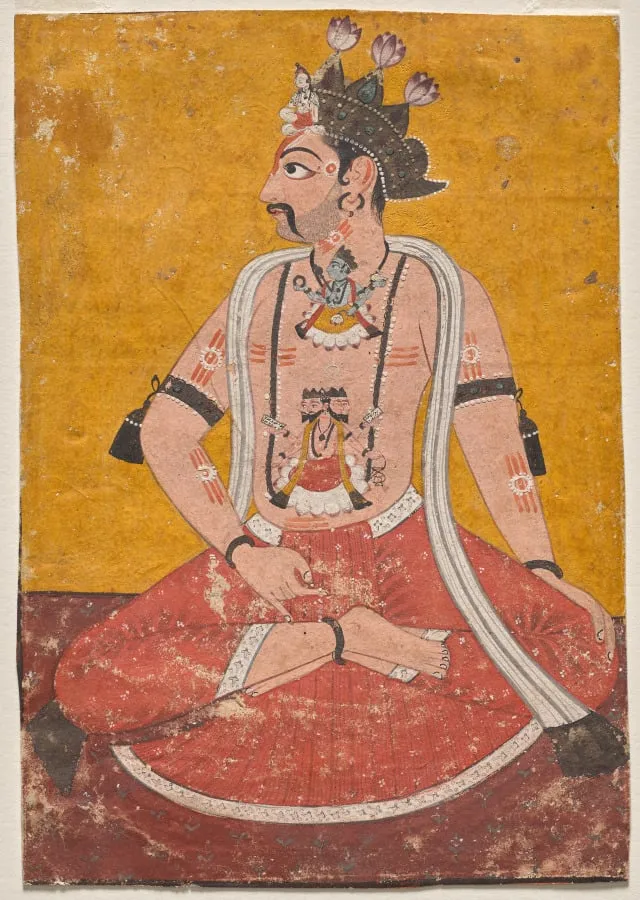
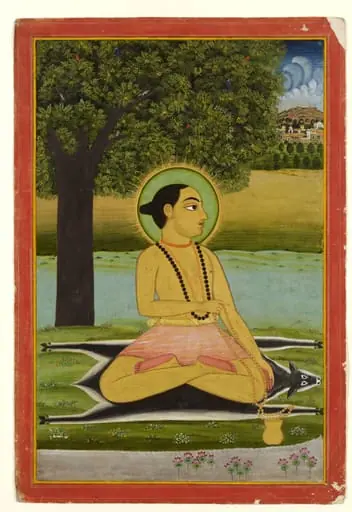
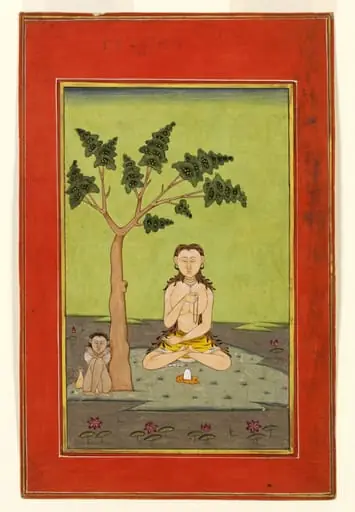
Man Dhata in Yogi Position is an unspecified painting by the Baroque artist Unknown. It dates from 1695 and is held in the collection of the Cleveland Museum of Art. The painting portrays Raja Mandhata of Nurpur, who ruled from the mid‑1660s until 1700, seated in a classic yogic posture.
About this work
Overview
The painting portrays Raja Mandhata of Nurpur, who ruled from the mid‑1660s until 1700, seated in a classic yogic posture. He is shown cross‑legged with eyes closed, his fingers curled, and a subtle radiance surrounding his form against a dark, empty background. Small flame‑like motifs rise from his head, suggesting a crown of light.
Subject & Meaning
The work illustrates the king performing the advanced yogic technique known as ghranti, in which controlled breath is believed to pierce three subtle knots—ghranti—located at the base of the spine, the heart, and between the eyebrows. These knots correspond symbolically to the deities Brahma, Vishnu, and Rudra (Shiva), linking the monarch’s physical act to a cosmological framework.
Technique & Style
Rendered in a stylised manner, the figure is outlined with delicate brushwork that emphasizes the luminous aura surrounding the body. The dark background isolates the subject, heightening the visual impact of the glowing outline and the tiny flame motifs. The composition blends portraiture with spiritual iconography, a rare combination in the visual culture of the period.
History & Provenance
Created during the late seventeenth century, the painting reflects a courtly tradition in which regional rulers associated themselves with yogic mastery. While portraits of kings were common, depictions of a sovereign actively engaged in such esoteric practice are scarce, underscoring the unique status of this piece within the artistic heritage of the Nurpur kingdom.
Artist & collection

 Domestic Scene
 Giacomo and Cardinal Marco, investing Andrea, Abbot of San Zeno, with his Benefice
 The Nymph of Fontainebleau
 Portrait of a Woman
 Madonna and Child with Saints in the Enclosed Garden
 Venus and Minerva
 Family Group of Four on Sofa
 Wall painting from Room H of the Villa of P. Fannius Synistor at Boscoreale