Artwork
MAN Naples 27875
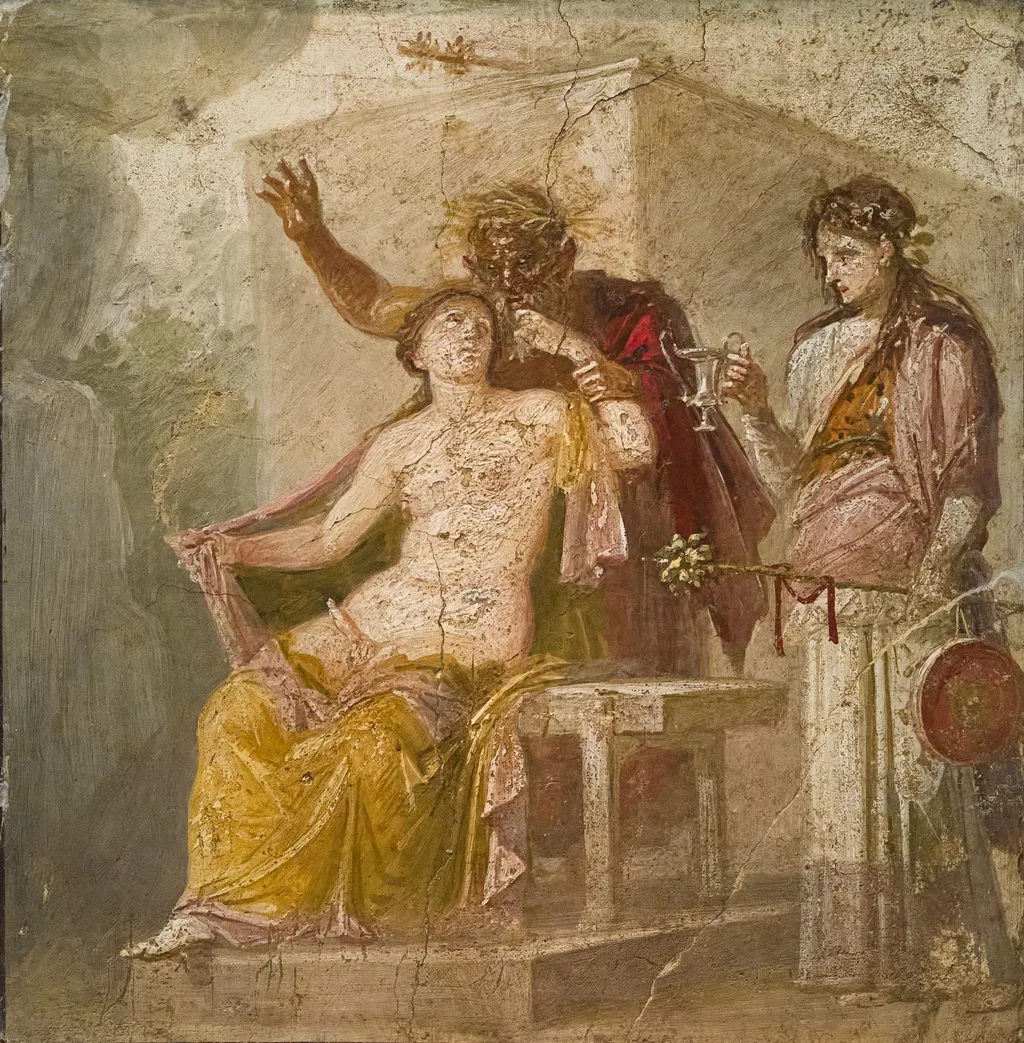
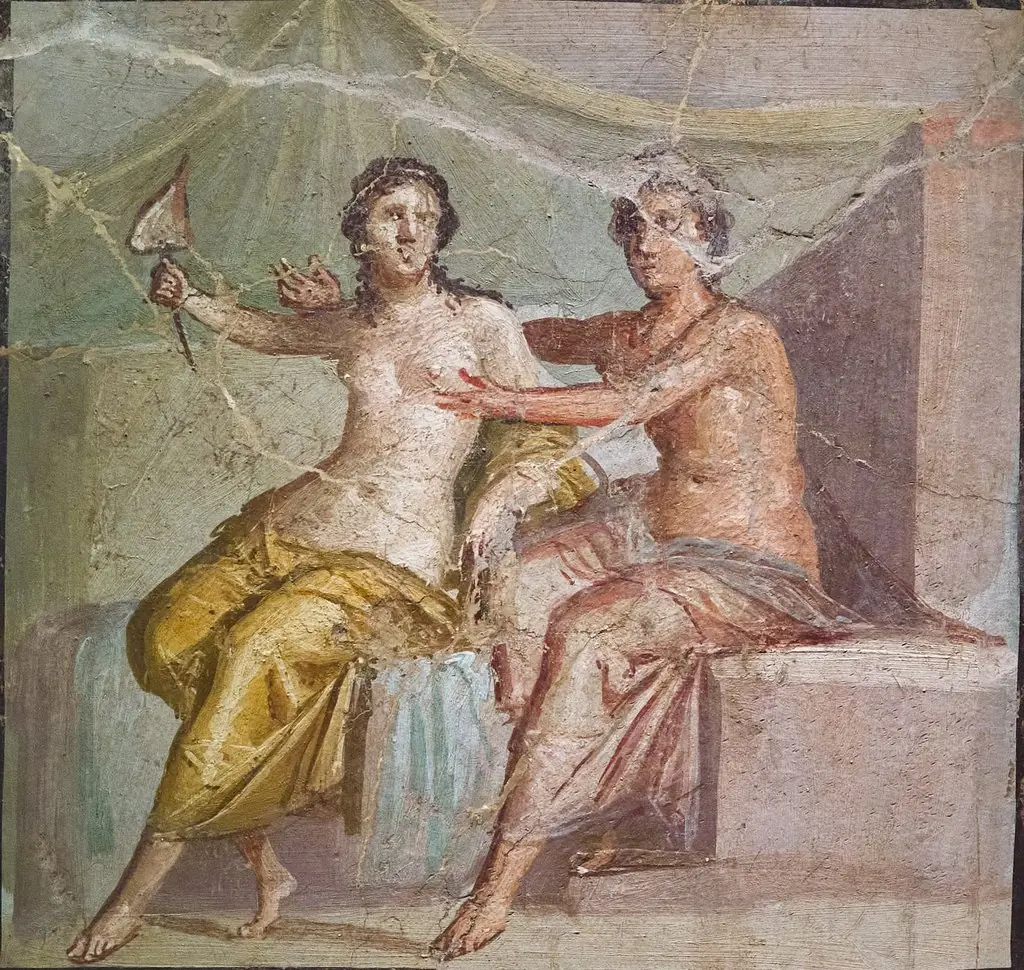
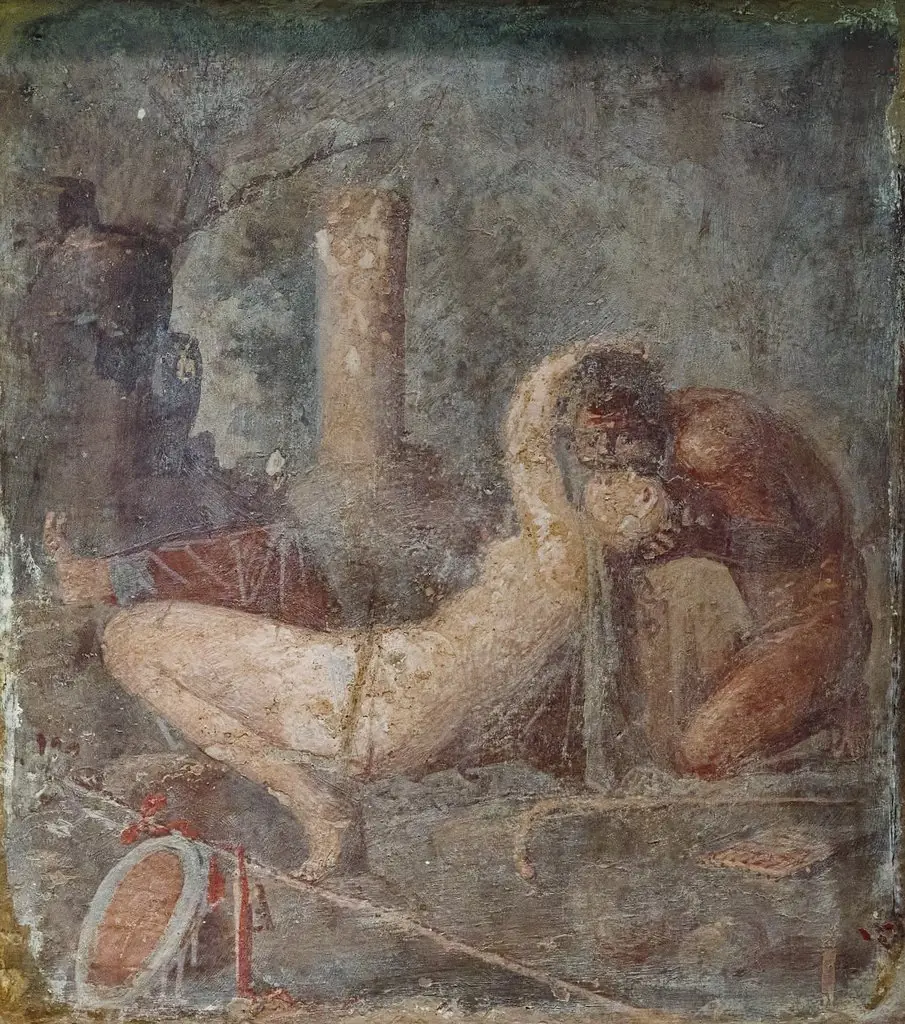
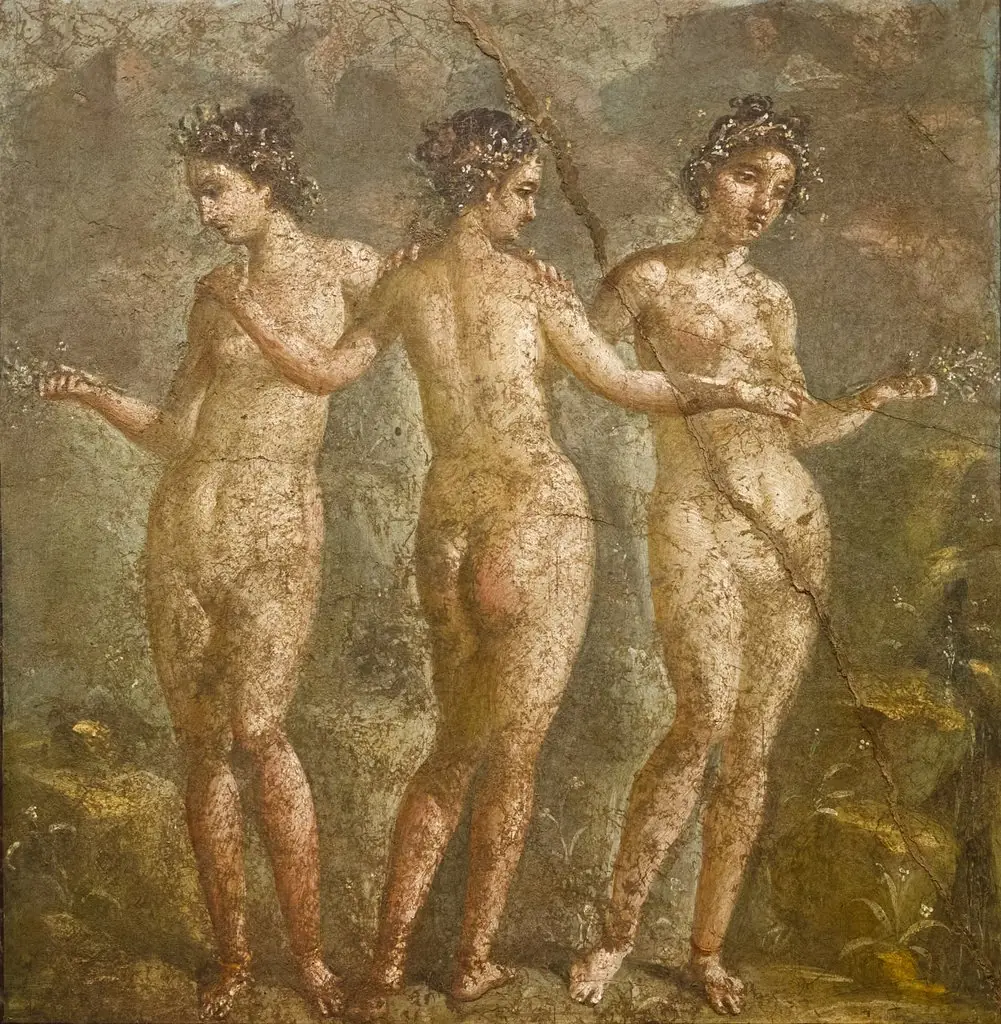
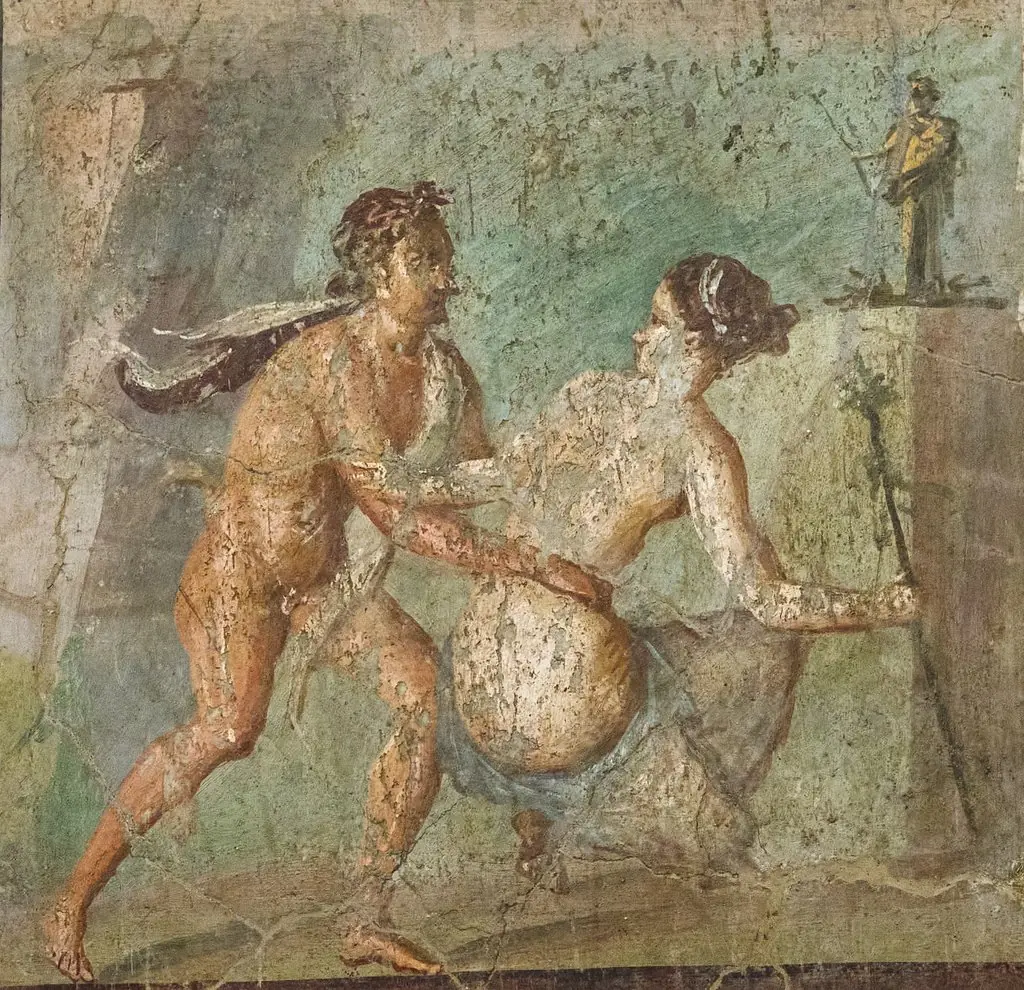
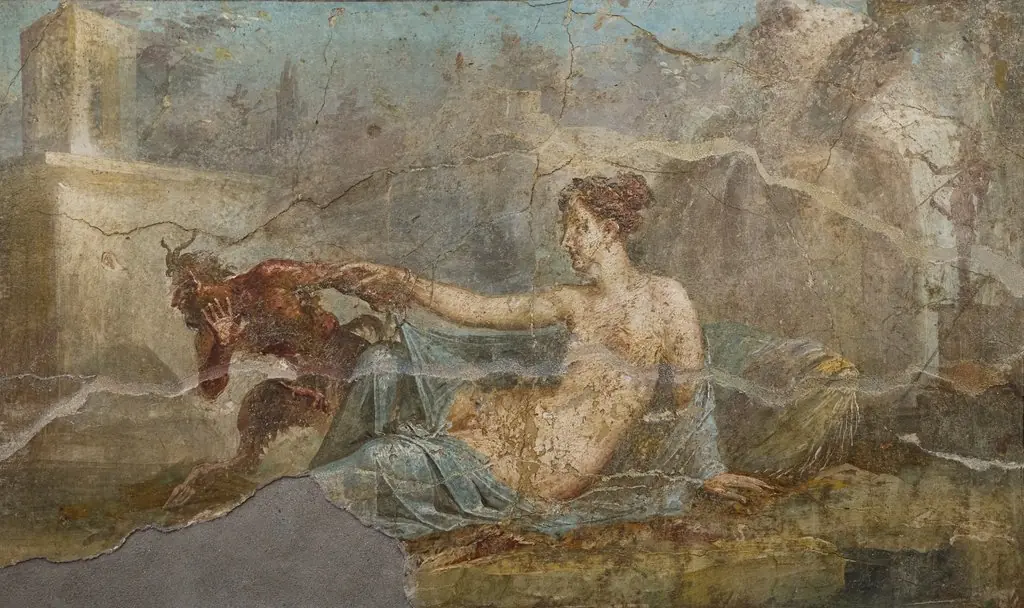
MAN Naples 27875 is a fresco painting by Unknown. It dates from 1850 and is held in the collection of the Naples National Archaeological Museum. This fresco, housed in Naples, portrays three figures arranged in a composed, ritualistic grouping.
About this work
Overview
The scene unfolds against a plain, light-toned wall with a shadowed area on the left, enhancing the figures’ presence without distraction.
This fresco, housed in Naples, portrays three figures arranged in a composed, ritualistic grouping. The scene unfolds against a plain, light-toned wall with a shadowed area on the left, enhancing the figures’ presence without distraction. Their postures and attire suggest a ceremonial moment, rendered with restrained grace and classical proportions, characteristic of Hellenistic or early Roman decorative traditions.
Subject & Meaning
The central woman, seated and adorned in yellow, appears to be the focus of a ritual act: the man to her right, in red, touches her head while offering a cup, possibly symbolizing blessing or libation. The third figure, standing in white, mirrors the cup’s presence, suggesting participation in a shared rite. The arrangement implies a domestic or religious ceremony, likely tied to fertility, hospitality, or ancestral veneration.
Technique & Style
Executed in fresco, the painting employs flat, even pigments applied to wet plaster, preserving crisp outlines and muted tones. Figures are rendered with smooth contours and minimal modeling, reflecting a preference for clarity over naturalism. Drapery folds are stylized, and spatial depth is suggested only by overlapping forms, aligning with late Hellenistic or early Imperial decorative conventions.
History & Provenance
The fresco originates from an ancient Roman domestic or religious site near Naples, likely dating to the first century CE. It was discovered during archaeological excavations in the region and transferred to the museum collection for preservation. Its survival reflects the durability of fresco techniques in well-constructed interiors, though its original context remains partially obscured by time.
Context
Created during a period when Roman wall painting absorbed Greek artistic ideals, this work reflects the cultural blending of the early Empire. Similar scenes appear in Pompeian homes, often illustrating private rituals or mythological allusions. The restrained elegance and symbolic gestures align with elite domestic aesthetics, where art reinforced social and spiritual norms through visual subtlety.
Legacy
Though not widely known outside regional collections, the fresco contributes to understanding how Roman households used imagery to encode ritual and hierarchy. Its preservation offers insight into the continuity of classical compositional principles in everyday art, influencing later interpretations of ancient ceremonial life in academic and museological settings.
Artist & collection

Museum
Naples National Archaeological Museum
Continue through works from the same source collection.
 Domestic Scene
 Giacomo and Cardinal Marco, investing Andrea, Abbot of San Zeno, with his Benefice
 The Nymph of Fontainebleau
 Portrait of a Woman
 Madonna and Child with Saints in the Enclosed Garden
 Venus and Minerva
 Family Group of Four on Sofa
 Wall painting from Room H of the Villa of P. Fannius Synistor at Boscoreale