Artwork
Man Standing
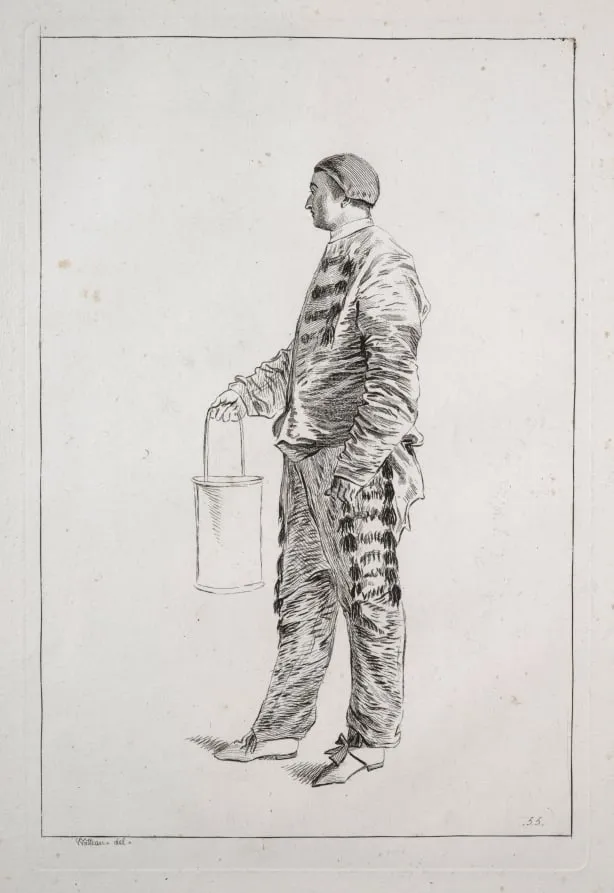
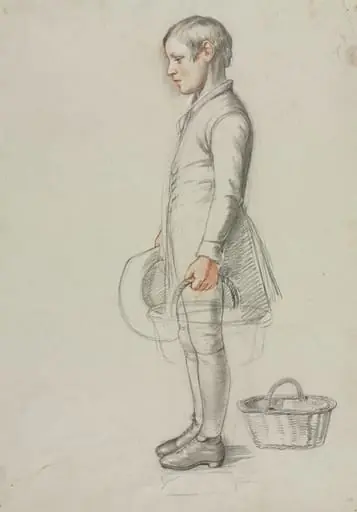
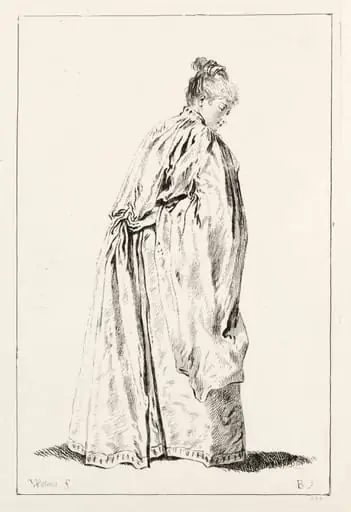
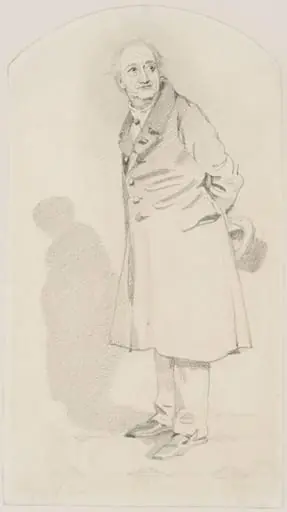
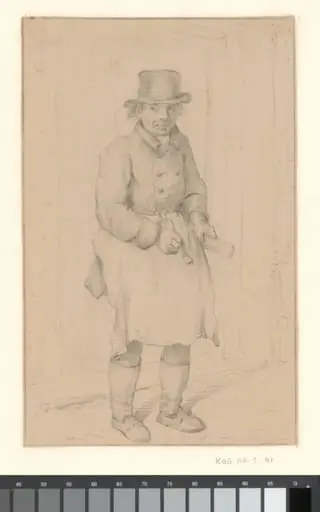
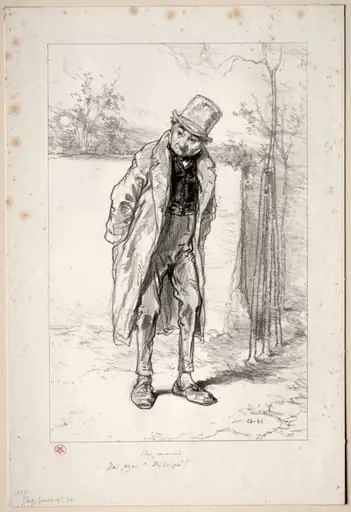
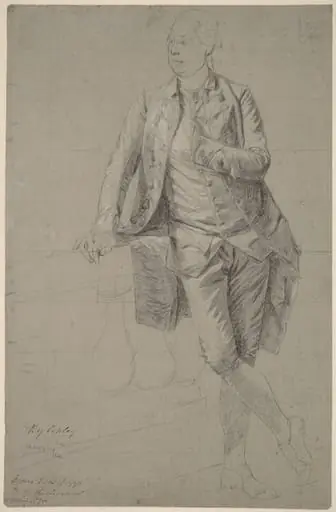
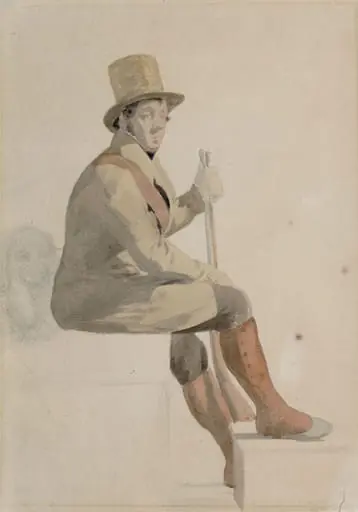
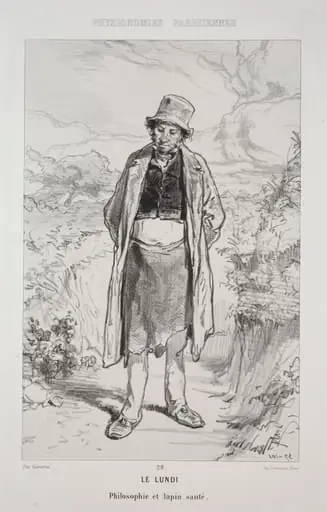
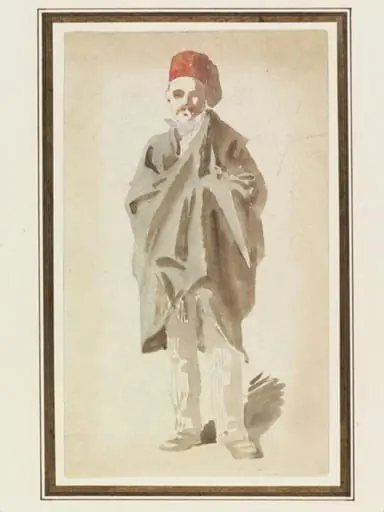
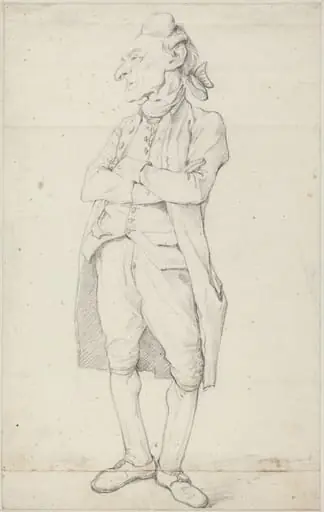
Man Standing is a print by the Baroque artist Unknown. It dates from 1704 and is held in the collection of the Cleveland Museum of Art. This print depicts a solitary man viewed from behind, captured in a moment of stillness.
About this work
Overview
This print depicts a solitary man viewed from behind, captured in a moment of stillness. Dressed in a striped coat and trousers, he holds a bucket in one hand while a cloth rests over his shoulder. The composition emphasizes quietude, with minimal detail and restrained lines that suggest an ordinary, unremarkable scene rather than a dramatic narrative.
Subject & Meaning
The figure appears to be an everyday laborer, engaged in a routine task with no overt symbolism. His relaxed posture and mundane props—bucket, cloth—point to domestic or manual work, likely domestic service or cleaning. The absence of context or emotion invites contemplation of quiet dignity in ordinary life.
Technique & Style
The artist employs clean, precise lines to define the folds of fabric and the contours of the body. Shading is subtle, used sparingly to suggest volume without heavy contrast. The simplicity of the draftsmanship reflects a focus on form and posture rather than ornamentation, aligning with observational realism.
History & Provenance
The work’s origin is undocumented in public records, but its stylistic traits suggest it may stem from 17th- or early 18th-century European printmaking traditions. Its unadorned subject and technique resemble studies made by artists observing daily life, though no known attribution or collection history has been established.
Context
In the Baroque era, artists increasingly turned to scenes of common life, moving beyond religious or mythological themes. This print fits within that trend, capturing a quiet, unidealized moment that reflects broader cultural interest in the dignity and rhythm of everyday labor.
Legacy
Though not widely known or reproduced, the print exemplifies a quiet strand of observational art that valued authenticity over spectacle. Its understated approach influenced later generations of realist draftsmen who sought to portray the unremarkable with clarity and respect.
Artist & collection

 Domestic Scene
 Giacomo and Cardinal Marco, investing Andrea, Abbot of San Zeno, with his Benefice
 The Nymph of Fontainebleau
 Portrait of a Woman
 Madonna and Child with Saints in the Enclosed Garden
 Venus and Minerva
 Family Group of Four on Sofa
 Wall painting from Room H of the Villa of P. Fannius Synistor at Boscoreale