Artwork
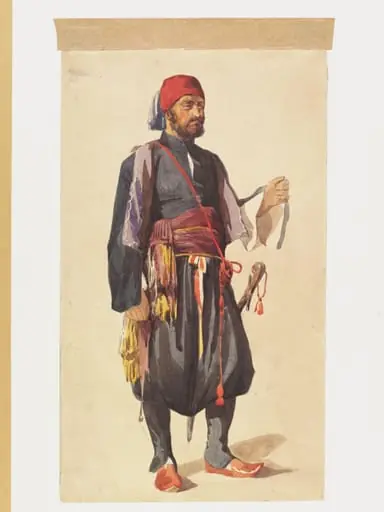
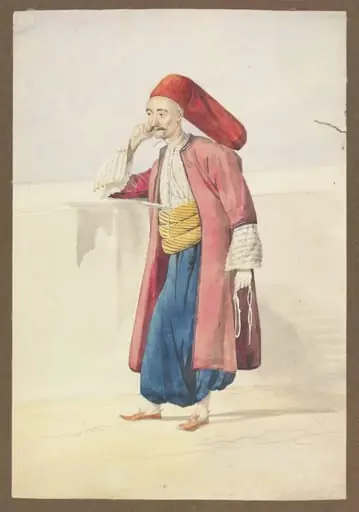
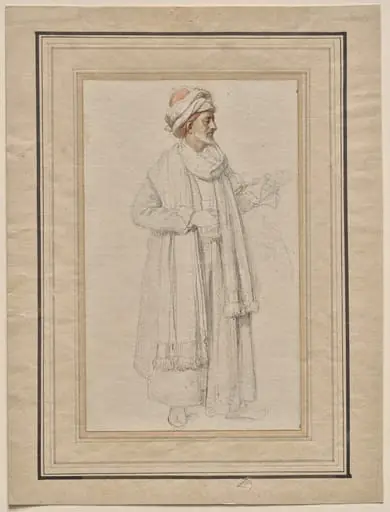
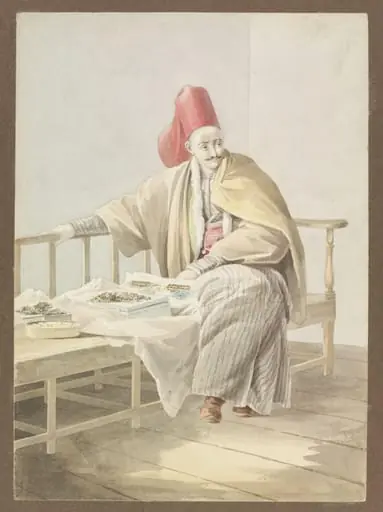
A man wearing a fez and wrapped in a long cloak
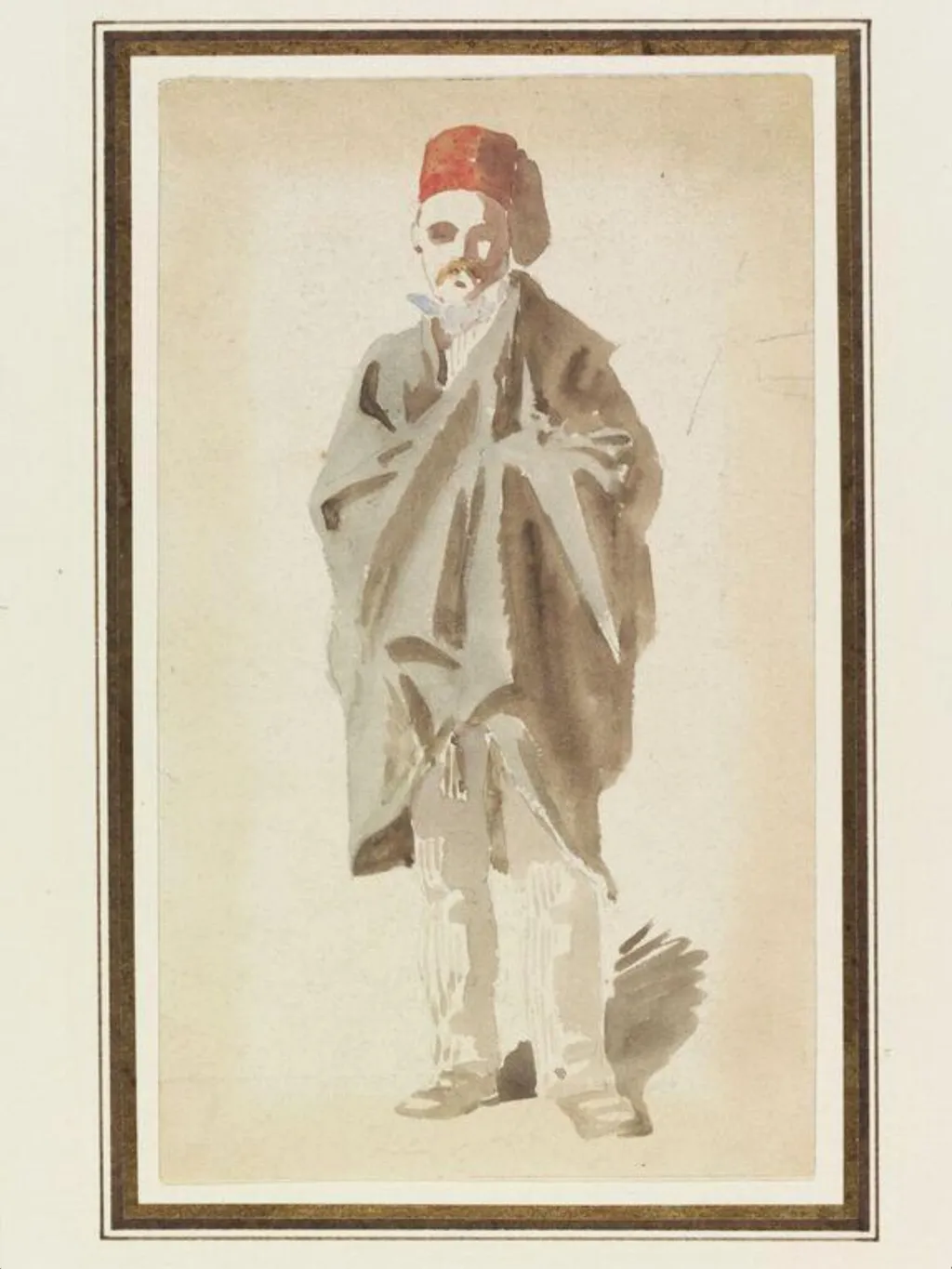
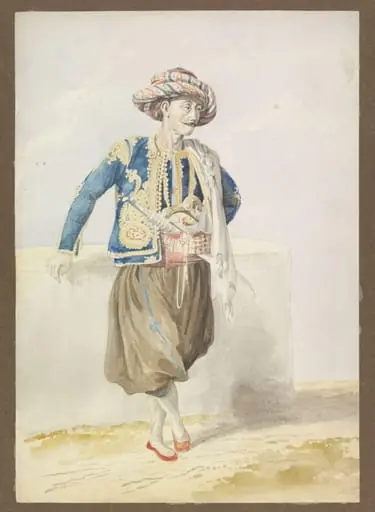
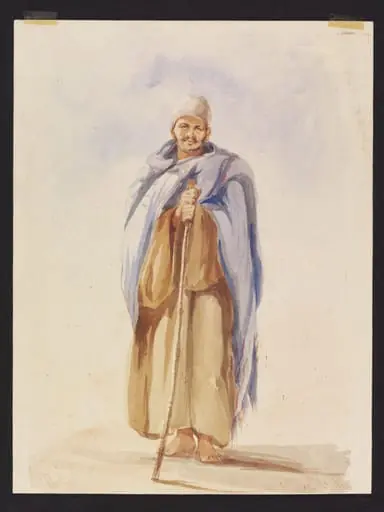
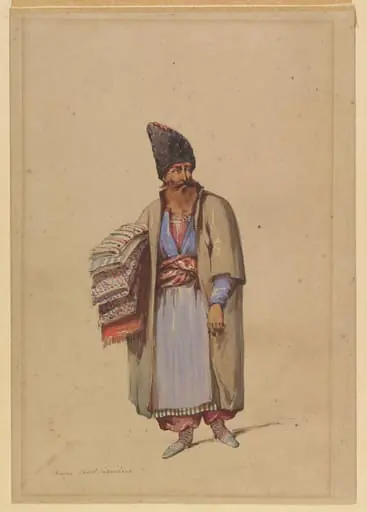
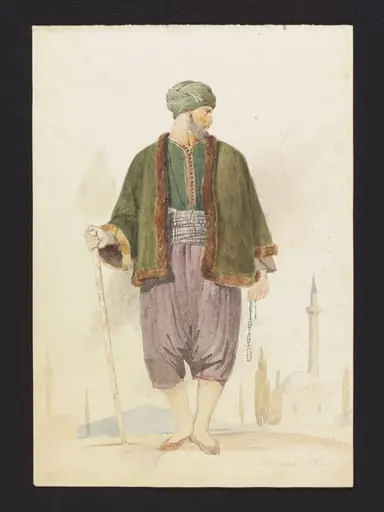
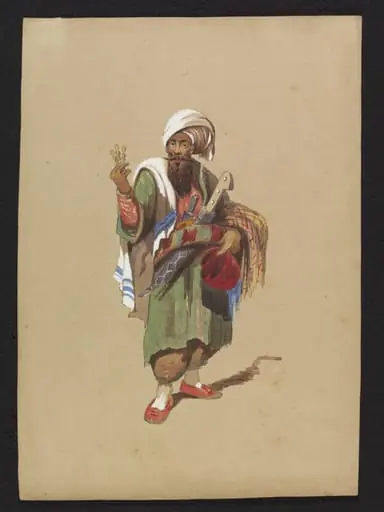
A man wearing a fez and wrapped in a long cloak is a watercolor work on paper by the Romanticist artist Aster Corbould. It dates from 1841 and is held in the collection of the Victoria and Albert Museum.
About this work
Overview
Aster Corbould’s watercolour presents a solitary figure dressed in a fez and a long, draped cloak. The subject stands upright, hands joined before him, rendered in a restrained palette that emphasizes form over colour. The composition conveys a calm, introspective mood, inviting viewers to consider the figure’s quiet presence.
Subject & Meaning
The central figure is portrayed in a contemplative stance, his clasped hands suggesting meditation or prayer. The fez, a distinctive headwear associated with Ottoman and North African cultures, alongside the flowing cloak, hints at an exotic or foreign identity, while the subdued atmosphere underscores a sense of personal reflection rather than narrative action.
Technique & Style
Executed in watercolour, the work employs delicate washes and fine line work to model the cloak’s folds and the fez’s brim. Muted tones and subtle gradations of light create a sense of depth without overt dramatization, aligning the piece with Romantic sensibilities that favour emotional nuance and atmospheric restraint.
History & Provenance
The drawing entered the museum’s collection after being acquired from the dealer P. Heathcote‑Williams in October 1972, the purchase price recorded as eight pounds. Its inclusion in the collection reflects the institution’s interest in 19th‑century British watercolours and the broader oeuvre of Aster Corbould.
Artist & collection
Artist
Aster Corbould sketched the everyday London they saw from their window—people in hats, dogs in alleys, the way light pooled on cobblestones.