Artwork
Mandala
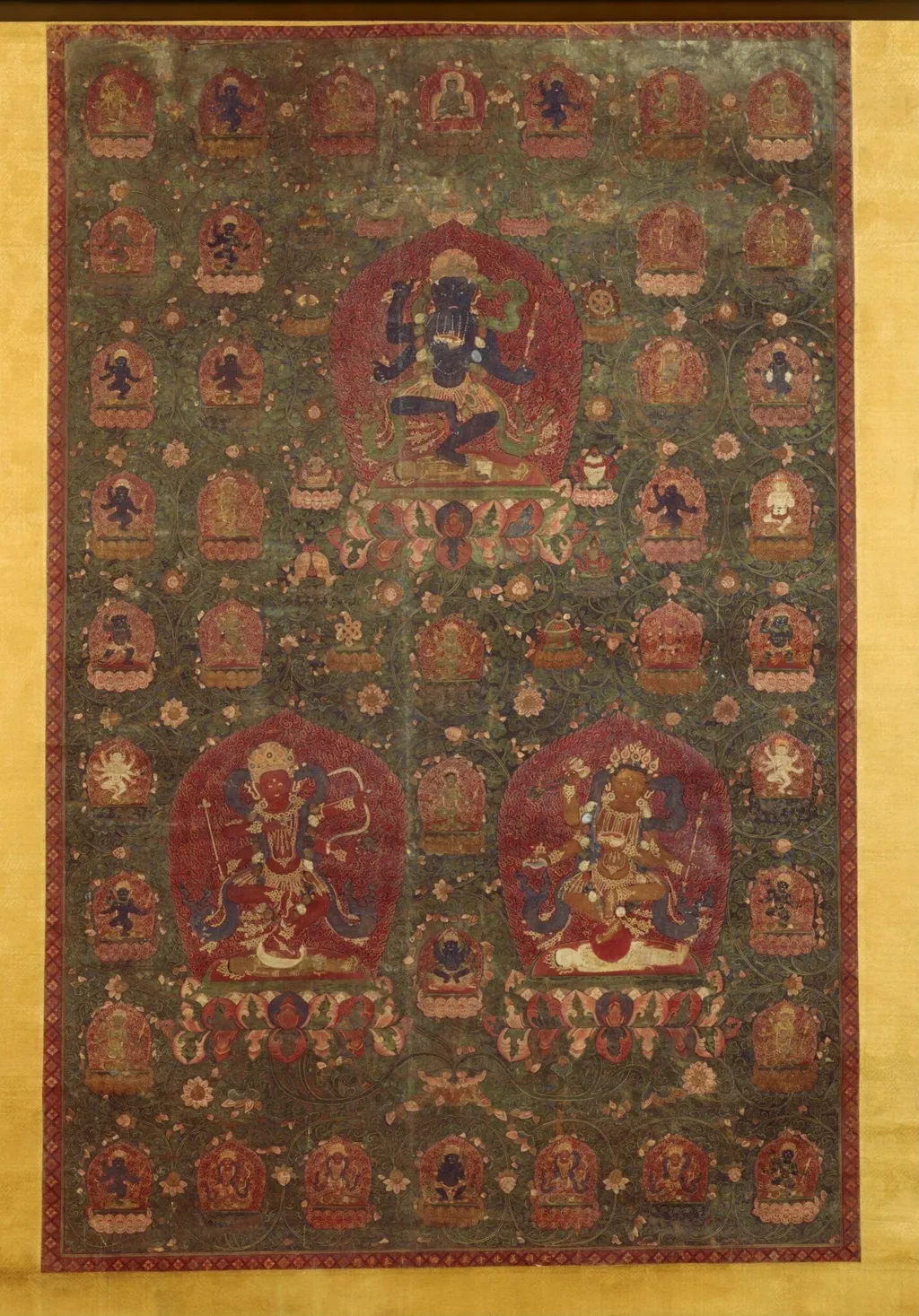
Mandala is a paint painting by the Renaissance artist Unknown. It dates from 1479 and is held in the collection of the Victoria and Albert Museum.
About this work
Overview
This painting is a mandala, a sacred diagram used in Buddhist meditation. Executed on paper, it exhibits darkened areas caused by centuries of incense smoke from its original temple setting. The work reflects a synthesis of artistic traditions, primarily Tibetan and Nepalese, which were introduced to China through monastic networks under imperial patronage.
Subject & Meaning
The mandala centers on wrathful deities, depicted as protectors of Buddhist doctrine. These figures wield weapons and stand triumphantly over subdued demons, symbolizing the conquest of ignorance and malevolent forces. Such imagery reinforces the mandala’s role as a spiritual tool, guiding practitioners toward enlightenment through visualization and ritual.
Technique & Style
The painting employs vivid pigments and precise linework, characteristic of Tibetan-influenced Buddhist iconography. Sharp contours and bold colors enhance the deities’ dynamic forms, facilitating meditative focus. The stylistic fusion evident here—blending Chinese, Tibetan, and Nepalese elements—distinguishes it from later Chinese Buddhist art.
History & Provenance
An inscription dates the scroll to 1479, during the Ming dynasty’s Chenghua era. It likely originated in a Beijing temple founded under Kublai Khan, known in the Ming period as the Temple of Great and Mighty Benevolence. This site served as a hub for Tibetan Buddhist teachings and housed prominent monks, suggesting the work’s creation within a monastic context.
Context
Tibetan and Nepalese monks, patronized by Yuan and Ming emperors, shaped Chinese Buddhist art from the late 13th century onward. This mandala exemplifies their influence, particularly in temples linked to imperial authority. Its survival underscores the Ming dynasty’s role in preserving trans-Himalayan Buddhist traditions within China.
Legacy
The mandala’s age and provenance highlight its significance within the evolution of Sino-Tibetan Buddhist art. Once integral to temple rituals, it now serves as a historical document, illustrating the cross-cultural exchanges fostered by imperial patronage and monastic networks during the Yuan and Ming dynasties.
Artist & collection

 Domestic Scene
 Giacomo and Cardinal Marco, investing Andrea, Abbot of San Zeno, with his Benefice
 The Nymph of Fontainebleau
 Portrait of a Woman
 Madonna and Child with Saints in the Enclosed Garden
 Venus and Minerva
 Family Group of Four on Sofa
 Wall painting from Room H of the Villa of P. Fannius Synistor at Boscoreale
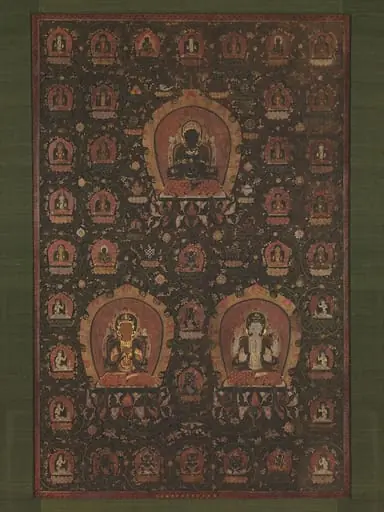 明 佚名 釋教三尊曼陀羅圖 軸|Mandala of Vajradhara, Manjushri and Sadakshari -Lokeshvara
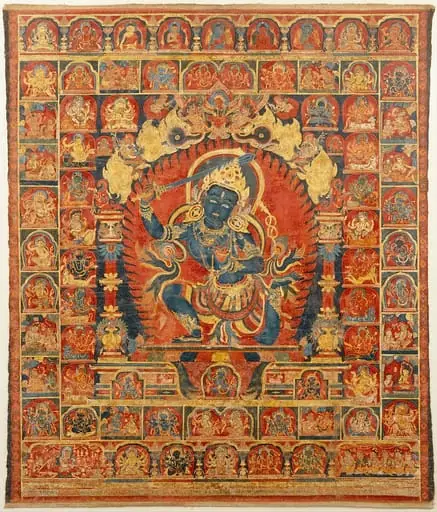 Untitled
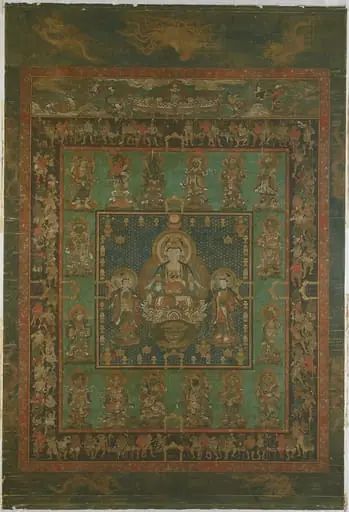 般若菩薩曼荼羅図|Mandala of the Bodhisattva Hannya (Prajnaparamita)
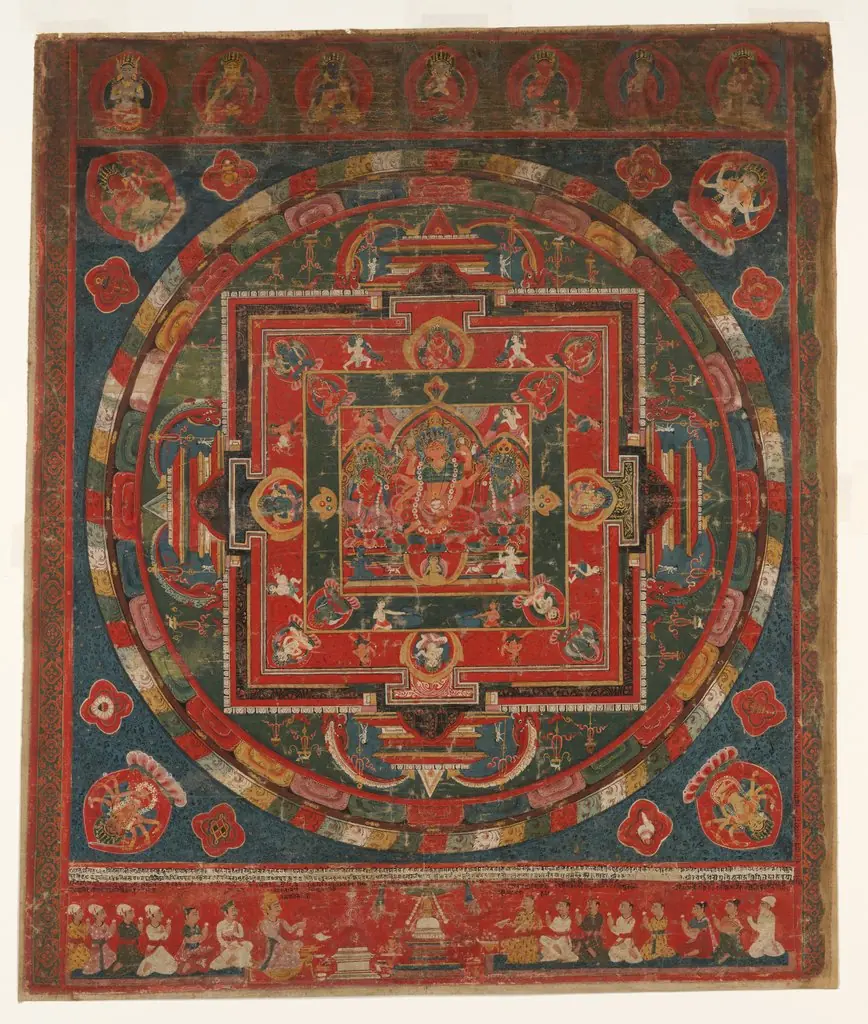 Vasudhara Mandala
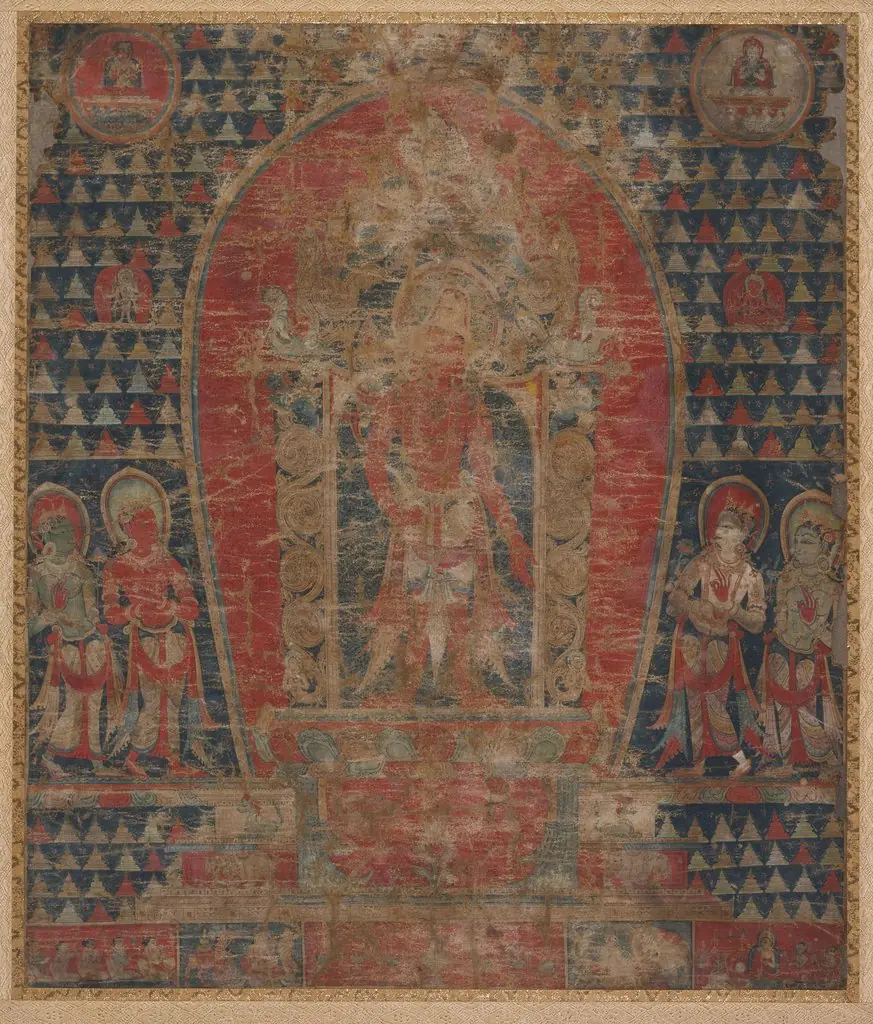 The Bodhisattva Avalokiteshvara and Four Taras
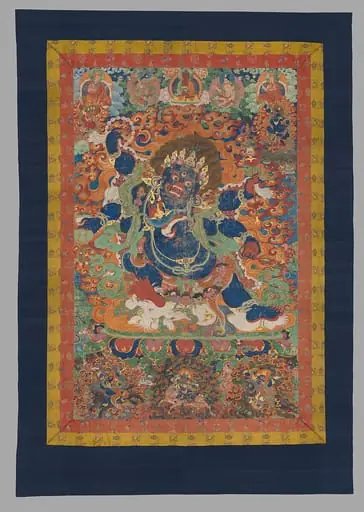 Untitled
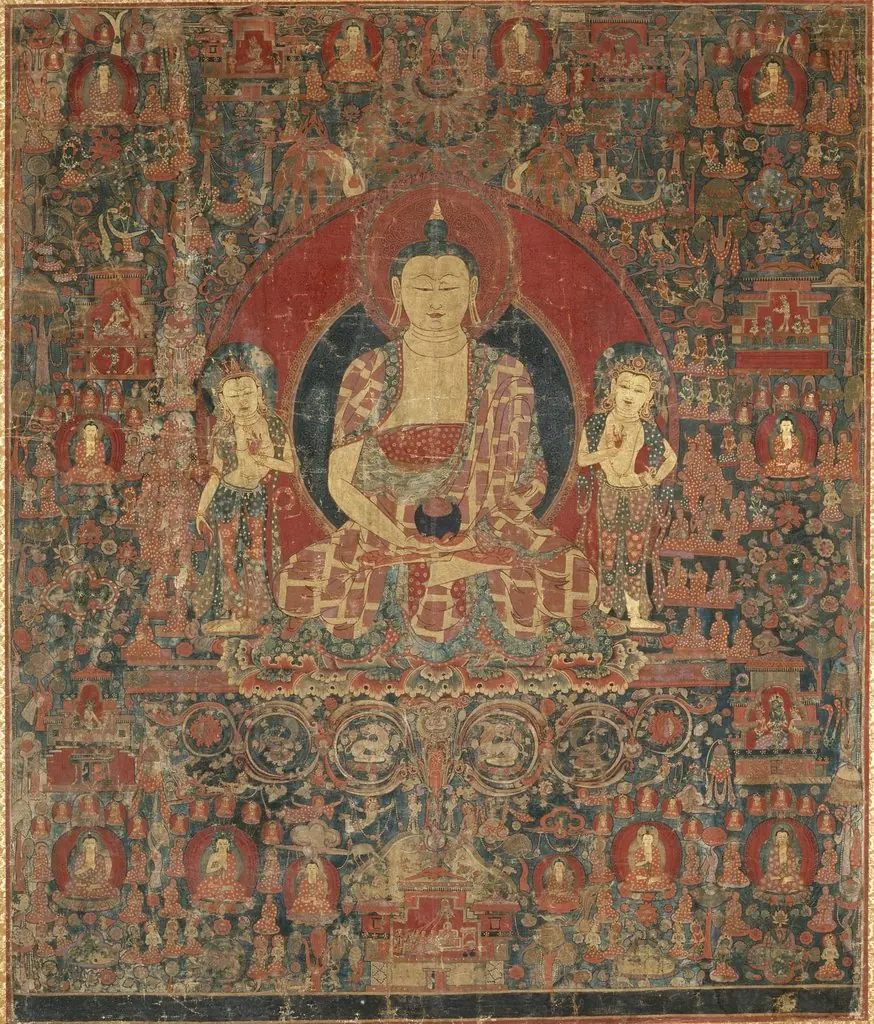 The Jina Buddha of Infinite Light (Amitabha) in His Pure Land Paradise (Sukhavati)
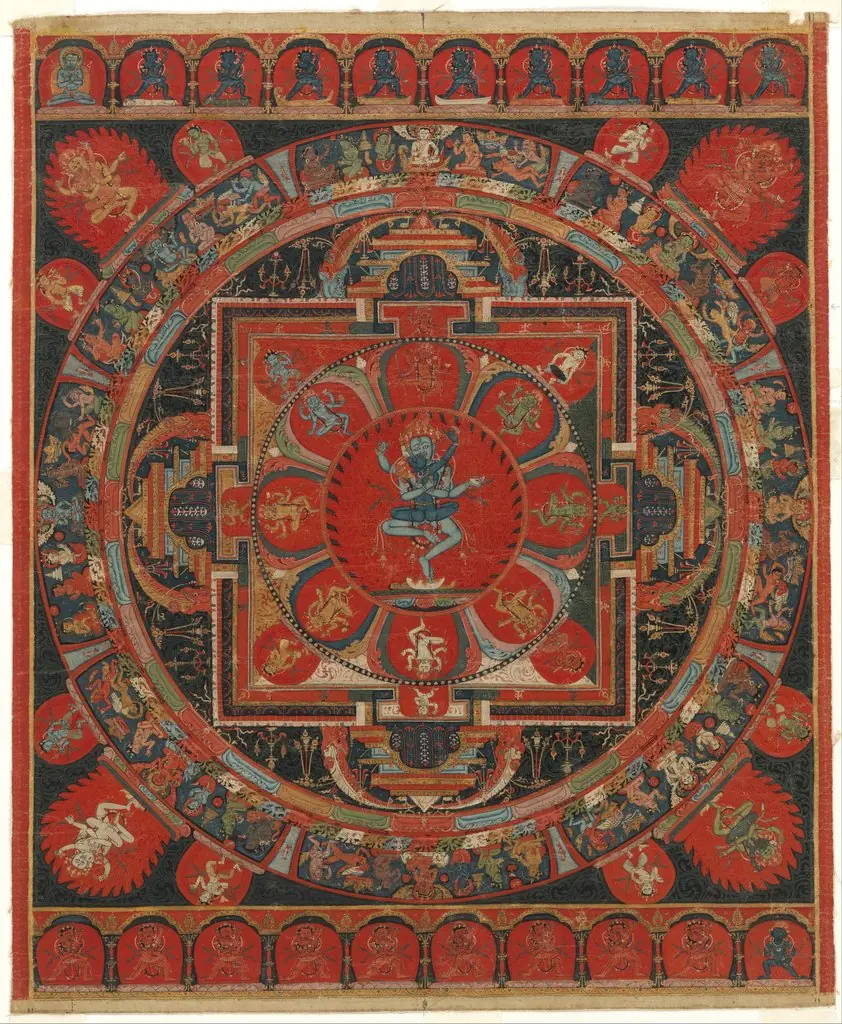 Hevajra Mandala
![The Guardian Generals of the Directions (Lokapalas) Dhritarashtra (East) [top] and Virudhaka (South) [bottom], by Unknown](https://artifactworldgallery.com/img/unknown--the-guardian-generals-of-the-directions-lokapalas-dhritarash--26a8da85b3fb4c5a-w320.webp) The Guardian Generals of the Directions (Lokapalas) Dhritarashtra (East) [top] and Virudhaka (South) [bottom]
The Guardian Generals of the Directions (Lokapalas) Dhritarashtra (East) [top] and Virudhaka (South) [bottom]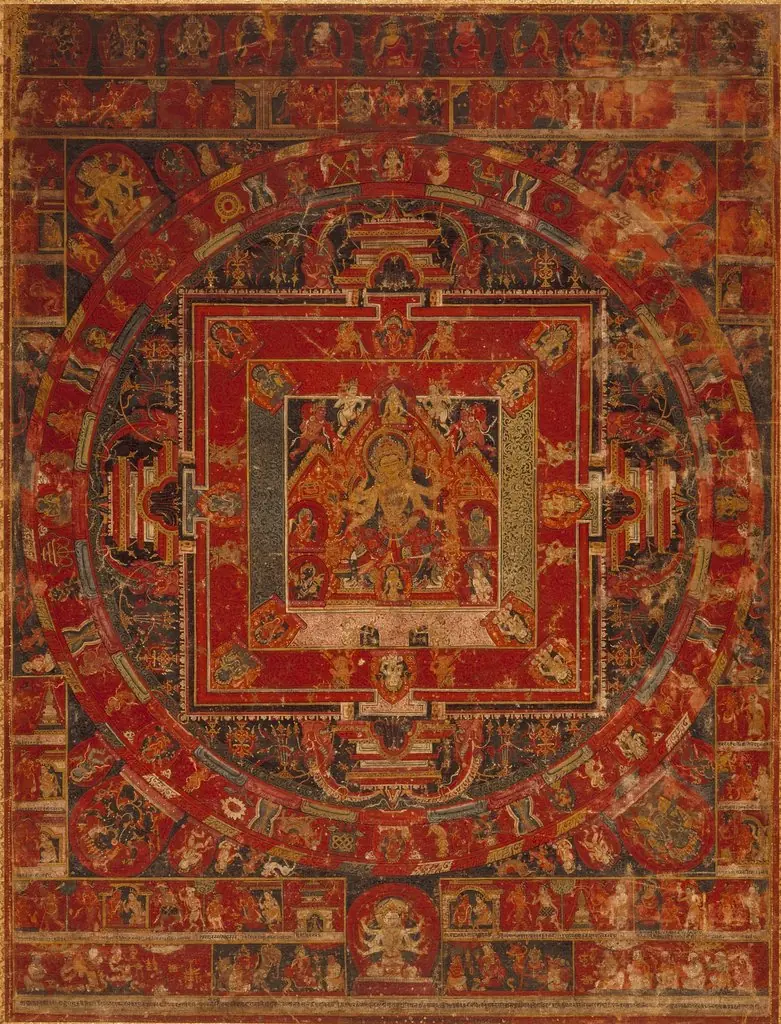 Mandala of Vasudhara
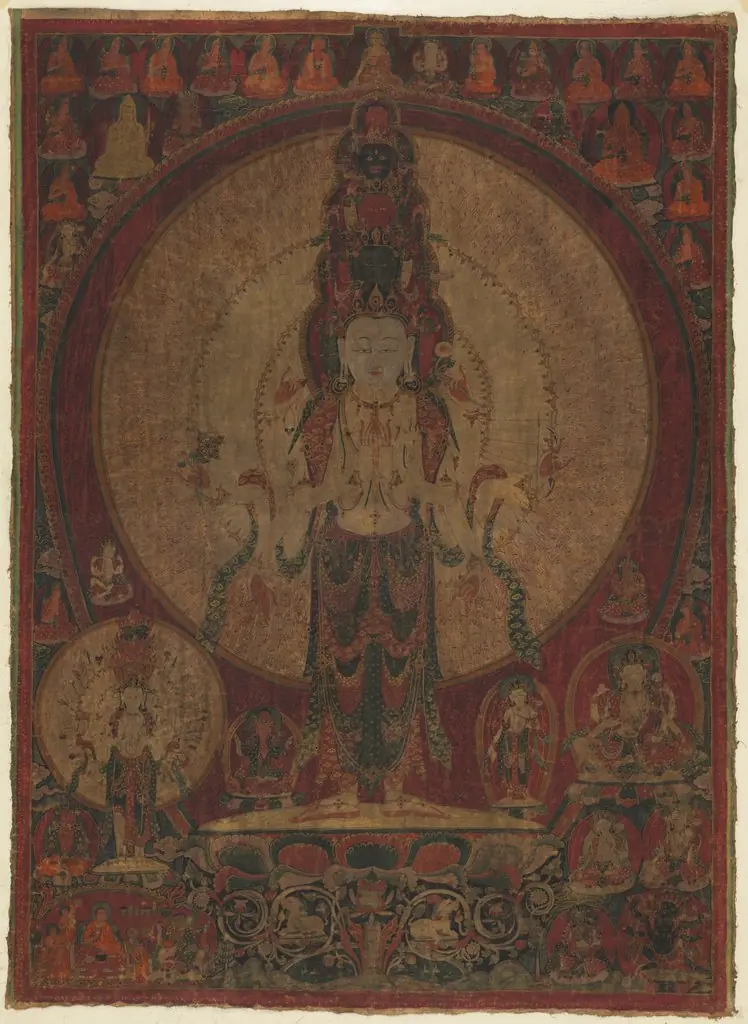 Eleven-Headed, Thousand-Armed Bodhisattva of Compassion (Avalokiteshvara)
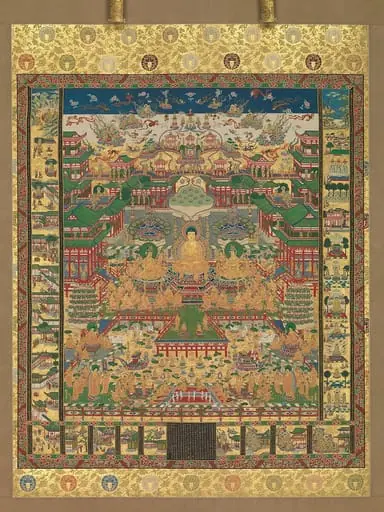 当麻曼荼羅|Taima Mandala