Artwork
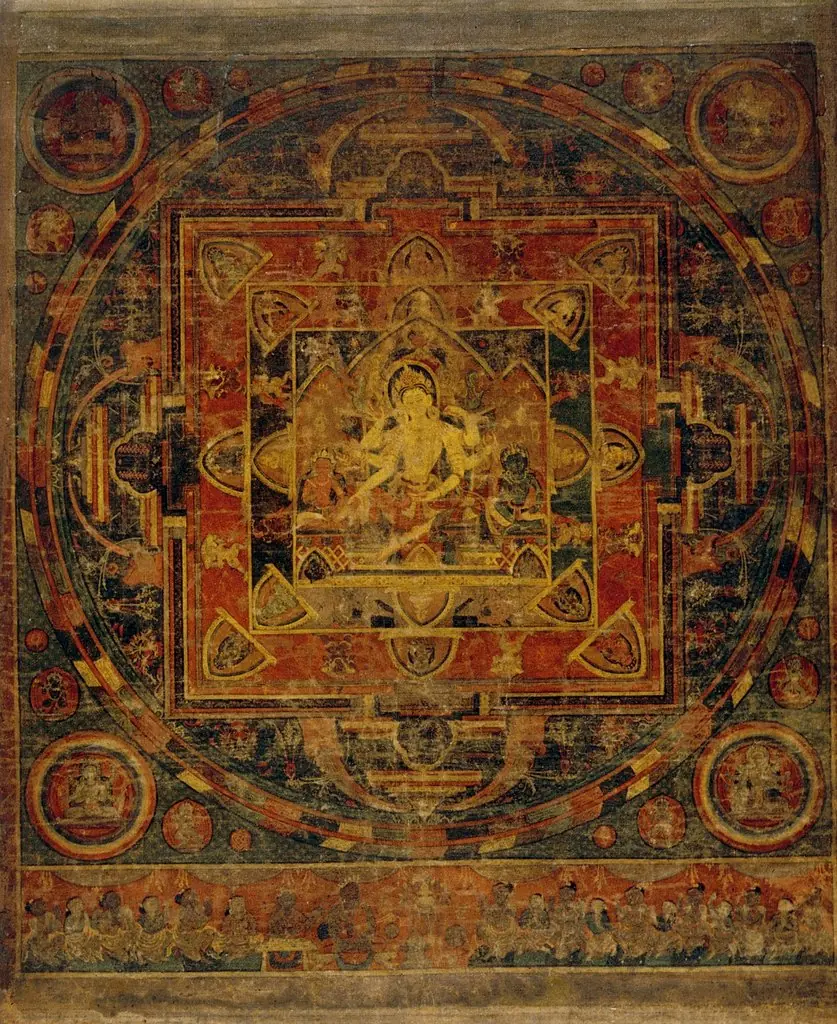
Mandala of Vasudhara
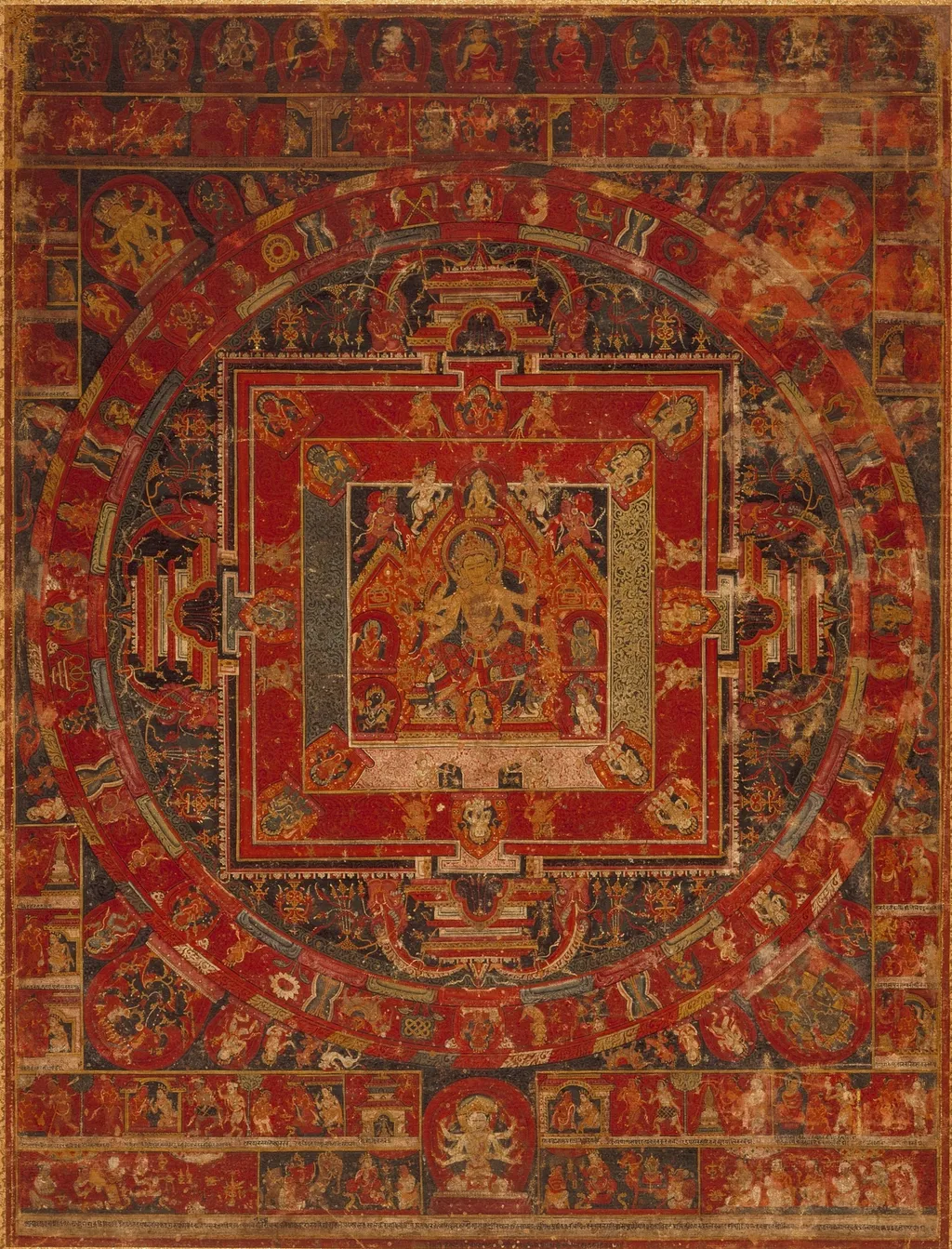
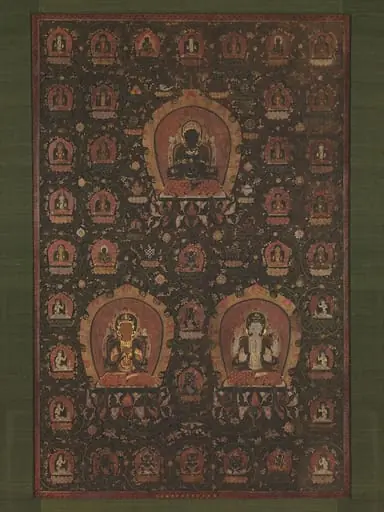
Mandala of Vasudhara is an unspecified painting by Unknown. It dates from 1498 and is held in the collection of the Los Angeles County Museum of Art.
About this work
Overview
The work titled "Mandala of Vasudhara" is a painted composition that depicts a traditional Buddhist mandala centered on the deity Vasudhara, the goddess of wealth and abundance. As a visual representation of spiritual cosmology, the piece arranges symbolic elements in concentric patterns that guide contemplation and ritual practice.
Subject & Meaning
Vasudhara, revered in Mahayana and Vajrayana traditions, embodies the generosity of the earth and the flow of material blessings. The mandala arranges her figure amid attendant deities, offering a schematic map of the divine realm that practitioners use to focus meditation on prosperity and the cultivation of merit.
Technique & Style
Executed in pigment on a flat surface, the painting follows the precise geometric conventions of mandala art, employing vibrant colors and intricate line work to delineate concentric squares, circles, and lotus motifs. The style reflects the syncretic aesthetic of Tibetan Buddhist visual culture, where symbolic precision outweighs naturalistic representation.
History & Provenance
The piece originates from a tradition of ritual paintings produced for monastic settings, likely commissioned by a Buddhist institution for use in ceremonial rites. Its documented trail begins with a mid‑20th‑century acquisition by a private collector before entering a museum collection, where it remains catalogued as a representative example of devotional mandala art.
Context
Mandala paintings such as this serve both as teaching tools and as objects of veneration within Tibetan Buddhism. They are often created under the guidance of a lama and used in initiations, where the visual layout mirrors the metaphysical structure of the universe as understood in Buddhist cosmology.
Legacy
As a preserved example of ritual painting, the work contributes to scholarly understanding of Tibetan iconography and the transmission of esoteric practices. Its presence in a public collection enables comparative study with other mandalas, illuminating regional variations in color palette, composition, and devotional emphasis.
Artist & collection

 Domestic Scene
 Giacomo and Cardinal Marco, investing Andrea, Abbot of San Zeno, with his Benefice
 The Nymph of Fontainebleau
 Portrait of a Woman
 Madonna and Child with Saints in the Enclosed Garden
 Venus and Minerva
 Family Group of Four on Sofa
 Wall painting from Room H of the Villa of P. Fannius Synistor at Boscoreale
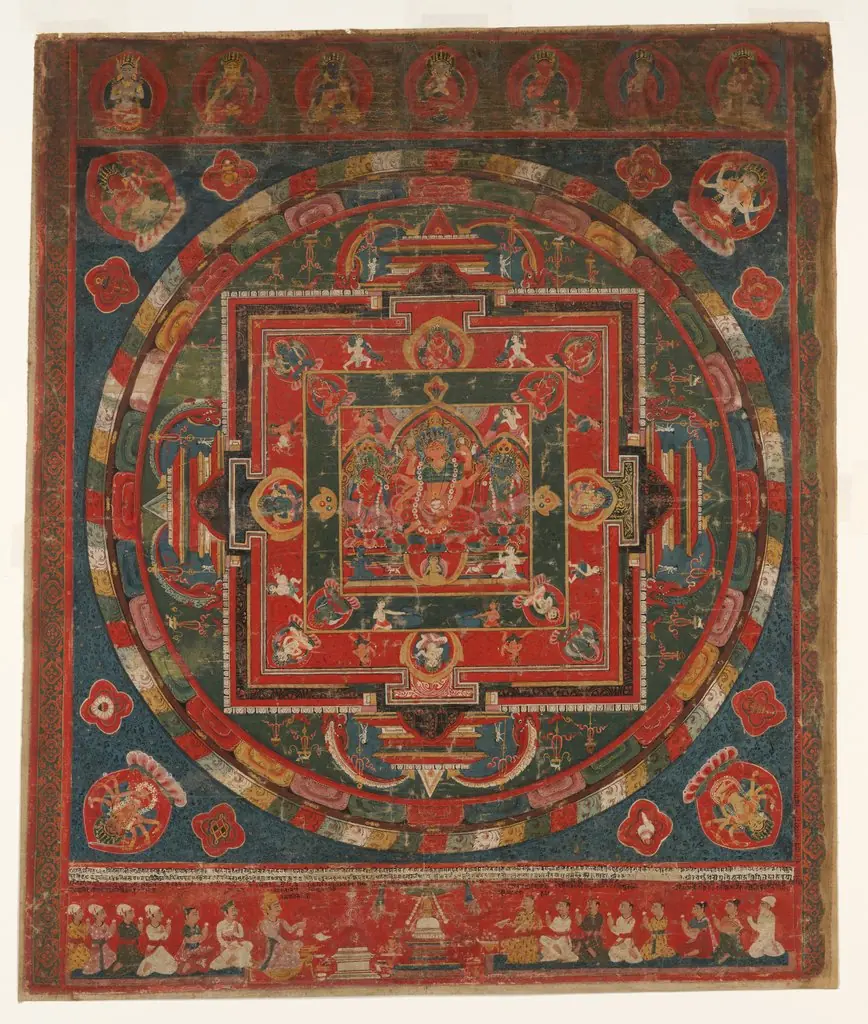 Vasudhara Mandala
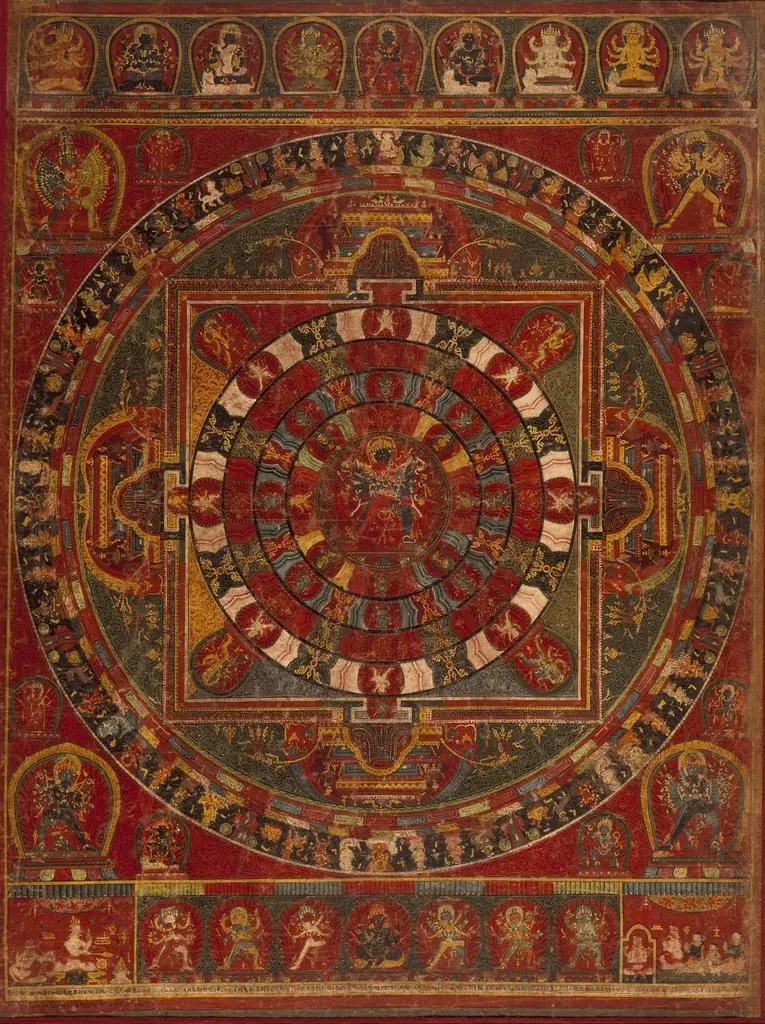 Mandala of the Buddhist Deity Chakrasamvara
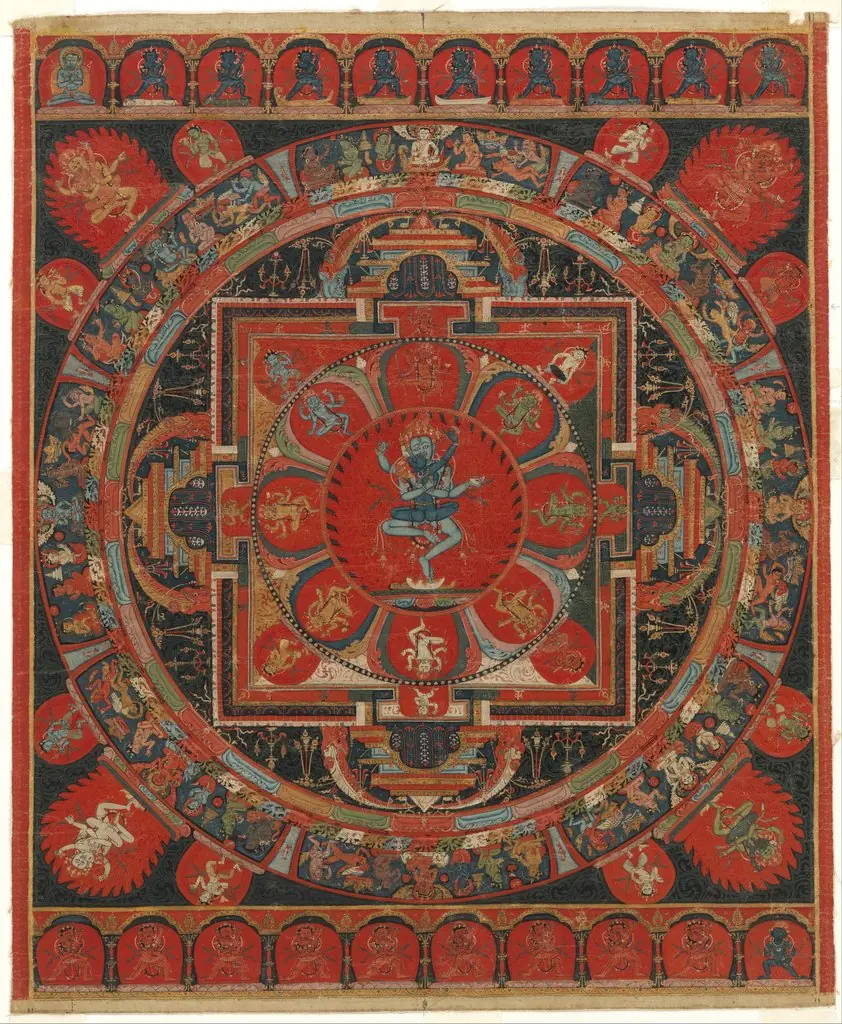 Hevajra Mandala
 Mandala of Vasudhara
 Mandala of Chakrasamvara and Vajravarahi
 Mandala
 Mandala
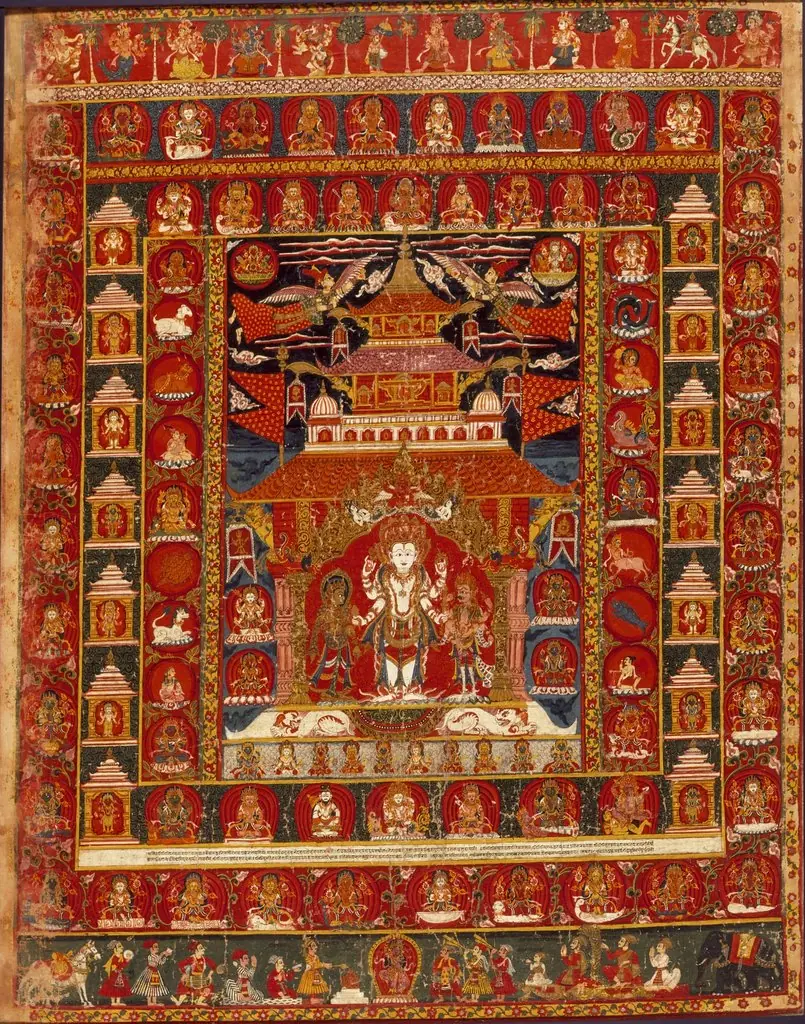 Mandala of Vishnu
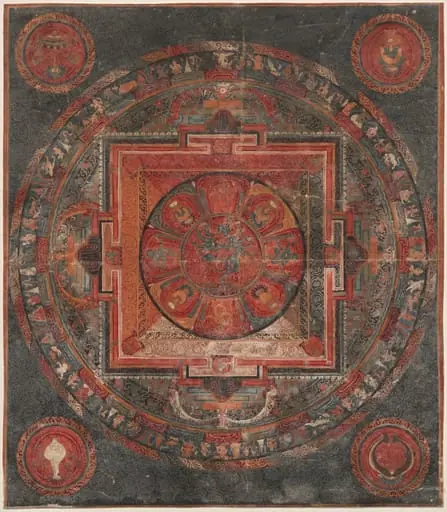 Mandala of Chakrasamvara and Vajravarahi
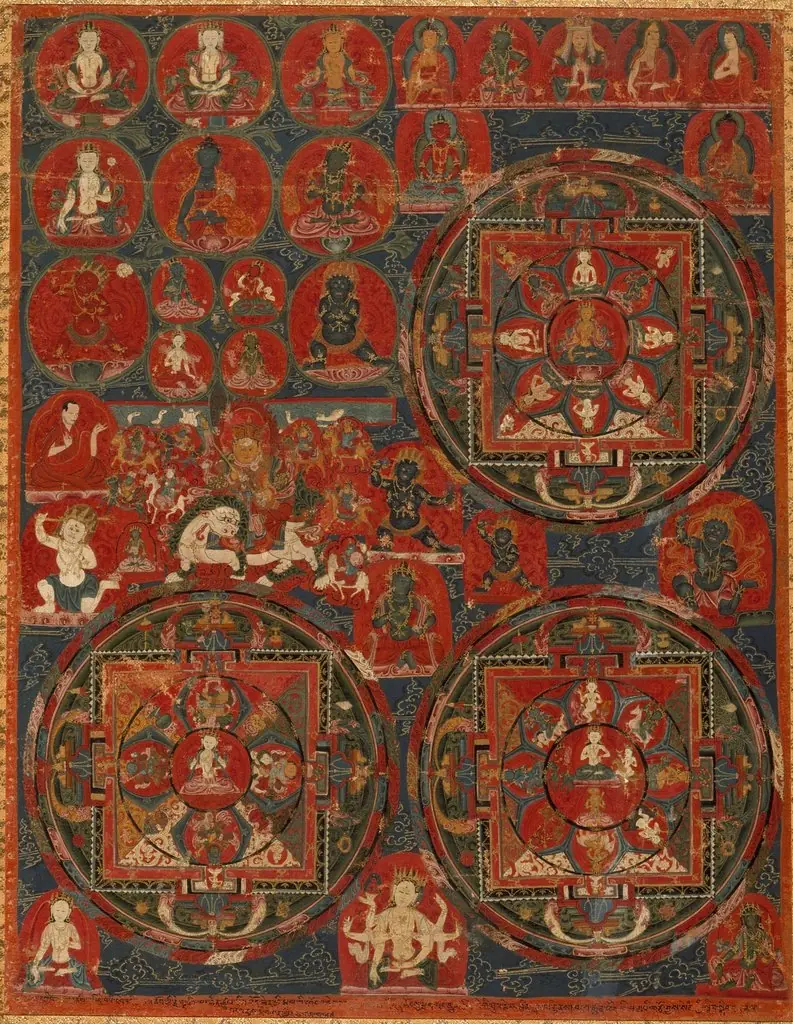 Three Mandalas
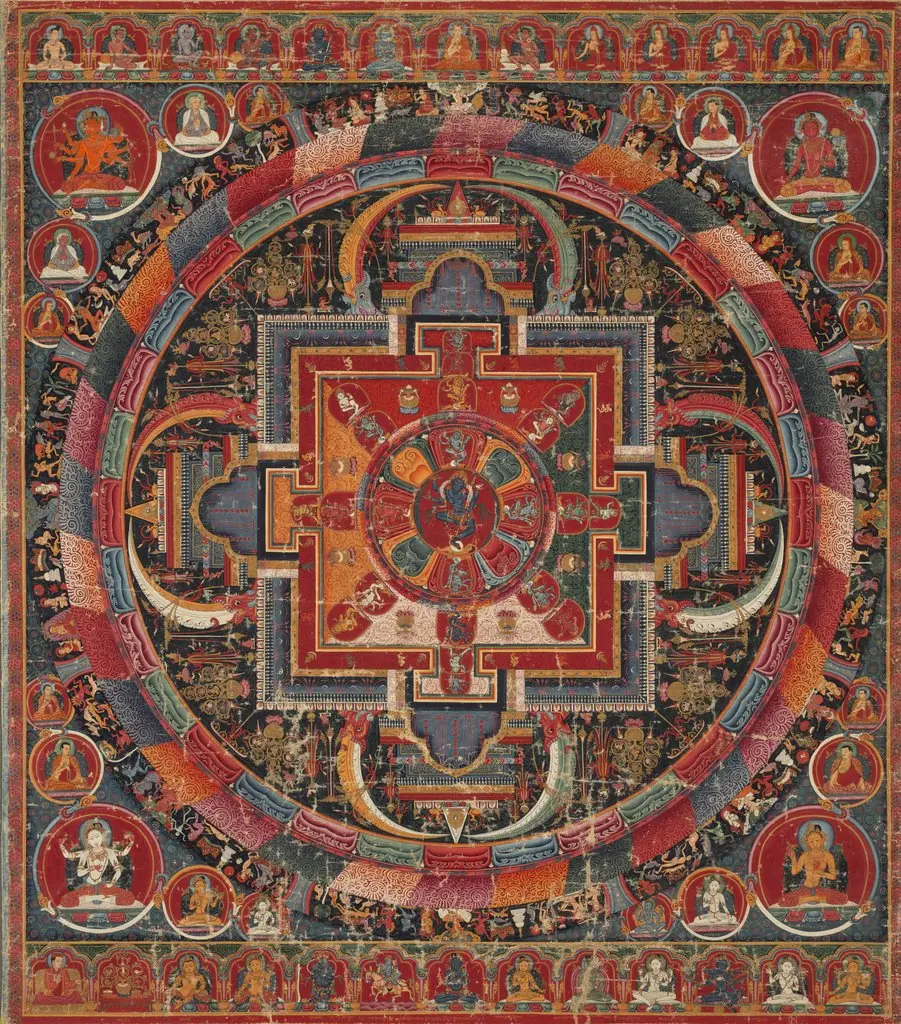 Twenty-three Deity Nairatma Mandala
 明 佚名 釋教三尊曼陀羅圖 軸|Mandala of Vajradhara, Manjushri and Sadakshari -Lokeshvara