Artwork
Marchand de Charbon Turc
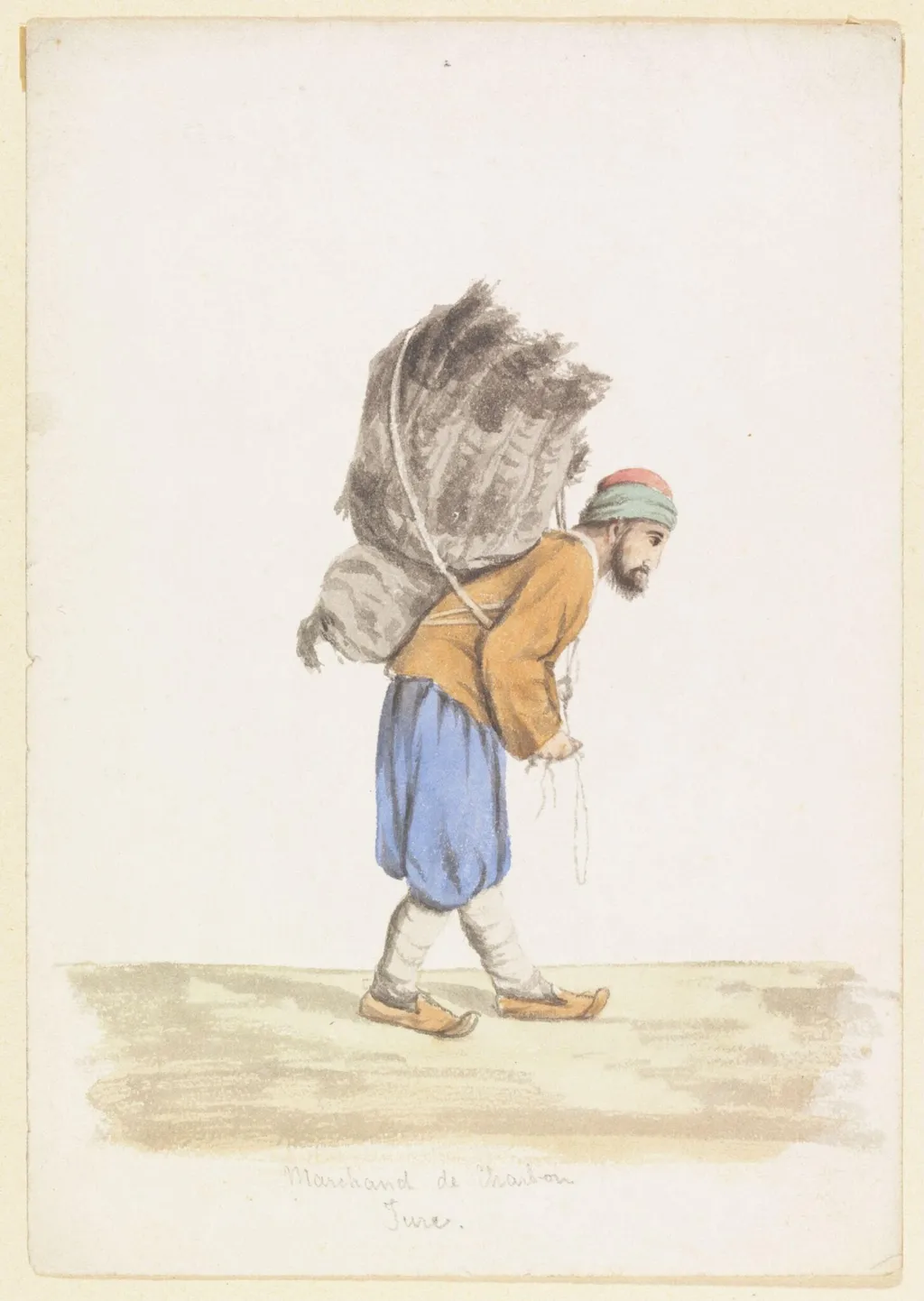
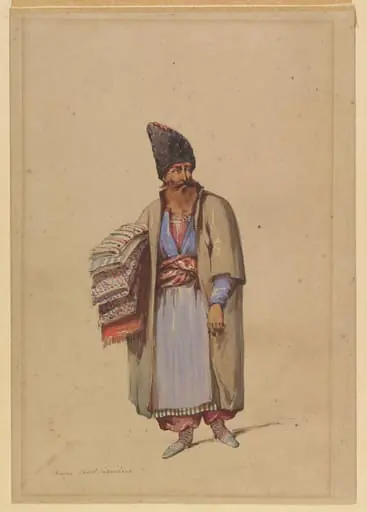
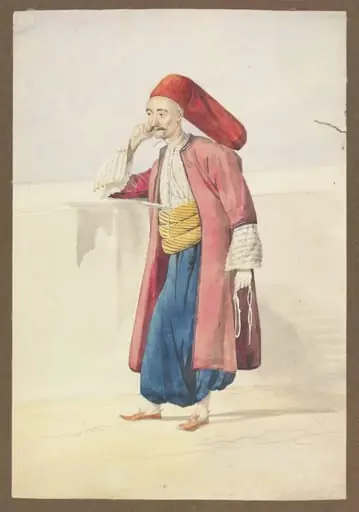
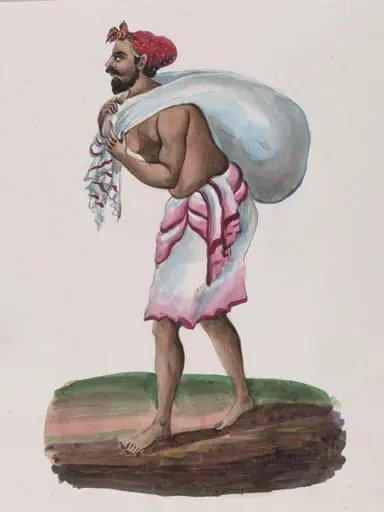
Marchand de Charbon Turc is a watercolor work on paper by the Impressionist artist Unknown. It dates from 1850 and is held in the collection of the Victoria and Albert Museum. This watercolour, dated to around 1850, portrays a Turkish coal merchant carrying a large load of charcoal on his back.
About this work
Overview
This watercolour, dated to around 1850, portrays a Turkish coal merchant carrying a large load of charcoal on his back.
This watercolour, dated to around 1850, portrays a Turkish coal merchant carrying a large load of charcoal on his back. The artist remains unidentified, and the work was acquired in Salisbury in December 1976 for £2.50. Rendered in loose, spontaneous brushwork, the piece captures a moment of physical labor with minimal embellishment, reflecting a documentary approach to everyday life rather than idealized representation.
Subject & Meaning
The figure is a working-class man engaged in the physical burden of transporting coal, a common but arduous task in 19th-century urban economies. His downward gaze and bent posture convey exhaustion and concentration, emphasizing the weight of his labor. The absence of context or narrative detail focuses attention on the human condition of manual toil, presenting the subject with quiet dignity rather than sentimentality.
Technique & Style
The artist employed rapid, fluid watercolour strokes to suggest form without fine detail. Clothing and the bundle of charcoal are rendered with minimal definition, relying on tone and gesture rather than precision. The palette is restrained—browns, blues, and muted reds—enhancing the sense of realism. This unpolished style aligns with sketches made on the spot, prioritizing immediacy over finish.
History & Provenance
The work surfaced in Salisbury in 1976, where it was purchased for a modest sum. No earlier ownership records are known, and its origin before the 20th century remains undocumented. Its survival suggests it was likely kept as a personal memento or overlooked as a minor study, rather than treated as a significant artwork during its early history.
Context
In mid-19th-century Europe, depictions of laborers from the Ottoman Empire were rare in Western art. This image may reflect growing European interest in Eastern subjects, though its informal style suggests it was not commissioned for elite audiences. It stands apart from grand orientalist paintings, instead offering a candid glimpse into the daily routines of itinerant workers.
Legacy
Though unsigned and unremarked upon in its time, the watercolour now serves as a quiet record of labor and migration in the 19th century. Its value lies not in artistic fame but in its unembellished testimony to ordinary lives. It contributes to a broader, less documented visual archive of working-class existence beyond the canon of celebrated art.
Artist & collection

 Domestic Scene
 Giacomo and Cardinal Marco, investing Andrea, Abbot of San Zeno, with his Benefice
 The Nymph of Fontainebleau
 Portrait of a Woman
 Madonna and Child with Saints in the Enclosed Garden
 Venus and Minerva
 Family Group of Four on Sofa
 Wall painting from Room H of the Villa of P. Fannius Synistor at Boscoreale
![A Serbetci, or drinks seller[?], by Anonymous Greek artist](https://artifactworldgallery.com/img/anonymous-greek-artist--a-serbetci-or-drinks-seller--61bdf44039236f66-w320.webp)
![A Saka, or water carrier[?], by Anonymous Greek artist](https://artifactworldgallery.com/img/anonymous-greek-artist--a-saka-or-water-carrier--fea97d6d74c0c945-w320.webp)