Artwork
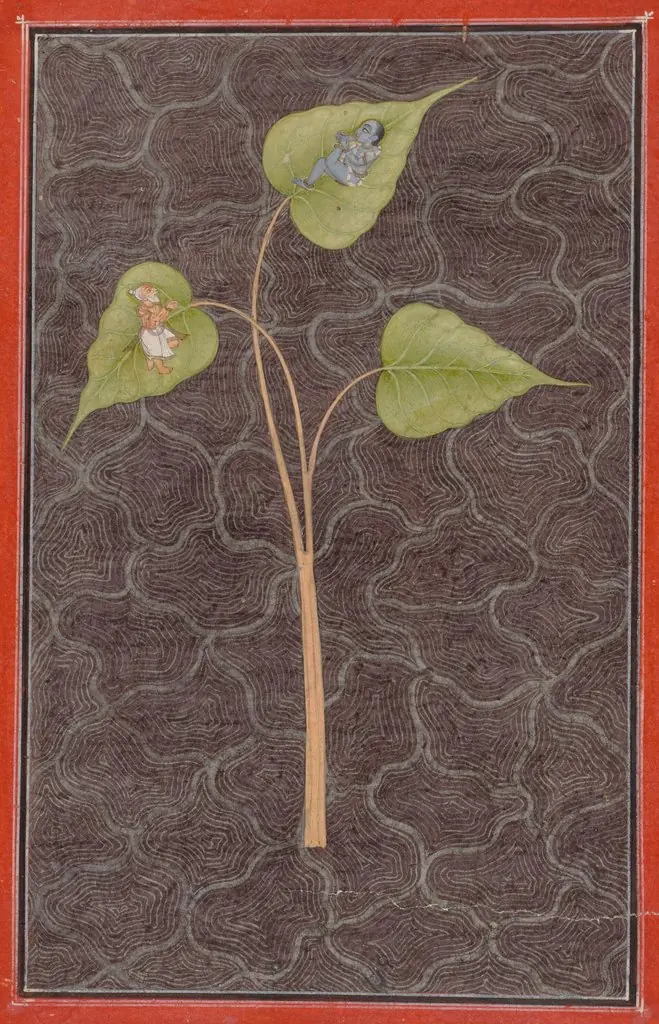
Markandeya Viewing Krishna in the Cosmic Ocean
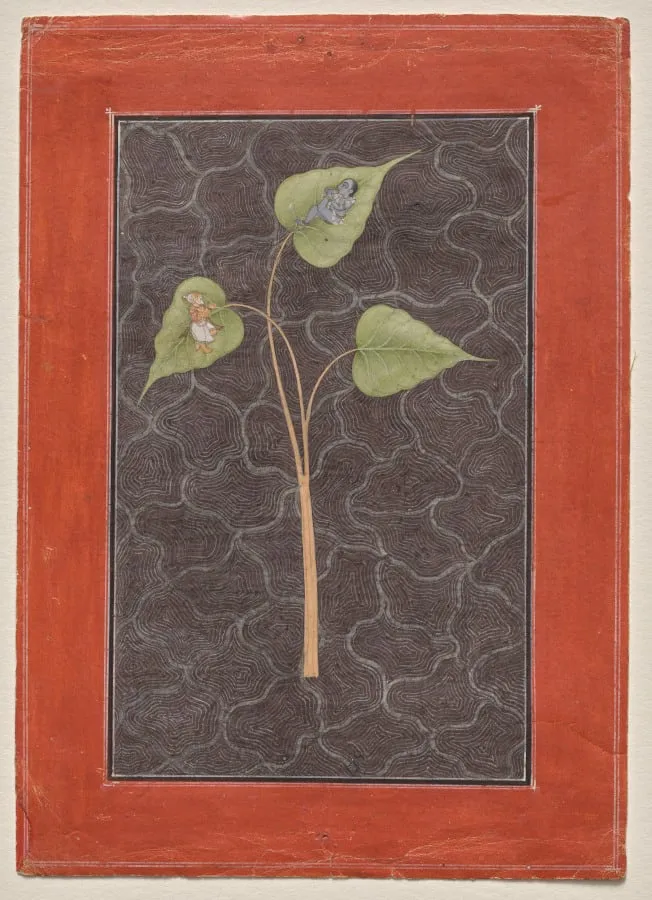
Markandeya Viewing Krishna in the Cosmic Ocean is an unspecified painting by the Baroque artist Unknown. It dates from 1680 and is held in the collection of the Cleveland Museum of Art.
About this work
Overview
This painting originates from the Pahari kingdom of Basohli, nestled in the Himalayan foothills, and reflects the devotional traditions of Hindu courtly art.
This painting originates from the Pahari kingdom of Basohli, nestled in the Himalayan foothills, and reflects the devotional traditions of Hindu courtly art. An unnamed artist rendered the myth of Markandeya’s encounter with Krishna in the cosmic ocean using stylized forms and intense color. The composition centers on a lone sage adrift in an endless, swirling sea, where divine revelation occurs amid chaos.
Subject & Meaning
The sage Markandeya, cursed with eternal life, witnesses the dissolution of the universe. Amid the dark, formless ocean, he beholds the infant Krishna resting on a banyan leaf, a symbol of renewal. When Markandeya gazes into Krishna’s mouth, he perceives the totality of past and future creation. The scene conveys cyclical time: destruction is not an end but the quiet inception of a new cosmic order.
Technique & Style
The artist employed concentric circles and undulating lines to evoke the boundless, timeless ocean, rejecting naturalism for symbolic abstraction. Krishna’s radiant blue form glows within a fiery halo, contrasting with the deep, turbulent waters. Tiny figures and creatures drift uselessly in the void, emphasizing scale and isolation. Bold pigments and sharp outlines, typical of Basohli style, heighten the mystical intensity of the scene.
History & Provenance
Created in the late 17th or early 18th century, the work emerged from the courtly ateliers of Basohli, a small Himalayan kingdom known for its vivid miniature paintings. Likely commissioned by a patron devoted to Vaishnavism, it was part of a larger series illustrating episodes from the Bhagavata Purana. Its survival reflects the enduring value placed on devotional imagery in regional Hindu courts.
Context
In Hindu cosmology, time is cyclical, with each dissolution (pralaya) preceding rebirth. This painting visualizes a key moment from the Bhagavata Purana, where divine presence persists even in universal ruin. The Basohli school, influenced by both indigenous traditions and Mughal aesthetics, used heightened emotion and symbolic geometry to convey spiritual truths, making such works tools of contemplation as much as devotion.
Legacy
The painting exemplifies how Pahari artists translated complex theological ideas into visually arresting forms. Its emphasis on inner vision over external realism influenced later Himalayan miniature traditions. Though lesser-known than Mughal or Rajasthani schools, Basohli works like this remain vital for understanding regional interpretations of Hindu cosmology and the role of art in mediating the divine.
Artist & collection

 Domestic Scene
 Giacomo and Cardinal Marco, investing Andrea, Abbot of San Zeno, with his Benefice
 The Nymph of Fontainebleau
 Portrait of a Woman
 Madonna and Child with Saints in the Enclosed Garden
 Venus and Minerva
 Family Group of Four on Sofa
 Wall painting from Room H of the Villa of P. Fannius Synistor at Boscoreale
 Untitled
 Prince with Two Lotus Blooms in Forest
 Gunakali Ragini
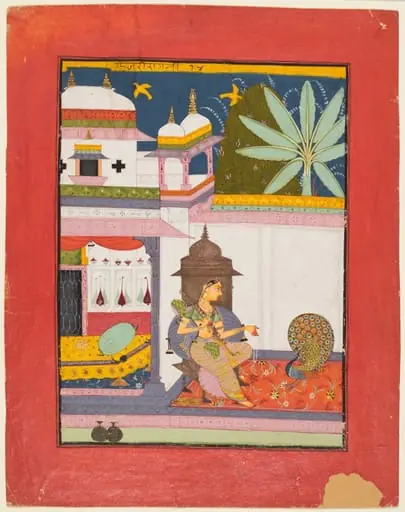 Woman Addressing a Peacock: Gujari Ragini of Megh, from a Ragamala
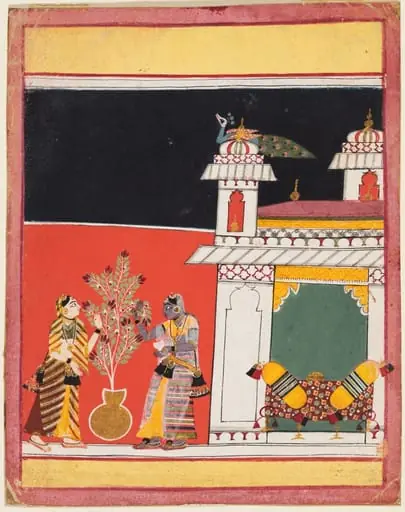 Two Women Pluck Flowers on a Terrace: Gunakali Ragini, from a Ragamala
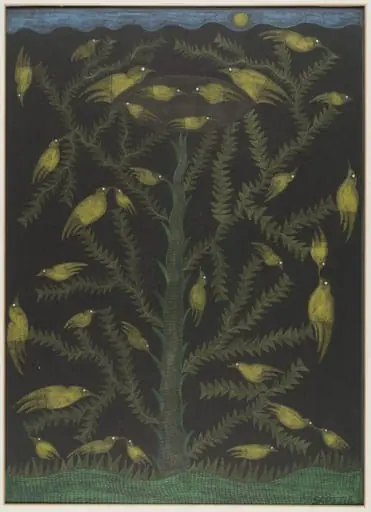 Birds in a tree
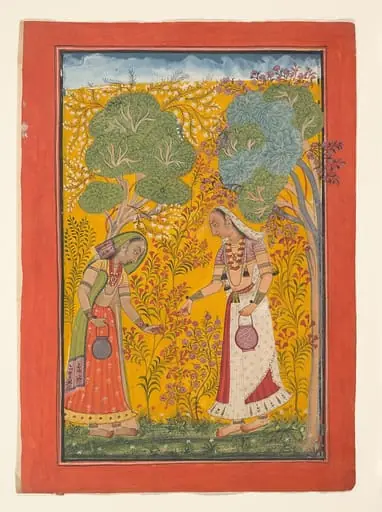 Untitled
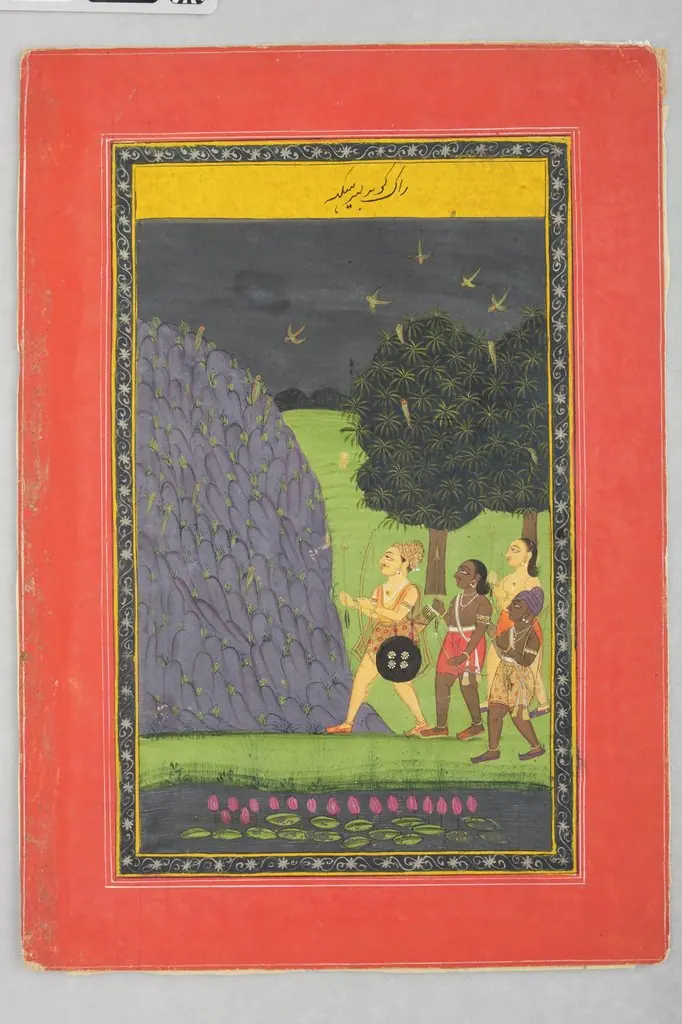 Prince and Attendants Hunting
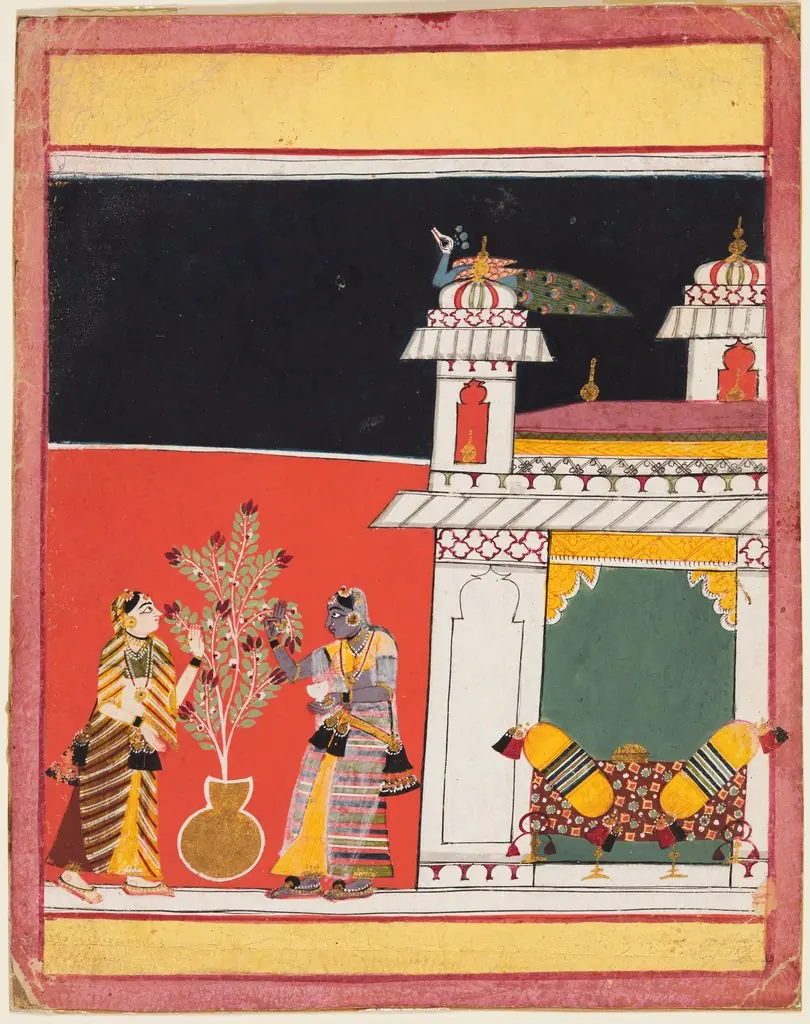 Two Women Pluck Flowers on a Terrace: Gunakali Ragini, from a Ragamala
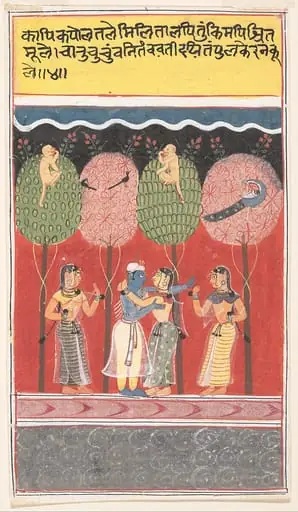 Untitled
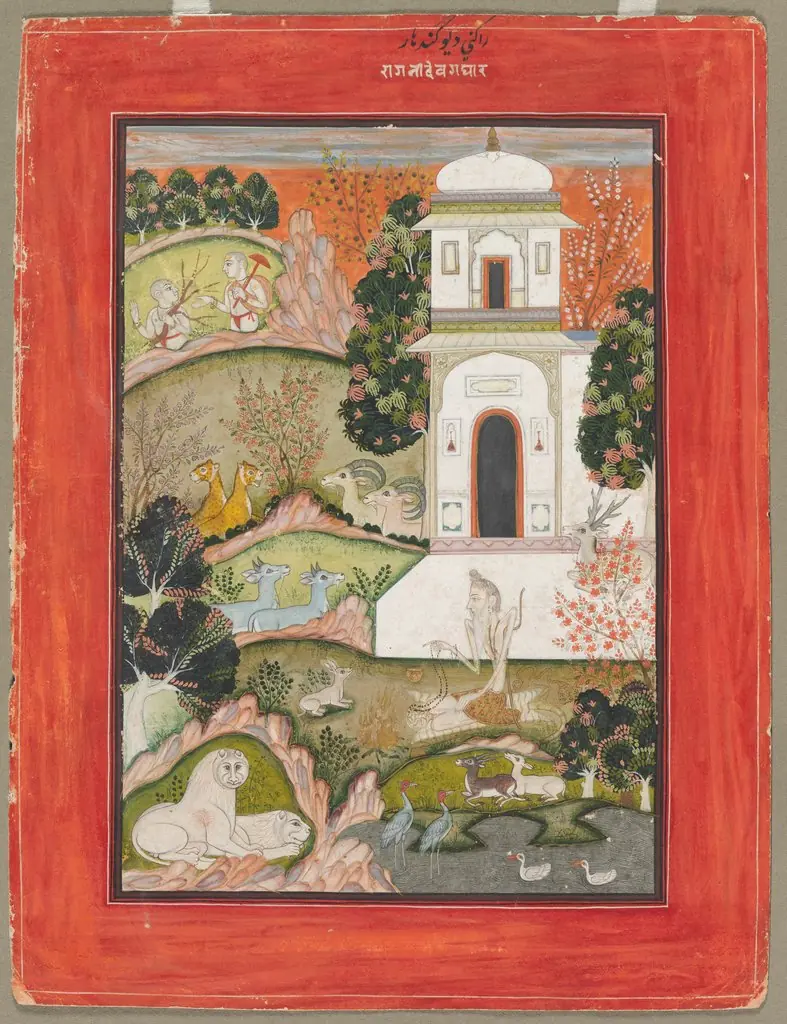 Devagandhara Ragini: An Ascetic in Retreat, from the Ragamala Series
 Markandeya Viewing Krishna in the Cosmic Ocean