Artwork
Mir Ja'far
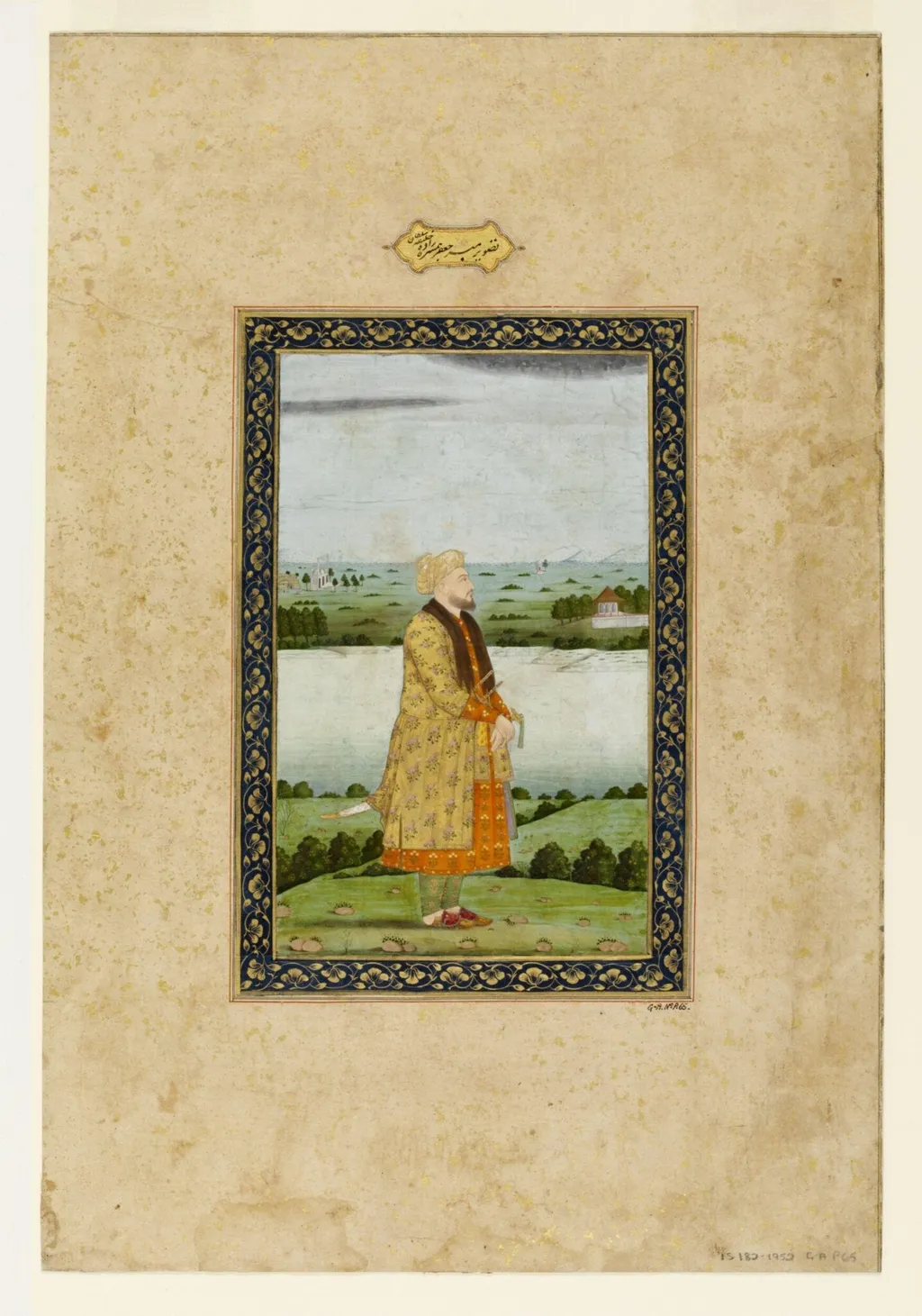
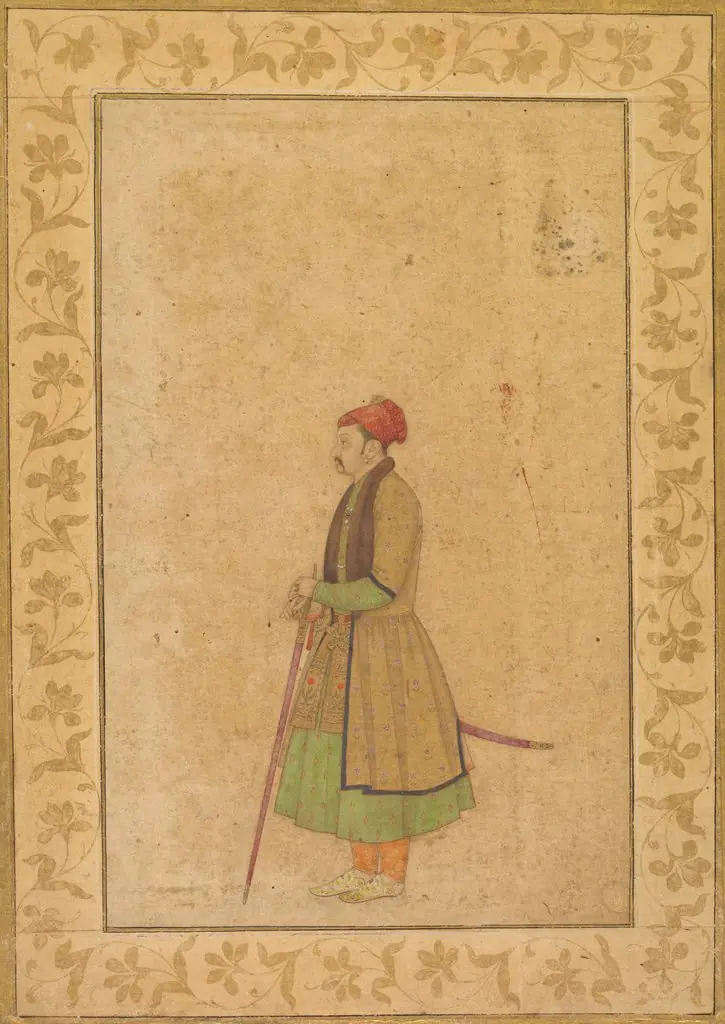
Mir Ja'far is a paint painting by the Rococo painting artist Unknown. It dates from 1760 and is held in the collection of the Victoria and Albert Museum. This 1760 portrait, executed in opaque watercolor on paper, presents the noble figure Mir Ja‘far standing within a landscape.
About this work
Overview
This 1760 portrait, executed in opaque watercolor on paper, presents the noble figure Mir Ja‘far standing within a landscape. He faces left, clad in a yellow coat with floral motifs over an orange garment, and wears a turban. In his right hand he bears a sword, while his left hand holds a cloth, set against a backdrop of water, trees and distant architecture.
Subject & Meaning
The work portrays Mir Ja‘far, a member of the regional aristocracy, emphasizing his status through sumptuous attire and weaponry. The inclusion of a sword and ceremonial cloth suggests both martial authority and ritual function, while the surrounding scenery may allude to his domain or a narrative of travel, reinforcing his prominence within the social hierarchy.
Technique & Style
Rendered in opaque watercolor, the painting employs the fine, flat washes characteristic of South Asian miniature traditions.
Rendered in opaque watercolor, the painting employs the fine, flat washes characteristic of South Asian miniature traditions. The artist achieved intricate detailing in the patterned coat, turban, and border, using vivid pigments to create contrast. The decorative frame surrounding the image features elaborate motifs, reinforcing the miniature aesthetic and highlighting the work’s emphasis on ornamental precision.
History & Provenance
The portrait’s creator remains unidentified, though its stylistic affinities link it to 18th‑century Persian or Indian court workshops. Acquired by the Victoria and Albert Museum, the piece entered the museum’s collection as part of its broader assemblage of South Asian decorative arts, reflecting historical interest in cross‑cultural portraiture.
Context
Produced during a period of vibrant artistic exchange between Persia, India, and the Ottoman realms, the painting reflects the diffusion of miniature techniques across these regions. Its depiction of a nobleman in elaborate dress aligns with contemporary courtly portraiture, where visual opulence served to affirm political legitimacy and cultural identity.
Artist & collection

 Domestic Scene
 Giacomo and Cardinal Marco, investing Andrea, Abbot of San Zeno, with his Benefice
 The Nymph of Fontainebleau
 Portrait of a Woman
 Madonna and Child with Saints in the Enclosed Garden
 Venus and Minerva
 Family Group of Four on Sofa
 Wall painting from Room H of the Villa of P. Fannius Synistor at Boscoreale
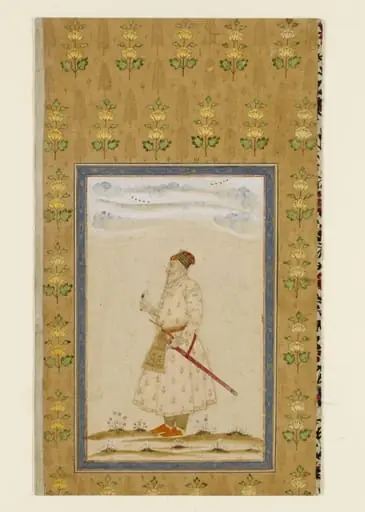 Aurangzeb
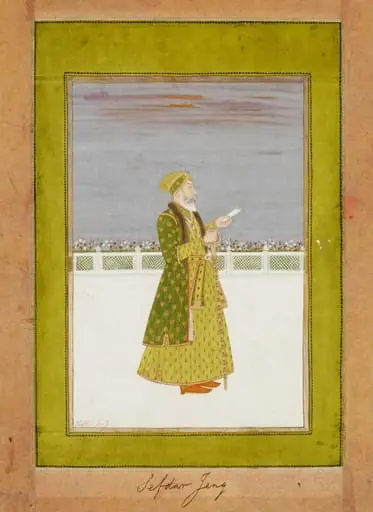 Zafdar Jung
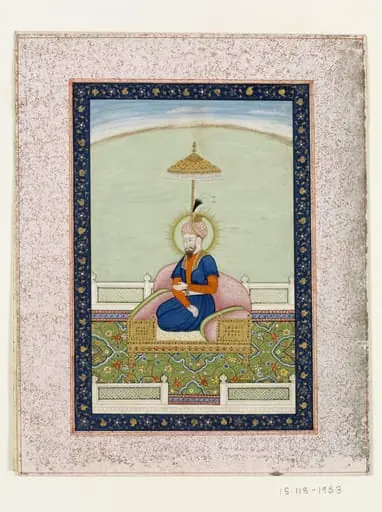 Miran Shah Mirza
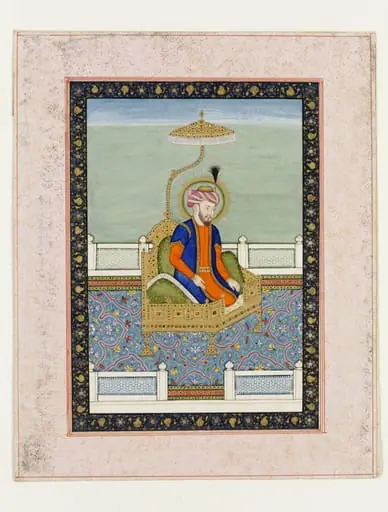 Umar Shaikh Mirza of Farghana
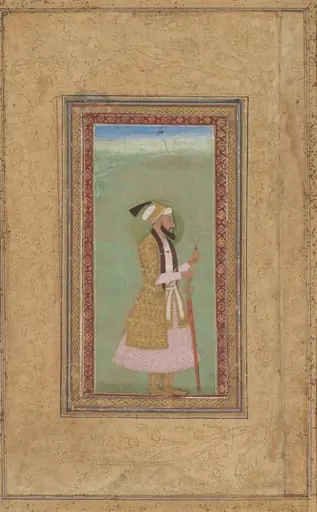 Portrait of a Prince with a Ruby
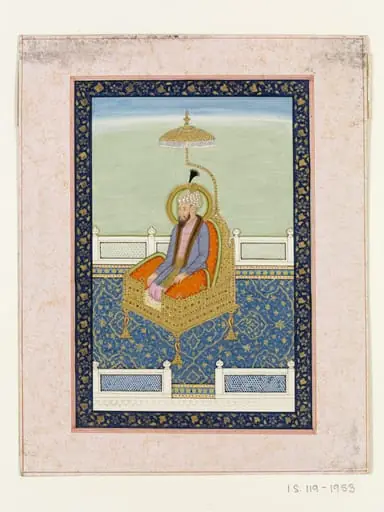 Sultan Muhammad Mirza of Samarkand
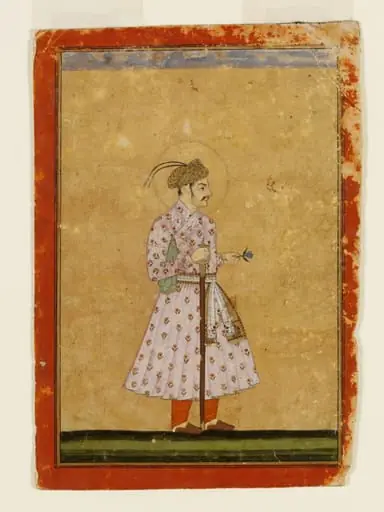 Emperor Jahangir
 Portrait of Raja Ram Singh of Amber (r. 1667-1688) with a Deccan Sword (recto); Calligraphy (verso)
 Portrait of Raja Ram Singh of Amber (r. 1667-1688) with a Deccan Sword (recto)