Artwork
Miran Shah Mirza
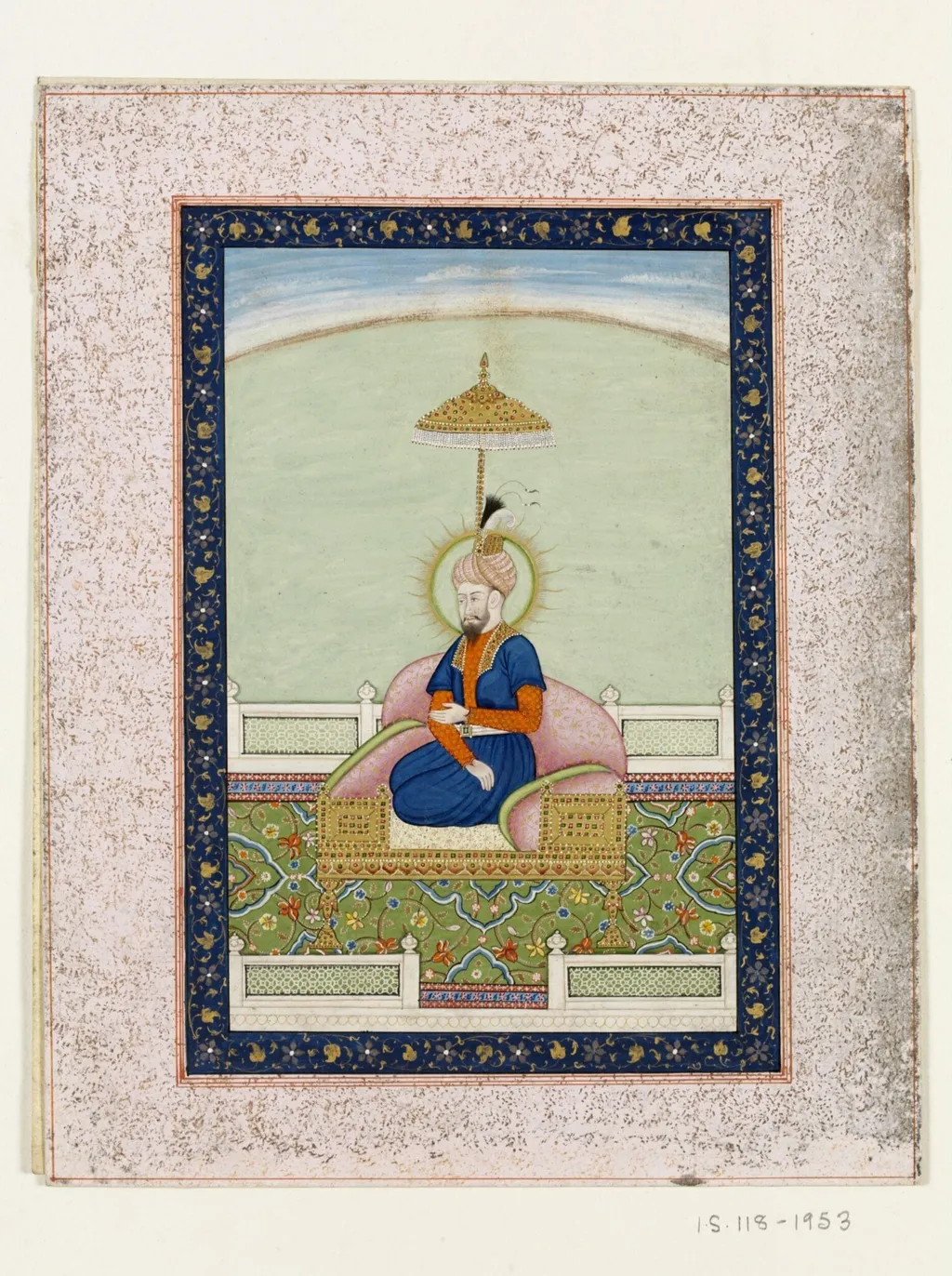
Miran Shah Mirza is a paint painting by the Mughal Painting artist Unknown. It dates from 1840 and is held in the collection of the Victoria and Albert Museum.
About this work
Overview
Executed in opaque watercolour and gold on paper, the work reflects the refined aesthetic of late Mughal and Persianate court portraiture.
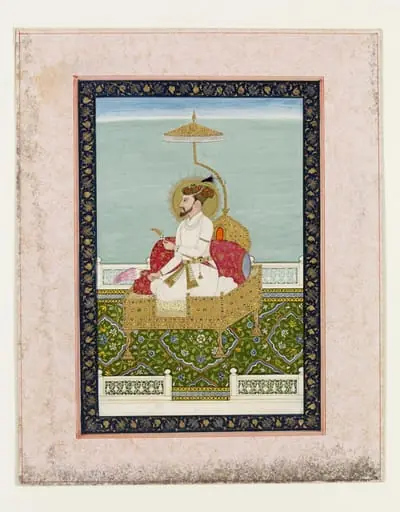
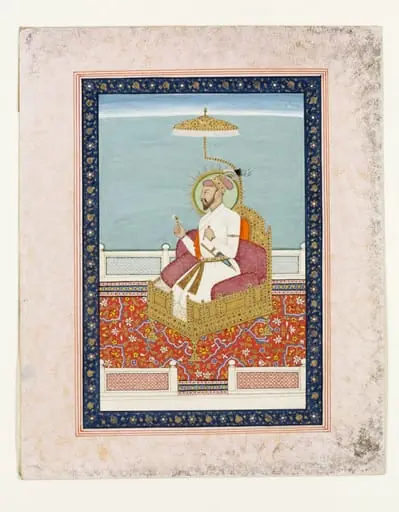
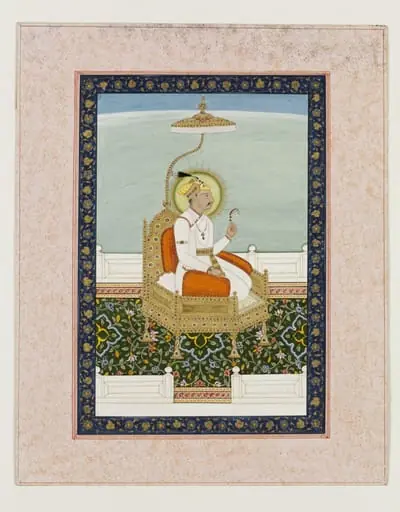
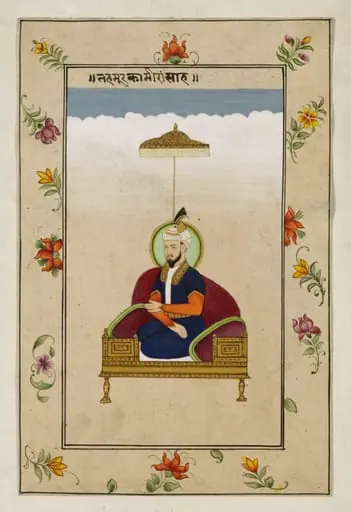
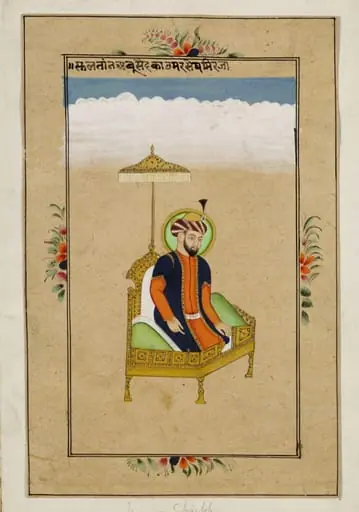
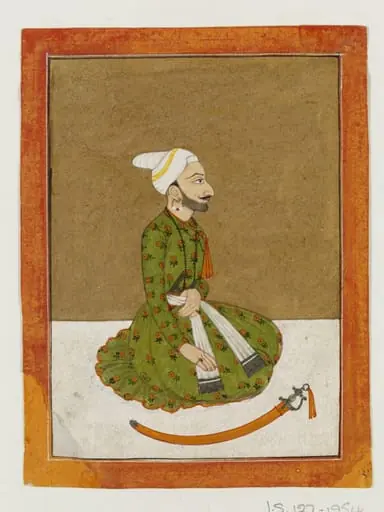
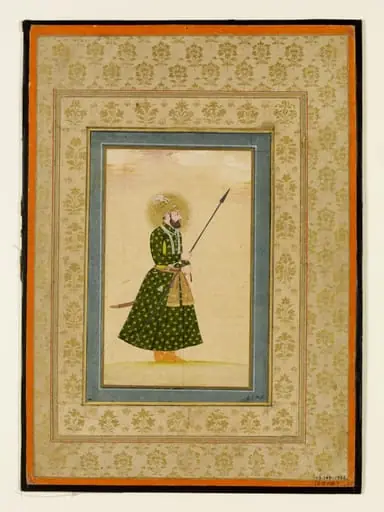
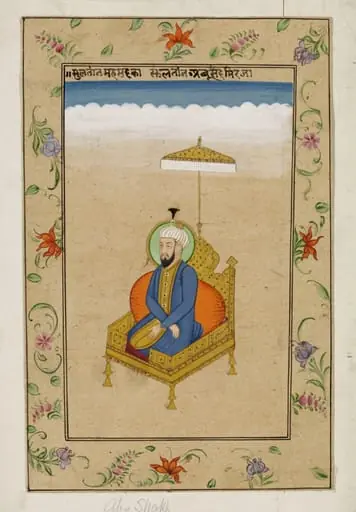
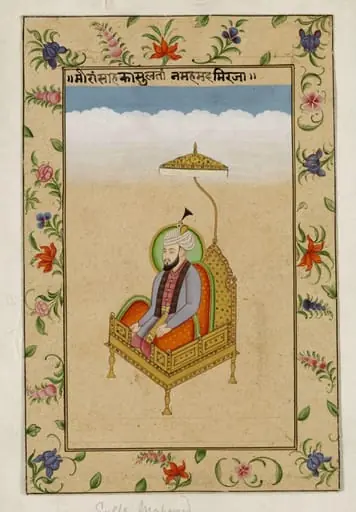
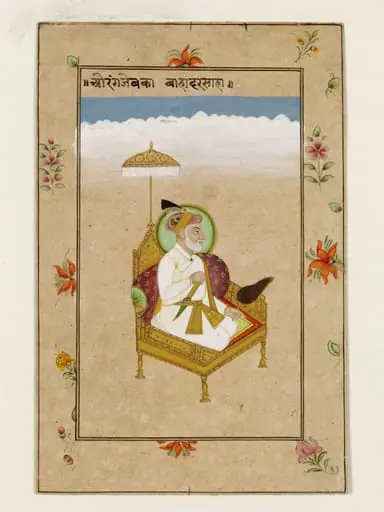
This 1840 portrait depicts Miran Shah Mirza, the eldest surviving son of Timur, seated in a composed, elevated posture. Executed in opaque watercolour and gold on paper, the work reflects the refined aesthetic of late Mughal and Persianate court portraiture. The figure is framed by a gold parasol and set against a flat green landscape, with ornate borders enclosing the composition in intricate floral and geometric patterns.
Subject & Meaning
Miran Shah Mirza is portrayed with quiet authority, seated on a cushioned platform beneath a golden canopy, a symbol of royal status. His calm demeanor and the halo-like glow around his face suggest spiritual or divine favor, common in depictions of noble lineage. The staff he holds may signify leadership or judicial power, reinforcing his position within the Timurid succession. The composition avoids narrative action, emphasizing dignity over movement.
Technique & Style
The painting employs fine brushwork in opaque watercolour, with gold leaf used extensively for the parasol, borders, and highlights on the robes. The flat, decorative background and stylized architecture reflect a blend of Persian miniature traditions with emerging Indian court styles. The intricate gold-and-colour borders, featuring floral motifs, serve both ornamental and symbolic functions, underscoring the subject’s elite status and the work’s ceremonial purpose.
History & Provenance
The painting was once part of the collection of George Eden, Earl of Auckland, who served as Governor-General of India from 1836 to 1842. Its presence in his holdings suggests it was acquired during his tenure, possibly through diplomatic channels or the acquisition of Indian court artifacts. The work’s journey from the Timurid sphere to a British noble’s collection reflects broader patterns of colonial-era art transfer.
Context
Created in the mid-19th century, this portrait belongs to a period when traditional Persianate court imagery persisted in India despite British political dominance. Artists continued to produce works for local elites and collectors who valued historical lineage. The painting’s stylistic continuity with earlier Timurid and Mughal models indicates a deliberate preservation of cultural identity amid colonial change.
Legacy
The painting remains a representative example of Indo-Persian portraiture from the colonial era, illustrating how traditional forms endured in artistic practice. It contributes to scholarly understanding of how royal imagery was maintained and recontextualized outside its original political framework. Similar works can be found in institutions such as the Victoria and Albert Museum, where they are studied as cultural artifacts rather than mere decorative objects.
Artist & collection

 Domestic Scene
 Giacomo and Cardinal Marco, investing Andrea, Abbot of San Zeno, with his Benefice
 The Nymph of Fontainebleau
 Portrait of a Woman
 Madonna and Child with Saints in the Enclosed Garden
 Venus and Minerva
 Family Group of Four on Sofa
 Wall painting from Room H of the Villa of P. Fannius Synistor at Boscoreale