Artwork
Aurangzeb
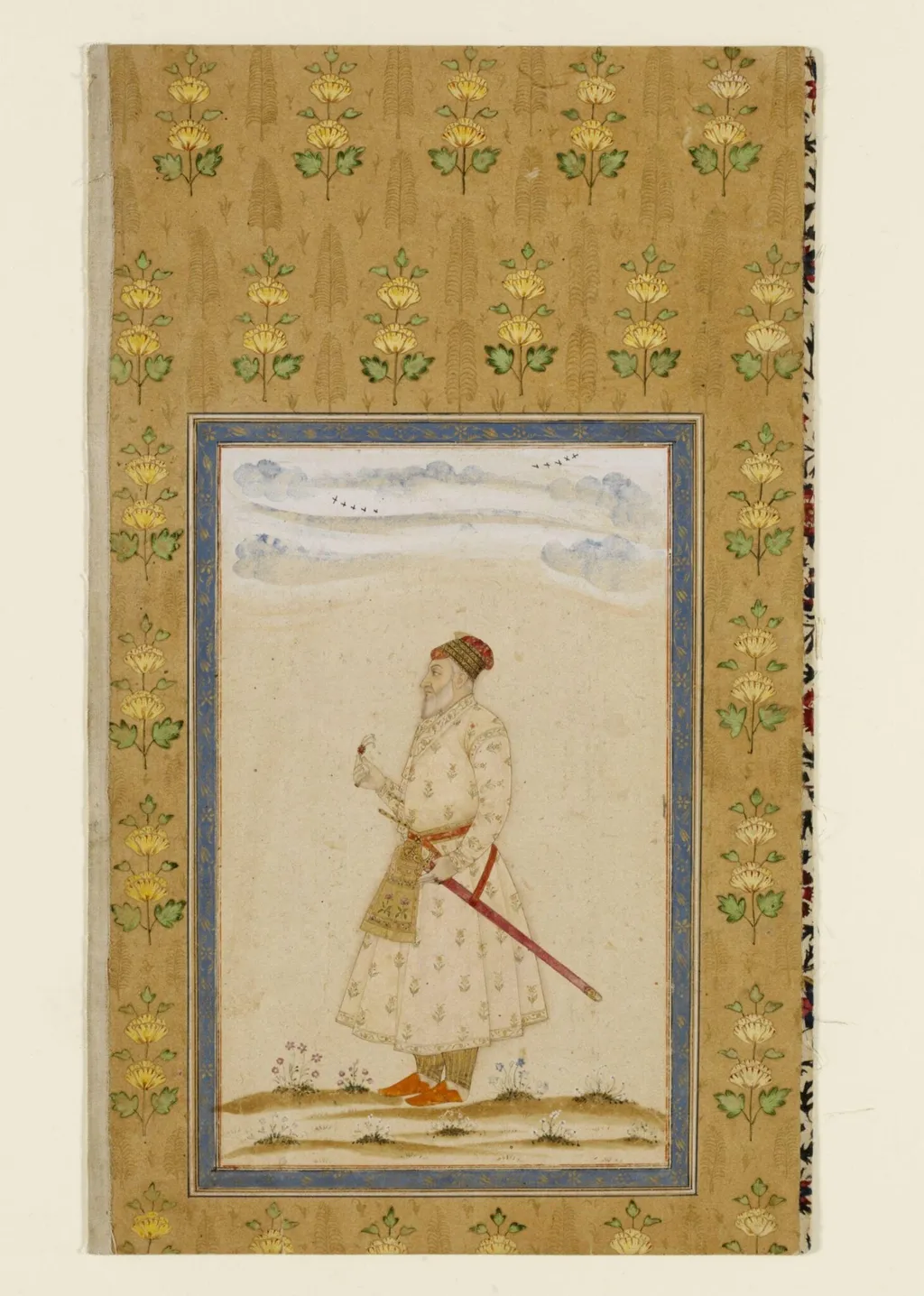
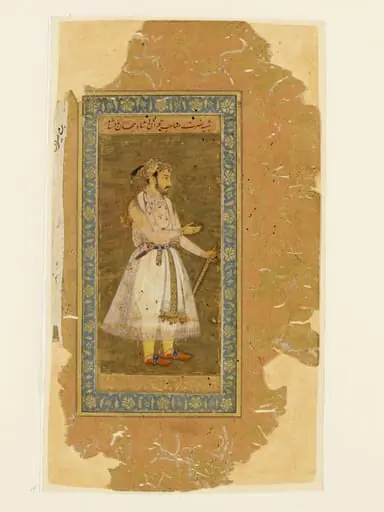
Aurangzeb is a paint painting by Unknown. It dates from 1650 and is held in the collection of the Victoria and Albert Museum.
About this work
Overview
The work reflects the refined aesthetic of Mughal court portraiture, emphasizing status through detail and composition rather than narrative action.
This opaque watercolor and gold painting on paper portrays the Mughal emperor Aurangzeb mounted on horseback, accompanied by a noble figure. Created in the late 17th century, it was once part of a personal album collected by Lieutenant Colonel Murdoch Smith in Tehran and later acquired by the museum for £25. The work reflects the refined aesthetic of Mughal court portraiture, emphasizing status through detail and composition rather than narrative action.
Subject & Meaning
The painting presents Aurangzeb in ceremonial attire, his posture and regalia signaling imperial authority. The accompanying noble, similarly adorned, reinforces the hierarchical structure of the Mughal court. The minimal landscape—grass, sky, scattered flowers—focuses attention on the figures, suggesting a formal portrait intended for private contemplation rather than public display. The small object in the emperor’s hand may signify a token of power or piety.
Technique & Style
Executed in opaque watercolor with extensive gold leaf, the painting demonstrates the precision characteristic of Mughal manuscript illumination. Fine brushwork defines the intricate patterns on the emperor’s robe, while the border of yellow blossoms and green foliage frames the scene with decorative restraint. A thin blue line separates the image from its ornamental frame, a common feature in album pages designed for intimate viewing.
History & Provenance
The painting entered institutional collections through Lieutenant Colonel Murdoch Smith, who assembled a significant group of Persian and Mughal artworks in Tehran during the 19th century. Museum records from a 2023 provenance study confirm its acquisition from Smith’s collection. Its journey from a private album to public archive reflects broader patterns of colonial-era art collection and the recontextualization of South Asian visual culture in Western institutions.
Context
Produced during Aurangzeb’s reign, the work aligns with a shift in Mughal portraiture toward austerity and formality, reflecting the emperor’s personal piety and reduced patronage of elaborate court scenes. Unlike earlier Mughal albums filled with lively narratives, this piece emphasizes stillness and dignity. Its inclusion in a bound album suggests it was valued as a personal relic, not a public monument.
Legacy
Though unsigned and unattributed to a specific artist, the painting remains a representative example of late Mughal court art. Its preservation in a major collection underscores the enduring scholarly interest in Mughal visual culture. It contributes to ongoing efforts to understand how imperial identity was constructed through image-making, and how such works were later dispersed across global collections.
Artist & collection

 Domestic Scene
 Giacomo and Cardinal Marco, investing Andrea, Abbot of San Zeno, with his Benefice
 The Nymph of Fontainebleau
 Portrait of a Woman
 Madonna and Child with Saints in the Enclosed Garden
 Venus and Minerva
 Family Group of Four on Sofa
 Wall painting from Room H of the Villa of P. Fannius Synistor at Boscoreale
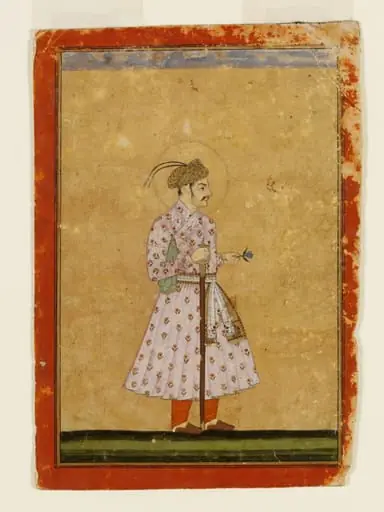 Emperor Jahangir
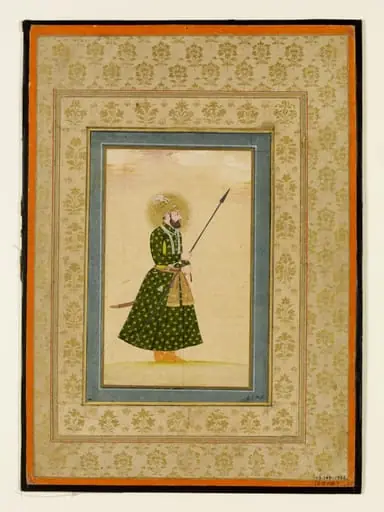 Jahandar Shah
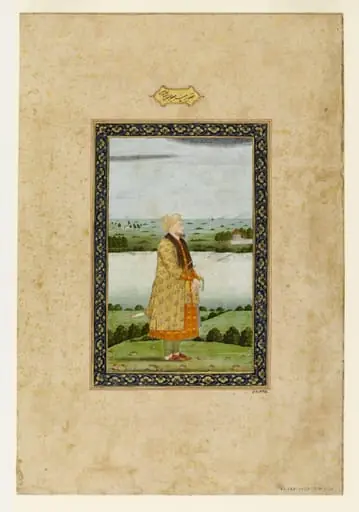 Mir Ja'far
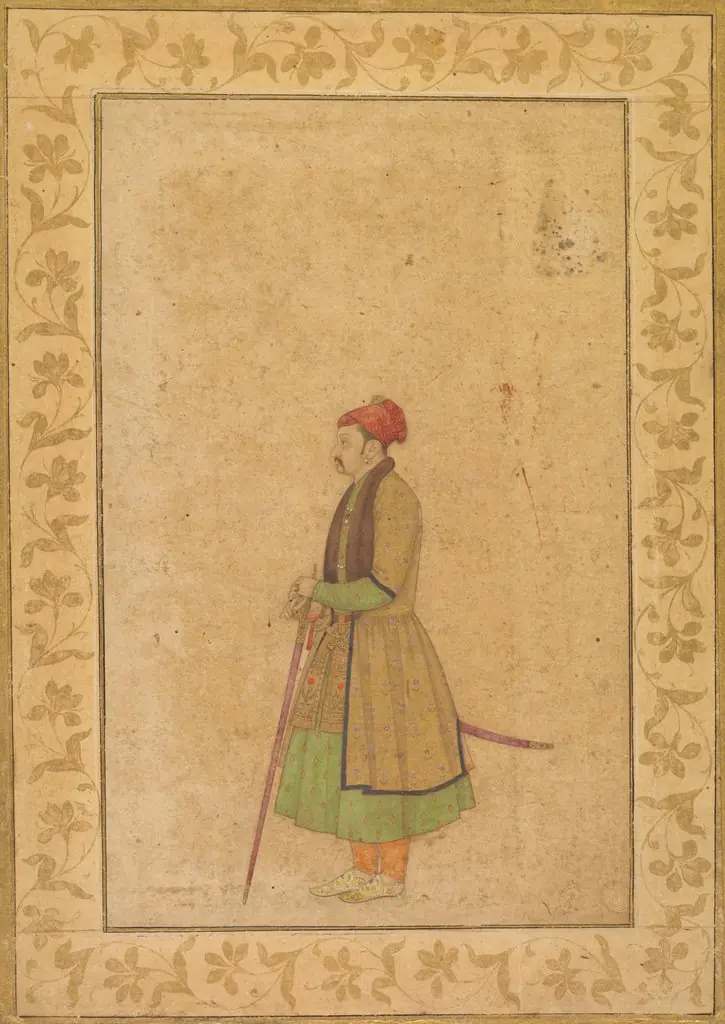 Portrait of Raja Ram Singh of Amber (r. 1667-1688) with a Deccan Sword (recto)
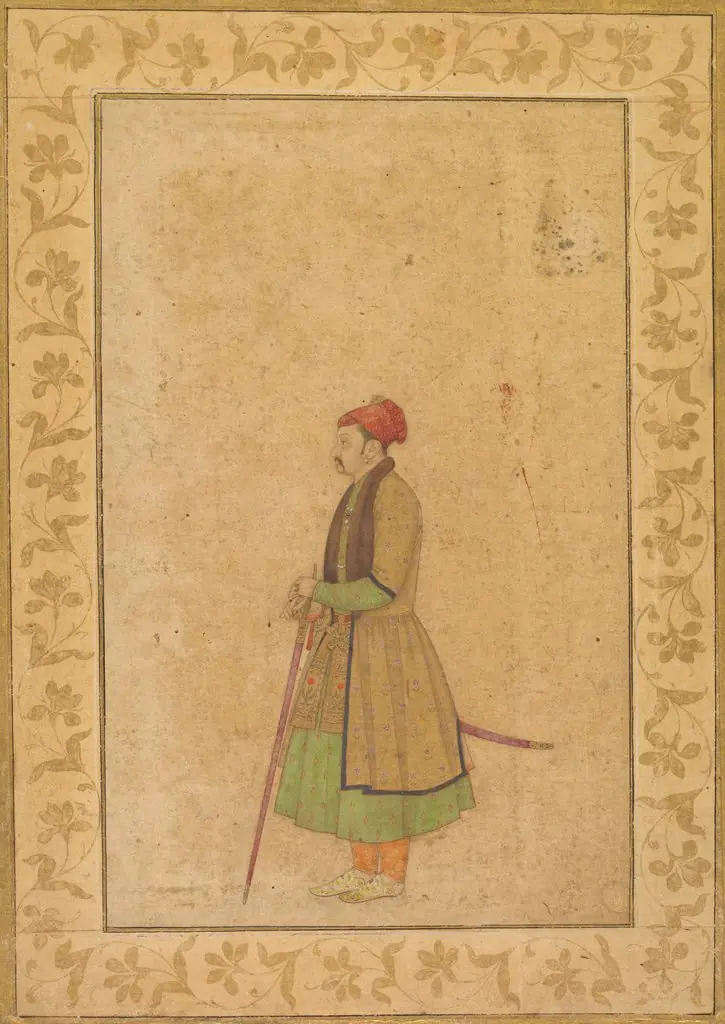 Portrait of Raja Ram Singh of Amber (r. 1667-1688) with a Deccan Sword (recto); Calligraphy (verso)
 Portrait of Raja Ram Singh of Amber (r. 1667-1688) with a Deccan Sword (recto)
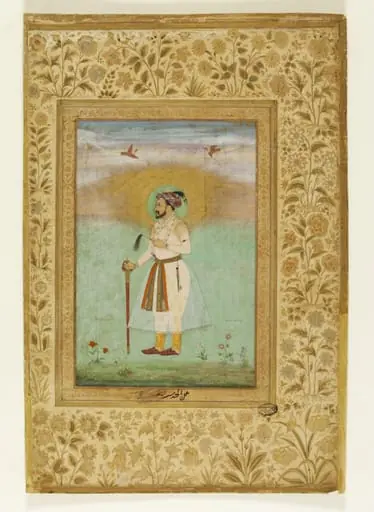 Untitled
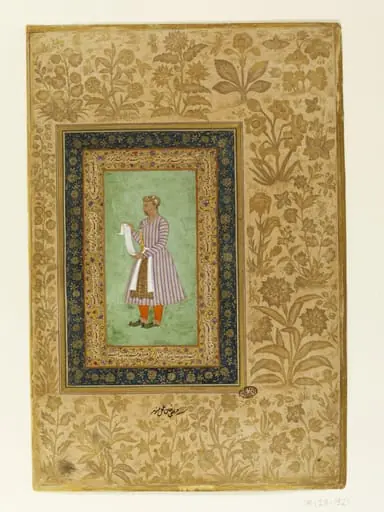 Murtaza Khan
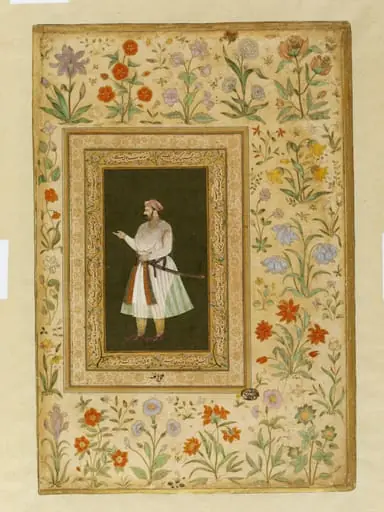 Untitled
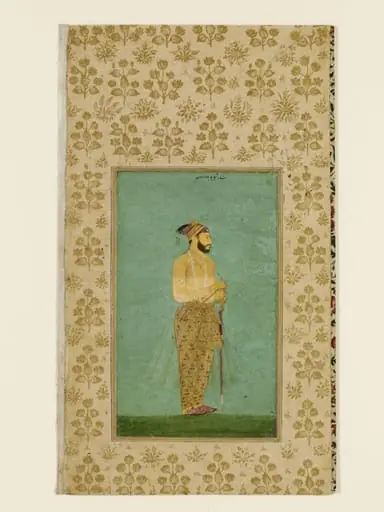 Shah Shuja' Bahadur Khan
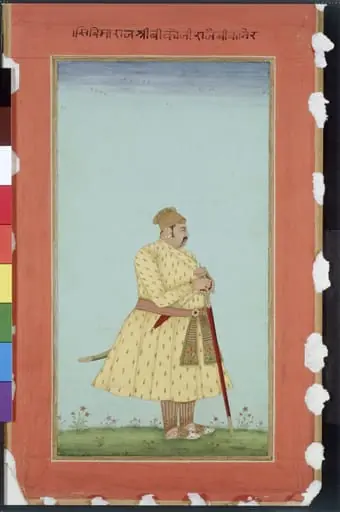 Rao Bikoji
 The emperor Jahangir