Artwork
Moșoaică - ulcică de moși
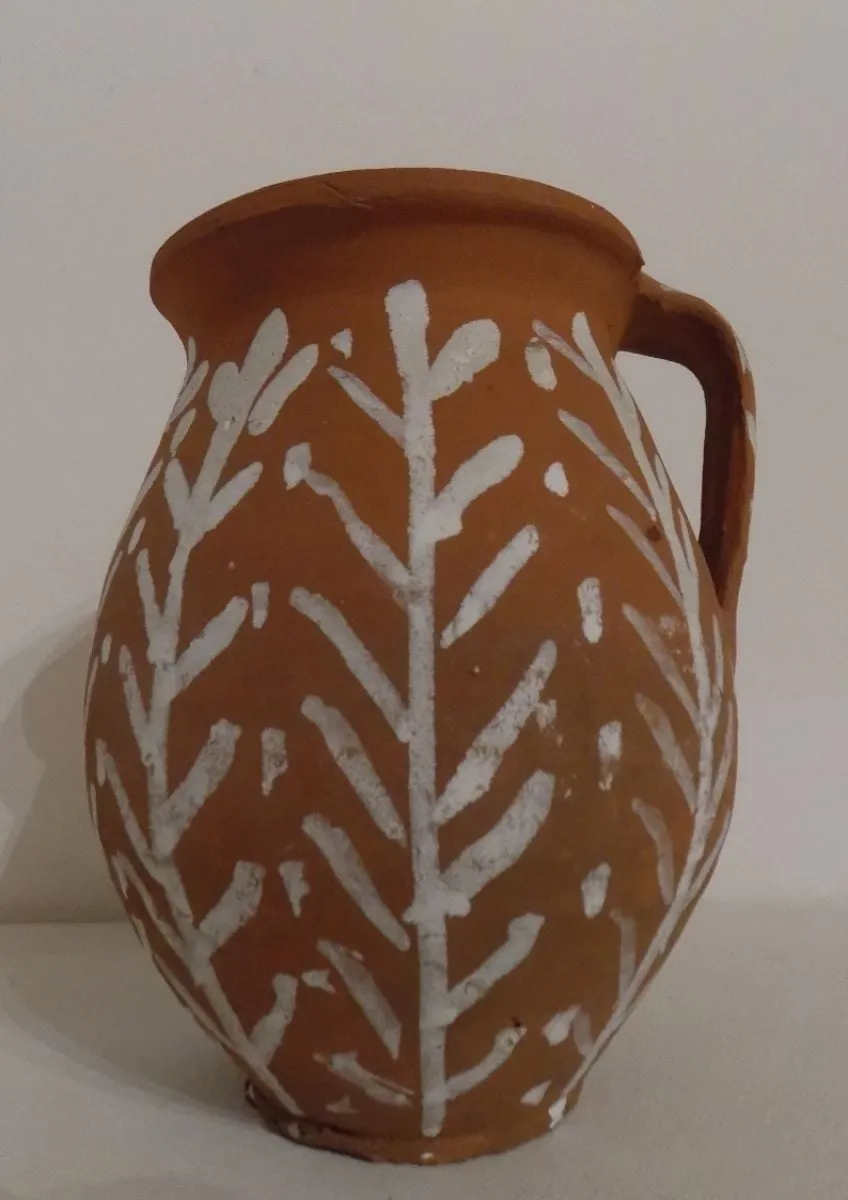
Moșoaică - ulcică de moși is a photography by Unknown. It dates from 1971 and is held in the collection of the Moldova National Museum Complex. A modest clay vessel, likely used in daily domestic life, features a rough, uneven glaze and dark surface stains from prolonged use.
About this work
Overview
A modest clay vessel, likely used in daily domestic life, features a rough, uneven glaze and dark surface stains from prolonged use.
A modest clay vessel, likely used in daily domestic life, features a rough, uneven glaze and dark surface stains from prolonged use. Its simple form and handmade appearance suggest it was crafted for practicality rather than ornamentation. The lid, secured by a small twisted-rope handle, indicates regular handling and functional design. The pot rests on a weathered wooden surface, reinforcing its association with everyday domestic spaces.
Subject & Meaning
This vessel represents the quiet utility of household objects in traditional rural life. Its wear and unadorned construction reflect a culture where functionality outweighed display. The rope-like lid handle, though small, speaks to thoughtful design—easy to grasp, durable, and suited to frequent use. It embodies the unspoken values of thrift, continuity, and care in material culture.
Technique & Style
Hand-thrown and fired with minimal refinement, the pot displays irregular glazing and surface imperfections typical of local, non-industrial ceramic traditions. The lid’s twisted-rope handle was likely formed by hand, a detail that balances utility with subtle craftsmanship. No decorative motifs are present, emphasizing form over ornament, consistent with utilitarian pottery of agrarian communities.
History & Provenance
The object aligns with ceramic traditions documented in the Museum of Ethnography’s collections, particularly from rural Eastern European households. Its condition suggests decades of domestic use before being collected. While its exact origin is unrecorded, its form and material point to a regional, pre-industrial production method, likely made by a local artisan for local use.
Context
In rural communities where mass-produced goods were scarce, such vessels were essential for storage, cooking, or preserving food. Their durability and simplicity made them ideal for daily tasks. Similar pots appear in ethnographic records from the 19th and early 20th centuries, reflecting a shared material culture shaped by limited resources and inherited techniques.
Legacy
This object survives as a quiet testament to the labor and routines of ordinary life. It contributes to broader understandings of how everyday items carry cultural memory. Though unremarkable in appearance, its preservation allows modern viewers to engage with the material realities of past generations, beyond the realm of ceremonial or elite artifacts.
Artist & collection
 Domestic Scene
 Giacomo and Cardinal Marco, investing Andrea, Abbot of San Zeno, with his Benefice
 The Nymph of Fontainebleau
 Portrait of a Woman
 Madonna and Child with Saints in the Enclosed Garden
 Venus and Minerva
 Family Group of Four on Sofa
 Wall painting from Room H of the Villa of P. Fannius Synistor at Boscoreale
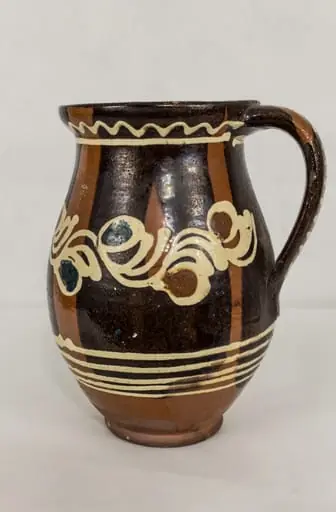 Vas cu corpul ușor curbat în partea centrală, prevăzut cu toartă laterală prinsă în două puncte, cu buza ușor răsfrântă spre exterior, smălțuit în exterior și interior, decorat pe toată suprafața în mai multe registre: pe gâtul piesei, un motiv circular peste care se suprapune motivul geometric valul; pe pântecul piesei, un motiv floral stilizat (ramură cu flori și frunze); spre baza piesei, o succesiune de cinci motive circulare concentrice; pe toartă, motive punctiforme. Cromatică: alb, albastru, cărămiziu, maro.
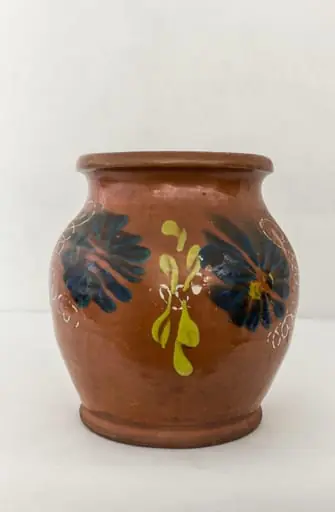 Vas cu corp bombat, cu buza răsfrântă, cu o toartă prinsă în două puncte, smălțuit în exterior și parțial în interior, decorat pe suprafața exterioară prin pictare cu motive fitomorfe (frunze) și florale (albăstrele), încadrate de linii spiralate. Cromatică: albastru, alb, galben, verde, maro, cărămiziu.
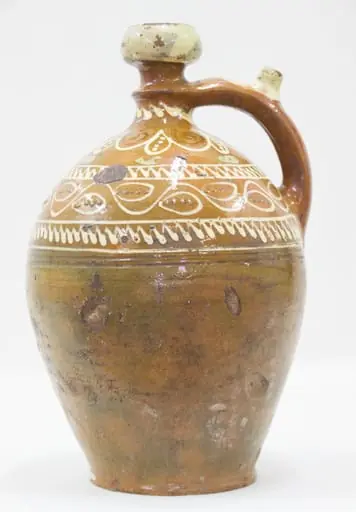 Ulcior de formă bitronconică cu gura îngustă și rotundă, cu o toartă și un orificiu pentru scurgerea lichidului, smălțuit și decorat pe jumătatea superioară cu motive vegetale (ghirlande) și geometrice (spirale; patru cercuri concentrice cu o linie șerpuită între ele).Cromatică: maro (fond), decor - galben, bej, alb, verde. Jumătatea inferioară a obiectului este nesmălțuită.
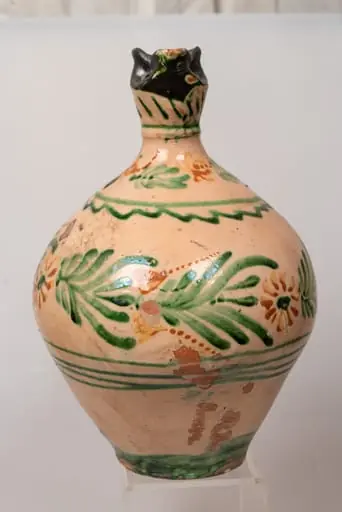 Piesă cu corp sfericl bombat, cu gât profilat, cu gât și gură îngustă, bilobată, cu cior. Din pântecul vasului pornește o toartă tubulară cu orificiu pronunțat pentru băut (cu țâță), care se unește cu vasul sub buza acestuia. Fața exterioară a ulciorului este angobată cu un strat de humă albă, peste care este pictat decorul, cu pensula și cu cornul, astfel: pe partea superioară a vasului, între două grupări de linii concentrice apare o bandă decorată cu motiv floral (o floare rotundă cu multe petale) alternând cu motivul fitomorf caracteristic centrului: frunze alungite, de culoare verde. Pe cant, delimitată de banda decorativă de pe burta vasului de către două linii concentrice, realizate drept și în valuri, este dispusă o bandă decorativă mai îngustă, cu motiv floral și motiv fitomorf delimitat de gât de un brâu colorat. Sub buza bilobată sunt realizate o serie de linii oblice paralele pictate, care continuă pe toată suprafața torții. Fundul vasului este marcat cu o bandă lată orizontală, pictată. Cromatica: alb, maro, verde. Vasul este acoperit cu un strat de smalț transparent.
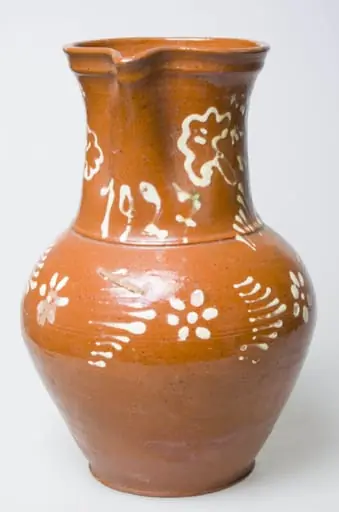 Vasul are forma tronconică, cu fund lat, gât gros, toartă și cioc opus acesteia. Decorul este unul floral, stilizat pe partea superioară imediat sub cioc. Obiectul este smălțuit pe ambele părti, fiind prevăzut cu o toartă pentru prindere. Cromatică: fondul este maro, iar motivele sunt pictate cu alb.
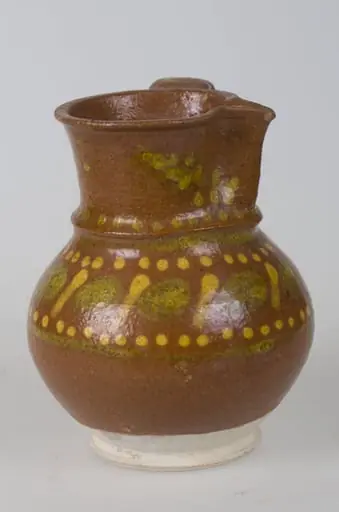 Vas cu corpul de formă cilindrică, cu fundul plat, corpul pântecos, gâtul înalt și gura largă, este prevăzută cu un cioc de scurgere așezat la nouăzeci grade față de toartă. Decorul pictat a fost realizat cu pensula în zona pântecului și a gâtului, format din motive geometrice. Pe pântecul vasului a fost pictat un registru încadrat între două linii de culoare verzuie, între care se află alte două linii realizate din puncte de culoare galbenă. În interiorul liniilor menționate anterior se află registre circulare format din pete de culoare verzuie, separate de linii galbene orizontale înclinate. Pe marginea vasului și pe toartă au fost pictate trei flori de culoare verde, de tipul „spicului de grâu”. Cromatică: alb (fund), maro-roșcat restul suprafeței; motive: galben; verde.
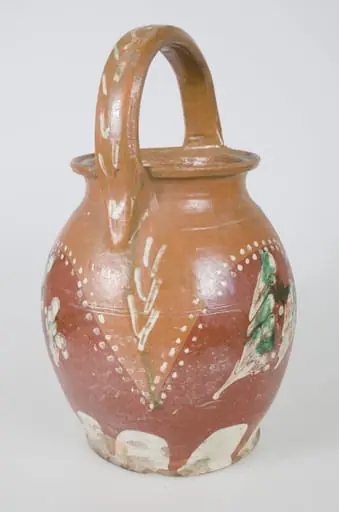 Vas smălțuit de formă ovoidală, bombat la mijloc, gât scurt cu buza dreaptă și evazată. Prevăzut cu o toartă semicirculară care pornește din buză, peste gură, și se prinde diametral opus (mănușar). Pe toartă este prezent motivul bradului realizat din linii albe unite în forma literei ”V”, înșiruite una după alta. Pe corpul vasului se găsesc trei registre circulare convexe, conturate cu câte două șiruri de puncte albe. În interiorul registrelor sunt decorații cu motive florale-vegetale stilizate. Între registre se găsesc câte trei decorații cu motivul bradului. La bază este conturat cu un șir de semicerucri pline. Cromatică: fond: cărămiziu; motive: brun; verde; alb.
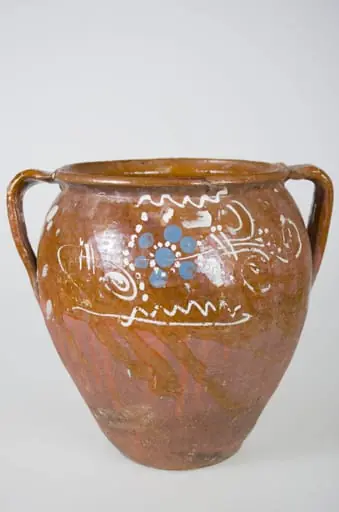 Vas de formă bitronconică și buză răsfrântă, smălțuit în partea superioară. Prezintă două toarte ce unesc partea cu gabarit maxim cu buza vasului. Decorații realizate în partea superioară, prin pictare cu pensula, într-un registru delimitat de o linie albă ondulată dispusă circular sub buză și o alta dublată de o linie dreaptă în zona diametrului maxim a vasului. Motive floral-vegetale, punctiforme și liniare, ilustrând două flori, câte una pe fiecare parte, cu petale albastre sugerate de puncte. Cromatică: fond: brun; motive: albastru; alb.
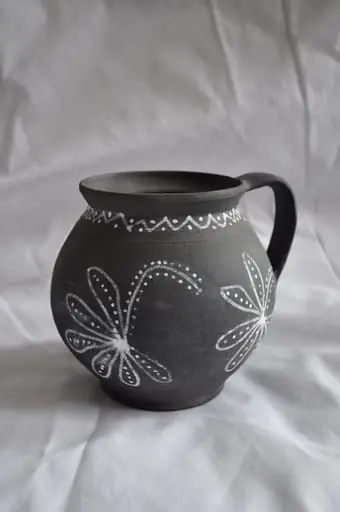 Puișor
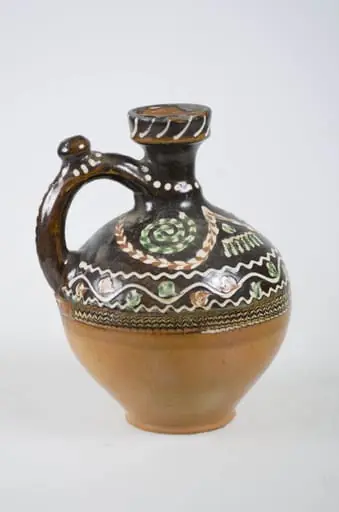 Vas ceramic sferic, ce prezintă baza plată din care pornesc pereții puternic arcuiți spre exterior, înalți, care în partea superioară se îngustează și se termină printr-un gât înalt cu marginea dreaptă ușor rotunjită. Ornamentul realizat cu cornul este dispus numai în partea superioară pe fond de angobă, realizat cu cornul. La diametrul maxim o porțiune jirăvită cu șarpe de o parte și de alta cu "altiță" și "boboci". Pe gât trei linii ondulate urmat de un șir de puncte. Pe marginea buzei linii. Mânerul prevăzut cu "țâță" are puncte. Jumătatea inferioară maro deschis. Smălțuit. Pe fundul vasului apare numele meșterului și localitatea "Ogrezeanu Stelian - Horezu". Cromatică: fond: maro închis partea superioară. Cărămiziu partea inferioară; motive: verde; alb; maro închis.
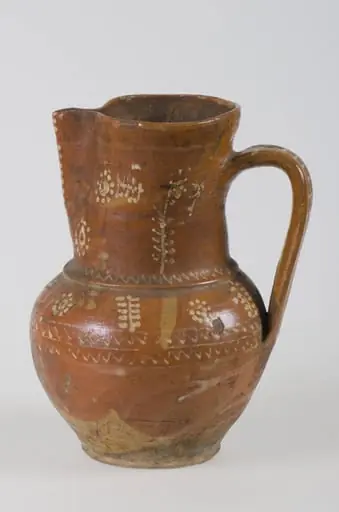 Cană înaltă cu o toartă și gura ovoidală terminată cu un cioc pe partea opusă torții. Toarta pornește de sub gură și se termină sub diametrul maxim al vasului. Smălțuită exterior. Decorată pe toată suprafața cu motive florale stilizate, motive fitomorfe (frunze stilizate) și motive geometrice: linie, linie ondulată, punct. Cromatică: fond: maroniu; motive: alb.
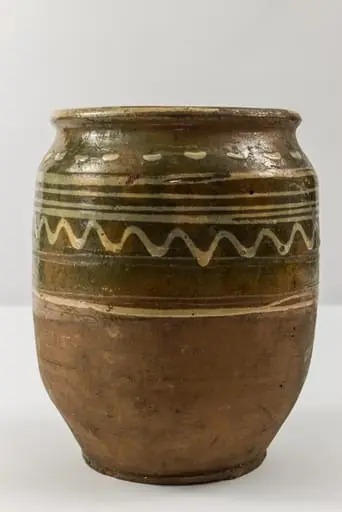 Piesă din lut modelat la roată, smălțuită în interior și parțial în exterior, de formă aproape cilindrică, cu pereții ușor îngustați spre bază, cu gură ușor răsfrântă. Decorul vasului este dispus pe suprafața exterioară, de la mijloc în sus, astfel: o dungă albă, un registru cu motivul valul, un grup de cinci cercuri concentrice, un registru cu motive liniare și punctiforme. Cromatică: maro, ocru, verde, alb.