Artwork
Cană înaltă cu o toartă și gura ovoidală terminată cu un cioc pe partea opusă torții. Toarta pornește de sub gură și se termină sub diametrul maxim al vasului. Smălțuită exterior. Decorată pe toată suprafața cu motive florale stilizate, motive fitomorfe (frunze stilizate) și motive geometrice: linie, linie ondulată, punct. Cromatică: fond: maroniu; motive: alb.
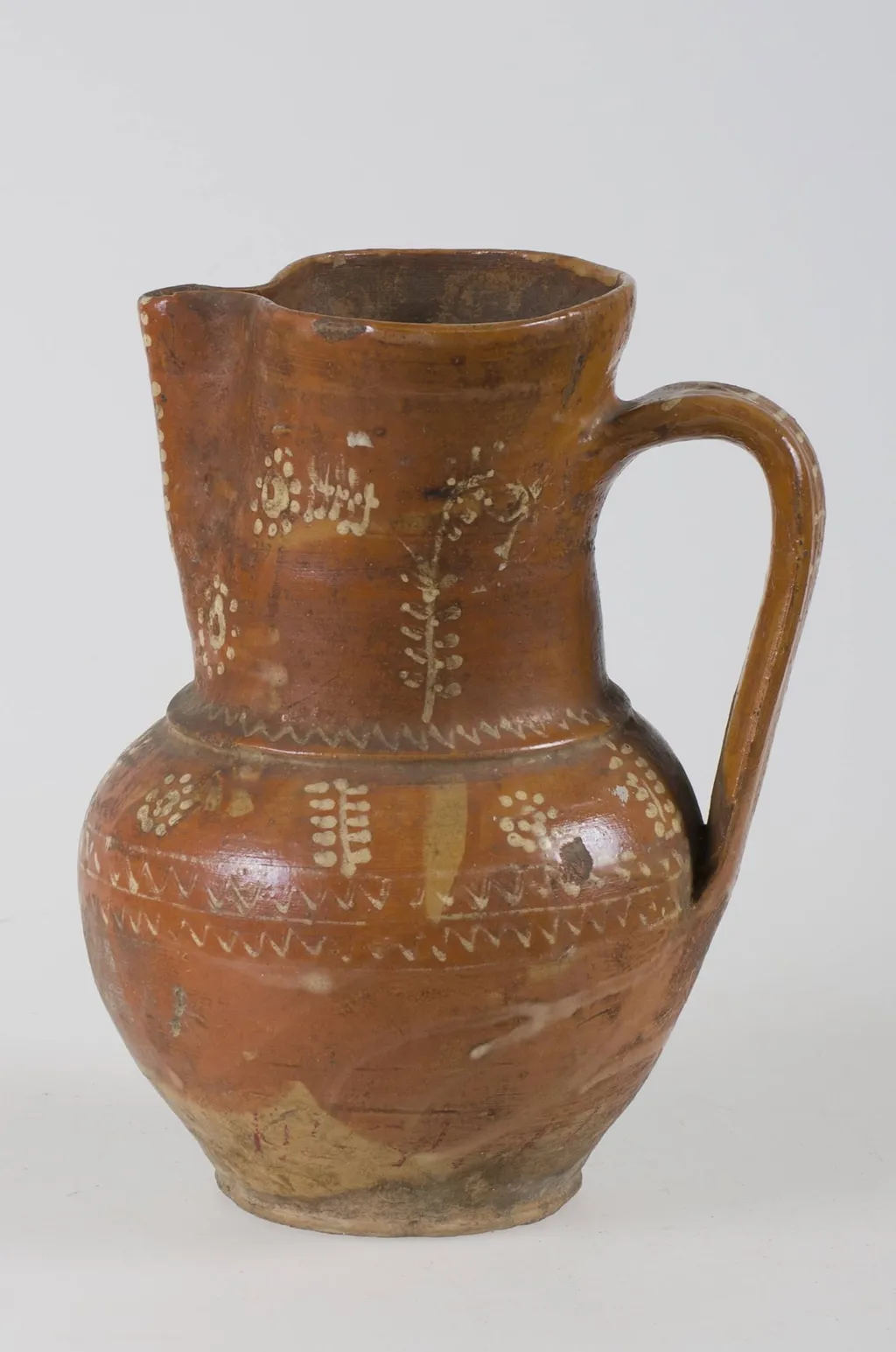
Cană înaltă cu o toartă și gura ovoidală terminată cu un cioc pe partea opusă torții. Toarta pornește de sub gură și se termină sub diametrul maxim al vasului. Smălțuită exterior. Decorată pe toată suprafața cu motive florale stilizate, motive fitomorfe (frunze stilizate) și motive geometrice: linie, linie ondulată, punct. Cromatică: fond: maroniu; motive: alb. is a photography by Unknown. It dates from 1850 and is held in the collection of the ASTRA National Museum Complex.
About this work
Overview
This brown clay pitcher features a distinctive ovoid mouth, a handle originating below the mouth and terminating under the vessel's maximum diameter, and a spout on the opposite side of the handle. Its exterior is fully glazed and decorated with a scattered arrangement of stylized floral, phytomorphic (stylized leaf), and geometric motifs in white against a maroon background.
Subject & Meaning
The pitcher's decorative motifs, including stylized flowers, leaves, lines, and dots, suggest a thematic focus on natural forms, though their stylization and scattered arrangement imply an aesthetic rather than representational intent.
Technique & Style
The vessel's construction and glazing technique indicate traditional craftsmanship. The decoration, with its simple, stylized motifs and lack of strict compositional order, points to a folk or regional style, prioritizing simplicity and coverage over complexity or symmetry.
History & Provenance
No specific historical or provenance details are provided, suggesting the piece's significance may lie more in its typological or stylistic characteristics than in a documented history.
Context
The design elements, particularly the stylized natural motifs, may reflect the influence of local flora on the artisan's aesthetic, with the overall style potentially placing it within a broader tradition of regional ceramics.
Legacy
The piece's legacy, if any, would likely be as an example of traditional, possibly folk, ceramic practices, highlighting the use of natural motifs in simplified forms within a specific ceramic-making tradition.
Artist & collection

 Domestic Scene
 Giacomo and Cardinal Marco, investing Andrea, Abbot of San Zeno, with his Benefice
 The Nymph of Fontainebleau
 Portrait of a Woman
 Madonna and Child with Saints in the Enclosed Garden
 Venus and Minerva
 Family Group of Four on Sofa
 Wall painting from Room H of the Villa of P. Fannius Synistor at Boscoreale
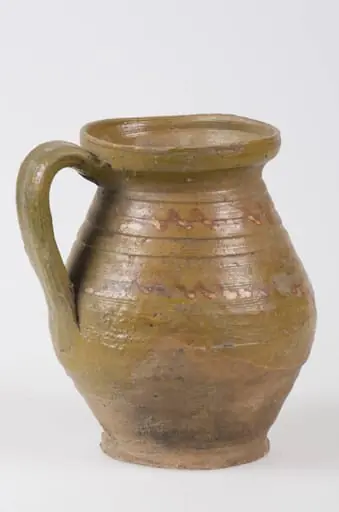 Vas bitronconic cu gât scurt și foarte profilat, cu gura înaltă și dreaptă. Prezintă o toartă care pleacă de sub buză și se unește cu corpul sub zona diametrului maxim. Este smălțuit în interior și la exterior (parțial nesmălțuit în partea de jos). În partea superioară prezintă un decor geometric realizat din cinci linii incizate și două linii în val pictate. Toarta este decorată cu puncte. Cromatică: fond: cărămiziu și pe alocuri verziu; motive: alb; maroniu. Prezintă uzură funcțională.
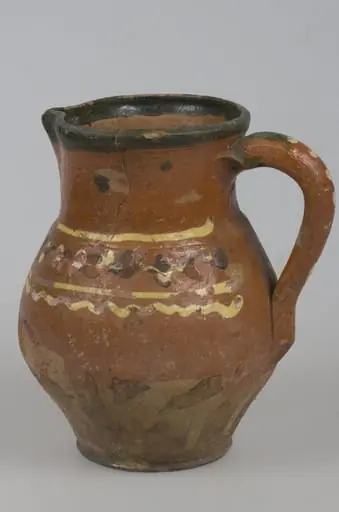 Vas de lut de mici dimensiuni, bombat, cu gât lung și puțin evazat, cu gură largă și cioc de scurgere. Toarta pornește de sub gură și coboară până în zona diametrului maxim al vasului. Este smălțuit în interior și exterior. Decorul dispus pe umărul vasului este format din: motive florale: o cunună din frunze încadrată de motive geometrice: o linie circulară în partea superioară și o linie circulară și una în val în partea inferioară. Buza vasului este vopsită în interior și exterior. Toarta este decorată cu puncte de culoare albă. Cromatică: fond: cărămiziu; motive: alb; verde; negru.
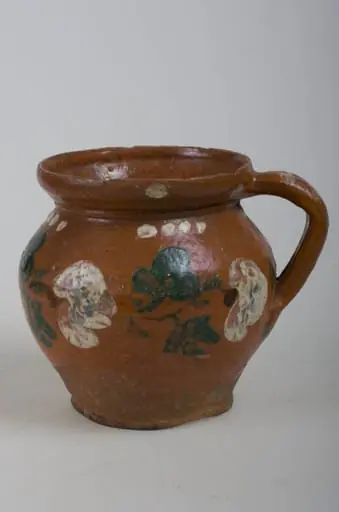 Ulcea de pus la grindă, cu corpul globular, gâtul scurt, buza evazată modelată la roată, arsă, smălțuită (interior și exterior până sub toartă), pictată cu pensula (motivele ornamentale). Motive florale și geometrice (puncte și linii). Vasul prezintă o impresiune sub toartă. Toarta are cinci linii albe transversale. Cromatică: fond: cărămiziu; decor: alb; verde; albastru.
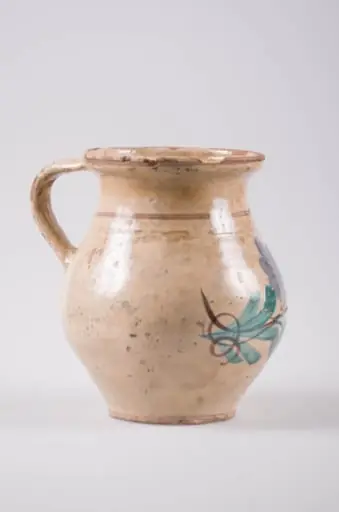 Oală de formă bitronconică de culoare bej. Decorul este reprezentat de motive florale: floarea este încadrată de linii albe realizate cu degetul; motive vegetale, motive geometrice: în partea superioară decorație circulară, linii. Prezintă toartă curbată. Smălțuită. Cromatică: fond: bej; motive: verde; albastru; maroniu.
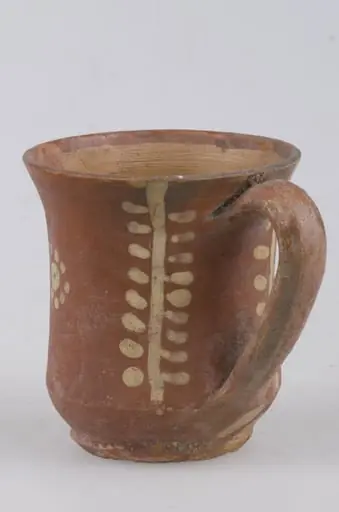 Recipient cilindric cu gura largă, prevăzută cu o toartă laterală care pleacă de sub buză și se termină la nivelul inferior al vasului. Este decorat cu motive florale și vegetale stilizate realizate din linii și puncte. Între trei crenguțe realizate dintr-o linie verticală și două rânduri de linii scurte orizontale paralele, de o parte și de alta a acesteia sunt pictate două flori realizate dintr-un punct central înconjurat de un cerc de puncte de dimensiuni mai mici. Smălțuit pe exterior. Cromatică: fond cărămiziu; motive: alb.
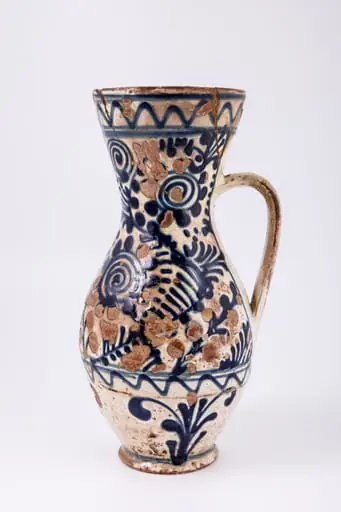 Cană cu corpul bombat, gât scurt, toarta dispusă de la gât la diametrul maxim al vasului. Suprafața decorativă a vasului este încadrată între linii subțiri și vălurite dispuse în partea superioară și inferioare. Decorul central reprezintă calea cu sori alcătuită din lujeri, linii paralel dispuse sub formă de raze, cercuri pline și floarea-soarelui stilizată. Cromatica: alb și albastru cobalt.
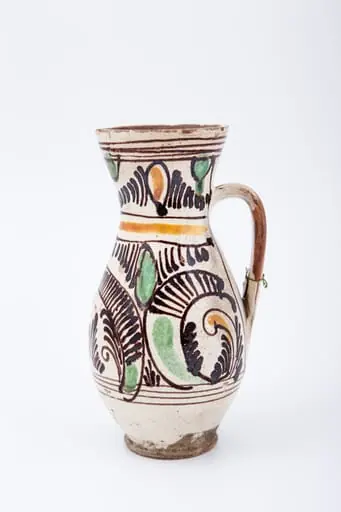 Cănceu piriform prevăzut cu o toartă, gât scurt și evazat, toarta dispusă de la gât la diametrul maxim al vasului. Suprafața decorativă a vasului este împărțită în două registre dispuse vertical, separate printr-o bandă lată verde așezată pe gâtul vasului. Primul registru prezintă motive geometrice stilizate: linii subțiri verticale și frunze stilizate, conturul fiind trasat cu cornul, pictate în interior cu galben și verde. Al doilea registru prezintă motive geometrice stilizate, linii, benzi interesectate decorate jumătate cu linii subțiri orizontale maro, jumătate pictate cu verde sau galben, cercuri hașurate care simbolizează motive florale și linii verticale subțiri maro. Decorul central este încadrat în partea inferioară și superioară de linii subțiri, paralele maro. Cromatică: alb; verde; maro; galben.
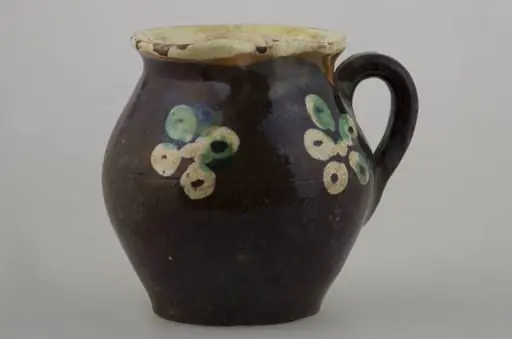 Vas de lut de mici dimensiuni de formă bitronconică și cu cioc de scurgere a apei la partea superioară cu gât scurt și buza evazată. Prevăzută cu o toartă care pornește de pe umărul vasului și se unește cu corpul sub diametrul maxim. Smălțuită în interior și exterior. În jumătatea superioară este decorată de o parte și de alta a torții cu motive florale: flori cu patru respectiv cinci petale. Toarta este decorată cu o linie albă. Cromatică: interior: alb; exterior: maro; motive: alb; verde.
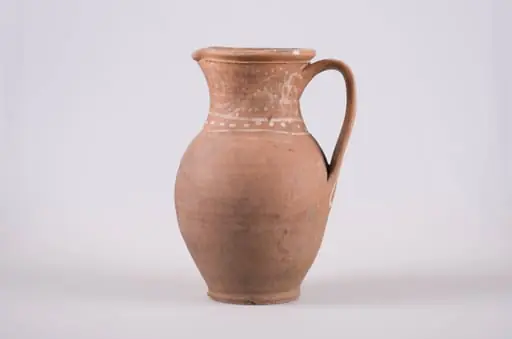 Recipient sferoidal cu gura largă și cioc. Prezintă toartă laterală. Decorul este floral și geometric pe toată suprafața gâtului format din linii, puncte, spirale. Decorat și pe toartă cu o linie de jur împrejur, iar pe buza vasului format din puncte. Cromatică: fond: cărămiziu; motive: alb.