Artwork
Piesă din lut modelat la roată, smălțuită în interior și parțial în exterior, de formă aproape cilindrică, cu pereții ușor îngustați spre bază, cu gură ușor răsfrântă. Decorul vasului este dispus pe suprafața exterioară, de la mijloc în sus, astfel: o dungă albă, un registru cu motivul valul, un grup de cinci cercuri concentrice, un registru cu motive liniare și punctiforme. Cromatică: maro, ocru, verde, alb.
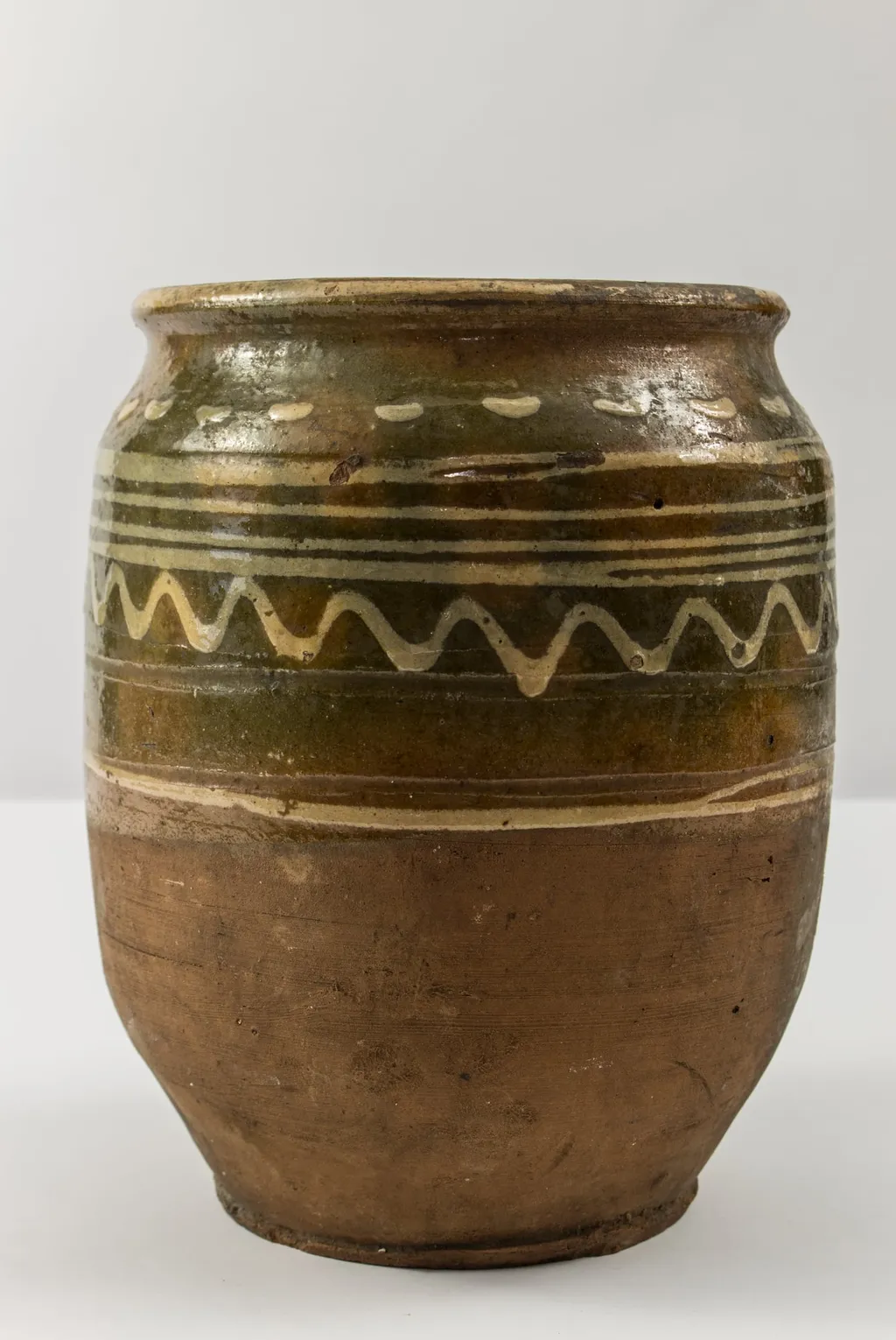
Piesă din lut modelat la roată, smălțuită în interior și parțial în exterior, de formă aproape cilindrică, cu pereții ușor îngustați spre bază, cu gură ușor răsfrântă. Decorul vasului este dispus pe suprafața exterioară, de la mijloc în sus, astfel: o dungă albă, un registru cu motivul valul, un grup de cinci cercuri concentrice, un registru cu motive liniare și punctiforme. Cromatică: maro, ocru, verde, alb. is a photography by Unknown. It dates from 1850 and is held in the collection of the Gavrila Simion Eco-Museum Research Institute Tulcea. This ceramic vessel is wheel-thrown and partially glazed, with a near-cylindrical form that gently tapers toward the base.
About this work
Overview
The piece exhibits a restrained palette of brown, ochre, green, and white, with visible signs of aging and surface wear consistent with prolonged use or burial.
This ceramic vessel is wheel-thrown and partially glazed, with a near-cylindrical form that gently tapers toward the base. The rim is slightly flared, contributing to its stable silhouette. Decoration is confined to the upper exterior surface, leaving the lower half and interior unadorned. The piece exhibits a restrained palette of brown, ochre, green, and white, with visible signs of aging and surface wear consistent with prolonged use or burial.
Subject & Meaning
The decorative scheme—comprising a white band, wavy lines, concentric circles, and linear or dot-like motifs—suggests symbolic or cultural significance, though no definitive narrative is known. These abstract patterns may relate to natural elements such as water, earth, or celestial forms, common in early ceramic traditions. The repetition of circular motifs could imply continuity or communal identity, but their precise meaning remains undocumented.
Technique & Style
The vessel was formed on a potter’s wheel and fired to achieve a durable, earthenware body. Surface decoration was applied post-firing using mineral-based pigments, limited to the upper third of the exterior. The brushwork is deliberate but unrefined, with uneven lines and faded pigments indicating hand-painted execution. The partial glazing on the interior suggests functional intent, possibly for storage or liquid containment.
History & Provenance
The object’s stylistic features align with Neolithic or early Bronze Age ceramic traditions from the Carpathian Basin. Its construction and decoration resemble artifacts from the Cucuteni-Trypillia culture, though no specific excavation context is recorded. The wear on the surface and fading of pigments suggest long-term exposure or use, possibly as a domestic or ritual vessel before being deposited or discarded.
Context
This vessel belongs to a broader regional tradition of handmade ceramics produced during the late Neolithic period in Eastern Europe. Similar vessels have been found in settlements across modern-day Romania, Moldova, and Ukraine, often associated with agricultural communities. The limited decoration and utilitarian form reflect a practical aesthetic, where ornamentation served symbolic or group-identifying roles rather than purely decorative ones.
Legacy
Though not widely published or exhibited, this piece contributes to the understanding of early ceramic practices in Southeastern Europe. Its design elements echo in later regional pottery traditions, demonstrating continuity in form and motif. Collections such as the Museum of Ethnography preserve similar examples, offering insight into the daily and ritual lives of prehistoric communities through their material culture.
Artist & collection
Museum
Gavrila Simion Eco-Museum Research Institute Tulcea
Continue through works from the same source collection.
 Domestic Scene
 Giacomo and Cardinal Marco, investing Andrea, Abbot of San Zeno, with his Benefice
 The Nymph of Fontainebleau
 Portrait of a Woman
 Madonna and Child with Saints in the Enclosed Garden
 Venus and Minerva
 Family Group of Four on Sofa
 Wall painting from Room H of the Villa of P. Fannius Synistor at Boscoreale
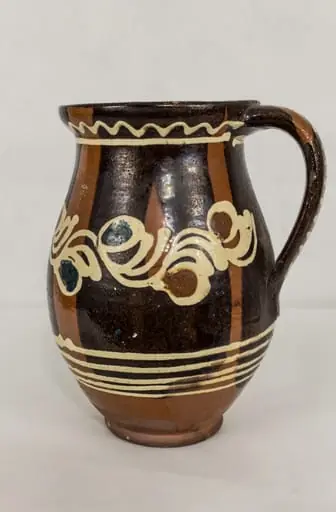 Vas cu corpul ușor curbat în partea centrală, prevăzut cu toartă laterală prinsă în două puncte, cu buza ușor răsfrântă spre exterior, smălțuit în exterior și interior, decorat pe toată suprafața în mai multe registre: pe gâtul piesei, un motiv circular peste care se suprapune motivul geometric valul; pe pântecul piesei, un motiv floral stilizat (ramură cu flori și frunze); spre baza piesei, o succesiune de cinci motive circulare concentrice; pe toartă, motive punctiforme. Cromatică: alb, albastru, cărămiziu, maro.
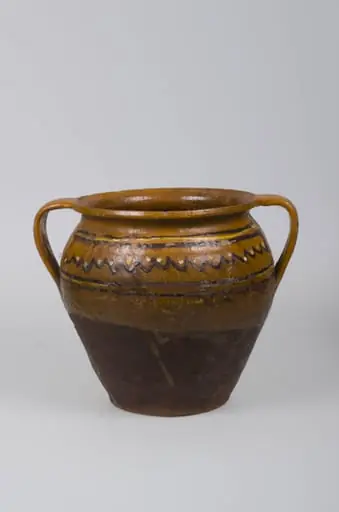 Vasul are formă bitronconică, prevăzut cu două toarte dispuse vertical în opoziție una față de cealalltă. Gâtul foarte profilat și buza evazată. Toartele pornesc din buza vasului și se unesc cu corpul în zona diametrului vasului, fiind aplatizate. Oala are urme de ardere secundară; este smălțuită în interior și în exterior (doar jumătatea superioară). Este folosită atât la pregătirea hranei cât și pentru păstrarea alimentelor și pentru transportul hranei la câmp. Oala este decorată pe umăr cu motive geometrice: linii drepte, linie în val, puncte. Cromatică cărămiziu; galben; maro închis.
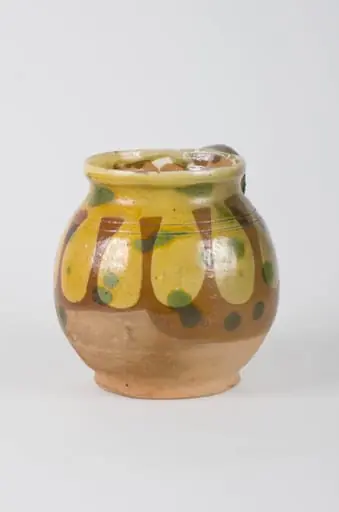 Vas din lut cu corp foarte bombat, cu gât scurt, buză evazată și ridicată. O toartă pornește din buză și este fixată pe corp la nivelul diametrului maxim. Pe umăr este decorată cu motive geometrice: două linii incizate. Din buză pornesc vertical loburi de angobă. Partea de jos nesmălțuită. Partea de sus smălțuită galben și stropită cu verde. Interior neangobat dar smălțuit. Cromatică: fond: cărămiziu; motive: galben; verde.
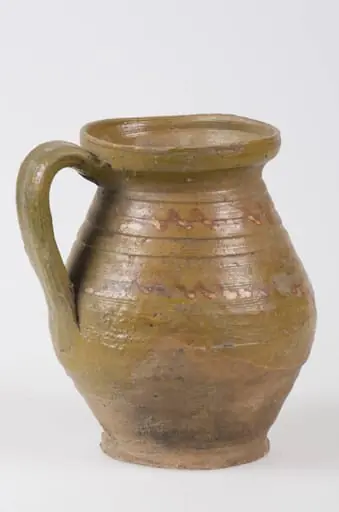 Vas bitronconic cu gât scurt și foarte profilat, cu gura înaltă și dreaptă. Prezintă o toartă care pleacă de sub buză și se unește cu corpul sub zona diametrului maxim. Este smălțuit în interior și la exterior (parțial nesmălțuit în partea de jos). În partea superioară prezintă un decor geometric realizat din cinci linii incizate și două linii în val pictate. Toarta este decorată cu puncte. Cromatică: fond: cărămiziu și pe alocuri verziu; motive: alb; maroniu. Prezintă uzură funcțională.
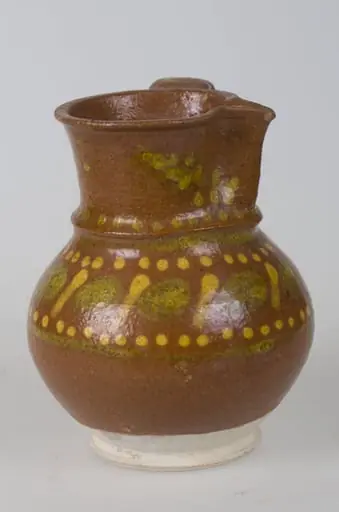 Vas cu corpul de formă cilindrică, cu fundul plat, corpul pântecos, gâtul înalt și gura largă, este prevăzută cu un cioc de scurgere așezat la nouăzeci grade față de toartă. Decorul pictat a fost realizat cu pensula în zona pântecului și a gâtului, format din motive geometrice. Pe pântecul vasului a fost pictat un registru încadrat între două linii de culoare verzuie, între care se află alte două linii realizate din puncte de culoare galbenă. În interiorul liniilor menționate anterior se află registre circulare format din pete de culoare verzuie, separate de linii galbene orizontale înclinate. Pe marginea vasului și pe toartă au fost pictate trei flori de culoare verde, de tipul „spicului de grâu”. Cromatică: alb (fund), maro-roșcat restul suprafeței; motive: galben; verde.
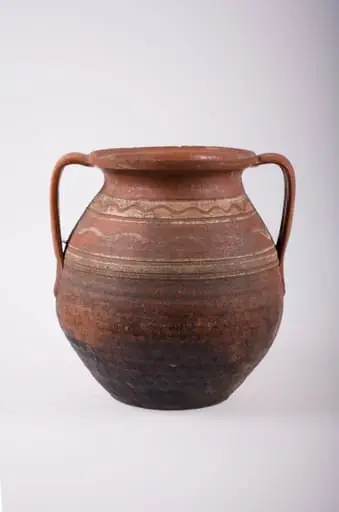 Oala bombată cu două toarte late, aplatizate, dispuse de o parte și de alta a gurii vasului; buză evazată; decorată în exterior cu motive geometrice: linii, linii vălurite pe un registru de cromatică albă. Cromatică: fond: maro; motive: alb-gălbui. Smălțuită pe gura vasului, interior și pe mânerul vasului.
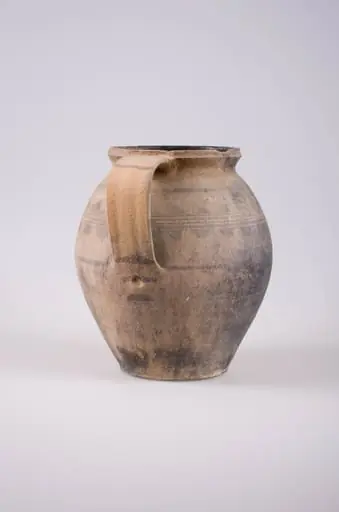 Oală borcan cu corp pântecos bombat cu gât profilat, cu buza evazată tăiată drept și toartă lată. Decorat în partea superioară cu cinci linii ușor adâncite realizate cu piaptănul care secționează un val pictat realizat cu degetul încadrate de două linii maro-roșcat. Toarta prezintă două caneluri este decorată cu o linie în partea superioară și trei linii în partea inferioară. Cromatică: fond: cărămiziu; motive: maro-roșcat. Prezintă urme de ardere secundară.